


Therapeutic Foot Massage for Lasting Pain Relief
- tmcpnet
- Dec 17, 2025
- 17 min read
A therapeutic foot massage is so much more than a simple spa indulgence. It's a clinical treatment performed by a Registered Massage Therapist (RMT) and designed to address specific health concerns, not just to pamper your feet. By targeting the intricate network of muscles, nerves, and soft tissues, this kind of therapy can unlock powerful, body-wide benefits for pain relief and overall wellness.
Beyond Relaxation: Understanding Therapeutic Foot Massage
When you hear "foot massage," your mind probably jumps to a relaxing spa day. And while those are wonderful, a therapeutic foot massage is a completely different experience.
Think of your feet as the foundation of a house. If that foundation is weak, misaligned, or in pain, the entire structure above it suffers. The goal of a therapeutic session, like those offered by RMT Taylor, is to restore that crucial foundation. It's a clinical practice that uses specific, targeted techniques to address underlying issues—not just to soothe tired soles.
The aim is to create lasting change that supports your entire body, from improving your balance to easing chronic pain. This distinction is vital for anyone seeking genuine, health-focused results. It's a practice that fits firmly within the spectrum of holistic therapies, blending hands-on skill with a deep understanding of the body.
To help clarify what makes this treatment so different, let's compare it side-by-side with a standard foot rub.
Therapeutic Foot Massage vs A Standard Foot Rub
This table breaks down the crucial differences between a clinical treatment and a relaxation service.
Feature | Therapeutic Foot Massage (RMT) | Standard Foot Rub (Spa) |
|---|---|---|
Primary Goal | Address specific health issues (e.g., pain, mobility). | General relaxation and stress reduction. |
Practitioner | Registered Massage Therapist (RMT) with extensive training. | Esthetician or spa therapist. |
Approach | Clinical, assessment-based, and targeted. | Generalized and focused on comfort. |
Techniques | Uses advanced modalities like Myofascial Release & Trigger Point Therapy. | Uses general stroking and kneading techniques. |
Session Focus | To achieve measurable health outcomes and lasting relief. | To provide an enjoyable, temporary experience. |
As you can see, the intent behind each service sets them worlds apart. A therapeutic session is about a journey toward better health, not just a momentary escape.
The Core Difference: A Clinical Approach
The real distinction comes down to two things: the intent behind the treatment and the qualifications of the practitioner.
An RMT like Taylor brings an in-depth knowledge of anatomy and physiology to every single session. It's this clinical mindset that ensures the techniques—whether it’s Myofascial Release, Trigger Point Release, or Joint Mobilization—are precisely matched to your health goals. This makes it a powerful tool for rehabilitation and preventative care.
While often grouped with other foot therapies, it's also distinct from practices like reflexology. For a deeper dive into that modality, you can explore our guide to foot reflexology massage.
Best of all, this personalized care is available right at your doorstep. Taylor provides professional mobile RMT services, bringing relief and restoration to clients in:
Brampton, Toronto, and Etobicoke
Oakville, Caledon, and Orangeville
Mississauga, Milton, and Halton
Guelph and surrounding communities
A therapeutic foot massage isn’t just about feeling good for an hour; it’s about restoring function, reducing pain, and improving your quality of life from the ground up. It’s a foundational element of a comprehensive wellness strategy.
The Proven Health Benefits of Foot Massage Therapy
A therapeutic foot massage offers so much more than just a moment of relaxation. When a Registered Massage Therapist (RMT) like Taylor works on your feet, they're not just rubbing them; they're kickstarting a chain reaction of positive effects that can boost your health from the ground up. This isn't guesswork—it's a targeted approach built on a deep understanding of anatomy and how the intricate structures in our feet impact the entire body.
The benefits aren't just feel-good anecdotes, either. A growing body of research points to real, measurable improvements. From disrupting chronic pain signals to gently calming a stressed-out nervous system, the power of a clinical foot massage is both profound and practical.
Alleviating Pain and Reducing Inflammation
One of the first things people notice after a therapeutic foot massage is a real sense of pain relief. For anyone dealing with the sharp, stabbing heel pain of plantar fasciitis, the relief can be a game-changer. Taylor uses specific techniques like deep tissue work and myofascial release to zero in on the inflamed plantar fascia and surrounding muscles, helping to break down adhesions and release that constant, nagging tension.
It’s about more than just soothing a sore spot. The real goal is to interrupt the pain-spasm cycle that keeps you hurting. By applying precise pressure to trigger points, an RMT can effectively "reset" the nerve signals, telling the brain to let go of its tight grip on the muscles. This not only eases the discomfort but also helps bring down local inflammation, paving the way for faster healing.
This flowchart shows how a session with an RMT creates benefits that ripple through your entire body.

As you can see, the treatment starts with a qualified RMT, focuses on the feet, and produces positive systemic effects that benefit your whole system.
Boosting Circulation and Supporting Healing
Think about it: your feet are the farthest point from your heart. This can make good circulation a real challenge, especially for older adults or those with conditions like diabetes. A therapeutic foot massage essentially acts as a manual pump, helping to push stagnant blood and lymphatic fluid out of congested areas.
This improved circulation is crucial because it delivers a fresh supply of oxygen and nutrients to tissues that desperately need them, speeding up the healing of strained muscles and ligaments. At the same time, it helps flush out metabolic waste products—the stuff that contributes to pain and swelling. For many of our clients in Brampton, Mississauga, and Guelph, this circulation boost is key to managing their symptoms and keeping their feet healthy.
A key takeaway is that improved blood flow does more than just warm your feet; it's an essential process for tissue repair, reduced swelling, and overall systemic health, making foot massage a valuable tool in both rehabilitation and preventative care.
Calming the Nervous System for Deep Relaxation
Living with chronic stress keeps your body stuck in "fight or flight" mode, a state run by the sympathetic nervous system. A therapeutic foot massage is an incredibly effective way to flip that switch and guide your body into the calming "rest and digest" state, which is handled by the parasympathetic nervous system.
The gentle, rhythmic strokes and sustained pressure on the nerve-rich soles of your feet send powerful calming signals straight to the brain. This helps lower levels of cortisol (the body's main stress hormone), slows your heart rate, and deepens your breathing. The result is a profound sense of relaxation—both mental and physical—that can stick with you long after the session is over.
Beyond just feeling good in the moment, this deep relaxation can help you improve sleep quality for deeper rest.
Enhancing Flexibility, Balance, and Mobility
Did you know your feet contain over 100 muscles, tendons, and ligaments? They all have to work in perfect harmony to support your entire body. When these tissues get tight and stiff, it can throw off your balance and mobility, which is a major concern for falls, especially among seniors.
By using techniques like joint mobilization, Taylor can gently increase the range of motion in all the small joints of the ankle and foot. This helps to lengthen those tight soft tissues and restore proper foot mechanics, which directly translates to better balance and a more confident, stable gait. This isn't just theory; clinical research backs it up, showing that targeted foot massage leads to measurable improvements in balance, foot sensation, and overall mobility for older adults and people with diabetic neuropathy.
Who Benefits Most From This Targeted Therapy?
While just about anyone can enjoy a therapeutic foot massage, for some folks, it’s an absolute game-changer in their health and wellness routine. It’s far more than a simple foot rub; it’s a targeted therapy that tackles specific, often chronic, challenges head-on. For these individuals, the work our male RMT, Taylor, does on their feet can dramatically improve their overall quality of life.
From seniors working to maintain their independence to active people pushing their physical limits, this kind of specialized care offers support exactly where it's needed most. Let’s take a closer look at the key groups who stand to gain the most from regular sessions.
Seniors and Older Adults
For older adults, staying mobile and independent is everything. A therapeutic foot massage is a gentle yet powerful tool that directly supports this goal. Taylor sees it time and again with his senior clients across Brampton, Oakville, and Etobicoke—it’s an essential part of managing the physical realities of aging.
Easing Arthritis Pain: By using gentle joint mobilization and soft tissue techniques, we can help relieve the stiffness and pain that comes with osteoarthritis in the feet and ankles. It makes every step just a little more comfortable.
Boosting Circulation: It’s common for circulation to the feet and hands to slow down as we get older. Massage helps manually encourage blood flow, which is crucial for keeping tissues healthy and can help reduce that stubborn swelling in the lower legs.
Improving Balance and Stability: The feet are packed with small joints and muscles. By improving their flexibility, this therapy enhances the sensory information your feet send to your brain. This sharpens your proprioception—your body's internal sense of where it is in space—which is a huge factor in preventing falls.
When you address foundational issues like pain, poor circulation, and stiffness, you help seniors stay active, confident, and safer on their feet. For a deeper dive, check out our guide on massage therapy for seniors and in-home care.
Athletes and Active Individuals
Whether you’re a marathon runner, a weekend sports enthusiast, or simply on your feet all day for work, your feet take a real beating. For this group, a therapeutic foot massage isn't a luxury; it’s a critical part of performing well and recovering properly.
The goal here is to restore the foot's natural mechanics and speed up the healing process. Nagging issues like plantar fasciitis, Achilles tendinopathy, and general foot fatigue can sideline even the most committed person. Using techniques like deep tissue work, trigger point release, and myofascial work, our therapist can get to the root cause of the pain.
Regular sessions can help you:
Recover Faster: By increasing circulation and easing muscle tension, massage helps flush out metabolic by-products and bring fresh, oxygenated blood to overworked tissues.
Prevent Injuries: Keeping the muscles and connective tissues in your feet pliable and responsive makes them less susceptible to strains and tears.
Stay at Peak Performance: Think of your feet as the foundation of every movement. When they’re functioning correctly, your gait, power, and endurance all get a boost.
For active people in communities like Milton and Guelph, making therapeutic foot massage a regular part of their training is one of the smartest things they can do for their long-term athletic health.
Individuals with Specific Health Conditions
Beyond general aches and pains, this targeted therapy can be an incredible source of support for people managing complex health conditions. A knowledgeable and compassionate RMT knows how to adapt their techniques to provide real comfort and relief in these situations.
Here are just a few examples of how it can help:
Neurological Conditions: For those living with Multiple Sclerosis (MS) or Parkinson's, massage can help manage symptoms like muscle spasticity. It also helps improve sensory feedback, which can be dulled by nerve damage. The gentle, rhythmic touch can also be incredibly calming for the entire nervous system.
Autoimmune Disorders: Conditions like Rheumatoid Arthritis often cause significant inflammation and pain in the small joints of the feet. During periods when a flare-up isn't active, a modified and gentle massage can help reduce localized swelling and soothe that deep ache.
Diabetes: People with diabetes know that foot care is non-negotiable. While we must be extremely cautious and get a doctor's okay before working directly on areas with neuropathy, improving the overall circulation in the lower legs is incredibly beneficial for tissue health and can help prevent complications.
For these clients, every session is completely customized. Taylor works closely with them, their families, and their caregivers across Toronto and Caledon to make sure every treatment is safe, appropriate, and perfectly aligned with their specific health needs. It's about bringing a touch of relief and compassionate care right to their door.
What to Expect During Your Mobile RMT Session
It’s completely normal to have questions before your first mobile RMT visit. Knowing what the process looks like can help you feel more comfortable and ready to get the most out of your treatment. We’ve designed the entire experience to be professional, stress-free, and centred around your needs, bringing the clinic experience right to your door in Brampton, Oakville, and the surrounding areas.
From the moment you book your appointment to the follow-up care, everything is handled for you. Let’s walk through what a typical mobile visit with our male RMT, Taylor, is actually like.

The Arrival and Initial Consultation
Your session starts the moment Taylor arrives at your home, right on time. He brings everything needed for a professional treatment—a comfortable massage table or chair, fresh linens, and all necessary supplies. All you need to do is point him to a small, clear space where he can set up.
Before any hands-on work begins, the appointment kicks off with a conversation. This brief but vital consultation is where Taylor gets to know your health history, what’s bothering you right now, and what you’re hoping to achieve. Are you struggling with nagging plantar fasciitis pain? Or perhaps your main goal is to reduce swelling and get the blood flowing better in your feet?
This initial chat is the key to creating a treatment that’s truly personalized, safe, and effective. It's also your time to ask any questions you have and let him know about your preferences.
The Therapeutic Treatment Itself
Throughout the foot massage, your comfort and privacy are paramount. You’ll stay comfortably clothed, only needing to expose your feet and lower legs. Professional draping with clean linens is used at all times to ensure you feel secure.
Based on your consultation, Taylor will use a blend of specialized techniques. This is far from a generic foot rub; it's a targeted, clinical treatment that might involve:
Deep Tissue Massage to release chronic muscle tension.
Trigger Point Therapy to zero in on specific knots and tight spots in the muscles.
Myofascial Release to gently stretch the connective tissue, or fascia, that encases the muscles.
Joint Mobilization to carefully improve the range of motion in your ankles and the smaller joints within your feet.
He’ll check in with you periodically about the pressure and your overall comfort, making sure you feel safe and in control. This client-focused approach is what professional RMT care is all about. For a deeper dive into the mobile service, check out our guide on what to expect from a mobile massage therapist in the GTA.
After Your Session Concludes
The therapeutic benefits continue even after the massage is over. Once the hands-on portion is finished, Taylor will share some personalized advice for at-home care. These are simple, effective tips meant to prolong the relief you’re feeling and empower you to be an active participant in your own health.
Your post-session care is a vital part of the therapeutic process. Taylor may suggest gentle stretches or simple self-massage techniques to help you maintain the benefits of the treatment between appointments.
He will also talk with you about a potential treatment plan that aligns with your long-term goals. Whether that means a few sessions to tackle a chronic issue or monthly appointments for maintenance, the plan will be built around your specific needs and schedule. We want the entire experience to feel supportive from start to finish.
Your Safety Always Comes First: Essential Guidelines for Foot Massage
When it comes to any kind of therapeutic treatment, your safety and well-being are paramount. While a professional foot massage can feel incredible and offer a world of benefits, there are certain times when it needs to be adjusted—or even postponed—to keep you safe. These are what we call contraindications.
This isn't about scaring anyone away from a great treatment! It's about empowering you with the right knowledge. Having an open and honest chat with your male RMT, Taylor, is the single most important step. It allows him to tailor the session to your specific health needs, making sure you get all the good stuff without any of the risk.
When a Foot Massage Should Wait
Some health issues are serious enough that massage needs to be put on hold until they've cleared up. We call these absolute contraindications because moving forward could be genuinely harmful. It’s so important to be upfront about your health history; a properly trained RMT knows exactly what to look out for. If you're curious about what makes a therapist a registered professional, you can learn more about what defines an RMT massage in our detailed guide.
Here are a few key situations where we’d need to reschedule:
Deep Vein Thrombosis (DVT): This is a blood clot, often in the leg. Massaging this area is a huge risk because it could break the clot free, sending it toward the lungs where it could be life-threatening.
Recent Fractures or Bad Injuries: If you have a fresh, unstable fracture or a severe sprain, massage can interfere with the healing process and make the injury worse.
Open Wounds or Skin Infections: We can’t massage over open sores, cuts, or infections like cellulitis. It's not just irritating—it can spread the infection.
Severe, Uncontrolled High Blood Pressure: While gentle touch can be calming, a deep or overly stimulating massage could negatively affect your blood pressure if it isn't well-managed.
Fever or Sickness: When your body is already working overtime to fight off an illness, a massage can put too much stress on your system and make you feel even worse.
Think of it as a team effort for your health. Always check with your doctor if you have serious health concerns before you book a massage. When you, your doctor, and your RMT are all on the same page, you get the best possible care.
Adjusting the Treatment to Fit Your Needs
Now, many other conditions don’t mean you have to cancel your appointment. They just mean we need to make some smart adjustments. These are called local contraindications—situations where Taylor can still perform the massage but will need to avoid a certain spot or use much gentler techniques.
For example, if you have severe varicose veins on one of your legs, he’ll steer clear of applying deep pressure directly over them. He can still work wonders on your feet and other areas, though! It's the same for someone with diabetic neuropathy; the pressure needs to be much lighter to protect sensitive tissues from any potential damage.
This is where the expertise of a professional RMT really comes into play. It's all about adapting the treatment to give you comfort and relief while completely respecting your body's limits and current health. That’s what makes it a truly safe, beneficial, and therapeutic foot massage.
Simple At-Home Foot Care to Extend Your Results
The relief and improved mobility you feel after a session with a Registered Massage Therapist don't have to fade away. Think of your professional treatments with Taylor as the deep-dive work, and what you do at home as the daily maintenance that keeps everything running smoothly. A few simple practices can make a huge difference, helping you hold onto that feeling of relief and flexibility for longer.
This isn't about trying to replicate what an RMT does. It’s about giving you the power to take an active role in your own health. Just a few minutes each day can help you manage tension, maintain flexibility, and support the incredible structures that carry you through life.
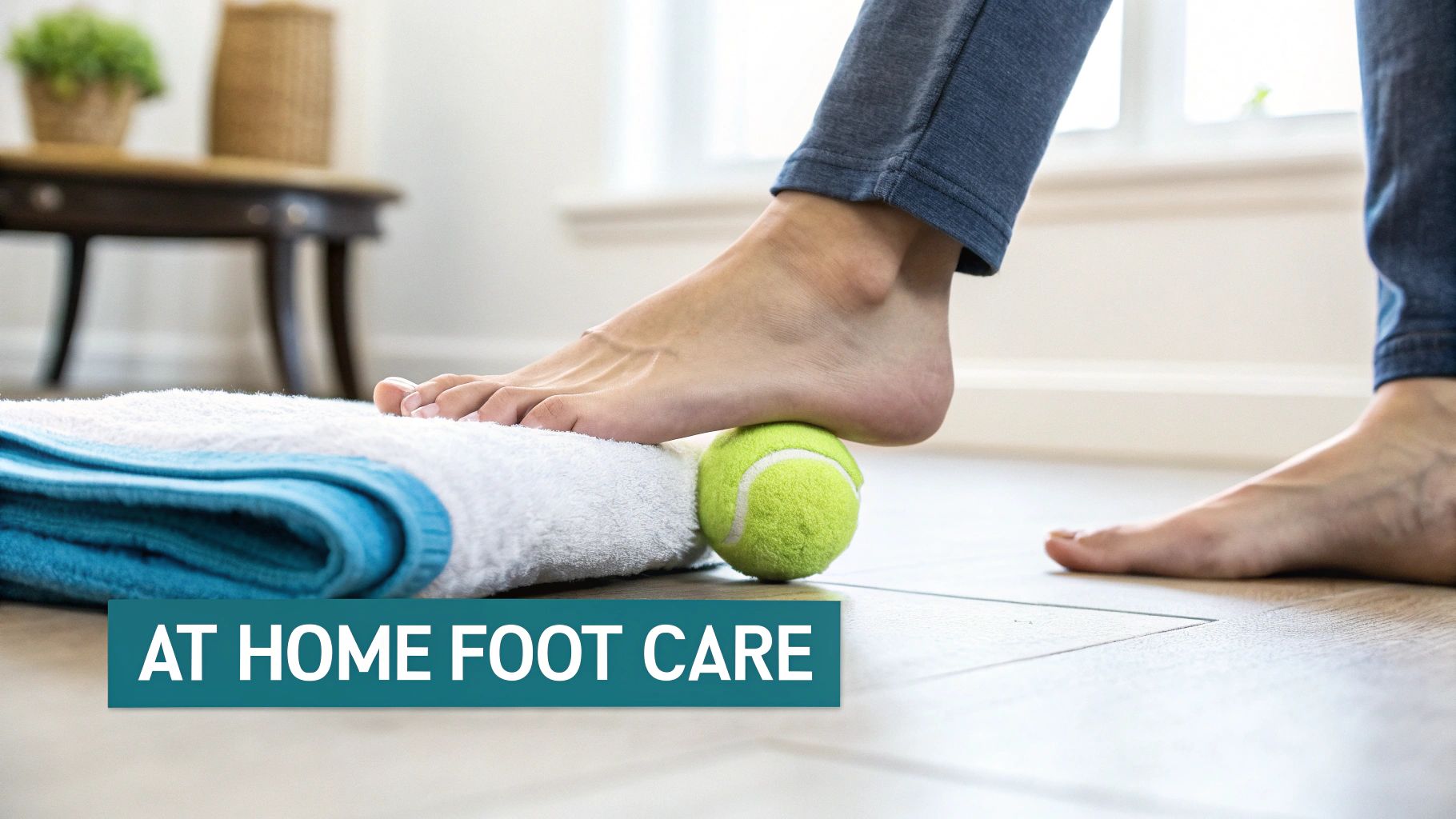
The Tennis Ball: Your Best Friend for Plantar Fascia Relief
One of the easiest and most effective tools for home foot care is an ordinary tennis ball. It’s absolutely perfect for getting into the plantar fascia—that tough band of tissue running along the bottom of your foot. When this area gets tight, it often leads to that sharp, nagging heel pain many people experience.
Here’s a simple way to use it for a self-massage:
Find a Comfy Seat: Sit down in a sturdy chair, keeping both feet flat on the ground to start.
Position the Ball: Place the tennis ball right under the arch of one of your feet.
Roll with Gentle Pressure: Slowly begin to roll the ball from your heel up towards your toes and back again. You’re in complete control of the pressure; lean in a bit more for a deeper sensation, but always start gently.
Pause on Tender Spots: If you find a spot that feels particularly tight or tender, just pause. Hold the ball there with steady pressure for 15-20 seconds and focus on taking some deep breaths. This gives the trigger point a chance to release.
Switch Sides: After about 2-3 minutes, switch the ball over to your other foot and repeat.
This little routine is fantastic for breaking down tight knots, boosting blood flow, and preserving the flexibility Taylor helps restore during your treatments.
Gentle Stretches for Happy Ankles and Toes
Stiffness in the dozens of tiny joints in your feet and ankles can have a surprisingly big impact on your overall balance and how you walk. These gentle stretches are incredibly easy to do right from a chair, making them accessible no matter your mobility level.
Ankle Circles: Lift one foot just off the floor and slowly draw a circle with your big toe. Do 10-15 rotations clockwise, then switch and do another 10-15 counter-clockwise. This movement is like oiling a hinge—it lubricates the joint and improves its range of motion.
Toe Curls and Spreads: While seated, imagine you're trying to scrunch up a towel on the floor with just your toes. Hold that curl for a moment, then release and spread your toes out as wide as you can. Repeating this 10 times is a great way to strengthen all those little muscles in your feet.
These movements might seem minor, but they are crucial for maintaining the complex mechanics of your feet. Consistency is what really matters here; doing them regularly will bring lasting improvements to your flexibility and stability.
Tips for Caregivers: The Power of Gentle Touch
If you’re caring for a loved one, a simple foot rub can be an incredible act of comfort and connection. The goal isn't to perform a clinical treatment, but to offer a soothing touch that eases anxiety and promotes circulation.
Always use a slow, gentle, and rhythmic approach. Apply a small amount of lotion and start with long, gliding strokes from the ankle toward the toes. You can gently squeeze the arch and use your thumbs to make small, comforting circles on the sole. Most importantly, check in frequently about how the pressure feels, keeping your touch light and reassuring. For a more detailed guide, check out our article on self-massage techniques for seniors.
By weaving these simple practices into your routine, you and your loved ones can become active partners in the healing process. This at-home care perfectly complements your professional treatments, creating a well-rounded and supportive approach to foot health across Brampton, Toronto, and the surrounding communities we serve. When you're ready for your next professional session, you can easily book your mobile massage appointment online.
Your Questions Answered
We get a lot of great questions about therapeutic foot massage from clients all over the Greater Toronto Area. Here are some of the most common ones, answered simply and clearly.
How Is Therapeutic Foot Massage Different From Reflexology?
That’s a fantastic question, and one we hear often. Think of it this way: therapeutic foot massage is grounded in clinical science—anatomy and physiology. When a Registered Massage Therapist (RMT) performs this treatment, they're working directly on the muscles, ligaments, and soft tissues of your feet to address specific, often diagnosed, conditions like plantar fasciitis or Achilles tendonitis. The goal is targeted relief and rehabilitation.
Reflexology, on the other hand, comes from a different school of thought. It's an alternative practice based on the idea that certain points on your feet act like a map, corresponding to different organs and systems throughout your body. The aim is less about treating a specific foot injury and more about promoting holistic balance and well-being system-wide.
Do I Need a Specific Problem to Get This Massage?
Not at all. While this type of massage is incredibly effective for managing pain and injuries, it’s also one of the best things you can do for proactive, preventative care.
Think of it as maintenance for your body's foundation. Regular sessions are a great way to boost circulation, ease built-up stress, and keep your feet and ankles flexible. It's a perfect fit for anyone who's on their feet all day, or for those who simply want to invest in long-term foot health.
How Should I Prepare for My Mobile Appointment?
Getting ready for your in-home session is easy. The main thing is to make sure there's a small, clear area where Taylor can comfortably set up his massage table and equipment.
It's also a good idea to wear something comfortable and loose-fitting that can be rolled up past your knees, like shorts or track pants. Most importantly, just come ready to relax and chat about what you're feeling. A good conversation about your comfort and goals is what allows Taylor to make the session just right for you.
How Often Should I Schedule a Foot Massage?
The best schedule really comes down to your individual needs and what you're hoping to achieve. If you're dealing with acute pain from a new injury, you might start with weekly sessions to get the symptoms under control and kickstart the healing process.
For general wellness and keeping your feet feeling great, once or twice a month is usually a great rhythm. Taylor will work with you during your first visit to map out a personalized treatment plan that makes sense for your body, your schedule, and your budget.
Ready to experience lasting relief and restore your body's foundation? At Stillwaters Healing & Massage, our male RMT, Taylor, brings professional, compassionate therapeutic care directly to your home. Book your mobile RMT appointment online today by visiting https://stillwatershealingmassage.clinicsense.com.


