


Your Ultimate Guide to Releasing Knots On Neck
- tmcpnet
- Feb 10
- 14 min read
We’ve all felt them: those hard, tender bumps in our neck and shoulders that just won't seem to go away. While we call them knots on neck tissue, they aren't actually tangled fibres. They're what medical pros call myofascial trigger points—tiny, stubborn contraction points within a muscle that refuse to let go.
These hyper-irritable spots can create a surprising amount of discomfort, making it hard to get through your day without wincing.
Understanding Those Painful Knots On Your Neck
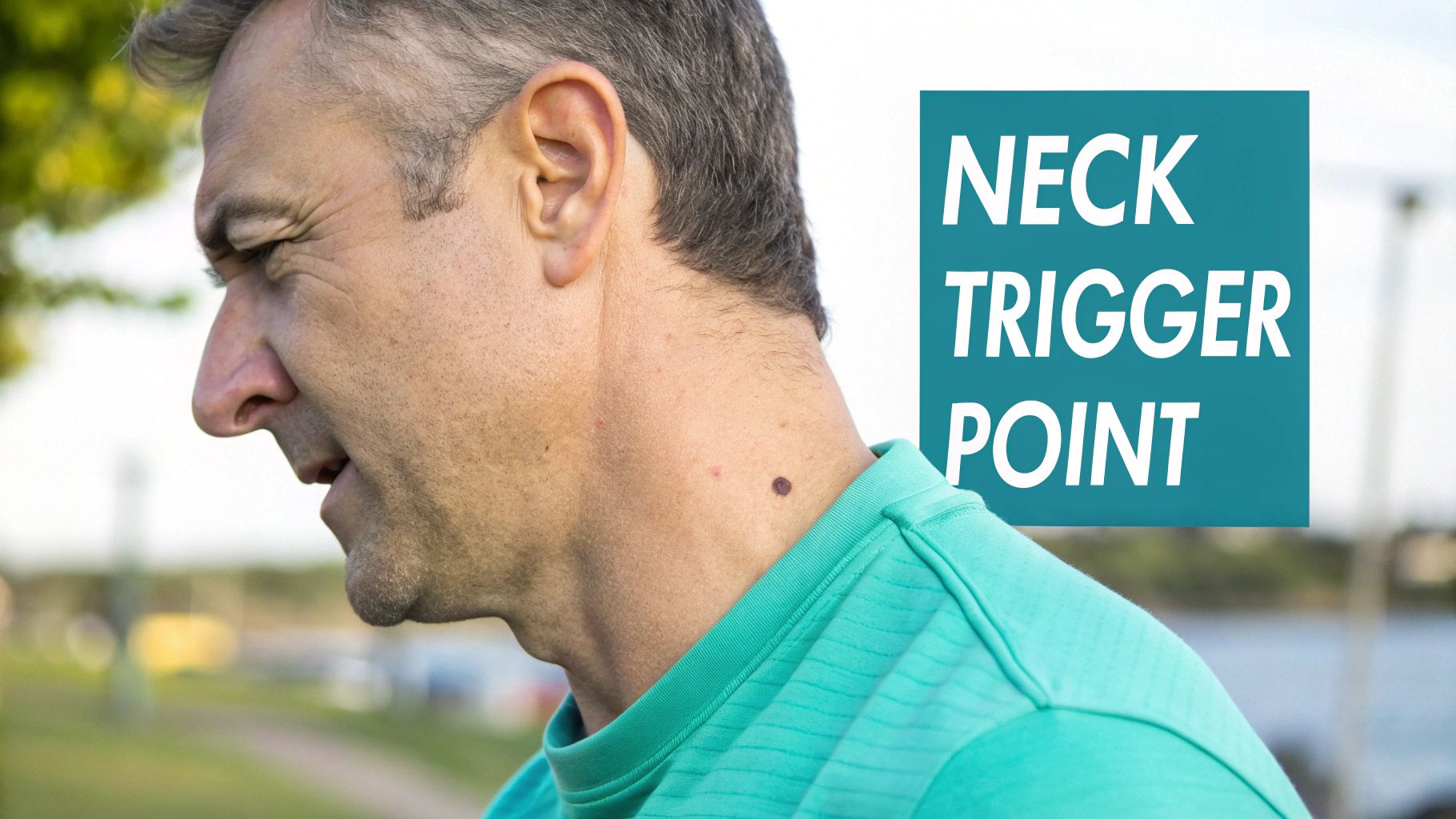
That stubborn, painful lump you feel isn't just a simple ache; it's a very real physical phenomenon. These knots are notorious for causing stiffness, nagging pain, and sometimes even pain that shows up elsewhere, like a tension headache or a strange tingling down your arm.
Think of your muscle fibres like a handful of uncooked spaghetti—straight, smooth, and sliding past each other easily. A trigger point is like a small section of that spaghetti that's become cooked and clumped together. This tangled spot creates a hard, sensitive nodule that restricts movement and can feel like a small, hard pea under your skin.
Common Hotspots for Neck Knots
While a trigger point can pop up in any muscle, they definitely have a few favourite hiding spots around the neck and shoulders. Knowing where to look is the first step in figuring out what’s causing your pain.
Upper Trapezius: This is the big muscle that runs from the base of your skull down to your shoulders. It's a classic spot for knots, especially if you carry stress here or spend a lot of time hunched over a desk. This is what causes that "weight of the world on my shoulders" feeling.
Levator Scapulae: This muscle connects your neck to your shoulder blade. A knot here is often the culprit behind that persistent, deep ache you feel right at the top corner of your shoulder blade.
Sternocleidomastoid (SCM): You can feel this one on the sides of your neck when you turn your head. Knots in the SCM are sneaky and can trigger headaches behind the eye, jaw pain, or even a sense of dizziness.
At Stillwaters Healing & Massage, our male RMT, Taylor, has years of experience tracking down these exact trigger points. He uses very specific techniques like Trigger point release and Myofascial release to get these knots to release, bringing much-needed relief from pain and stiffness to clients all over Brampton, Mississauga, and the GTA.
In this guide, we'll get into why these knots form and, more importantly, what you can do about them. For a more detailed look at the science behind it all, you can learn more about our services like Swedish massage, Deep tissue massage, and Cupping therapy. We’ll cover everything from safe at-home remedies to when it’s time to call in a professional, so you can finally get some lasting relief.
So, Why Do We Actually Get Neck Knots and Tension?
Figuring out why you have those stubborn, painful knots in your neck is the first real step to getting rid of them for good. It’s tempting to point the finger at a single bad night's sleep, but the truth is usually a mix of daily habits and other factors that slowly tighten up your muscle fibres over time.
The culprits are often hiding in plain sight, woven right into our modern lives. Just think about how you’re holding your head right now. Chances are, you’re looking down at a phone or tablet. This forward-head posture—often called 'tech neck'—puts a massive amount of strain on the muscles in the back of your neck. They’re working overtime just to keep your head from dropping.
It’s the same story with long hours spent sitting, whether you're at a desk in Toronto or settled into a comfy armchair in Brampton. When we slouch, our shoulders slump forward and our head juts out, which is the perfect recipe for painful trigger points to form in the big muscles of our upper back and neck, like the trapezius.
The Link Between Stress and Strain
It’s not all about physical posture, though. Your emotional state has a huge impact. When you're feeling stressed or anxious, your body tenses up as part of its "fight or flight" response, and the muscles in your neck and shoulders are often the first to clench. If that stress never really goes away, your muscles never get the signal to relax, leading to those hard, tender knots.
A few other common causes can add to the problem:
Repetitive Strain: Things we do every day can be the source. Hobbies like knitting or gardening, or even just carrying a heavy purse on the same shoulder day after day, can overwork specific muscles.
Sudden Injury: A slip and fall, a sports injury, or even a minor fender-bender that causes whiplash can create immediate muscle trauma that results in knots.
Dehydration: Your muscles need water to work properly. When you don't drink enough, your muscle fibres can cramp and develop trigger points much more easily.
How Aging Plays a Role in Neck Pain
For older adults, the reasons behind neck knots can be a bit more layered. Age-related changes, like the joint stiffness and inflammation from osteoarthritis, can cause the surrounding muscles to tighten up protectively. This is a big deal in our communities. In fact, historical data from Peel Region's long-term care homes reveals a 40% rise in complaints about neck knots among seniors since 2020. This spike has been linked to less activity and more isolation during the pandemic.
The prevalence of these knots is particularly high—61%—in those over 75, often tied directly to arthritis flare-ups. You can dig deeper into the connection between arthritis and muscle pain in this in-depth study.
Once you start to see these root causes in your own life, you can make real, targeted changes. It might mean adjusting your desk setup, finding better ways to manage stress, or getting some professional help from our Geriatric massage or Rehabilitation massage services. Understanding the "why" is what gives you the power to finally break the cycle of pain.
Gentle At-Home Techniques For Lasting Relief
When you're dealing with a stubborn knot in your neck, you want relief, and you want it now. The good news is you don't always need to wait for an appointment. There are several gentle, effective things you can do right from your own home to ease that muscle tension, get the blood flowing, and bring back a sense of comfort without making things worse.
These methods are especially good for older adults or anyone managing mobility challenges because the focus is always on listening to your body. The golden rule is to move slowly and with intention. Never, ever push into sharp pain. You'll find that small, consistent efforts are what truly make a difference in the long run.
Simple Stretches to Release Tension
Gentle stretching is one of the best ways to lengthen those tight, balled-up muscle fibres. Think of it as convincing the muscle to let go of that constricted feeling. Just remember to hold each stretch steadily—no bouncing—and to breathe deeply the entire time.
Chin Tuck: Sit or stand up straight, with your gaze forward. Now, gently pull your chin straight back, as if you’re trying to make a double chin. You should feel a nice stretch along the back of your neck. Hold it for 5 seconds, then release. Try to do this 5 times. It's a fantastic antidote to the "tech neck" we get from looking down at screens.
Ear-to-Shoulder Stretch: Let your shoulders relax and drop down. Slowly tilt your head, bringing your right ear toward your right shoulder. Stop when you feel a gentle stretch on the left side of your neck. Hold this for 15-20 seconds, then slowly come back to the centre and repeat on the other side.
This flowchart shows how everyday things like posture and stress can create a direct pathway to those painful knots in your neck.
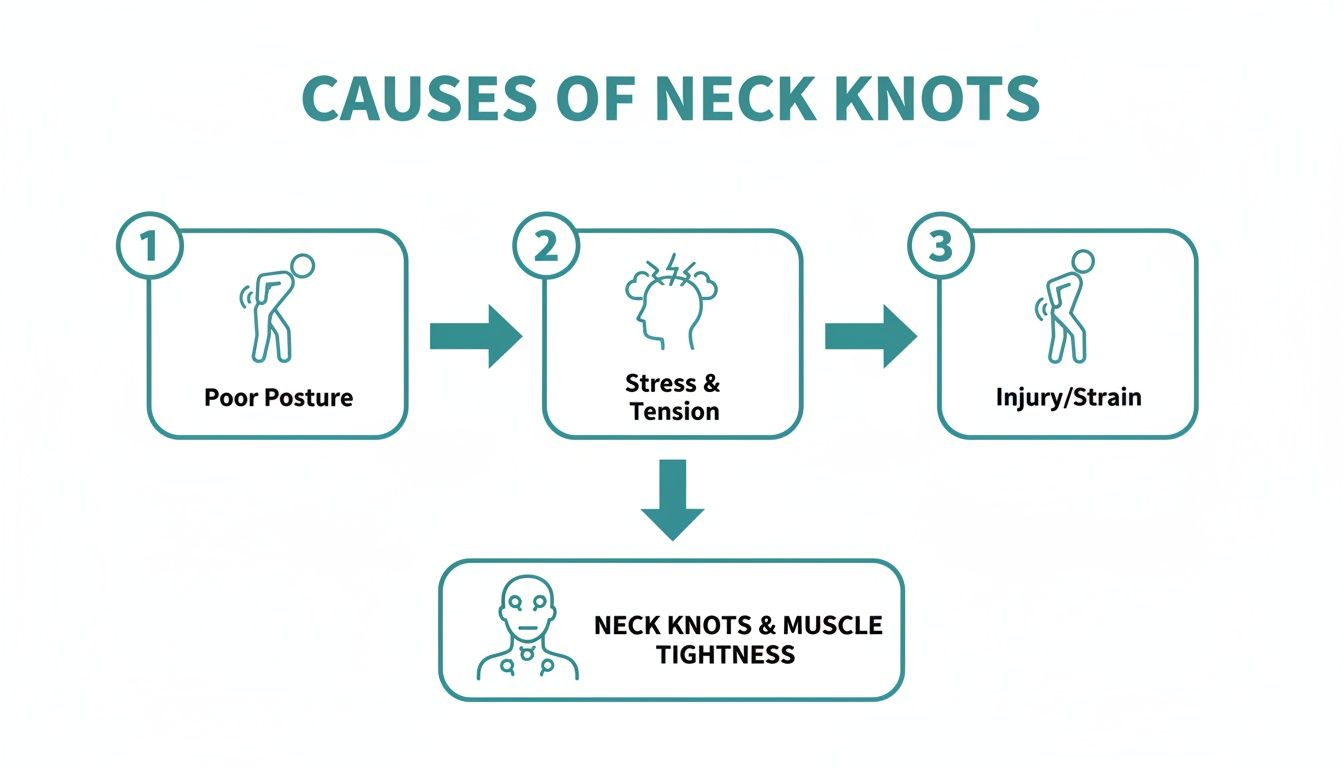
It’s a clear visual reminder of why being mindful of our daily habits is such a crucial part of prevention.
The Soothing Power of Heat and Self-Massage
Never underestimate the power of warmth for aching muscles. Applying gentle heat is a simple way to coax tight muscles into relaxing. A warm compress, a heating pad on a low setting, or even a warm shower can boost blood flow to the sore spot, helping those tense fibres to release. Aim for about 15-20 minutes of heat at a time.
You can also try a little self-massage. Using the fingertips of the hand opposite the sore side, gently explore the area on your neck or shoulder. When you find that specific tender spot—the knot—apply gentle, steady pressure. Hold that pressure for 30-60 seconds and focus on taking deep, slow breaths. These techniques complement professional Hydrotherapy applications well.
The table below summarizes these and other safe at-home strategies. They are designed to be accessible and easy to perform, providing a toolkit for managing neck discomfort between professional treatments.
Safe At-Home Relief Strategies for Neck Knots
Technique | How It Helps | Best Practice Tip |
|---|---|---|
Gentle Heat Therapy | Increases blood flow and relaxes muscle fibres, making them more pliable. | Use a heating pad on low or a warm, moist towel for 15-20 minutes. Avoid direct skin contact to prevent burns. |
Gentle Stretching | Lengthens tight muscles and improves the range of motion in the neck. | Hold each stretch for 15-20 seconds without bouncing. Breathe deeply and never push into pain. |
Self-Massage | Applies direct pressure to trigger points, helping them release. | Use your fingertips to apply sustained, gentle pressure to the knot for 30-60 seconds. |
Mindful Movement | Encourages gentle motion, preventing stiffness from setting in. | Slowly and deliberately turn your head from side to side or nod gently. Keep movements small and pain-free. |
These techniques empower you to take an active role in your own comfort and well-being.
Remember, the goal of at-home care is gentle relief, not forceful correction. Listen closely to what your body is telling you. If a movement or pressure increases pain, ease up immediately.
For those looking to complement these manual techniques, some people find that using a floss band can provide targeted muscle compression to help improve mobility. Simple tools like this can be a great way to manage discomfort between your professional massage therapy sessions.
The Role Of Professional Massage Therapy
While at-home techniques are a fantastic way to manage everyday tension, some knots are just too deep, stubborn, or complicated to handle on your own. If you find that gentle stretching and self-massage aren't cutting it, that's often a sign you need a more skilled approach. This is exactly where a Registered Massage Therapist (RMT) comes in.
An RMT like Taylor brings a deep understanding of anatomy and physiology to the table—literally. They can pinpoint the exact location of a trigger point, trace its referred pain patterns, and use precise techniques to coax the muscle into finally letting go. It's so much more than just rubbing a sore spot; it’s a clinical, targeted treatment for your muscle health.
Advanced Techniques for Stubborn Knots
A professional session can include treatments that are pretty much impossible to do by yourself. These methods get to the root cause of the knot, offering relief that's more significant and lasts much longer.
Trigger Point Release: This involves applying direct, steady pressure to the knot. The idea is to interrupt the pain feedback loop and boost blood flow, which helps flush out waste products and allows those tightly-wound muscle fibres to relax and lengthen.
Myofascial Release: Sometimes the issue isn't just the muscle itself, but the fascia—the thin, web-like connective tissue that surrounds it. Myofascial release uses slow, gentle pressure to stretch and loosen this tissue, which can dramatically improve mobility and reduce pain.
Deep Tissue Massage: For those chronic knots buried deep within the muscle, this technique uses firm pressure and slow strokes to reach those deeper layers. It's incredibly effective at breaking up old scar tissue and adhesions that cause long-term stiffness.
The Convenience of Mobile RMT Services
Let's be honest, getting to a clinic can be a major hurdle, especially for seniors or anyone with mobility challenges. In the Peel Region, where over 65% of adults aged 65 and older report chronic muscle and joint issues like neck knots, easy access to care is crucial. A mobile RMT service brings that professional care right to your front door in Brampton, Mississauga, or Oakville, taking the stress of travel completely out of the equation.
Seeking professional help is an investment in your well-being. It acknowledges that some issues require an expert's touch to break the cycle of chronic pain and restore proper function.
For a deeper dive into the benefits, you might be interested in our guide on what is registered massage therapy and how it can help you. Ultimately, when at-home care isn't enough, calling in a professional is the most direct and effective path to resolving those persistent knots for good.
Simple Lifestyle Changes To Prevent Neck Knots
The old saying, "an ounce of prevention is worth a pound of cure," couldn't be more true when it comes to neck knots. The best way to deal with that nagging pain is to stop it from starting in the first place. By making a few small, mindful tweaks to your daily routine, you can dramatically cut down on the strain that builds up into tense, painful muscles.
It all starts with your posture. This is probably the single biggest change you can make. Whether you’re working at a desk in an Etobicoke office or just reading in your favourite armchair in Caledon, how you sit matters. Try to keep your computer screen at eye level so you’re not constantly craning your neck forward. Make sure your chair supports the natural curve of your lower back, and plant your feet firmly on the floor. It’s all about creating a stable, aligned foundation for your body.
Integrate Movement and Mindfulness
Sitting for too long is the enemy of a happy neck. Your muscles get stiff and lock up. The solution? Think of it as taking regular “movement snacks” throughout the day. You don't need to block off an hour for a workout. Just get up every 30 minutes or so. Reach for the ceiling, do a few gentle neck rolls, or simply walk around the room. These little breaks keep everything loose and prevent tension from settling in. For more ideas, take a look at our guide on 8 essential mobility exercises for seniors.
Stress is also a huge culprit. When we're stressed, our shoulders have a sneaky habit of creeping up towards our ears, and often we don't even realize it's happening. A fantastic way to combat this is with simple deep breathing. A few times a day, just pause. Inhale slowly through your nose and feel your belly expand, then exhale slowly through your mouth. This tiny act can reset your nervous system and signal those tight shoulder muscles to finally let go. Our Energy healing service can also help manage stress.
Protecting Caregivers and Improving Sleep
Caregivers, in particular, face physical challenges that put them at a much higher risk for neck knots. Using proper body mechanics isn't just a good idea—it's essential for your own well-being. When you're helping a loved one move, always bend with your knees, not your back. Keep your back straight and hold them close to you. This forces you to use your strong core muscles instead of straining your neck and shoulders. It’s no surprise that insights from Ontario Health Peel Region show 52% of family caregivers in the west GTA end up with secondary neck knots from stress and improper lifting.
Finally, let's talk about sleep. You can do everything right during the day, but an unsupportive pillow can undo all your hard work overnight by forcing your neck into an awkward angle for hours. Your sleep setup is a critical piece of the puzzle. Making a simple change like choosing the best pillows for neck pain can make a world of difference, ensuring your head and neck stay perfectly aligned with the rest of your spine while you rest.
Book Your In-Home Massage In The GTA
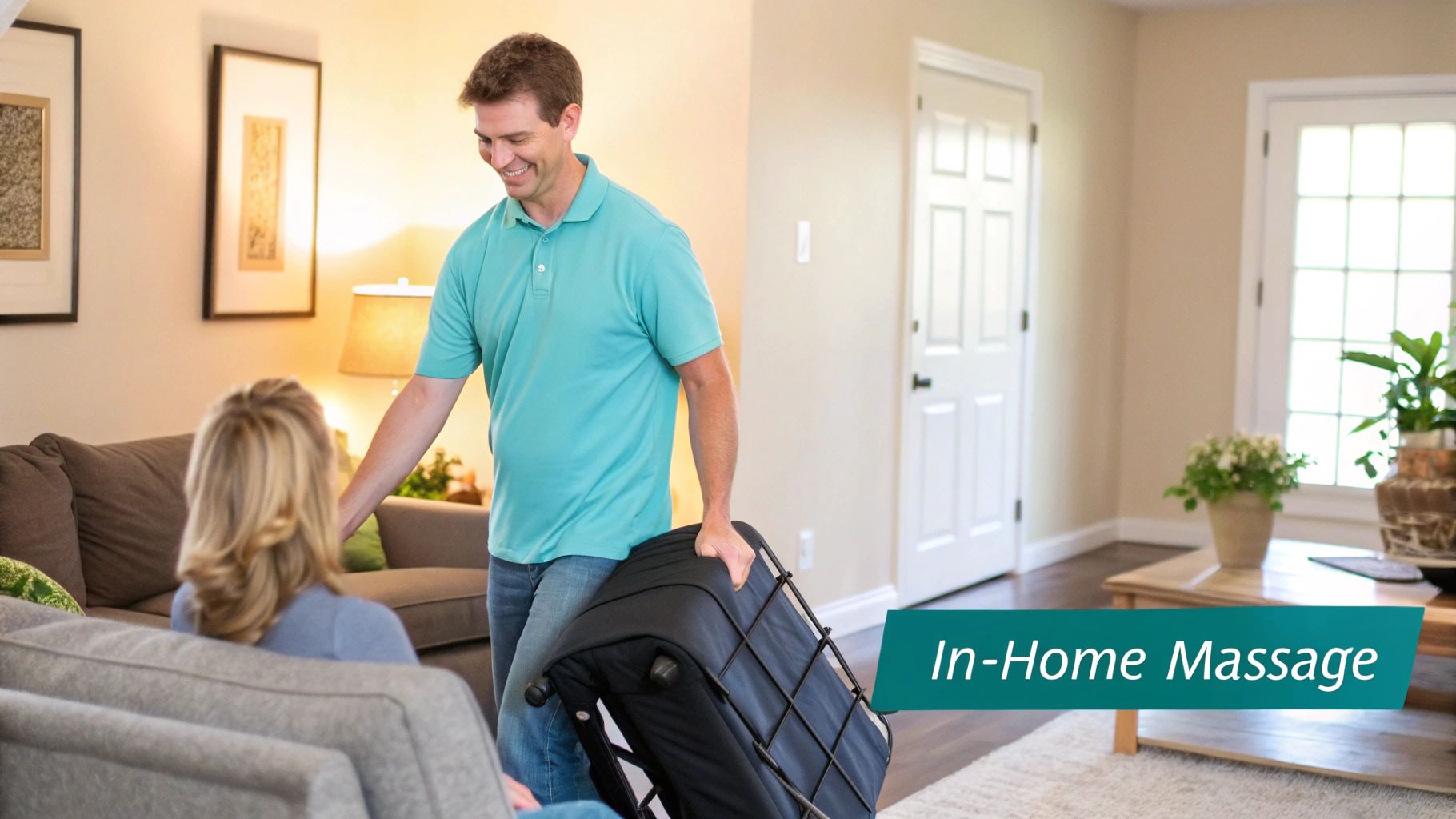
If you've had enough of those chronic neck knots and persistent pain running your day, the path to relief is simpler than you might think. Stillwaters Healing & Massage brings professional, therapeutic care right to your front door, taking the stress and hassle of travel completely out of the equation.
Our male Registered Massage Therapist, Taylor, offers compassionate, one-on-one treatments in the comfort and privacy of your own home, assisted living facility, or long-term care residence. It's a mobile service designed to meet you exactly where you are, making professional care both accessible and genuinely convenient.
Serving Communities Across The GTA
We’re proud to serve clients across a wide range of communities, making sure that top-tier massage therapy is always within reach. Our main service areas include:
Brampton
Toronto
Etobicoke
Oakville
Caledon
Orangeville
Mississauga
Milton
Halton
Guelph
Picture this: expert care for those painful knots on neck without having to deal with traffic, find parking, or arrange a ride. We aim to create a seamless, relaxing experience from the moment you book, so you can focus entirely on your healing and well-being. For a closer look at how it all works, check out your guide to massage at your home in the GTA.
Your comfort and health are our absolute priorities. By bringing the clinic to you, we help remove the barriers that might be stopping you from getting the consistent care needed to feel your best.
Whether you're dealing with tension from work, facing mobility challenges, or feeling the physical toll of caregiving, professional help can be a game-changer. Taylor specializes in techniques like Sports massage therapy, Joint mobilization, and Myofascial Release, which are incredibly effective for targeting and resolving those stubborn muscle knots.
It's time to invest in your well-being. To schedule your personalized in-home massage therapy session, please head over to our secure online booking page. Let us help you find lasting relief and get you back to living a life with less pain and more freedom.
Got Questions? We've Got Answers
It's completely normal to have a few questions before you book a massage, especially when you're dealing with stubborn neck pain. Let's clear up some of the most common ones we hear.
How Often Should I Get a Massage for Constant Neck Knots?
Honestly, there's no one-size-fits-all answer, but we can give you a pretty good roadmap. If you're struggling with neck knots that just won't quit, we often see the best results by starting with sessions once a week or every two weeks. This initial frequency gives us a real chance to get ahead of that deep, chronic tension.
Once things start to loosen up and you're feeling a lot better, many of our clients in the Brampton and Mississauga area find that a "maintenance" massage every 4-6 weeks is perfect. It helps keep those pesky knots from staging a comeback. Taylor will chat with you and figure out a schedule that makes sense for your body and your goals.
Is It Normal for Trigger Point Therapy to Hurt?
You might feel some discomfort when we're working on a really deep, stubborn knot—some people call it a "good hurt." But it should never feel sharp, searing, or unbearable. The whole point is to find relief, not to test your pain tolerance.
Our male RMT, Taylor, is trauma-informed and your comfort is always the top priority. We'll check in with you constantly to make sure the pressure feels productive, not painful. You should always be able to breathe easily right through it.
The secret to effective trigger point therapy is working with your body, not fighting against it. A deep, achy feeling often means we're making progress. Sharp pain, on the other hand, just makes your muscles guard and tense up—the exact opposite of what we want.
Can Massage Actually Help with Neck Pain from Arthritis?
Absolutely. While massage can't make the arthritis itself disappear, it can be a game-changer for managing the pain and stiffness that comes with it. We use gentle, soothing techniques to ease the muscle tension that builds up around sore joints.
By boosting circulation and calming inflammation in the neck and shoulder muscles, a good massage can significantly reduce your pain, help you move more freely, and just generally make your day-to-day life feel better.
Why Is a Mobile RMT a Good Option for Seniors?
Think of it this way: we take all the stress out of getting the care you need. Our mobile RMT service is a huge help for seniors because it completely eliminates the hassle of travelling to a clinic. We bring the full, professional massage experience right to your home, retirement community, or long-term care facility, whether you're in Oakville, Etobicoke, or nearby.
It’s the perfect solution for anyone with mobility challenges or chronic pain, or for those who simply feel more at ease in their own space. You get to relax from the moment we arrive to the moment we leave.
Ready to finally get some lasting relief from those nagging neck knots? Let Stillwaters Healing & Massage bring expert, compassionate care right to your door.


