


A Senior’s Guide to Sciatica Pain Massage
- tmcpnet
- Jan 4
- 14 min read
Sciatica is more than just back pain; it's that sharp, shooting sensation that can travel all the way from your lower back down your leg. For many people, especially seniors, that pain can be completely debilitating. The good news is that targeted therapeutic massage can offer real, lasting relief by focusing on the tight muscles that are often the root cause of the problem.
How Can Massage Actually Help with Sciatica?
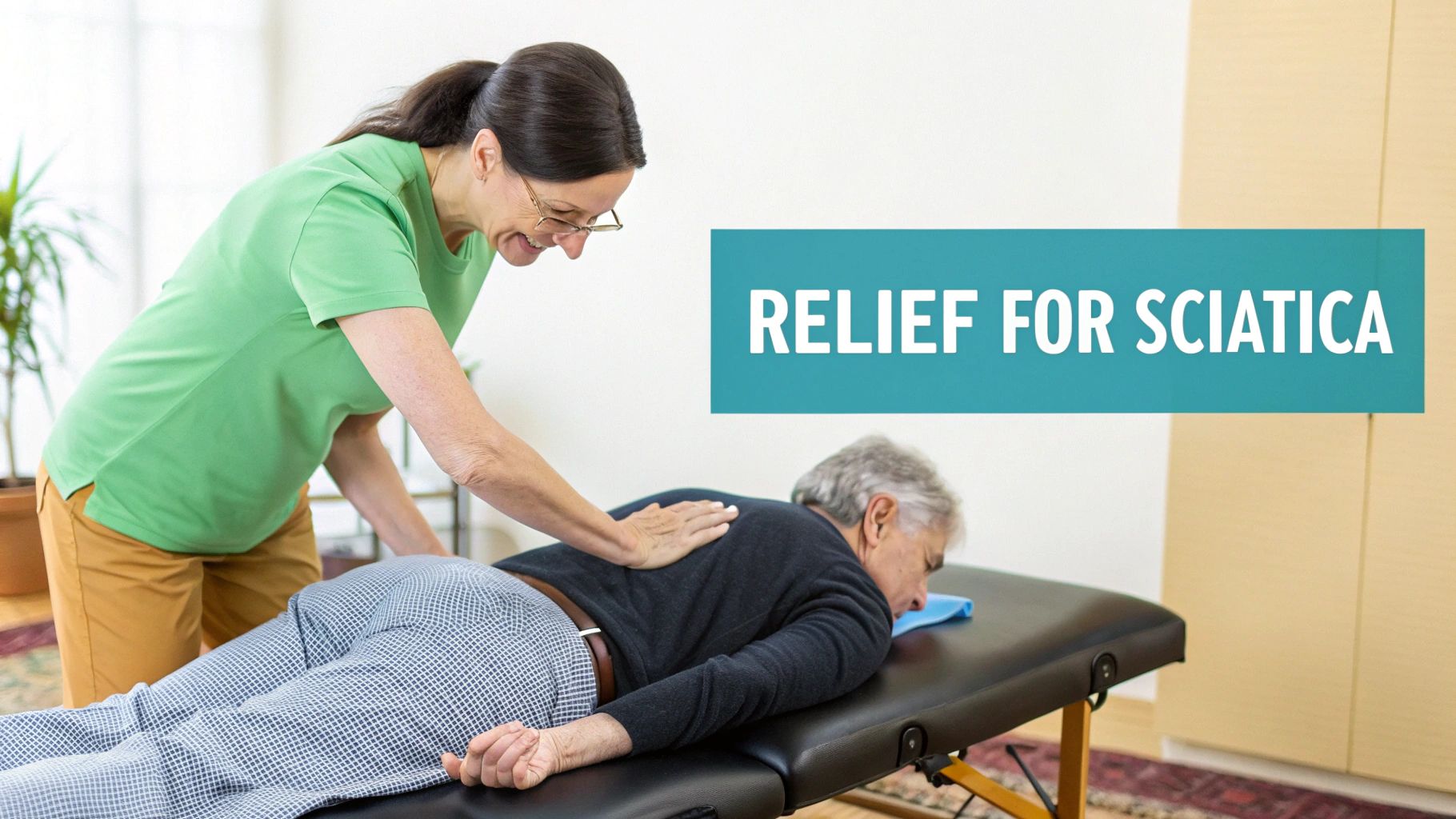
When you feel that unmistakable sciatic "zing," it’s usually because something is pressing on or irritating your sciatic nerve. It’s the longest nerve in your body, running from your lumbar spine, through your buttocks, and down the back of each leg. More often than not, the source of that pressure is muscular.
This is where a skilled Registered Massage Therapist (RMT) comes in. A sciatica pain massage isn't your typical relaxation treatment. It's a clinical, focused approach designed to get to the bottom of what’s causing that nerve compression in the first place.
The Muscles Behind the Pain
One of the most common culprits is the piriformis muscle, which is tucked away deep in your glutes. The sciatic nerve runs right under it—and for some people, it actually passes straight through it. If that muscle gets tight or inflamed from sitting too long, an old injury, or even just disuse, it can squeeze the nerve and trigger those classic sciatica symptoms.
A professional RMT like Taylor from Stillwaters Healing & Massage knows exactly how to work with the piriformis and other surrounding muscles. The goal isn't just to rub a sore spot; it’s to strategically release the muscular tension that’s causing all the trouble.
By improving circulation, reducing inflammation, and calming the entire nervous system, our RMT, Taylor, can significantly ease discomfort. Professional in-home massage is more than temporary comfort—it’s a foundational part of managing sciatic pain.
Specific Techniques for Real Relief
So, what does this look like in practice? Massage helps sciatica from a few different angles, all aimed at creating more space around the nerve and getting the surrounding tissues back to a healthy state.
Here’s a breakdown of how it works:
Releases Muscle Tension: Techniques like Deep Tissue Massage and Myofascial Release are perfect for softening and lengthening those tight, stubborn muscles in the lower back, glutes, and legs—especially the piriformis.
Improves Blood Flow: Getting the circulation going brings fresh oxygen and nutrients to the area. This is crucial for reducing inflammation and helping your body heal itself.
Reduces Nerve Compression: This is the most direct benefit. By releasing the muscles that are physically pinching the sciatic nerve, we can alleviate the source of the pain.
Calms the Nervous System: Therapeutic touch has a powerful effect on the nervous system, helping it switch from a stressed "fight-or-flight" mode to a "rest-and-recover" state. This simple shift can lower your perception of pain.
This comprehensive approach is incredibly effective. Sciatica is a nerve-compression issue that causes leg pain in an estimated 40% of adults over 60. For these individuals, studies show that techniques like deep tissue and myofascial release can cut pain by 58% after just six sessions. You can learn more about these findings on sciatic pain management.
For seniors in areas like Brampton, Toronto, Etobicoke, Oakville, and Caledon, having this specialized care come to you eliminates the stress and pain of travel. Taylor brings his expertise and equipment right to your home, ensuring the treatment is as convenient as it is effective. To get a better sense of the benefits, check out our guide on how massages help sciatica.
Ultimately, a professional massage for sciatica is a strategic therapy. It pinpoints the specific muscular issues contributing to your pain and provides a sustainable path toward better mobility and lasting comfort.
Important Safety Considerations for Seniors
A targeted massage can work wonders for sciatica, but safety has to be the number one priority. This is especially true when working with seniors, who often have other health considerations to keep in mind. A professional, therapeutic approach isn't just about knowing what to do—it's about knowing when to pause and bring in a doctor.
At Stillwaters Healing & Massage, your well-being is everything. Before a single technique is applied, our RMT, Taylor, goes through a detailed health intake. Think of it less as a formality and more as the foundation of your treatment. It's how we ensure every movement is perfectly adapted to you, creating a session that's not only effective but completely safe.
Red Flag Symptoms: When to See a Doctor Immediately
Sometimes, certain symptoms point to something more serious than typical sciatica. If you or your loved one experiences any of the following, it’s crucial to hold off on massage and get a medical evaluation right away.
Sudden, severe weakness in the leg or foot, sometimes called "foot drop."
Loss of bladder or bowel control. This can be a sign of cauda equina syndrome, a serious medical condition.
Numbness in the "saddle" area—that is, the inner thighs, groin, and buttocks.
Fever, chills, or unexplained weight loss that comes along with the back and leg pain.
These are considered medical emergencies. Massage is not the right tool here; the priority is to contact a healthcare provider immediately.
Health Conditions That Require Massage Modifications
For many seniors in Oakville, Etobicoke, Orangeville, and our neighbouring communities, living with chronic conditions is just a part of life. The good news is that a skilled RMT like Taylor can absolutely modify a sciatica massage to work around these conditions safely. The key is open communication.
Open communication is the cornerstone of safe and effective massage therapy. Always inform your RMT, Taylor, about your complete health history, including all diagnosed conditions and medications you are taking.
Here are a few common conditions that call for a modified approach:
Osteoporosis: With bones that are more brittle or have lower density, we need to use a much gentler touch. Deep pressure over the spine or ribs is a definite no-go to avoid any risk of fracture. Taylor will stick to broader, lighter strokes and concentrate on muscular release away from those vulnerable spots.
Blood Thinners (Anticoagulants): If you're on medications like warfarin or heparin, your risk of bruising is higher. Deep tissue work is generally off the table. Instead, the session will focus on Swedish massage, myofascial release, and other lighter methods.
Deep Vein Thrombosis (DVT): A history of blood clots means we strictly avoid massaging the legs. The risk of dislodging a clot is just too great. Taylor can still provide fantastic relief by focusing on the lower back and gluteal muscles without compromising your safety.
Uncontrolled High Blood Pressure: While massage is often great for lowering blood pressure, the session needs to be adapted. We'll use soothing, calming techniques to avoid any overstimulation.
Fall Risk: Stability is a huge factor when working with seniors. For caregivers and therapists alike, understanding a person's balance is vital. Resources on balance assessment tests for elderly individuals can offer some really helpful insights here.
Being mindful of these factors is how we provide care that is both comforting and responsible. To dive a little deeper, feel free to check out our guide on massage for seniors and what to expect. By having these important conversations, we make sure every session from Milton to Caledon is a safe, healing experience.
Getting Your Space Ready for a Relaxing Session
The best part of a mobile massage is that the relief comes right to your doorstep. Whether you're in a Brampton living room or a Guelph assisted living suite, creating a peaceful space for your treatment is simple and can make a huge difference in your experience. Your comfort is everything, and a little bit of prep work goes a long way.
Taylor brings all the professional gear—the table, fresh linens, lotion, the works. All you need to do is clear a little space where you can truly unwind. It doesn’t have to be massive; a space roughly 10 feet by 6 feet is usually perfect. This gives him enough room to set up the table and move around freely to work effectively.
Think about the vibe of the room. Simply dimming the lights, drawing the curtains, and setting the thermostat to a cozy temperature can instantly make a familiar room feel like a tranquil sanctuary. If you find gentle music relaxing, by all means, have some playing softly.
Finding the Right Position for Your Body
When you’re dealing with sciatica, certain positions—especially lying flat on your back—can be downright painful. That's completely expected, and we always work around it. The goal is to find a setup that eases the pressure and lets your body relax into the treatment.
We have a few go-to positions that work wonders for most people:
Side-Lying: This is often the gold standard for sciatica relief. We'll have you lie on your non-painful side, place a comfy pillow between your knees, and maybe another one to hug. This simple setup keeps your spine in a happy, neutral alignment and takes the pressure right off your lower back.
Pillow Support: If lying on your stomach is manageable, we can slide a pillow under your hips or abdomen. This creates a slight, gentle arch in your low back that can help decompress the nerve. A small pillow under the ankles also feels great and prevents any strain.
Seated or in a Wheelchair: For some folks, lying down just isn't in the cards. Taylor is a pro at adapting his massage techniques so you can get a full, effective treatment while staying seated in a comfortable armchair, recliner, or even your wheelchair.
The most important thing to remember is there's no single "right" way to be positioned. The best position is whatever feels most comfortable and pain-free for you. We'll spend time figuring that out together before we even start.
The Quick Chat Before We Begin
Those few minutes before the hands-on work begins are crucial. This is your chance to tell us exactly what’s going on with your body today. Sciatica is shifty; what felt okay last week might be a major trigger now.
Before Taylor starts, be ready to share:
Your Pain Level: On a scale of 1 to 10, where are you at? Is it a dull 3 or a sharp, radiating 7?
The "Hot Spots": Point out precisely where it hurts the most. Deep in the glute? Shooting down your calf?
Numbness or Tingling: Let him know if you're feeling any pins and needles or loss of sensation. This is key information for keeping the treatment safe and effective.
This open conversation is what allows us to tailor the session perfectly to your needs. From Halton to Mississauga, our promise is a respectful, personalized, and healing experience. For more tips on what to expect from an in-home visit, have a look at our ultimate guide to booking a massage at home service.
Specific Massage Techniques for Sciatic Nerve Relief
Once you're settled and comfortable, we can get down to the real work of easing that sciatica pain. A truly therapeutic massage for sciatica isn’t a one-size-fits-all routine. Instead, Taylor uses a blend of specialized techniques, each chosen to tackle the specific muscle and tissue issues that are causing your nerve pain. Every method serves a unique purpose, whether it's releasing tight connective tissue or deactivating those stubborn knots in your muscles.
This isn't just about general relaxation—it's a targeted clinical strategy. The whole point is to create more space around the sciatic nerve, calm down inflammation, and bring healthy movement back to your lower back and hips. Our RMT, Taylor, will skillfully mix and match these techniques based on what your body is telling him and your feedback during the session.
Before we dive in, setting the stage for comfort is key. A successful session always starts with a foundation of comfort and clear communication, which is our top priority for every client, whether in Brampton, Toronto, or beyond.

Our Therapeutic Services
Stillwaters Healing & Massage offers a wide range of modalities to provide comprehensive care tailored to your specific needs. Taylor may incorporate several of these into your sciatica treatment plan:
Swedish Massage: Gentle, flowing strokes to promote relaxation and improve circulation.
Deep Tissue Massage: Focused pressure to target the deeper layers of muscle and connective tissue.
Cupping Therapy: Uses suction to lift tissue, increase blood flow, and release tension.
Myofascial Release: Applies sustained pressure to release restrictions in the connective tissue (fascia).
Trigger Point Release: Direct pressure on "knots" to alleviate referred pain and muscle tightness.
Joint Mobilization: Gentle, passive movements to improve joint mobility and reduce stiffness.
Rehabilitation Massage: Aims to restore function and reduce pain after injury or surgery.
Hydrotherapy Applications: The use of heat or cold to reduce inflammation and soothe muscles.
Geriatric Massage: A gentle approach specifically adapted for the needs of older adults.
Sports Massage Therapy: Designed to address the needs of athletes, focusing on prevention and recovery.
Energy Healing: A holistic approach to balance the body's energy for overall well-being.
You can learn more about how myofascial release and trigger points are addressed in our detailed guide.
Here's some powerful proof from the field: A landmark study on 500 Canadian seniors found that rehabilitation massage cut sciatica episodes by an incredible 62%. When geriatric-focused cupping was added, it boosted flexibility by 40%. These numbers show just how much of a difference targeted, professional techniques can make.
By weaving these specialized approaches together, Taylor can provide a comprehensive massage that addresses your sciatica from multiple angles. Whether he’s visiting you in Mississauga, Caledon, or Guelph, the session is always shaped by your specific needs to give you the most effective and lasting relief possible.
Simple Stretches to Maintain Your Progress
That feeling of relief right after a massage is fantastic, but the real work starts in the days that follow. Consistent, gentle movement is what truly keeps the progress you’ve made and stops those sciatica flare-ups from creeping back. Think of these simple stretches as your daily tune-up—a small but powerful investment in your long-term comfort.
The idea here isn’t to push through pain. Instead, we want to gently coax some flexibility back into the muscles that crowd the sciatic nerve, like the hamstrings, the piriformis in your hip, and your lower back. When these muscles stay pliable, they're far less likely to tighten up and put the squeeze on that nerve.

Seated Stretches for Safety and Comfort
For many of us, getting down on the floor just isn't practical, and that's perfectly okay. You can get an incredibly effective stretch while sitting securely in a sturdy chair. The golden rule is to always listen to your body—move only until you feel a mild pull, never a sharp pain.
Seated Hamstring Stretch: Sit right at the edge of your chair. Extend one leg straight out in front of you with your heel resting on the floor. Now, keeping your back straight, hinge forward from your hips until you feel a gentle stretch along the back of your thigh. Hold it there for 20-30 seconds, then slowly come up and switch sides.
Seated Piriformis Stretch: While seated, cross the ankle of one leg over the opposite knee, making a "figure four" with your legs. For some, this position alone is enough of a stretch. To go a bit deeper, you can gently lean your torso forward. Hold for 20-30 seconds before swapping legs.
These seated options make daily stretching accessible to everyone, ensuring you can keep up the good work no matter your mobility level. If you're looking for more ideas, our guide on 8 essential mobility exercises for seniors in 2025 has a great collection.
Practical Self-Care to Complement Massage
Beyond stretching, a few other simple habits can make a huge difference in extending the benefits of your massage with Taylor and managing any lingering discomfort.
One of the easiest and most effective tools is gentle heat. Applying a warm pack or soaking in a warm bath for 15-20 minutes works wonders on tight, achy lower back and gluteal muscles. The warmth draws more blood to the area, helping to relax that muscular tension and soothe irritation.
Quick tip: Consistency trumps intensity every time. A few minutes of gentle stretching and a warm pack each day will do far more for you than one long, aggressive session once a week.
The Importance of Daily Movement
This might be the most crucial piece of advice: just keep moving. Prolonged sitting is one of the biggest culprits behind sciatica pain because it puts constant pressure on the lower back and piriformis muscle. It’s so important to get up and walk around for a few minutes every hour.
This doesn't mean you need to start training for a marathon. A short, slow walk down the hallway or a lap around the garden is perfect. That gentle activity gets your circulation going, lubricates the joints, and keeps your muscles from seizing up.
Incorporating the specific remedial exercises taught during your sessions is also incredibly powerful. Here in the Halton and Peel Regions, we’ve seen families watch their loved ones' balance improve by as much as 52% with these simple, guided movements. What's more, for sciatica specifically, studies have shown that myofascial therapy can cut hospital visits by 30% among seniors over 70.
By pairing the skilled, targeted work from your massage with these daily self-care practices, you’re creating a powerful, proactive strategy for managing sciatica. It puts you in the driver's seat of your own wellness, building resilience against pain and improving your quality of life right here in Brampton, Mississauga, and beyond.
Your Sciatica Massage Questions, Answered
It's completely normal to have questions before starting any new therapy, especially for something as persistent and frustrating as sciatica. You want to be sure this is the right move for you or your loved one. Let's walk through some of the most common questions we hear from clients across Brampton, Toronto, and the surrounding areas.
Our goal is to make sure you feel completely comfortable and clear on what to expect before Taylor even arrives at your door.
How Often Should I Get a Massage for Sciatica?
This is probably the number one question we get, and the honest answer is: it depends. The right frequency really hinges on whether you're dealing with a sudden, acute flare-up or managing a more chronic, long-term situation.
For an Acute Flare-Up: When the pain is sharp and intense, we need to be a bit more proactive. Taylor usually suggests a session once a week for the first 2-4 weeks. This helps us calm down the initial inflammation, release that severe muscle guarding, and break the pain cycle before it really sets in.
For Chronic Management: Once we've moved past that acute phase, the goal shifts to maintenance. For keeping that nagging, persistent sciatica at bay, a session every two to four weeks is often the sweet spot. It's just enough to prevent those muscles from seizing up again, preserving your mobility and keeping you comfortable.
Together, we'll figure out a plan that feels right for your body, your schedule, and how you're responding to the treatment.
Is a Massage for Sciatica Going to Be Painful?
Many people hear "therapeutic massage" and immediately think "pain." That's a common misconception. While we might encounter moments of discomfort—what many describe as a "good hurt" or a deep, satisfying ache—the session should never feel genuinely painful.
When Taylor is working on a stubborn trigger point or releasing a tight band of fascia, you’ll definitely feel it. But it should always feel productive and well within your personal comfort level.
Your comfort is our absolute priority. We can't stress this enough: we need to keep the lines of communication open. You are always in the driver's seat when it comes to pressure, and we encourage you to speak up at any point so we can adjust.
Is There a Chance Massage Could Make My Sciatica Worse?
When you’re in the hands of a licensed and experienced Registered Massage Therapist (RMT), it’s incredibly rare for a professional massage to worsen sciatica. An RMT like Taylor has a deep, practical understanding of the body's roadmap. He knows precisely which techniques are safe for nerve compression issues and, just as importantly, which areas to approach with caution or avoid altogether.
The real risk comes from someone who isn't properly trained and might apply aggressive, inappropriate techniques that could easily irritate the sciatic nerve. This is exactly why choosing a qualified professional who truly understands the nuances of sciatica is crucial for your safety and for getting real, lasting relief.
What if I Can't Lie Comfortably on a Massage Table?
This is a frequent concern, and it's absolutely no problem at all. In fact, this is where the flexibility of in-home mobile massage truly shines. We adapt to your space and your needs, not the other way around.
If lying flat on a table isn't an option for you, Taylor can provide a fantastic, effective treatment in whatever position feels best. Many of our clients in Etobicoke, Oakville, and Milton get their sciatica treatments while:
Lying on their side in bed, propped up with pillows for support.
Sitting comfortably in their favourite armchair or recliner.
Remaining seated in their wheelchair.
We'll find the setup that allows you to relax completely, which is essential for you to get the full benefit of the massage.
At Stillwaters Healing & Massage, our commitment is to provide care that is not only effective but also safe, compassionate, and built around you. If you’re ready to see how a specialized massage for sciatica can help you get back to living more comfortably, we invite you to book a session.


