


Massage Therapist vs Physiotherapist Ontario: When to Book In-Home RMT
Updated: Sep 13
Choosing a massage therapist vs a physiotherapist in Ontario is a booking decision—not a contest for a single “better” profession. This page focuses on when an in-home Registered Massage Therapist (RMT) visit is a reasonable next step, when physiotherapy is often the better first call, and how Stillwaters prioritizes Brampton and Peel for mobile care. It does not diagnose a condition or promise a cure.
Lean toward physiotherapy when you need a formal assessment after injury or surgery, progressive exercise rehab, or a care plan tied to a clinic pathway. Lean toward an RMT when soft-tissue comfort, tension management, or recovery support is the goal and a clinician has not told you to avoid massage. If symptoms are sudden, severe, neurological, or unexplained, seek medical assessment first.
Stillwaters offers in-home RMT with Brampton and Peel first. Other GTA addresses are considered only when travel time, practitioner availability, and the schedule allow. Review openings on the Stillwaters booking page or call (416) 706-5748.
For a deeper scope contrast (training and roles), see Physiotherapy vs Massage Therapy: RMT vs PT Scope. For how mobile visits work across the region, see Home Massage Therapy in the GTA.
Understanding the Core Differences in Care
Picking the right professional is your first step toward getting back on your feet. While both RMTs and PTs are vital to our health, their training, what they're allowed to do, and their treatment methods are quite different because they're designed to help with different problems. Getting a handle on these distinctions will help you make a smart choice and get the care that’s right for you.
For many of us in places like Brampton, Mississauga, and Etobicoke, the decision really boils down to this: are you looking for proactive wellness and pain management, or do you need reactive rehabilitation? One is focused on the body's soft tissues, while the other takes a broader look at your overall physical function and mobility.
A Quick Comparison
To make things even clearer, here’s a table that breaks down the fundamental differences between what an RMT and a physiotherapist bring to the table. This should help you quickly figure out which professional is the better fit for your health goals, whether you're in Oakville or Guelph.
Key Differences RMT vs Physiotherapist
Aspect | Registered Massage Therapist (RMT) | Physiotherapist (PT) |
|---|---|---|
Primary Focus | Manipulation of muscles and soft tissues to alleviate pain, tension, and stress. | Diagnosis, treatment, and prevention of movement dysfunction and physical injury. |
Main Goal | Improve circulation, reduce muscle soreness, enhance relaxation, and manage chronic pain symptoms. | Restore mobility, strength, and function after an injury, surgery, or due to a medical condition. |
Common Techniques | Swedish massage, deep tissue, myofascial release, trigger point therapy, cupping, joint mobilization. | Therapeutic exercises, manual therapy, modalities (ultrasound, TENS), and functional training. |
Typical Conditions | Chronic back pain, arthritis stiffness, stress, headaches, muscle strains, and general wellness. | Post-surgical rehabilitation, sports injuries, neurological conditions (e.g., stroke), and acute joint sprains. |
This table gives you a great at-a-glance view, but sometimes a simple analogy helps.
An easy way to think about it is this: An RMT is a specialist in muscular and soft tissue health, focusing on symptom relief and wellness. A PT is a movement specialist, focused on diagnosing conditions and rehabilitating function.
At the end of the day, knowing who to book with comes down to what you need right now. If you're looking for relief from nagging muscle aches or want to manage the physical toll of stress, the hands-on approach of an RMT is probably your best bet. If you need help finding a qualified professional, our guide on how to find a registered massage therapist in your area has some great tips.
Training and Scope: What Sets RMTs and PTs Apart?
When you're trying to decide between a massage therapist and a physiotherapist, one of the most helpful things to look at is how they're trained. Their education is what really defines what they can do for you, how they're regulated in Ontario, and the kind of care they're qualified to give.
A Registered Massage Therapist (RMT) in Ontario goes through a very focused diploma program, usually lasting anywhere from 18 to 36 months. This training is all about getting hands-on with the body’s soft tissues—that’s your muscles, tendons, ligaments, and the connective tissue called fascia. Their curriculum is packed with anatomy, physiology, and a whole toolbox of manual techniques, making them true experts in therapeutic touch.
On the other hand, a physiotherapist (PT) takes a much longer academic road. They start with an undergraduate degree and then go on to earn a Master's degree in Physiotherapy. This university education gives them a deep understanding of diagnostics, the mechanics of body movement (biomechanics), and a wide range of evidence-based rehabilitation strategies.
A Quick Look at Their Educational Paths
The training they receive really shapes their day-to-day work. An RMT's diploma gives them an incredible set of specialized manual skills, while a PT's degree provides the broad framework needed to diagnose and create complex recovery plans.
Registered Massage Therapist (RMT): They earn a college diploma that zeroes in on hands-on methods like Swedish massage, Myofascial release, and Trigger point therapy. In Ontario, they’re regulated by the College of Massage Therapists of Ontario (CMTO).
Physiotherapist (PT): They hold a Master's degree from a university, which trains them to diagnose conditions, build comprehensive rehabilitation plans, and use tools like therapeutic exercise and ultrasound. Their governing body is the College of Physiotherapists of Ontario.
This is a really important distinction for families in places like Etobicoke and Oakville. If you're dealing with stubborn muscle pain or chronic tension, an RMT is your specialist. But if you've had an injury and need someone to figure out what's wrong and guide you through a full recovery, a PT is the right choice.
What They’re Actually Allowed to Do
The biggest difference comes down to their legally defined scope of practice. A physiotherapist is considered a primary healthcare provider, which gives them the authority to diagnose conditions. This is a "controlled act," meaning they can officially identify the root cause of your pain or mobility issue. An RMT can't do that.
An RMT's role is incredibly therapeutic, just not diagnostic. Their expertise lies in assessing and treating the body's soft tissues and joints. They use specific, targeted techniques to manage pain, help you move better, and just generally improve your well-being. To get a better sense of all the techniques they use, you can learn more about what registered massage therapy involves in our guide.
Here's the bottom line: A physiotherapist diagnoses and rehabilitates. They focus on getting your function back after an injury or illness. A Registered Massage Therapist treats and manages your symptoms, focusing on the health of your muscles and connective tissues to bring relief and improve your quality of life.
This difference also shows up in their work environments. Research on work-related musculoskeletal disorders on PMC highlights that massage therapists often face more physical strain than physiotherapists. PTs, with their university training, frequently use specialized equipment and assistants to lessen the physical load.
For seniors and their caregivers in the Halton region, this has an interesting ripple effect. The shorter training path for RMTs means there's a larger workforce available for mobile services. This resilience gap really underscores the dedication of RMTs, making them perfectly suited for geriatric clients in assisted living who can benefit from treatments like Geriatric massage and Hydrotherapy applications right in their own homes. It’s what makes dedicated RMTs like our therapist, Taylor, who serves communities from Milton to Orangeville, so essential for providing accessible, in-home care.
A Look at Treatment Techniques and Practical Approaches
Trying to choose between a massage therapist and a physiotherapist? One of the best ways to decide is to understand what actually happens during a session. While both are focused on making you feel and move better, their methods and the overall flow of a visit are quite different.
A session with a Registered Massage Therapist (RMT) is all about skilled, hands-on work on your body's soft tissues. The whole experience is designed to be therapeutic and restorative. A physiotherapy appointment, on the other hand, often feels more like a coaching session, blending hands-on treatment with active exercises and education.
The RMT’s Therapeutic Toolkit
The real strength of an RMT lies in their extensive hands-on skills. They have a whole toolbox of techniques they can draw from, whether you need gentle relaxation or work on a deep, stubborn knot.
Here are a few of the core techniques you might encounter:
Swedish Massage: This is what most people picture when they think of massage. It involves long, flowing strokes that boost circulation and help you unwind. It’s fantastic for general stress and tired muscles.
Deep Tissue Massage: For more persistent issues, this technique gets into the deeper layers of muscle and connective tissue. It's more intense and is specifically used to break down scar tissue and release those chronic muscle knots. If you're dealing with stubborn aches, you can learn more about how our deep tissue massage therapy can provide relief.
Myofascial Release and Trigger Point Release: This is a more targeted approach. It focuses on releasing tightness in the fascia—the web of connective tissue covering your muscles—and deactivating specific trigger points that can send pain signals to other parts of your body.
Cupping Therapy: This technique uses suction cups to lift tissue, improve blood flow, and release tension in the muscles and fascia.
Joint Mobilization: Using gentle, passive movements, the therapist can help increase a joint's range of motion and ease stiffness. This is a game-changer for anyone dealing with the discomfort of arthritis.
The main thing to remember is that an RMT session is largely a passive experience for you. Your job is simply to relax on the table and let the therapist work on your soft tissues to get the desired result.
The Physiotherapist's Broader Approach
A physiotherapist's toolkit goes well beyond the treatment table. While they certainly use hands-on techniques, their primary goal is to get you actively involved in your own recovery. They want to give you the knowledge and tools to manage your condition for the long haul.
A PT’s methods often combine a few key elements:
Therapeutic Exercise Prescription: This is the heart and soul of physiotherapy. They’ll create a customized plan of stretches, strengthening exercises, and stability work to correct imbalances and help injured areas heal properly.
Manual Therapy: Just like an RMT, a physio uses hands-on techniques. However, they typically use them to prepare the body for the exercises to come, making them more effective.
Modalities: Physiotherapists might also use tools like ultrasound, TENS (transcutaneous electrical nerve stimulation) machines, or simple heat and ice packs to help manage pain and inflammation.
Functional Training: This is all about getting you back to your daily life safely. A PT can help you re-learn how to do everyday things, from walking with a better gait to lifting groceries without straining your back.
Let's look at two real-world examples. An older adult in Orangeville dealing with stiff, arthritic hands would get immense relief from an RMT using joint mobilization to gently improve flexibility. But for someone in Mississauga recovering from hip replacement surgery, a physiotherapist is the clear choice. They would provide a structured plan of strengthening exercises aimed at rebuilding the strength and confidence needed to walk normally again.
Ultimately, the RMT helps manage symptoms, while the PT works to rebuild function.
Matching Your Condition to the Right Professional
When you're dealing with pain or stiffness, trying to decide between a massage therapist and a physiotherapist can be confusing. It really boils down to one key question: Are you looking to manage ongoing symptoms and improve your quality of life, or do you need help recovering function after a specific injury or event?
Getting this right from the start means you're investing your time and energy into the most effective care for your needs. For anyone living in communities like Halton or Guelph, understanding this distinction is the first step toward feeling better.
This flowchart lays out the different paths nicely, showing how RMTs focus on wellness and symptom management, while physiotherapists target functional rehabilitation.
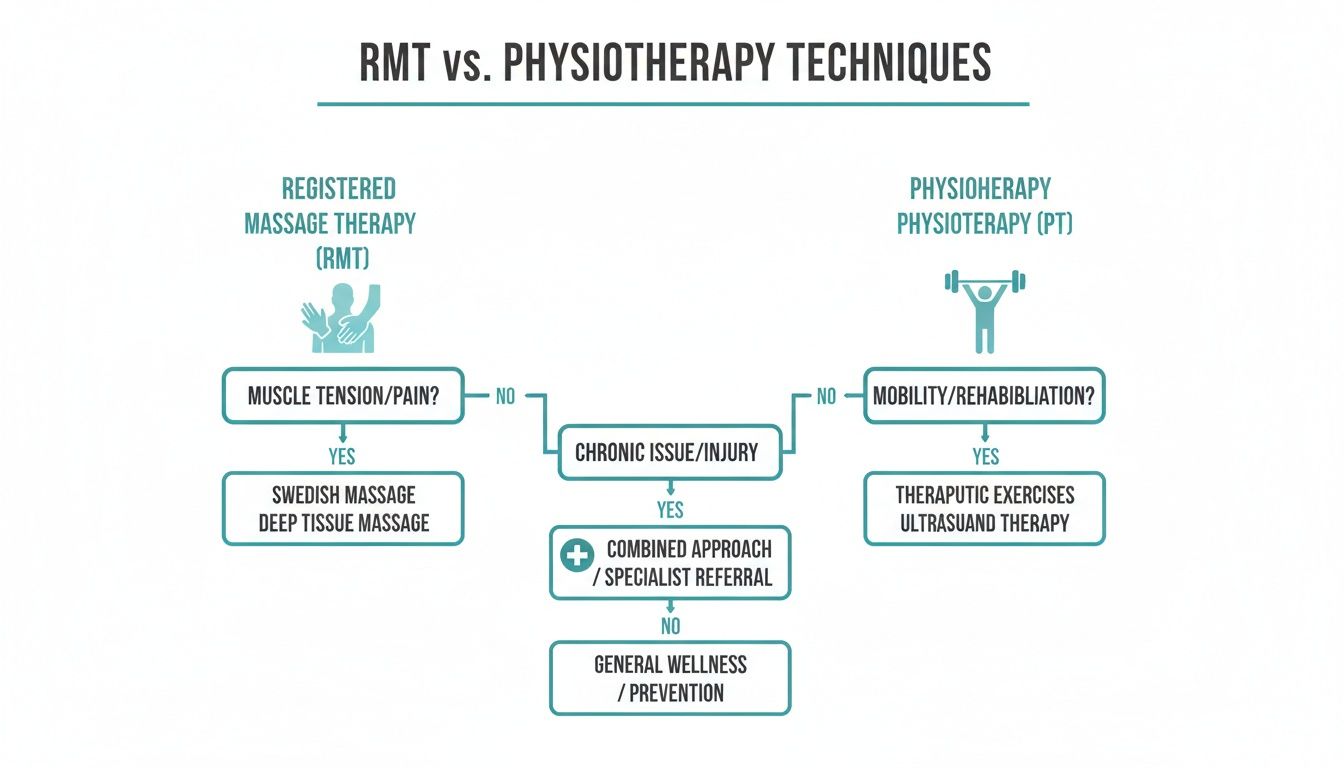
As you can see, RMTs primarily use hands-on techniques like Swedish or deep tissue massage. Physiotherapists, on the other hand, build their treatment plans around active approaches, such as prescribed exercises and movement retraining.
When to See a Registered Massage Therapist
A Registered Massage Therapist (RMT) is your go-to professional when your main goal is to manage symptoms, find relief from pain, and just generally feel better day-to-day. Their expertise is centred on the body's soft tissues—muscles, tendons, and ligaments.
It's a great idea to book an in-home session with an RMT for conditions like:
Chronic Muscle Tension and Stiffness: If you're constantly battling tightness in your neck, shoulders, or back from daily life or posture, an RMT can work wonders.
Arthritis Pain Management: For older adults, massage therapy is an incredibly helpful way to ease the joint stiffness and muscle aches that come with arthritis, making movement more comfortable.
Stress and Anxiety Reduction: The simple power of therapeutic touch from an RMT can help quiet the nervous system, lower stress hormones, and leave you feeling deeply relaxed. We even offer Energy healing for a holistic approach.
General Aches and Pains: For that non-specific soreness that comes from a bit of overexertion or just the realities of aging, massage helps boost circulation and soothe tired muscles.
Mobile massage services are especially valuable here. Having an expert therapist come to your home in Brampton or Toronto takes the hassle of travel out of the equation, making it much easier to get consistent, effective care.
When to See a Physiotherapist
A physiotherapist is the right choice when you need a formal diagnosis and a structured, active plan to get your body working properly again. They specialize in rehabilitation after an injury, surgery, or illness has impacted your physical abilities.
You should seek out a physiotherapist in situations such as:
Acute Injuries: If you've just sprained an ankle, pulled a muscle, or hurt your back, a PT can assess the damage and lay out a clear plan for healing.
Post-Surgical Rehabilitation: After a procedure like a hip or knee replacement, a physiotherapist is absolutely essential. They guide you through the specific exercises needed to rebuild strength, balance, and mobility safely.
Neurological Conditions: For anyone recovering from a stroke or managing a condition like Parkinson's or Multiple Sclerosis, a PT is key to improving movement patterns and maintaining independence.
Loss of Function or Mobility: If you've noticed a sudden or worsening difficulty with walking, keeping your balance, or doing daily tasks, a physiotherapist can investigate the cause and work with you to restore your function.
In a nutshell: RMTs are experts at managing your symptoms to improve your daily comfort and quality of life. Physiotherapists are experts at diagnosing issues and rehabilitating function to get you back to where you were before.
Here in Ontario, this distinction is also reflected in how care is delivered. Economic factors and different training pathways often make it easier for RMTs to provide flexible, mobile services that are perfect for seniors. The demand is certainly there; Job Bank Canada forecasts strong growth for RMTs, and over 35% of Canadians used massage last year for issues like chronic pain—a trend that's especially noticeable in the Halton region.
To dive deeper into this topic, take a look at our guide on the key differences between a physiotherapist and a massage therapist and find out who benefits most from each type of care.
The Benefits of In-Home Massage Therapy for Seniors
For many older adults and anyone with mobility issues, the choice between a massage therapist and a physiotherapist often comes down to a very practical question: who can come to me? While both professionals offer incredible benefits, getting consistent, high-quality care without the ordeal of travel can make all the difference. This is precisely where in-home Registered Massage Therapy (RMT) truly stands out, turning essential healthcare from a logistical headache into a comfortable part of your routine.
Think about it—eliminating the drive to a clinic in Brampton or sitting in traffic coming from Caledon removes a huge barrier. For an older adult managing chronic pain or a family member juggling appointments, the energy saved is enormous. Instead of navigating transportation, waiting rooms, and unfamiliar settings, the healing starts right in the comfort and safety of home.
Enhancing Daily Comfort and Quality of Life
The advantages of mobile massage are about so much more than just convenience. For seniors, regular therapeutic touch directly addresses many physical and emotional challenges that come with aging, making it a cornerstone of a well-rounded care plan.
Managing Chronic Pain: Conditions like arthritis often bring persistent joint stiffness and muscle aches. An in-home massage that incorporates techniques like joint mobilization and Swedish massage can help ease inflammation and improve flexibility, offering real, tangible relief.
Reducing Anxiety and Improving Sleep: The simple act of gentle, professional touch from an RMT can significantly lower stress levels, especially for those in long-term care or assisted living. This calming effect often translates directly to better sleep, which is fundamental to good health.
Easing Muscle Stiffness: Neurological conditions such as Parkinson's can cause severe muscle rigidity. Targeted approaches like myofascial release work to maintain tissue pliability, making everyday movements less of a struggle.
Improving Circulation: For those with limited mobility, Geriatric massage helps to stimulate blood flow, which is vital for tissue health and overall well-being.
The true value of in-home massage therapy for seniors lies in its proactive, wellness-oriented approach. It’s not just about reacting to symptoms, but about consistently enhancing comfort, preserving mobility, and elevating day-to-day quality of life.
Greater Accessibility in Ontario
Opting for an RMT for in-home care is also a practical choice, backed by the sheer number of professionals in our area. Here in Ontario, registered massage therapists are far more numerous than physiotherapists. The province has approximately 16,100 RMTs compared to about 7,454 physiotherapists, meaning there's a much larger pool of practitioners available to provide flexible, mobile services. You can see more data on Canada's physiotherapy workforce on physiotherapy.ca.
This numerical advantage simply makes it easier to find care. For families in Mississauga, Milton, or Guelph, it means scheduling consistent, professional care with an RMT is often much more straightforward. The focus on proactive wellness, paired with the unmatched convenience of at-home service, makes it an ideal solution for maintaining health and independence.
Ultimately, bringing expert care directly to you supports not only the person receiving the treatment but their entire support network. To learn more about how these services are specifically adapted for older adults, take a look at our dedicated guide on massage therapy for seniors and in-home care.
How Both Professions Work Together for Better Health
When it comes to your health, it's rarely an "either/or" situation. Choosing between a massage therapist and a physiotherapist is a perfect example. The best results often come from a collaborative approach, where both professionals bring their unique skills to the table. Think of them as a team working for you, not as two separate options.
This synergy is a game-changer, especially for complex health issues. The physiotherapist handles the diagnosis and creates a plan for rehabilitation, while the Registered Massage Therapist (RMT) zeroes in on the soft tissue problems—the pain, stiffness, and tension—that almost always come with an injury or chronic condition. Together, they build a far more complete and effective care plan.

A Practical Example of Team-Based Care
Let's picture someone in Oakville who is recovering from a bad fall. Here’s how their combined care journey might unfold:
The Physiotherapist's Role: First up is the physiotherapist. They'll assess the injury, figure out the extent of the damage, and design a structured rehabilitation program. The focus will be on specific exercises to rebuild strength, improve balance, and get the person moving safely again.
The RMT's Role: As the patient starts their physio exercises, they're likely going to feel muscle soreness, swelling, and a lot of tension in other parts of their body. That's because healthy muscles often overcompensate to protect an injured area. This is exactly where an RMT like our therapist, Taylor, steps in.
Integrated Treatment: Taylor can provide in-home sessions in Oakville, using specialized techniques like rehabilitation massage and myofascial release to calm the pain and reduce inflammation. When the muscles are less sore and tight, it becomes much easier for the patient to perform their physiotherapy exercises effectively, which can speed up the whole recovery process.
In this scenario, the RMT’s work doesn't just feel good; it directly supports the physiotherapist's goals. Managing pain and improving tissue health helps the patient get the absolute most out of every single rehab session.
The Power of a Combined Approach
This team-based model works for so much more than just acute injuries. For instance, a person in Mississauga dealing with chronic arthritis might get exercises from their physiotherapist to keep their joints mobile. At the same time, an RMT could provide regular in-home massages to ease stiffness and manage the pain from flare-ups.
Integrating different therapies provides a more comprehensive and person-centred approach to health. When a physiotherapist and a massage therapist communicate and work in tandem, they address both the root cause of dysfunction and the associated symptoms, leading to faster, more sustainable results.
This kind of teamwork ensures all angles of a person's health are covered. The structural and functional work of physiotherapy is powerfully boosted by the pain-relieving, restorative work of massage therapy. For families all across the GTA, from Brampton to Milton, knowing this partnership is possible helps you build the strongest healthcare team for your needs.
Ready to see how in-home massage can fit into your wellness plan? You can easily book a mobile massage session online and experience professional, personalized care right in your own home.
Frequently Asked Questions
When you're trying to decide between a massage therapist and a physiotherapist, a lot of practical questions come up. Let's clear up some common concerns for seniors and their families in the Greater Toronto Area so you can make a confident choice for your health.
Do I Need a Doctor's Referral for Treatment?
For the most part, no. In Ontario, you can book an appointment directly with a private Registered Massage Therapist or a physiotherapist without getting a referral from your doctor. This is great because it means you can get the care you need, right when you need it.
One thing to keep in mind, though, is your insurance plan. Many extended health benefits providers do require a doctor's note before they'll cover the cost. It's always a smart move to call your insurance company first to see what your plan requires. For our mobile massage services, you never need a referral to book with us.
Can Massage Therapy Complement My Physiotherapy?
Absolutely! They actually work together beautifully. Think of it this way: your physiotherapist is focused on restoring movement and function through targeted exercises and rehabilitation. At the same time, an RMT like our therapist Taylor can work on the related muscle pain, stiffness, and stress that almost always comes with an injury.
When muscles are tight and sore, it can be tough to do your physio exercises properly. Massage helps release that tension, making the tissues more pliable so you can get more out of your rehab. We often coordinate with our clients' other healthcare providers in communities like Caledon and Orangeville to make sure everyone is on the same page.
An integrated care plan is often the most effective. Massage therapy can prepare the body for physiotherapy by reducing pain and improving tissue pliability, while physiotherapy helps solidify long-term functional gains.
What Should I Expect During My First In-Home Session?
Your first mobile massage session with our male therapist, Taylor, is all about you. It starts with a friendly, confidential chat about your health history and what you're hoping to achieve. This conversation is key to creating a treatment plan that’s tailored specifically for you, whether you’re looking for pure relaxation or targeted therapeutic work.
Taylor brings everything needed right to your home in Brampton, Mississauga, or the surrounding areas—a professional massage table, fresh linens, and high-quality lotion. You’ll be professionally draped throughout the session, with only the area being treated uncovered. Our priority is to ensure you feel safe, comfortable, and respected in your own space.
How Do I Know Which Professional to See First?
Here’s a simple way to think about it. If you're dealing with a new, undiagnosed pain, have just had an accident, or need rehabilitation after surgery, start with a physiotherapist for a formal diagnosis and treatment plan. They are trained to assess and diagnose these kinds of acute issues.
On the other hand, if you're struggling with ongoing muscle tension, stress, arthritis aches, or general stiffness that affects your daily life, then an RMT is an excellent choice for managing those symptoms. Their hands-on approach is fantastic for improving your comfort and overall quality of life.
Ready to experience the benefits of professional, in-home massage therapy? Our registered male therapist, Taylor, brings compassionate and skilled care to your doorstep in Brampton, Toronto, Etobicoke, Oakville, Caledon, Orangeville, Mississauga, Milton, Halton, and Guelph. Book your personalized mobile session today.


