


Difference Between Physiotherapist and Massage Therapist: Who Benefits Most?
When you're trying to figure out who to see for an ache, pain, or injury, the choice between a physiotherapist and a massage therapist can be confusing. The core difference really boils down to one thing: their primary goal. A physiotherapist (PT) is a primary healthcare provider focused on diagnosing and treating injuries and movement disorders with a full-on rehabilitation plan. In contrast, a Registered Massage Therapist (RMT) is an expert in the hands-on manipulation of soft tissues, aiming to relieve pain, ease muscle tension, and improve overall wellness.
Understanding Core Roles: Physiotherapist vs. Massage Therapist
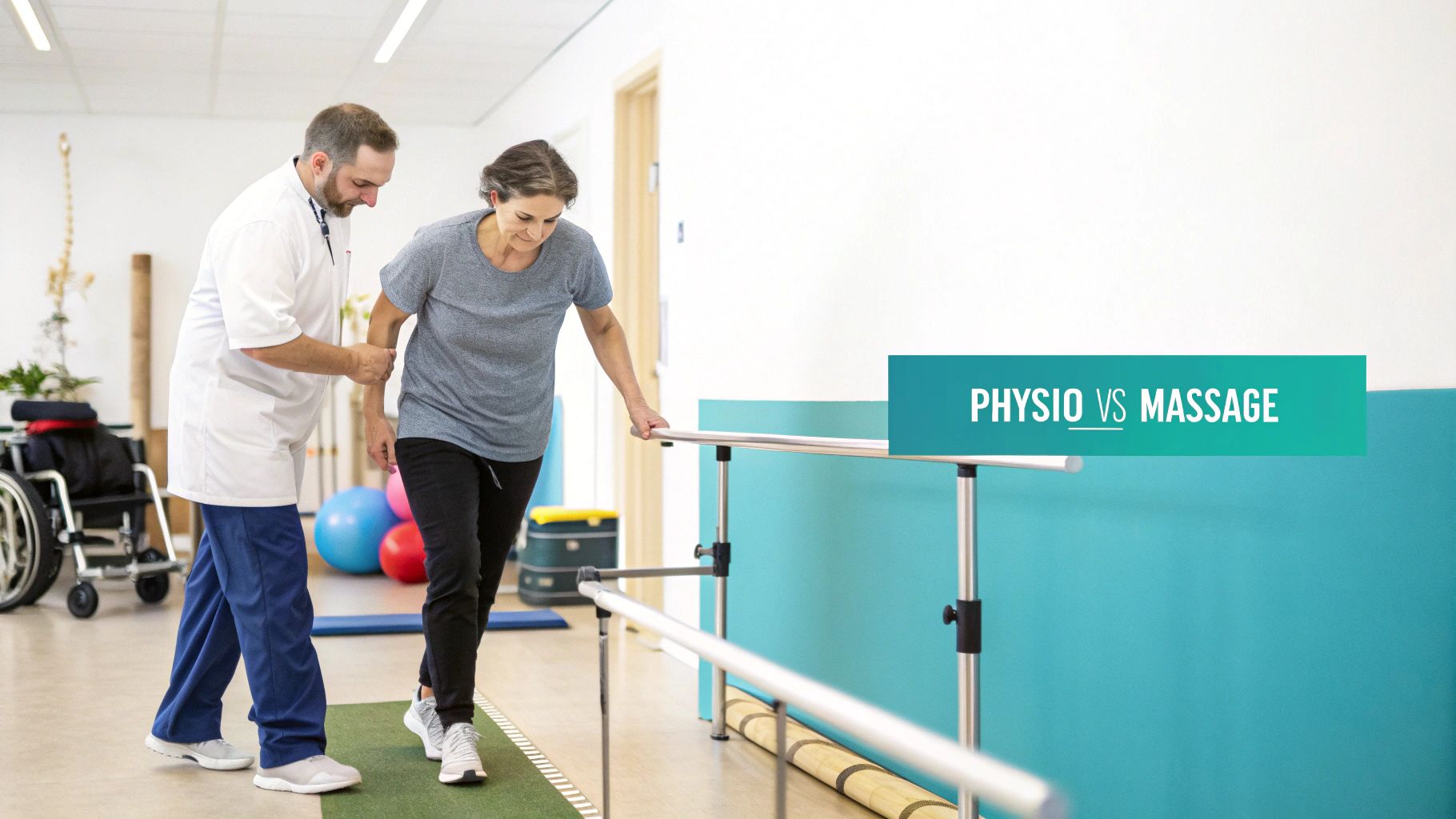
If you're dealing with pain or recovering from an injury in a place like Brampton or Toronto, it's easy to get lost in the options. Both physiotherapists and RMTs are crucial to our healthcare system, but they come at your health from different angles. Getting a handle on their distinct scopes of practice is the first step to making the best choice for your body.
A physiotherapist takes a diagnostic and rehabilitative approach. They’ll give you a thorough assessment to pinpoint the root cause of why you can't move properly, whether it’s from an accident, recent surgery, or a long-standing condition. Their treatment plans are built for the long haul, often including prescribed exercises, joint mobilization, and a heavy dose of education to get you moving again and keep you from re-injuring yourself.
An RMT, on the other hand, zeroes in on the health of your body’s soft tissues—your muscles, tendons, ligaments, and fascia. Using very specific manual techniques, they work to release tight muscles, get your circulation moving, and manage pain. This makes them the go-to experts for things like postural strain from sitting at a desk all day, stress-related tension, and general muscle soreness. If you want a deeper dive into their skills, our guide on what is an RMT massage is a great place to start.
Think of it this way: A physiotherapist is like a mechanic who diagnoses why your car is pulling to one side and rebuilds the alignment to make sure it runs straight for years. An RMT is the specialist who details the car, tuning up the engine's components to reduce friction and make it run smoothly right now.
For a quick reference, this table breaks down the main differences at a glance.
Physiotherapist vs. RMT at a Glance
Aspect | Physiotherapist (PT) | Registered Massage Therapist (RMT) |
|---|---|---|
Primary Focus | Diagnosing injuries and restoring functional movement. | Treating soft tissue to relieve pain and muscle tension. |
Scope of Practice | Broad; includes diagnosis, exercise prescription, and rehabilitation. | Focused; primarily hands-on manual therapy for muscles and connective tissues. |
Common Conditions | Post-surgical recovery, stroke rehabilitation, chronic disease management. | Muscle soreness, tension headaches, postural strain, stress relief. |
Approach | Diagnostic and rehabilitative; focuses on long-term recovery. | Therapeutic and wellness-focused; addresses immediate soft tissue health. |
Ultimately, both professionals offer incredible value, but knowing who to call for what will get you on the right path to recovery and wellness much faster.
Education and Professional Standards: A Tale of Two Paths
While both physiotherapists and massage therapists are dedicated to improving your well-being, their training and professional standards are worlds apart. Grasping these differences is the first step in understanding the unique value each brings to the table. Think of it this way: a physiotherapist’s education is a deep dive into university-level science and diagnostics, while a Registered Massage Therapist’s training is an intensive, hands-on immersion into the body's soft tissue.
These distinct educational models are what shape their scope of practice and the kind of care you'll receive.
The Physiotherapist’s Academic Journey
Becoming a physiotherapist in Canada is a serious academic undertaking. It starts with a four-year undergraduate degree, usually in a field like kinesiology or health sciences, to build a rock-solid foundation in human anatomy, physiology, and biomechanics.
But that’s just the beginning. Aspiring PTs must then be accepted into a Master of Physical Therapy (MPT) program. This is a demanding, two-year graduate degree that blends advanced coursework with over 1,000 hours of supervised clinical placements. This is where they truly hone their diagnostic skills, learning to assess complex injuries and develop evidence-based rehabilitation plans for a massive range of conditions.
After graduating, they must pass the national Physiotherapy Competency Examination (PCE) to get their license. This entire process ensures they are qualified to act as primary healthcare providers, ready to diagnose conditions and guide you through a long-term recovery.
The Registered Massage Therapist’s Specialized Training
The road to becoming a Registered Massage Therapist (RMT) in Ontario is just as demanding, but it’s structured differently, with a laser focus on specialized, hands-on mastery. An RMT must graduate from an intensive diploma program at an accredited college.
Don't mistake this for a weekend workshop. These programs often pack in over 2,200 hours of comprehensive training, covering anatomy, pathology, neurology, and a huge variety of manual therapy techniques.
The educational requirements really draw a line between a physiotherapist and a massage therapist in Canada. Physiotherapists complete advanced master's degrees with a heavy emphasis on clinical assessment and rehabilitation. RMTs, on the other hand, complete rigorous diploma programs centred on hands-on techniques and the intricate world of soft tissue therapy.
Once they finish their education, graduates face a comprehensive set of practical and written certification exams from the College of Massage Therapists of Ontario (CMTO). This regulatory body ensures every RMT meets incredibly high standards for safety, ethics, and professional skill.
To get a real sense of what goes into their training, take a look at our in-depth article, Your Guide to a Registered Massage Therapist.
Who’s Keeping Watch? Professional Regulation
Both professions are governed by strict regulatory bodies here in Ontario, and their entire purpose is to protect you, the public.
Physiotherapists are regulated by the College of Physiotherapists of Ontario.
Registered Massage Therapists are regulated by the College of Massage Therapists of Ontario (CMTO).
These colleges are the ones who set the standards for professional conduct, ongoing education, and ethical practice. This oversight is your guarantee that whether you're seeing a PT in a busy clinic or an RMT for an in-home session, you are in the hands of a qualified and accountable professional. The bottom line is that both paths require immense dedication, but their focus—diagnostic rehabilitation versus manual soft tissue therapy—is what truly sets them apart.
Scope of Practice and Treatment Approaches
Where a physiotherapist and a massage therapist really part ways is in their scope of practice and how they approach treatment day-to-day. While both want to get you out of pain and improve your life, they come at it from fundamentally different angles, using entirely different toolkits.
A physiotherapist's scope is broad, clinical, and heavily focused on diagnosis. Their main job is to restore functional movement and stop future injuries from happening. This always starts with a deep dive assessment to figure out the root cause of the problem, leading to a structured, long-term rehab plan.
On the other hand, a Registered Massage Therapist’s world revolves around the hands-on manipulation of the body's soft tissues—your muscles, tendons, ligaments, and fascia. The goal is often more immediate: to ease musculoskeletal pain, melt away muscle tension, boost circulation, and foster a general sense of well-being.
The Physiotherapist’s Clinical Toolkit
Think of a physiotherapist as a movement detective. They aren't just looking at your pain; they’re investigating the biomechanical faults that caused it in the first place. Their goal is to fix the underlying problem for good.
Their toolkit is incredibly varied and might include:
Therapeutic Exercise: They'll prescribe very specific exercises to strengthen weak muscles, stretch what's tight, and get you moving properly again.
Manual Therapy: This involves hands-on techniques, like joint mobilizations, designed to improve how a joint moves and reduce stiffness.
Electrotherapy: They might use machines like ultrasound or TENS to help manage acute pain and inflammation.
Patient Education: A huge part of their job is teaching you about your condition, how to move correctly, and what you can do to prevent the issue from coming back.
A physio might perform some soft tissue work that feels a bit like massage, but it’s just one small piece of a much larger diagnostic and rehabilitative puzzle. Their end game is to empower you with long-term independence and restore your body's function.
The RMT’s Hands-On Specialization
An RMT, like our male therapist Taylor, is a true specialist in soft tissue. His expertise is in his hands—the ability to feel and work with muscle tissue to release tension, break down painful knots (adhesions), and improve tissue health. It’s a direct approach that can provide immediate relief and kickstart the body’s own healing processes.
An RMT’s work is highly focused and often involves techniques like:
Deep Tissue Massage: Applying firm, targeted pressure to reach the deeper layers of muscle and connective tissue.
Myofascial Release: Using slow, sustained pressure to free up restrictions in the fascial network that wraps around your muscles.
Trigger Point Therapy: Zeroing in on those specific, hyper-irritable spots in a muscle to shut down referral pain patterns. You can learn more in our guide to Myofascial Release and Trigger Points.
The professional landscape in Canada really underscores these differences. Physiotherapists are in high demand for creating tailored rehab programs, especially in clinical settings. At the same time, massage therapists provide essential care for a huge slice of the population—around 35% of Canadians see an RMT each year for soft tissue and joint issues, using techniques like hands-on manipulation, hydrotherapy, and remedial exercises.
If there’s one thing to remember, it’s this: physiotherapy is primarily about rehabilitation—rebuilding your body’s ability to function. Massage therapy is about restoration—addressing the muscular symptoms to bring back comfort and wellness.
This is exactly why, for someone in Brampton, Toronto, or Mississauga dealing with nagging muscle strain or chronic tension, a mobile RMT can be a game-changer. The targeted, hands-on treatment gets right to the source of the discomfort, promoting deep relaxation and healing without you ever having to leave home. Both professions are vital, but they’re designed to achieve different, though often complementary, results.
Choosing the Right Professional for Your Condition
Okay, so you understand the key differences between a physiotherapist and a massage therapist. But how do you actually decide who to call when you're in pain? It really boils down to one simple question: Are you trying to diagnose and fix a functional problem, or are you looking for relief from sore, tight muscles?
Getting this right from the get-go means you’ll get the most effective care, which saves you time, money, and a lot of unnecessary discomfort. This flowchart is a great starting point to help you visualize that decision.
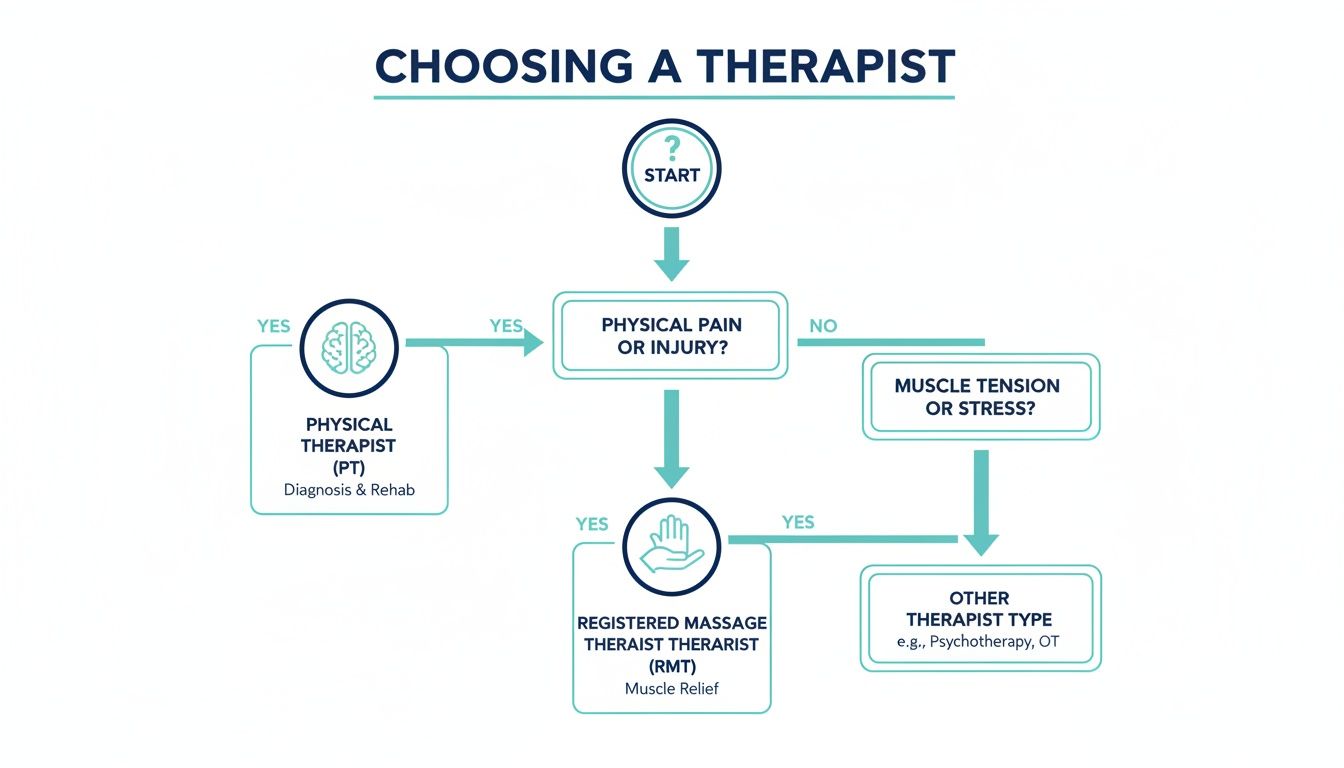
As you can see, your primary goal—whether it's getting a diagnosis for an injury or simply easing muscular aches and pains—is what really points you in the right direction.
When to See a Physiotherapist
Think of a physiotherapist as your first stop for anything that needs a formal diagnosis, a step-by-step rehabilitation plan, and a focus on getting you moving properly again for the long haul. Their real strength lies in digging down to the root cause of an impairment and then building a comprehensive plan to get you back on your feet.
You should book in with a physiotherapist for things like:
Post-Surgical Recovery: After a joint replacement or ligament repair, a physio is absolutely essential for safely rebuilding strength and mobility.
Significant Sports Injuries: For a torn ACL, a bad sprain, or a rotator cuff injury that’s seriously affecting your daily life, a physio provides the crucial diagnostic and rehab care.
Neurological Conditions: People recovering from a stroke or managing conditions like Parkinson's or Multiple Sclerosis rely on physiotherapy to improve balance, coordination, and overall independence.
Chronic Conditions: A physio can design programs to help manage the limitations of conditions like arthritis or osteoporosis, helping you maintain movement and keep pain at bay.
Essentially, if the problem is about how your body moves and functions as a whole, a physiotherapist is the expert you need to see first. They are the go-to for diagnosing an injury.
When to See a Registered Massage Therapist
A Registered Massage Therapist (RMT) is your best bet for issues that live in the soft tissues—your muscles, tendons, and ligaments. Their hands-on skills are perfectly tuned to relieve pain, melt away tension, and help your muscles recover from strain or overuse. If you're looking for a wider perspective on finding the right practitioner, this guide on how to choose the right therapist offers some great general advice.
You’ll want to see an RMT for:
General Muscle Soreness and Stiffness: That ache you feel after a tough workout, a long day in the garden, or just from chronic tightness is exactly what massage therapy targets.
Stress-Induced Tension: If you’re someone who holds stress in your shoulders or gets frequent tension headaches, an RMT can work wonders by releasing those knotted muscles.
Postural Strain from Desk Work: Sitting at a computer all day is notorious for causing back, neck, and shoulder pain. Massage is incredibly effective at undoing that muscular strain.
Enhancing Athletic Recovery: Many athletes use regular massage as a key part of their routine to speed up recovery and keep their muscles healthy between training sessions.
Which Professional Should You See for Your Condition?
Still not sure? This table breaks it down by specific conditions to help you decide whether a physiotherapist or a registered massage therapist is the better starting point for your needs.
Best for Physiotherapy | Best for Massage Therapy |
|---|---|
Post-surgery rehabilitation (e.g., knee replacement) | Chronic muscle tension (e.g., tight shoulders) |
Acute sports injuries (e.g., ACL tear, ankle sprain) | Stress-related muscle tightness and headaches |
Neurological disorders (e.g., stroke, Parkinson’s) | Postural pain from desk work or repetitive tasks |
Chronic pain with a functional impairment (e.g., arthritis) | Delayed onset muscle soreness (DOMS) after exercise |
Loss of balance or mobility in older adults | General stiffness and muscle aches |
Repetitive strain injuries needing a rehab plan | Improving circulation and promoting relaxation |
Remember, this is a guide. Sometimes, the best approach involves seeing both professionals as part of a collaborative healthcare team.
An RMT excels at managing the muscular symptoms that accompany an injury or arise from daily life. While a PT diagnoses the "why," an RMT expertly treats the "what"—the painful and tight muscles themselves.
This is exactly where a skilled mobile RMT like Taylor is such a game-changer for people in Brampton, Toronto, and Etobicoke. For things like chronic muscle tension or the joint stiffness that often comes with aging, getting targeted treatments like Deep Tissue Massage or Myofascial Release in your own home offers incredible relief without the hassle of travel. The focus is on immediate comfort and soft tissue health, making it an ideal solution for managing your ongoing muscular wellness.
How Collaborative Care and Mobile Services Enhance Recovery
Often, the discussion around physiotherapy versus massage therapy frames them as an either/or choice. In reality, their greatest strength often lies in working together. While each professional brings a unique skill set to the table, their work is incredibly complementary. When combined, they can create a powerful synergy that speeds up recovery, especially for people with complex conditions or mobility limitations.
Think of it this way: a physiotherapist can diagnose the underlying problem and lay out a strategic roadmap for rehabilitation, while a Registered Massage Therapist provides the targeted, hands-on work to manage the muscular side of things. For example, after a physio prescribes exercises to strengthen the muscles around an arthritic knee, an RMT like Taylor can use Geriatric Massage to ease the related joint stiffness and muscle tension. This makes it far easier—and less painful—for the client to actually do their exercises effectively.
A physiotherapist designs the architectural blueprint for recovery; a skilled RMT builds the scaffolding, providing the hands-on support that makes the structural work possible. This integrated approach ensures both the root cause and the symptoms are addressed.
The Rise of In-Home Therapeutic Services
This team-based approach becomes even more powerful when the care comes directly to you. We're seeing a huge surge in demand for in-home health services across Canada. Physiotherapists and RMTs are both crucial parts of this trend. While massage therapists currently hold the largest share of the market, the need for both is climbing, with over 35 per cent of Canadians having used massage therapy services in the past year. This is largely driven by our aging population looking for real solutions for chronic pain, arthritis, and stiffness.
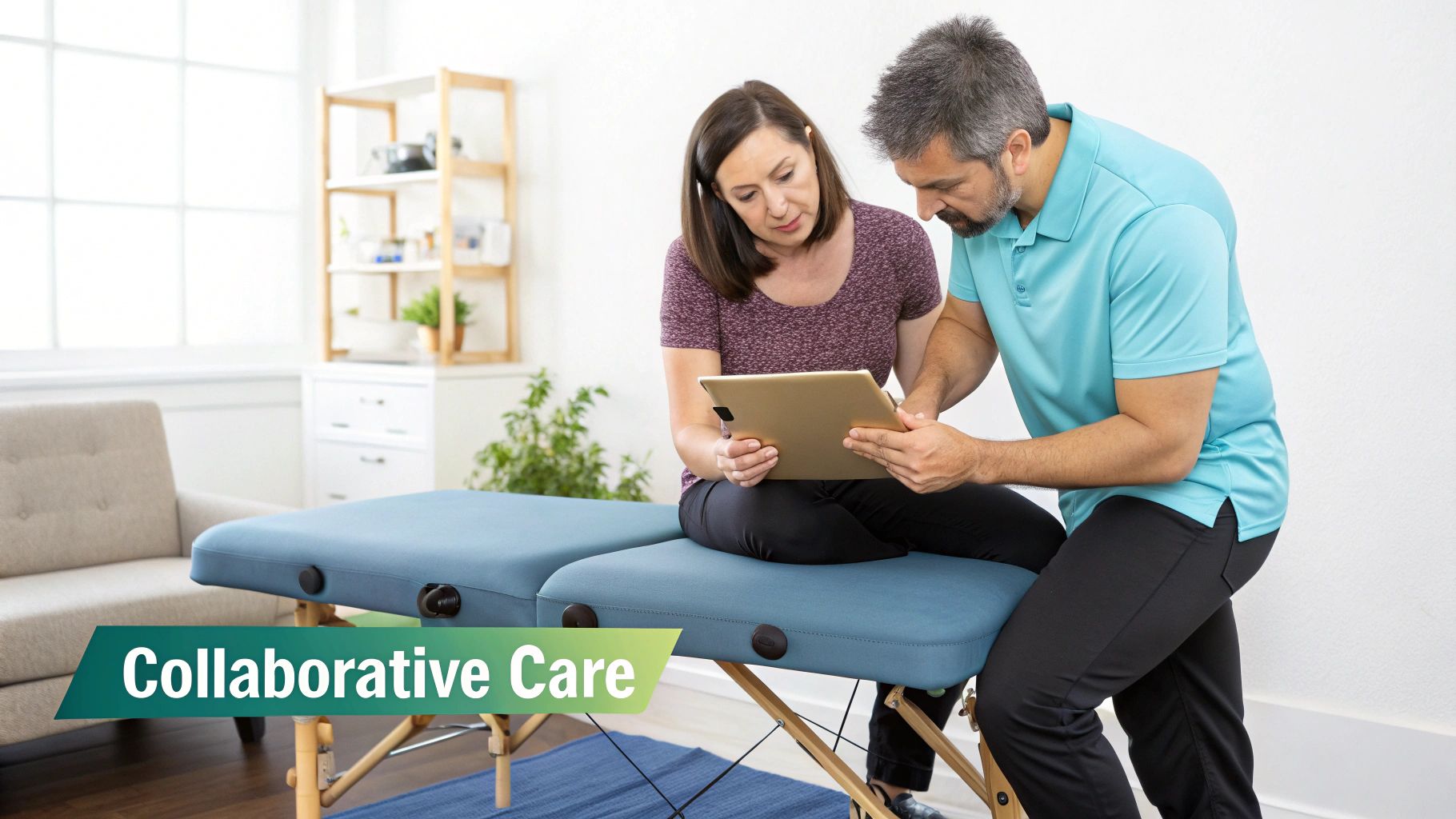
For many people, especially seniors or those with limited mobility, just getting to a clinic can be a major hurdle. The travel adds physical strain and logistical stress, which can ironically undermine the very recovery it's meant to support.
Mobile Massage Therapy: A Modern Solution
This is exactly where Stillwaters Healing Massage is making a difference for residents in Brampton, Toronto, Etobicoke, Oakville, Caledon, Orangeville, Mississauga, Milton, Halton, and Guelph. Our RMT, Taylor, brings specialized, trauma-informed care right to your home, assisted living facility, or long-term care residence. By eliminating the travel barrier, we make it possible for clients to receive high-quality therapeutic massage in a place where they feel safe, comfortable, and at ease.
This mobile service is a game-changer for:
Seniors with Mobility Issues: It removes the physical challenge of getting to appointments, ensuring consistent care for pain management and mobility.
Post-Surgical Clients: It allows for gentle, rehabilitative massage during the crucial early stages of healing, without the strain or risk of travel.
Individuals with Chronic Conditions: It provides regular, accessible soft tissue therapy to help manage symptoms and genuinely improve quality of life.
The concept of at-home care isn't limited to massage; for a broader look, you can explore the benefits of in-home physical therapy for seniors. By bringing professional services like Rehabilitation Massage or Myofascial Release to your doorstep, a mobile RMT becomes an essential partner in a truly client-focused healthcare plan. You can learn more about these profound advantages in our guide on the benefits of mobile massage services.
Ready for a Mobile Therapeutic Massage in Brampton and the GTA?
Figuring out the difference between a physiotherapist and a massage therapist is the key to getting the right care. Think of it this way: a physiotherapist is like an architect for your body's recovery, diagnosing injuries and creating a plan to restore functional movement. A registered massage therapist is the skilled craftsperson who works on the ground, providing hands-on treatment to your muscles and soft tissues to ease pain and get you feeling right again.
When your primary goal is to tackle muscle soreness, persistent stiffness, or the physical toll of stress, the focused, hands-on work of a Registered Massage Therapist (RMT) is often the best path forward. At Stillwaters Healing Massage, our male RMT, Taylor, specializes in bringing that precise, client-centred care right to your door.
Your Path to Wellness Starts at Home
Stillwaters Healing Massage delivers professional, therapeutic treatments across Brampton, Toronto, Mississauga, Oakville, Milton, Caledon, Etobicoke, Orangeville, Halton, and Guelph. We take the hassle out of getting to a clinic, so you can relax and heal in a space where you're already comfortable—your own home.
Our services are built around your specific needs. Whether you’re dealing with chronic pain, working through an injury, or just trying to prioritize your well-being, Taylor has the skills to help. His treatments include:
Swedish massage and Deep tissue massage for melting away deep-seated knots and tension.
Cupping therapy and Myofascial release to work on the connective tissues that can restrict movement.
Trigger point release and Joint mobilization to improve mobility and target specific sources of pain.
Sports massage therapy and Rehabilitation massage to help athletes recover and heal properly.
Geriatric massage and Hydrotherapy applications designed for gentle yet effective care for seniors.
Energy healing for a holistic approach to wellness.
Bringing compassionate, trauma-informed therapy into your home makes it so much easier to get consistent care. This is a game-changer for seniors, people with limited mobility, or anyone who finds a clinical environment adds more stress than it relieves.
Ready to take the next step? Booking your session couldn't be easier. If you want a full rundown of what to expect, have a look at our ultimate guide to booking a massage at-home service. It's time to feel the incredible benefits of professional mobile massage therapy and find your balance again.
Your Questions, Answered
Making the right choice for your health can feel complicated, so let's clear up a few common questions we hear from clients across Brampton, Toronto, and the surrounding areas. Think of this as a quick guide to help you decide with confidence.
Do I Need a Doctor's Referral for a PT or RMT in Ontario?
Technically, no. In Ontario, both physiotherapists and Registered Massage Therapists (RMTs) are primary healthcare providers, which means you can book an appointment directly without seeing a doctor first.
The catch, however, is often your insurance plan. Many extended health benefits require a physician's note to reimburse you for massage therapy, and sometimes for physiotherapy too. It’s always a good idea to give your insurance provider a quick call to check your policy before booking. That little step can save you a big headache later.
Who Should I See for a Serious Injury Like a Torn Ligament?
If you're dealing with a major injury like a torn ligament, your first call should be to a physiotherapist. Their extensive training is focused on diagnosing the extent of the damage and building a formal rehabilitation plan to get you back on your feet. They’ll guide you through the process of restoring strength, stability, and proper function.
An RMT can be a fantastic ally in your recovery, but they come in a bit later. They can help manage the secondary muscle tightness and soreness that often comes with an injury, which can make sticking to your physio exercises a lot easier.
Think of it this way: The physiotherapist is the architect who designs the blueprint for repair. The RMT is the skilled tradesperson who manages the surrounding site, making the rebuilding process smoother and less painful.
My Back Aches from Desk Work. Should I Choose a PT or RMT?
For that nagging, general backache you get from sitting at a desk all day, an RMT is a great place to start. The problem is often just tight, overworked muscles, and a good massage therapist can work wonders. They can use techniques to release that built-up tension and give you some much-needed relief.
Now, if the pain is sharp, shoots down your leg, or just isn't getting better after a massage or two, it's time to see a physiotherapist. They can dig deeper to see if there's an underlying mechanical issue and give you specific exercises to fix the root cause, not just the symptoms.
What Are the Benefits of a Mobile Massage Service for Seniors?
For seniors, a mobile RMT service can be a game-changer. It completely removes the stress and physical challenge of getting to a clinic, which is a huge relief for anyone with limited mobility, chronic pain, or no easy way to get around.
Receiving treatment in the familiar comfort of home makes the entire experience more relaxing and effective. A therapist like Taylor, who specializes in geriatric massage, can adapt the session to address conditions like arthritis and stiff joints right where the client feels safest. This convenience isn't just a luxury—it often leads to better results because it makes regular, consistent care possible.
At Stillwaters Healing & Massage, Taylor brings professional, trauma-informed therapeutic massage right to your door, helping you find relief without the hassle of travel. Ready to feel the difference personalized, in-home care can make?


