


Deep Tissue Massage Therapy Explained: A Guide to Pain Relief
- tmcpnet
- Jan 20
- 16 min read
When you're dealing with stubborn aches and pains that just won't go away, a standard relaxation massage often doesn't cut it. This is where deep tissue massage therapy comes in. It’s a powerful, focused technique specifically designed to reach the deepest layers of your muscles and connective tissues to release chronic tension patterns. Think of it as a specialized tool for rehabilitation and serious pain management.
What Is Deep Tissue Massage Therapy?

Picture your muscles as a rope made of countless tiny fibres. Through injury, repetitive strain, or even just chronic stress, these fibres can get tangled up, forming painful, rigid knots known as adhesions. These adhesions are notorious for restricting your movement, blocking good circulation, and causing that deep, persistent discomfort you feel.
Deep tissue massage is all about methodically working to break down these adhesions, allowing your muscles to finally return to their normal, healthy state. It’s less of a gentle tune-up and more like a detailed intervention for your body's most challenging spots.
The Core Principles of the Technique
Our male Registered Massage Therapist, Taylor, uses a very intentional approach. It’s not about brute force; it’s about applying slow, deliberate strokes with sustained pressure to gently work through the top layers of muscle and connect with the deeper structures below. This careful technique is what coaxes the deep-seated tension to finally let go.
The key principles are pretty straightforward but require a skilled touch:
Slow and Deliberate Strokes: Unlike the faster, gliding movements of a Swedish massage, deep tissue strokes are slow. This gives the therapist time to really feel for tight, restricted areas and work on them effectively.
Sustained Pressure: By holding firm pressure on a specific knot, the therapist encourages the muscle fibres and the surrounding connective tissue (fascia) to relax and release their grip.
Targeted Application: The focus is razor-sharp. We’re not just going through the motions; we’re zoning in on your specific problem areas, whether it’s a stiff neck, a nagging lower back, or perpetually tight shoulders.
Deep tissue massage therapy gets to the root cause of muscular pain. It’s a focused treatment designed to break up old scar tissue and physically unravel muscle "knots" or adhesions that choke off circulation and cause pain, stiffness, and limited motion.
Your Healing Journey at Home
At Stillwaters Healing & Massage, we believe that true healing happens best when you're completely at ease. That’s why we bring this clinical-level care right to your doorstep. Our mobile massage service means you can get all the benefits of deep tissue massage therapy in the comfort and privacy of your own home, whether you're in Brampton, Toronto, Etobicoke, or Oakville.
Taking the stress of travel out of the equation allows your body and mind to fully sink into the therapeutic process. If you want to get a better handle on how we tackle these muscular restrictions, you can learn more about how myofcial release and trigger points are explained in our related article.
Once you understand how deep tissue massage actually works, you can see why it’s so effective for managing chronic pain, improving your mobility, and helping your body find its natural balance again. Taylor always customizes the session, making sure the pressure and focus are perfectly aligned with what you and your body need.
How Deep Tissue Differs From Swedish Massage
It’s easy to think all massages are pretty much the same, but the world of therapeutic touch is vast and varied. When you’re trying to pick the right treatment, knowing the difference between styles—especially deep tissue versus Swedish massage—is key. The real distinction isn't just about how much pressure is used; it's about the entire goal of the session.
Think of a Swedish massage like a gentle, flowing river. Its main purpose is to help you relax, melt away surface-level muscle tension, and get your circulation moving. It’s the perfect choice for unwinding after a stressful week or just for some general wellness.
Deep tissue massage, on the other hand, is more like a skilled plumber methodically clearing out a stubborn blockage. The goal here is very specific: to find and release those chronic patterns of tension, knots (also called adhesions), and scar tissue tangled up in the deeper layers of your muscles and connective tissues. This is a corrective approach focused on fixing a problem.
The Core Differences in Technique
The feeling of receiving a Swedish massage versus a deep tissue massage is completely different because the therapist's tools and approach are tailored to the therapeutic goal.
Pressure: Yes, deep tissue uses firmer pressure, but it's a common myth that it’s just a "harder" Swedish massage. It’s not about brute force. Instead, our RMT, Taylor, uses slow, sustained pressure with his forearms, elbows, and knuckles to carefully sink through the top layers and reach the underlying structures causing you pain.
Speed and Rhythm: Swedish massage is known for its long, gliding strokes (effleurage) and kneading (petrissage), which are applied in a rhythmic, often faster, pace to soothe the nervous system. Deep tissue work is much slower. The strokes are deliberate and focused, often moving against the grain of the muscle to break down those tough adhesions.
Therapeutic Intent: The main goal of a Swedish session is relaxation and stress relief. The primary intent of deep tissue massage is to tackle specific musculoskeletal issues like chronic pain, limited mobility, and postural problems.
A Swedish massage is designed to calm your nervous system and give you a feeling of overall well-being. A deep tissue massage is a targeted treatment aimed at resolving the deep-seated muscular issues that cause long-term pain and dysfunction.
For anyone in Brampton or nearby who is focused on managing stress, understanding how Swedish massage therapy helps reduce anxiety can shed more light on its incredible benefits. This can really help you decide which approach fits what you need right now.
Deep Tissue vs Swedish Massage at a Glance
To help make the choice even clearer, here’s a quick comparison of these two popular massage styles. This table breaks down the key characteristics of each, so you can easily see which one aligns with your wellness goals.
Feature | Deep Tissue Massage | Swedish Massage |
|---|---|---|
Primary Goal | To release chronic muscle tension and adhesions; rehabilitation. | To promote full-body relaxation and reduce stress. |
Pressure Level | Firm, deep, and sustained on targeted areas. | Light to firm, applied with broad, gliding strokes. |
Pace & Rhythm | Slow, deliberate, and focused. | Flowing, rhythmic, and often faster-paced. |
Techniques Used | Stripping, friction, and trigger point therapy. | Effleurage, petrissage, tapotement, and friction. |
Best For | Chronic pain, injury recovery, postural issues, and limited mobility. | Stress relief, general tension, improved circulation, and relaxation. |
Ultimately, choosing between deep tissue and Swedish massage really comes down to listening to your body. If you're looking for a real solution to persistent pain in your back, neck, or shoulders, the focused approach of deep tissue massage therapy that Taylor provides from Mississauga to Guelph is probably the right call. But if your main goal is simply to de-stress and recharge, a Swedish massage is a fantastic choice.
The Therapeutic Benefits for Chronic Pain and Mobility
Deep tissue massage is much more than a simple feel-good treatment; it’s a powerful tool for creating lasting change in how your body moves and feels. For anyone grappling with stubborn, persistent pain, this therapy offers a path to real-world benefits that can dramatically improve your day-to-day life. It gets right to the root of the problem, especially when chronic tension is the culprit.
This isn't a general, all-over massage. It’s highly focused work that targets specific, often debilitating issues. Think about conditions like chronic lower back pain, fibromyalgia, or sciatica—they all involve deep-seated muscle tension and inflammation that can really get in the way of living your life. Deep tissue massage methodically works to release the knots and trigger points that fuel these painful conditions.
Breaking Down Barriers to Movement
One of the most incredible benefits of this therapy is its ability to break down scar tissue. After an injury or even from years of postural strain—a common problem for desk workers in Mississauga and Oakville—your body can form adhesions. You can think of these as bits of internal glue, sticking muscle fibres and connective tissues together where they shouldn't be.
These adhesions are notorious for restricting movement, causing that familiar feeling of stiffness and pain. A deep tissue session systematically works to separate these stuck tissues, which in turn helps to:
Improve Flexibility: By freeing up tight, restricted muscles, your joints can finally move through their full, intended range again.
Increase Range of Motion: Simple movements, like turning your head to check a blind spot or reaching for something on a high shelf, become easier and less painful.
Reduce Stiffness: Many clients, especially older adults, tell us they notice a significant decrease in that frustrating morning stiffness that can come with aging.
To really see the difference, this chart breaks down the goals of deep tissue work compared to the more relaxation-focused Swedish massage.
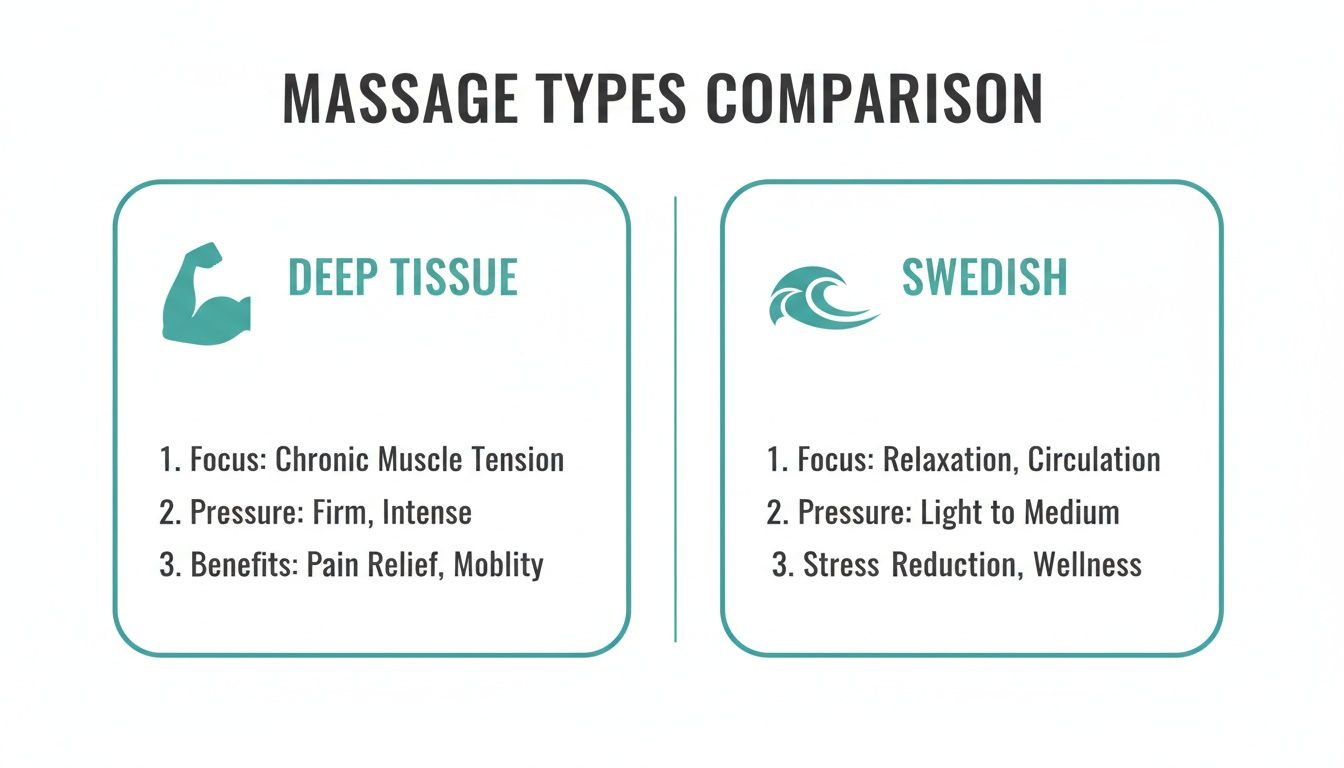
As you can see, deep tissue is specifically designed for rehabilitation. It’s all about targeting those deeper muscle layers to correct dysfunction and restore proper movement.
Practical Outcomes for a Better Life
The physical changes we create during a session with our RMT, Taylor, translate directly into practical, noticeable improvements in your life. For our neighbours in Brampton or Caledon dealing with postural strain, or for seniors in Halton managing chronic conditions, the outcomes can be profound.
For starters, by easing chronic muscle tension and inflammation, clients often report better, more restorative sleep. It makes sense—when your body isn’t fighting constant pain signals, it can finally rest and repair itself properly overnight. This effect is boosted by the therapy's ability to lower stress hormones like cortisol, which are well-known for disrupting healthy sleep.
A key goal of deep tissue massage is to restore function and reduce pain to such a degree that clients may experience a decreased reliance on pain medication. This is achieved within a safe, professional therapeutic relationship built on trust and clear communication.
Managing a condition like arthritis also requires a comprehensive approach. Stillwaters Healing & Massage provides a range of services that can complement a deep tissue session, including Swedish massage, cupping therapy, myofascial release, and geriatric massage, all designed to support your wellness goals.
And it’s not just about the physical. Deep tissue massage is a powerful way to manage stress. For a wider look at calming your mind and body, you might consider exploring various relaxation techniques for stress relief. By giving your body a chance to let go of stored physical and emotional tension, this therapy is a huge support for your overall mental well-being.
So, Is Deep Tissue Massage Actually Right for You?
Figuring out the best way to tackle your pain is the first, and most important, step toward feeling better for good. Deep tissue massage therapy can be a game-changer, but it’s not a one-size-fits-all solution. It's a specific tool for a specific job, and knowing if it matches what your body needs is crucial.
So, who really benefits from this kind of focused work? It’s often the perfect choice for people wrestling with those nagging, persistent aches and pains that just don’t seem to budge with lighter therapies. If your pain feels deep, stubborn, and like it’s been there forever, this is likely a good path to explore.
Who Is a Good Candidate for Deep Tissue Work?
Certain lifestyles and health conditions practically scream for the kind of targeted relief that deep tissue massage delivers. Our RMT, Taylor, sees clients every day who fit this mould, adapting each session to their unique needs, whether he's in Brampton, Etobicoke, or Mississauga.
You might be a perfect fit if you are:
Living with Chronic Pain: If you're dealing with long-term issues like a constantly aching lower back, fibromyalgia, sciatica, or repetitive strain from your job, you're in the right place. This technique is designed to get to the root of that kind of deep-seated discomfort.
An Athlete or Just Plain Active: It doesn't matter if you're a serious competitor or a weekend warrior. Deep tissue work is brilliant for sorting out muscle imbalances, breaking down old scar tissue, and speeding up your recovery time.
A Desk Worker or Long-Haul Commuter: All those hours spent slumped over a keyboard in a Toronto office or stuck in traffic around Oakville? They create serious postural strain. Think tight shoulders, a stiff neck, and a back that just won't quit complaining. Deep tissue directly targets those chronically overworked muscles.
Recovering from an Injury: After an injury, your body creates adhesions—think of them as tiny, internal "scabs" made of painful, rigid tissue. Deep tissue massage is incredibly effective at breaking these down, which helps restore movement and dial down the pain.
What About Seniors or Medically Complex Clients?
Now, a lot of people hear "deep tissue" and immediately think of intense, painful pressure. But a truly skilled therapist knows its real power is in smart adaptation. This is where our specialized training in geriatric and mobility-sensitive care at Stillwaters Healing & Massage really shines, especially for our clients across the Peel and Halton regions.
Taylor brings a unique, trauma-informed approach to every single session. What does that mean? It means he’s dedicated to creating a space of absolute safety, trust, and open communication—something that’s non-negotiable when working with anyone, but especially with medically complex individuals.
A trauma-informed approach recognizes that a person's life experiences shape how they perceive touch. It’s all about prioritizing consent, clear communication, and empowering the client, making sure every treatment feels safe, respectful, and genuinely healing.
This specialized mindset allows Taylor to safely and effectively adapt deep tissue techniques for:
Seniors in Assisted Living: For older adults, the work is modified quite a bit. The pressure is gentler and the pace is slower. The goal is to carefully ease arthritic stiffness, boost circulation, and maintain joint mobility without ever overwhelming the body.
Individuals with Neurological Conditions: For clients living with conditions like Parkinson’s or Multiple Sclerosis (MS), targeted massage can be a huge help in managing muscle spasticity and rigidity. Taylor works closely with clients, their caregivers, and facility staff in communities from Caledon to Milton to ensure the treatment is a seamless part of their overall care plan.
By truly understanding what each person needs, we can use the principles of deep tissue massage in a way that’s both safe and incredibly effective. The goal isn't just to work deeply; it's to work smartly, always respecting the body’s boundaries while gently encouraging it toward feeling better.
If any of this sounds like you or someone you care for, deep tissue massage therapy could be a powerful step forward on your wellness journey. Ready to give it a try? You can find Taylor’s availability for a mobile massage in your home or care facility right on our secure booking portal.
What to Expect During Your In-Home Massage Session

The idea of getting a clinical-level treatment right in your living room can feel a little strange at first. We get it. That's why we want to pull back the curtain on the whole process, so you can feel prepared, confident, and ready to focus on your healing. This is exactly what a deep tissue massage therapy session with our RMT, Taylor, looks like, step by step.
Our mobile service is built to be seamless and stress-free. Whether you're in a private home in Guelph, a long-term care facility in Orangeville, or an assisted living residence in Milton, you can expect the same professional, consistent care.
The Arrival and Professional Setup
Your session really begins the moment Taylor arrives. He’ll have everything needed to create a professional treatment space: a sturdy, comfortable massage table, fresh linens, and high-quality lotions or oils. All he needs from you is a quiet corner with enough room to set up—about the size of a large area rug is perfect.
The setup itself is quick and discreet. In just a few minutes, your chosen space is transformed into a peaceful, therapeutic environment. The entire process is designed to be as non-intrusive as possible, respecting your home and privacy from start to finish. For a closer look at how it all works, check out our guide to a professional home massage service.
The Initial Consultation and Communication
Before any hands-on work starts, Taylor will sit down with you for a brief but thorough chat. This is a crucial step where you can share your health history, pinpoint what’s hurting, and set goals for the session. It’s also where we establish clear communication, which is the foundation of any good deep tissue massage.
Communication is everything. The goal is to find that 'good pain'—a sensation of intense but productive release—not pain that feels harmful. We always encourage you to speak up during the session so Taylor can adjust the pressure to what feels right and effective for you.
During the Massage and Professional Draping
Once you’re comfortable on the table, your privacy and warmth are our top priorities. We use professional draping techniques, meaning only the specific area being worked on (like your back or a shoulder) is uncovered at any time. This practice ensures you feel secure and respected throughout your entire treatment.
As Taylor begins the work, he'll use slow, deliberate strokes to reach those deeper layers of muscle tissue. He’ll check in with you regularly about the pressure, making sure it stays within your comfort zone while still being therapeutically effective. It's a team effort, and your feedback is what makes the session successful.
Aftercare for Maximum Benefit
When the massage is over, Taylor will step out to give you a moment to get up slowly and get dressed. Afterwards, he’ll walk you through some personalized aftercare advice to help you get the most out of the treatment.
Most aftercare plans include a few key things:
Hydration: Drinking plenty of water is essential. It helps your body flush out the metabolic waste that gets released from your muscles during a deep tissue session.
Gentle Movement: A light stretch or a slow walk can do wonders to prevent stiffness and help your body integrate the therapeutic work.
Rest: Give your body time to recover. It's completely normal to feel a bit sore for a day or two, much like you would after a good workout.
The growing acceptance of this kind of therapeutic work reflects a much bigger trend. The massage industry has seen incredible growth, with revenue in some areas jumping nearly 16% in a single year. This shows just how mainstream modalities like deep tissue massage have become. That momentum means more practitioners are getting specialized training, which is fantastic news for seniors and people with chronic conditions who need expert care. You can find more details in this report on massage therapy statistics.
Safety Considerations and When to Avoid Deep Tissue Massage
Your health and well-being are always the number one priority. While deep tissue massage therapy can be a game-changer for pain and mobility, it isn't the right fit for every person or every situation. Knowing when to be cautious—or even avoid this technique altogether—is a crucial part of a safe and effective treatment plan.
This is where we talk about contraindications. In simple terms, a contraindication is just a medical reason why a certain treatment shouldn't be used because it could do more harm than good. This is why having an open, honest conversation with your RMT before every session is so important.
When Deep Tissue Massage May Not Be Appropriate
Some medical conditions just don't mix with the deep, direct pressure of this type of massage. Taylor, our RMT, is specifically trained to spot these situations to protect your health. It’s absolutely vital to let him know if you're dealing with any of the following:
Infectious Skin Diseases: Things like cellulitis, impetigo, or shingles can be spread or made worse by direct contact and pressure.
Recent Surgery or Injury: Your body needs undisturbed time to heal. Applying deep pressure to a recent surgical site, a fracture, or a bad sprain can get in the way of recovery and even cause more damage.
A History of Blood Clots (DVT): This is a big one. Deep pressure could potentially dislodge a blood clot, which is a serious, life-threatening risk.
Bleeding Disorders or Use of Blood Thinners: If you have a condition or are on medication that makes you bruise easily, firm pressure could cause unnecessary tissue damage.
Safety Modifications for Complex Health Needs
For many people, the answer isn’t to skip massage entirely, but to modify it. This is where a truly skilled and knowledgeable therapist proves their worth. Taylor specializes in adapting his techniques for people with complex health histories, making sure every client in Brampton, Mississauga, and the surrounding areas has a safe and comfortable experience.
For example, clients with osteoporosis need a much gentler touch to avoid any risk of fracture. During pregnancy, deep work on the abdomen is off-limits, and we adjust positioning to ensure the safety and comfort of both mother and baby. Taylor’s advanced training in geriatric and palliative care means he works hand-in-hand with caregivers and facility coordinators, creating a plan that honours each client’s unique health journey.
Informed consent is the cornerstone of a safe practice. It means you are always in control, and every step of the treatment is explained and agreed upon, ensuring your well-being is protected above all else.
Understanding what makes professional care different is key. You can learn more by checking out our guide on what Registered Massage Therapy is and how it can help you.
Making sure everyone has access to safe, professional care is also a matter of health equity. Data from the industry shows a significant gap: 33% of higher-income individuals received a massage compared to just 17% of those with lower incomes. Mobile services, like ours, help bridge this divide by bringing professional care directly to seniors and others who face mobility challenges. You can read the full massage industry fact sheet to learn more about this trend.
Your Deep Tissue Massage Questions Answered
Stepping into the world of therapeutic massage can bring up a few questions, and that's perfectly normal. To make sure you feel completely comfortable and ready for your session, our male RMT, Taylor, has put together answers to some of the most common things people ask him about deep tissue massage therapy, whether they're in Brampton, Toronto, or the surrounding areas.
Does Deep Tissue Massage Hurt?
This is probably the number one question he gets! While deep tissue work is definitely firm and focused, it should never be outright painful. Many clients describe the sensation as a "good hurt"—that intense feeling you get when a therapist finds exactly the right spot and you can feel the tension start to melt away.
The most important thing to remember is that you are in complete control. Taylor constantly checks in and relies on your feedback to find that sweet spot where the pressure is effective but not overwhelming. You're a team, and the goal is to make the session productive, not punishing.
How Often Should I Get a Deep Tissue Massage?
There's no one-size-fits-all answer here; the best frequency really depends on your body, your daily life, and what you're hoping to achieve.
For a specific problem: If you're dealing with a recent injury or a bad flare-up of chronic pain, we might start with weekly or bi-weekly sessions to get things under control and build some positive momentum.
For general maintenance: If your goal is to manage stress, counteract the effects of sitting at a desk all day, or just invest in your overall well-being, a monthly session is often a great rhythm to get into.
Together, you'll figure out a treatment plan that makes sense and gets you the lasting results you're looking for, whether you're in Caledon or Mississauga.
Will I Be Sore Afterwards?
It’s quite common to feel a bit of muscle soreness for a day or two after a deep tissue session, much like you would after a good workout.
Think of this post-massage tenderness as a sign that we’ve made progress. It means your body has started to release old tension patterns and break down those stubborn knots, kicking off the healing process.
Taylor will always give you some simple aftercare tips, like drinking plenty of water and doing a few gentle stretches. These little things can make a big difference in reducing any soreness and helping you get the most out of your treatment.
How Does a Mobile Massage Work in My Home?
Our mobile service is all about bringing professional, clinical care to you in the most convenient way possible, whether you're in Milton, Halton, or Guelph. Taylor arrives at your home, assisted living facility, or long-term care residence with everything needed for a complete session.
That includes a professional massage table, clean linens, and all the necessary supplies. He takes care of all the setup and teardown, so all you have to do is relax and receive top-quality care in a space where you already feel safe and comfortable.
Ready to feel the difference that professional, in-home deep tissue massage therapy can make? Stillwaters Healing & Massage brings expert, compassionate care right to your doorstep, serving Brampton, Toronto, Etobicoke, Oakville, Caledon, Orangeville, Mississauga, Milton, Halton, and Guelph. Book your session with Taylor today through our simple and secure booking link: https://stillwatershealingmassage.clinicsense.com.


