


Find a Massage Therapist at Home: Your Ultimate Guide
Picture this: all the therapeutic benefits of a professional massage, but without the hassle of traffic, parking, or waiting rooms. When a massage therapist comes to your home, they bring the clinic to you, turning your own space into a sanctuary for healing and relaxation. It's a game-changer, especially for busy professionals, seniors, or anyone who simply values their time and comfort.
Why Choose In-Home Massage Therapy?
Opting for an in-home massage isn't just a matter of convenience; it’s a smart decision for your health. Think about it – you completely eliminate the stress of getting to an appointment. In places like Brampton, Toronto, Etobicoke, Oakville, Caledon, Orangeville, Mississauga, Milton, Halton, and Guelph, just the commute can be enough to tense you right back up.
The real magic, though, happens after the massage. Instead of jumping into your car and battling traffic, you get to stay put. You can relax, have a cup of tea, and let the benefits of the treatment really sink in. This extended period of calm helps your body fully integrate the work, making the therapy that much more effective.
The Value of Personalized Care in a Familiar Setting
A mobile RMT, like our male therapist Taylor, offers a level of personalized attention that's tough to match in a bustling clinic. The entire appointment is focused solely on you, in your environment. There's no sense of being rushed because another client is waiting.
This dedicated, one-on-one approach is especially helpful for:
Seniors: Who often feel more secure and at ease in their own homes, and may have difficulty with mobility.
Caregivers: Who have demanding schedules and find it nearly impossible to carve out time for self-care away from home.
Individuals with Chronic Conditions: Who can get consistent, vital treatment without the physical toll of travel.
Choosing an in-home massage transforms therapy from a clinical appointment into a seamless part of your life. When the therapist comes to you, it’s far easier to stay on top of your health, manage chronic pain, and keep stress in check.
Deciding between a home visit and a clinic appointment often comes down to personal needs and priorities. Here's a quick breakdown to help you see what might work best for you.
At-Home Massage vs Clinic Visit: A Quick Comparison
Feature | Massage Therapist at Home | Traditional Clinic Visit |
|---|---|---|
Convenience | Unmatched. No travel, no traffic, no waiting rooms. | Requires travel, parking, and scheduling around clinic hours. |
Comfort | Your own safe, familiar, and private environment. | A professional but potentially less personal clinical setting. |
Relaxation | Post-massage bliss continues uninterrupted at home. | The journey home can reintroduce stress and tension. |
Personalization | The therapist adapts to your space and specific needs. | Standardized rooms and equipment. |
Time Savings | Saves 60-90 minutes of travel and wait time. | Appointment time plus commute time. |
Accessibility | Ideal for those with mobility issues or caregivers. | Can be a barrier for some individuals. |
Ultimately, both options provide access to professional care, but an at-home session is designed around your life, not the other way around.
What a Typical At-Home Session Involves
From the moment your RMT, Taylor, arrives, the entire experience is designed to be professional and stress-free. He brings everything needed—a sterile massage table, fresh linens, lotions, and any specialized equipment for treatments like Cupping Therapy or Myofascial Release.
Your session starts with a thorough chat about your health history and what you want to achieve, just like in a clinic. Taylor takes the time to create a treatment plan tailored specifically to you, whether you need a Deep Tissue Massage for stubborn knots or a gentle Geriatric Massage to improve circulation. It’s all about delivering high-quality, clinical care with unbeatable convenience.
To learn more, you can explore the benefits of mobile massage services. When you're ready, you can schedule your own personalized session through the online booking link.
How to Find and Vet a Qualified RMT
Inviting a professional into your home or a loved one’s residence is a big step. It requires a different level of trust than simply booking an appointment at a clinic. When you're searching for a massage therapist at home, your first priorities have to be safety, comfort, and, of course, the quality of care. The good news is that in Ontario, the profession is regulated, which gives you a clear path to make sure you're in good hands.
The absolute first thing you must do is confirm the therapist is a Registered Massage Therapist, or RMT. This isn't just a title; it's a regulated healthcare designation. RMTs are governed by the College of Massage Therapists of Ontario (CMTO), meaning they’ve gone through extensive training and are held to very high standards for ethics and practice.
Verifying Credentials with the CMTO
The CMTO has a public register online, and it’s your best friend in this process. Don't ever feel awkward asking a potential therapist for their full name and registration number. A true professional will be happy to provide it—it's a sign they take their accountability seriously.
Once you have their info, pop over to the CMTO’s public register website. It's a quick search, and here’s what you're looking for on their profile:
Active Status: Make sure their registration is listed as "Active." This is your proof they are currently licensed and in good standing to practise in Ontario.
Disciplinary History: This section is crucial. It will list any past or current disciplinary issues, findings of professional misconduct, or any restrictions on their practice. A clean record here brings a lot of peace of mind.
Business Address: Even for a mobile practice, they should have a professional location listed.
Honestly, this check is non-negotiable. It's the simplest way to protect yourself and ensure you’re getting care from a qualified individual who plays by the rules. The entire experience, from that first call to the end of the session, should feel professional and straightforward.
This infographic shows what that professional flow looks like for an in-home massage.
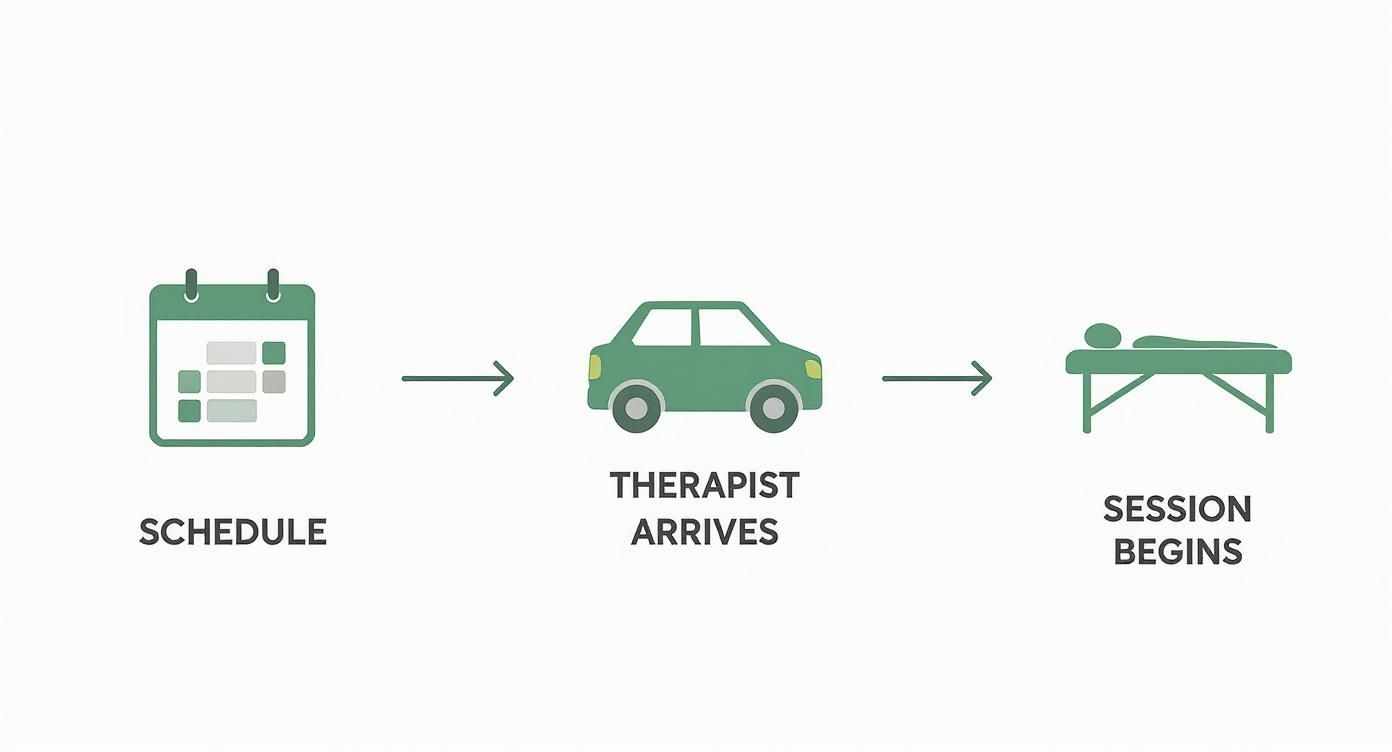
The main takeaway here is that a professional service isn't a mystery. It follows a clear, predictable, and client-first process from start to finish.
Beyond the Registration Number
Okay, so you've confirmed they're a registered RMT. Great! Now, is this the right RMT for you? This is where you dig a little deeper into their experience and specialties.
For example, our RMT Taylor focuses on areas like rehabilitation massage and geriatric massage. Having that kind of specialization clearly stated on a profile lets clients from Caledon to Guelph know he has the specific expertise they might be looking for. If you want to learn more about what goes into their practice, you can check out this complete guide to a registered massage therapist.
An RMT’s profile should give you confidence in their ability to meet your needs. Look for specifics—do they mention experience with conditions like yours? Do they list techniques like myofascial release or joint mobilization if that’s what you need?
Strong regulatory bodies are what make all this possible. Over in California, for instance, the California Massage Therapy Council (CAMTC) oversees the industry to maintain high standards. As of June 2024, they've certified 50,495 massage therapists, and their mission is to help consumers find credible practitioners while weeding out illegal operations. It just goes to show how important a good regulatory system is.
Reading Reviews and Asking the Right Questions
Online reviews and testimonials are gold. They give you a real-world peek into a therapist's professionalism, punctuality, and the actual quality of their care. I always suggest looking for reviews that go into detail, especially from clients who also received in-home services.
When you finally reach out, don't hold back your questions. A good RMT will appreciate an informed client. Try asking things like:
"What's your experience working with seniors or people with mobility challenges?"
"How do you adapt a technique like deep tissue massage when you're working in someone's home instead of a clinic?"
"Could you walk me through your draping and privacy protocols for in-home sessions?"
Their answers will tell you so much about their experience level and their commitment to making you feel safe and comfortable. Finding the right massage therapist at home is really about building a trusted therapeutic relationship. Taking these few extra steps ensures your choice is a smart one, setting you up for a truly healing and restorative experience.
The Kinds of Massage You Can Get at Home
One of the best parts about booking a massage at home is that you don’t have to compromise on quality or options. A fully qualified and equipped mobile RMT like Taylor brings the entire clinic experience right to your door. This means you have access to a whole menu of treatments, from general relaxation to highly specific therapies for injuries or chronic conditions. Knowing what's available helps you ask the right questions and work with your therapist to create the perfect plan.
Most people are familiar with the classic Swedish Massage. It's the go-to for a reason and probably what comes to mind when you picture a relaxing spa day. Using long, flowing strokes, gentle kneading, and circular motions, it’s fantastic for melting away stress, easing general muscle tightness, and boosting circulation. Imagine that feeling, but without having to drive home afterwards—pure bliss.
Going Deeper Than Just Relaxation
While a calming Swedish massage is wonderful, sometimes you need something more focused. For our clients in places like Brampton and Mississauga who are dealing with persistent pain from long hours at a desk or a physically demanding job, a Deep Tissue Massage is often the answer. This isn't about just pressing harder; it’s a specific technique that uses slow, deliberate strokes and focused pressure to reach the deeper layers of muscle and connective tissue. It’s incredibly effective at breaking up those stubborn, painful knots and releasing long-held tension.
Getting the most out of this kind of treatment means knowing a bit about what to expect. You can learn more about how it works by reading this guide on deep tissue massage for fast pain relief to see if it’s the right approach for you.
Beyond deep tissue, your RMT might incorporate other powerful techniques, such as:
Myofascial Release: This is all about the fascia—the web of connective tissue that surrounds every muscle and organ. By applying gentle, sustained pressure, the therapist can release restrictions in this tissue. It can be a game-changer for restoring movement and easing the kind of widespread pain associated with conditions like fibromyalgia.
Trigger Point Release: Ever had one of those sharp, specific "knots" that sends pain shooting elsewhere when you press on it? That’s a trigger point. This therapy involves applying direct pressure to that exact spot to get the muscle fibres to release, which can provide immense relief.
Specialized Care Adapted for You and Your Space
A truly great mobile RMT knows how to adapt. Their clinical skills have to translate from a formal clinic setting to your personal space, and that's especially important for clients with mobility issues or those in geriatric care. The priority is always providing safe, effective therapy, wherever you're most comfortable.
The true value of a mobile RMT is their ability to adapt clinical skills to a personal setting. From a living room in Oakville to a long-term care facility in Caledon, the focus is on delivering therapeutic care that meets you where you are.
For example, a technique like Joint Mobilization, which involves gently moving your joints to improve their range of motion, doesn't always need a massage table. An experienced therapist can do this safely and effectively while you’re sitting comfortably in your favourite chair or resting in your own bed.
Likewise, Geriatric Massage involves modifying standard techniques to better suit the needs of older adults. This often means shorter sessions with gentle, soothing strokes designed to improve circulation, ease the stiffness from arthritis, and offer the profound benefits of compassionate, healing touch.
Other popular services include:
Cupping Therapy: Uses special cups to create suction, which helps lift tissue, dramatically increase blood flow, and release deep-seated tension.
Sports Massage Therapy: Designed for active individuals, it helps prevent injuries, boost performance, and speed up recovery after a workout or event.
Rehabilitation Massage: A focused approach to help you recover from an injury or surgery, aimed at restoring function and minimizing scar tissue.
Hydrotherapy Applications: Utilizes water in various forms (e.g., heat packs, cold compresses) to enhance therapeutic effects.
Energy Healing: A complementary therapy that works with the body's subtle energy fields to promote balance and well-being.
Whether you're trying to manage chronic pain in Etobicoke or seeking supportive therapy in Guelph, the range of services a mobile RMT offers is vast. The best way to start is always with a conversation. Tell your therapist what’s going on, what your goals are, and trust them to recommend the right blend of techniques for you. When you're ready, you can easily book a session online to start your healing journey.
Getting Your Space Ready for a Mobile Massage
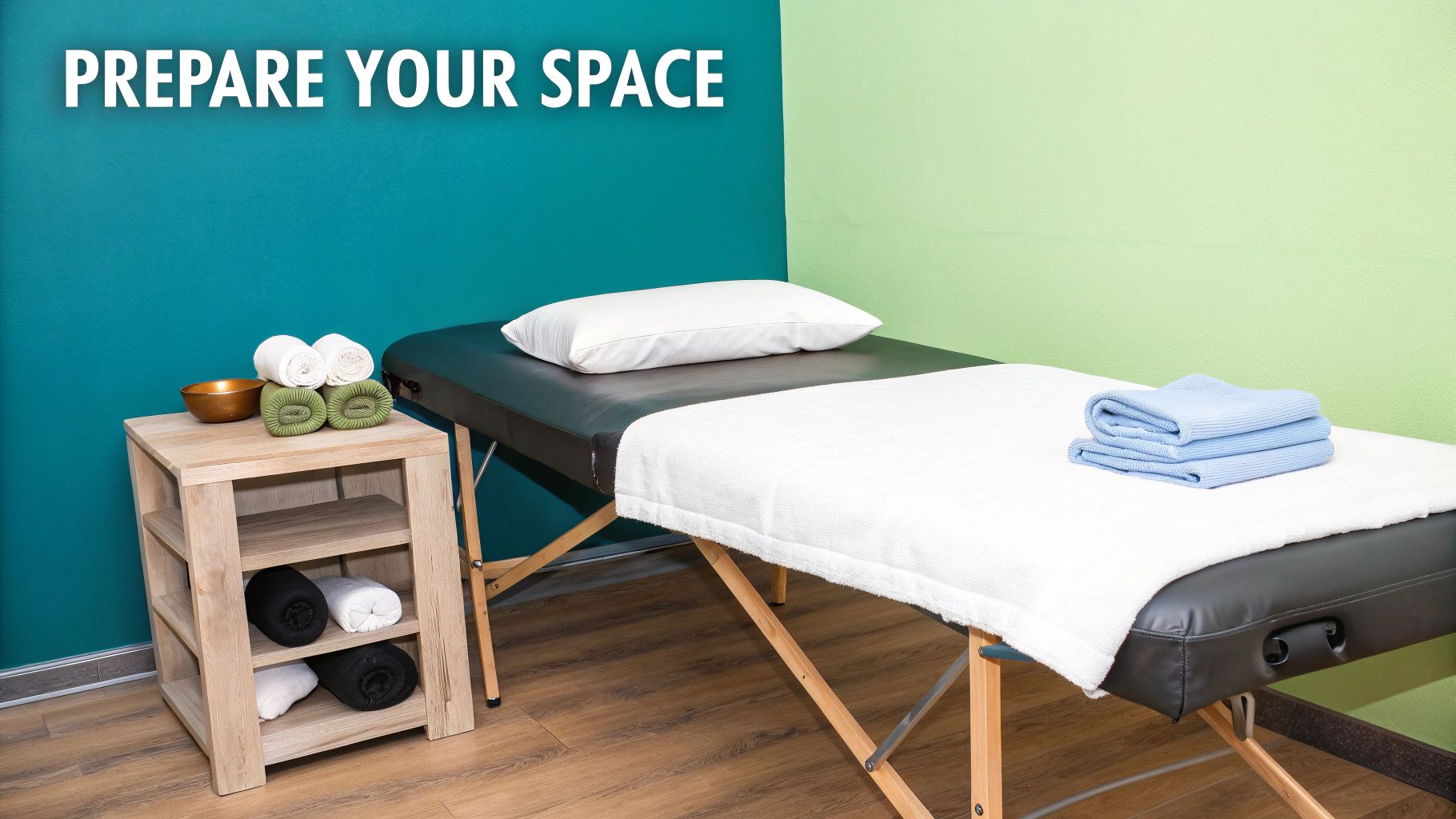
One of the best parts of booking a massage therapist at home is getting treated in a place where you already feel comfortable and safe. With just a little bit of prep, you can help transform your familiar space into a peaceful sanctuary, which really makes a difference in getting the most out of your session.
You don't need to recreate a fancy spa. The goal is simply to create a calm, private, and functional area where you can fully relax and let the healing happen. A few small adjustments are all it takes.
Picking the Perfect Spot
First thing's first: where in your home should the massage take place? The most important things to consider are privacy and quiet. Choose a room where you can shut the door to minimize interruptions from family, pets, or the phone ringing. This is key to helping your nervous system truly unwind.
Your therapist will need enough space to walk all the way around the massage table. A clear area of about 10x12 feet (or 3x4 metres) is ideal. This could be a spare bedroom, a quiet part of the living room, or even a home office with the chair pushed aside. Don't stress if you don't have a dedicated room—any quiet, private space will do the job beautifully.
A common misconception is that you need a huge, empty room. The reality is that any space where the therapist can walk around the table without bumping into furniture is sufficient for a professional, effective treatment.
Taylor, your RMT, brings all the main equipment, but the environment you create plays a huge role in your comfort and how effective the treatment is.
Setting a Relaxing Mood
Once you have your spot picked out, a few small touches can elevate the atmosphere from just a room to a truly relaxing space. Think about what helps you personally feel calm and see if you can bring those elements in.
Warmth is Key: Your body temperature often drops a little during a massage as you relax. It’s a good idea to turn the heat up a degree or two beforehand. Having a light blanket handy is also a great comfort.
Soften the Lights: Harsh, bright overhead lights can be jarring. If you can, dim the lights, close the curtains, or just use a small lamp in the corner for some soft, indirect lighting. It makes a world of difference.
Mind the Noise: For some, silence is golden. For others, it can be distracting. If you prefer some background sound, consider putting on some soft instrumental music or a nature sounds track to help mask other household noises.
These simple steps are cues for your brain and body, telling them it’s time to switch off and focus on feeling better. If you're looking for more ideas, check out these 5 tips to get the best out of your massage.
What to Have Ready (and What to Leave to the Pro)
A professional mobile RMT comes fully equipped. They bring everything required to provide a clinical-grade treatment right in your home.
You can expect your therapist to bring:
A professional, sterilized massage table
Fresh, clean linens and draping sheets
High-quality massage lotions or oils
Any specialized tools needed for your treatment, like cups or specific balms
Really, your only job is to provide the space and be ready to relax. It can be helpful to have a couple of your own pillows nearby, as they can be used for extra support under your knees or ankles to make you even more comfortable.
One last tip: it’s best to make sure any pets are secured in another room so they don’t interrupt the session. Taking care of these little details beforehand ensures everything runs smoothly, letting you sink into a deeply therapeutic experience the moment your therapist arrives.
Your First In-Home Session: A Walkthrough
It's completely normal to feel a bit unsure about what happens during your first at-home massage. Let's walk through the process so you can set aside any nerves and simply look forward to the experience. From the moment your therapist, Taylor, arrives, every step is designed for your safety, comfort, and well-being.
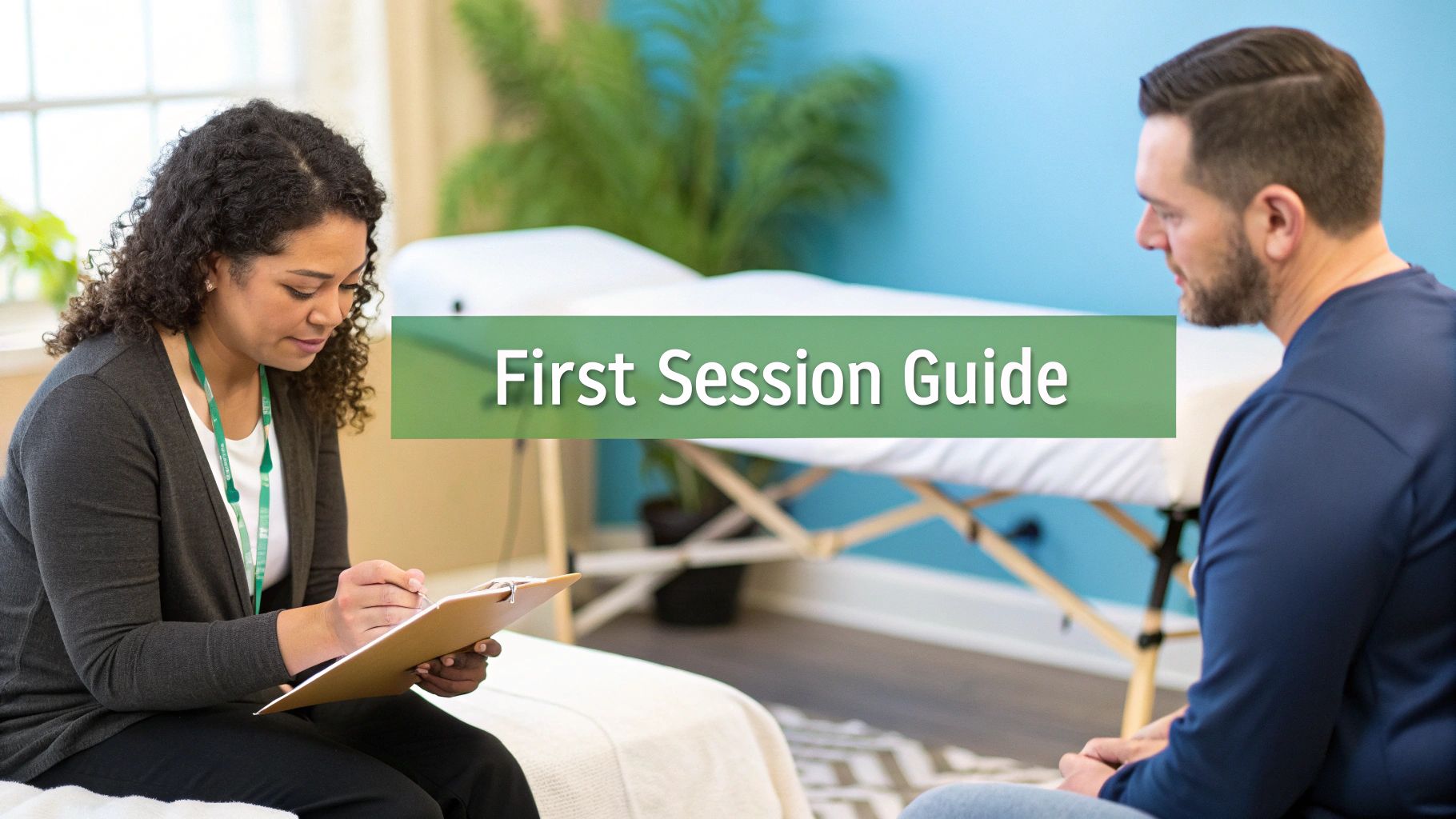
The appointment doesn't start with the massage itself, but with a conversation. This is the initial health intake, and it's a vital part of the process. You and Taylor will sit down and chat about your health history, what's bothering you right now, and what you hope to get out of the session. Be ready to share details about old injuries, ongoing conditions like arthritis, or specific areas of pain. This discussion is always confidential and gives your RMT the information needed to design a treatment that's both safe and effective for you.
Consent and Communication are Key
Before any hands-on work begins, Taylor will outline the proposed treatment plan and ask for your informed consent. This isn't just a formality; it's a cornerstone of professional practice in Ontario and your chance to ask questions and set boundaries. You are always in the driver's seat, and your comfort is the absolute top priority.
That clear communication needs to continue once the massage is underway. In fact, it's even more crucial then. Your real-time feedback is what allows the therapist to adjust their technique and make sure you're getting exactly what you need.
Don't ever hesitate to speak up. A good therapist wants to know:
Pressure: Is it too deep, too light, or just right? A simple "a little less pressure there, please" is perfect.
Discomfort: If a technique feels painful or just "off," say so immediately. There's no such thing as "no pain, no gain" in a therapeutic massage.
Temperature: Feeling a bit chilly? Just ask for another blanket.
Positioning: An extra pillow under your knees or a different headrest position can make all the difference. All you have to do is ask.
Your voice is the most important tool in the room. An effective therapeutic partnership is built on open, honest communication. It ensures you get the results you want in a way that feels completely safe and comfortable.
This collaborative approach is a hallmark of the profession. A therapist's expertise and specializations often shape their career and earning potential. For instance, independent practitioners frequently earn more than their counterparts in a spa setting, which reflects their advanced skills and the demands of running a business.
Your Privacy and Professional Draping
Privacy is a common concern, especially for a first session. Rest assured, Registered Massage Therapists follow strict draping protocols to ensure you feel secure and respected at all times. You'll be asked to undress to your personal comfort level, and you will be covered by a sheet or blanket throughout the treatment.
Only the specific part of your body being worked on at that moment will be undraped. For example, if Taylor is focusing on your shoulder, the rest of your body remains comfortably and securely covered. This professional standard maintains your dignity and keeps you warm, allowing you to fully relax into the treatment. For a more detailed look at what a visit involves, you can read our guide to an at-home RMT session in Milton, Ontario.
Once the hands-on portion is over, your therapist will leave the room so you can get dressed in complete privacy. They'll come back in after a few minutes to discuss what they found, offer helpful aftercare advice like gentle stretches or hydration tips, and get your next appointment booked if you'd like. The whole process is structured to build trust and make your first visit a truly positive one.
Your Questions Answered About In-Home Massage Therapy
It’s completely normal to have questions before inviting a massage therapist into your home. It’s a big step towards taking control of your health, and feeling prepared is key to a great experience. We get a lot of the same queries from clients all over our service areas, from Brampton to Oakville, so let's walk through them.
The aim is to make everything, from the moment you book to the treatment itself, feel easy and comfortable. Getting these details sorted out upfront means you can relax and focus on what’s most important: your well-being.
Do I Need to Be an RMT to Provide Massage Therapy?
In Ontario, the answer is a hard yes. To legally practise massage therapy, an individual must be a Registered Massage Therapist (RMT). This title isn't just a fancy name; it's a professional designation from the College of Massage Therapists of Ontario (CMTO). It’s your guarantee that the therapist has completed rigorous training and is held to the highest professional and ethical standards.
When you book with an RMT like Taylor, you’re not just getting a massage—you’re receiving care from a licensed healthcare professional. That's a critical difference.
Can You Claim Mobile Massage on Insurance?
Absolutely. If your extended health benefits cover massage therapy, then treatments from a mobile RMT should be covered too, as long as they are registered with the CMTO.
After your session, you'll be provided with an official RMT receipt that has everything your insurance company needs:
The RMT's full name and registration number
The date, time, and length of your treatment
The total cost of the session
A clear description of the service you received
You just submit that receipt to your provider for reimbursement, the same way you would if you’d visited a clinic.
It’s always a good idea to double-check the specifics of your plan beforehand. While services from an RMT are typically eligible, some insurers have their own quirks.
What Payment Methods Are Accepted?
We try to keep the payment process as simple as possible. People have different preferences, especially when a family member might be arranging the care.
You can typically pay for your session using:
Credit Card: A quick and secure option.
E-transfer: Very popular for direct payments from your bank.
Debit: This can be processed in person at the end of your session.
Payment is handled right after your treatment, and your insurance receipt will be emailed to you on the spot.
What If I Live in a Condo or Apartment?
Living in a condo, an apartment, or even just a smaller home in places like Mississauga or Etobicoke is no problem at all. A good mobile RMT knows how to adapt to all sorts of spaces.
All that's really needed is a quiet, private area with enough room for the massage table and for the therapist to move around it. A space of roughly 10x12 feet is ideal. This could be a living room with the coffee table pushed aside, a spare bedroom, or even a cleared-out home office. Don't worry about the heavy lifting—the table and all equipment will be brought right up to your unit.
Are There Any Contraindications for Massage?
Your safety is always the top priority. Massage therapy is wonderfully beneficial for most people, but there are certain situations, which we call contraindications, where we need to be cautious, modify the treatment, or even postpone it.
Before your first session, we'll go through a detailed health history form to screen for any potential issues. Common contraindications include things like:
Fever or an infectious illness
Acute inflammation from a recent, serious injury
Certain skin conditions or open wounds
Deep vein thrombosis (blood clots)
Some advanced heart or kidney conditions
If you have a complex medical history, it's always smart to have a quick chat with your doctor before booking a massage. Taylor is trained to adapt his techniques for a wide range of conditions to make sure your session is both safe and effective. It all comes down to open communication so we can build the best care plan for you.
Ready to feel the difference that professional, compassionate care in your own home can make? We bring expert RMT services right to your door.
Book your session with Taylor today and start your journey to better health.


