


Physiotherapist Cost in Ontario: Fees, OHIP & What Affects Price
Updated: Sep 8
How much does a physiotherapist cost in Ontario? There is no single province-wide fee. Private physiotherapy prices vary by clinic, visit length, location, and whether you need an initial assessment versus a follow-up. Treat any dollar ranges on this page as educational context only—confirm the current fee with the clinic you choose before you book.
Does OHIP cover physiotherapy? Often not for routine private clinic visits. Some workplace, auto, or extended-health plans may reimburse physiotherapy when your plan lists it—your insurer decides. Stillwaters Healing & Massage is an in-home RMT / massage therapy service, not a physiotherapy clinic, and does not set or bill physiotherapy fees.
If you are comparing scopes or planning soft-tissue comfort care after a clinician clears you, Stillwaters offers qualified in-home RMT visits with Brampton and Peel as the priority. Request time on the Stillwaters booking page or call (416) 706-5748. You receive an RMT receipt; Stillwaters does not promise direct billing.
For regulated-scope context, see Physiotherapy vs Massage Therapy: RMT vs Physiotherapist Scope. This page does not diagnose injuries, prescribe rehab programs, or promise recovery timelines.
Your Guide to Physiotherapy Costs in Ontario
Getting a handle on the costs is a crucial first step in planning your recovery. While the numbers can fluctuate, it helps to have a ballpark figure in mind, especially when you're budgeting for care in communities like Brampton, Toronto, or Mississauga. Keep in mind that the cost isn't just for the therapist's time; it also covers their specialized skills, training, and the clinic's overhead.
This chart gives you a quick visual on how costs in a major hub like the GTA stack up against the national average.
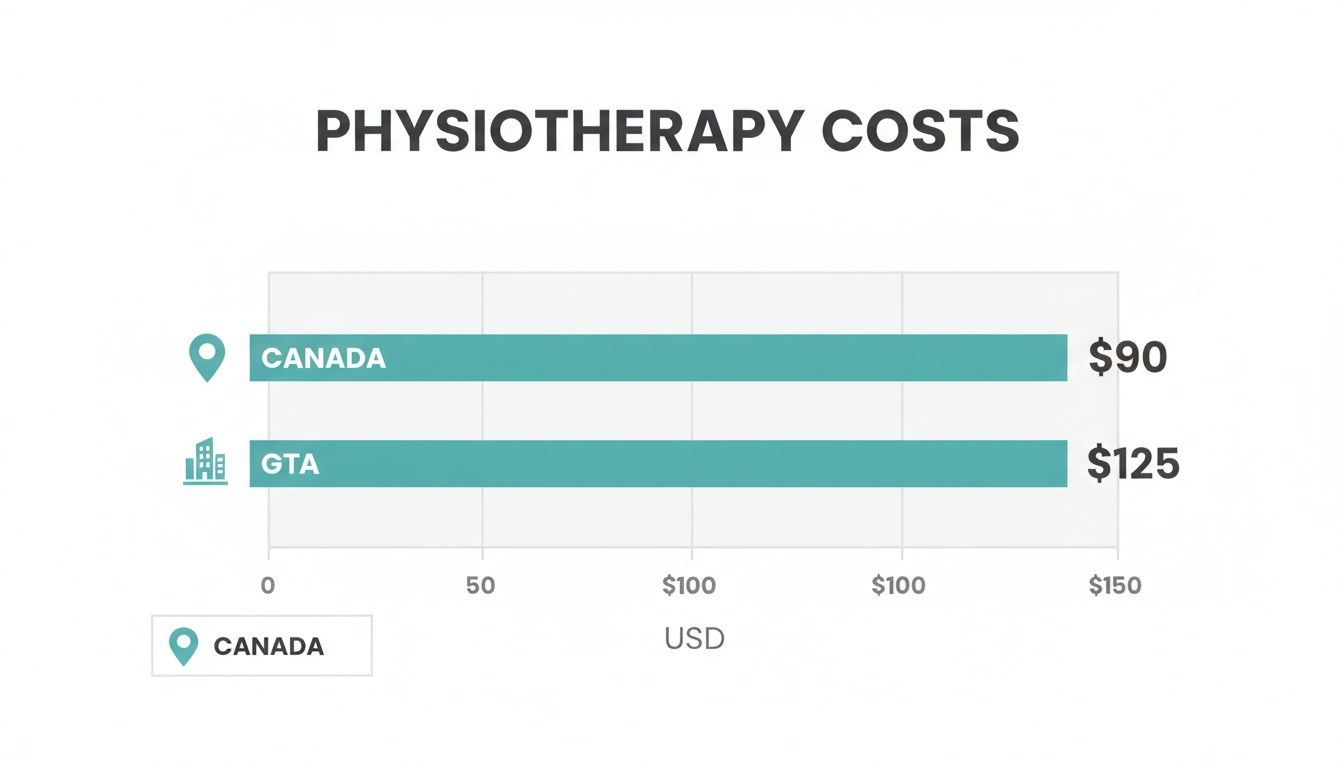
As you can see, living in a big city often comes with a higher price tag for healthcare, and physiotherapy is no exception.
A Look at Average Session Prices
Across Canada, physiotherapy costs are fairly consistent, usually landing somewhere between $75 to $100 for an hour-long session. Here in the GTA, however, that number climbs. You can expect a 60-minute session in Toronto to cost around $160 to $165, while a shorter 40-minute appointment might be in the $123 to $129 range.
To make it even clearer, here’s a quick summary of what you might expect to pay for different types of physiotherapy services in our area.
Estimated Physiotherapy Costs in the GTA
Service Type | Average Cost Range |
|---|---|
Initial Assessment (60 mins) | $120 - $165 |
Standard Follow-Up (45 mins) | $100 - $130 |
Short Follow-Up (30 mins) | $85 - $110 |
In-Home Physiotherapy Visit | $150 - $200+ |
Of course, think of these numbers as a guide, not a rule. The final cost can be shaped by the physiotherapist's level of experience, the specific treatments you need (like pelvic floor therapy or acupuncture), and whether you're visiting a clinic or having them come to your home.
If you're curious how these prices compare to other hands-on therapies, you can see our breakdown of RMT prices in the GTA for a side-by-side view.
What Really Determines Physiotherapy Pricing
Ever wondered why one physiotherapy session costs more than another? It’s not just a random number. The price you see is actually a reflection of several key factors, from the therapist’s expertise to the very location of the clinic. When you understand what goes into the cost, you get a much clearer picture of the value you're receiving.
Think of it like this: the final cost is built from different layers. The main ones are the length of your session, the specific type of treatment you need, the therapist's credentials, where the clinic is located, and whether they come to you or you go to them. Let's break down how each piece affects the bottom line.
Session Duration and Complexity
The most direct factor in pricing is simply time. Your first appointment, the initial assessment, is almost always the longest—usually 60 minutes or more. This gives your therapist the time needed to do a deep dive into your history, assess your movement, and map out a solid plan.
Follow-up sessions are typically shorter, maybe 30 to 45 minutes, and focus on carrying out that plan. Naturally, a longer, more in-depth session will cost more. The complexity of your condition also plays a role. Rehabbing a straightforward ankle sprain is quite different from creating a long-term management plan for chronic back pain, and the pricing often reflects that difference in skill and strategy.
Practitioner Experience and Specialization
Not all physiotherapists are the same, and their level of expertise is a big part of the cost. A therapist with a Doctor of Physical Therapy (DPT) and a decade of experience will understandably have higher rates than someone fresh out of school. You're paying for their advanced knowledge and their history of getting results.
Specialized treatments also tend to cost more because they require extensive, dedicated training. Some of these highly focused areas include:
Pelvic Floor Physiotherapy: A crucial specialty for treating conditions like incontinence and pelvic pain.
Vestibular Rehabilitation: Targeted therapy to help with dizziness and balance issues.
Neurological Physiotherapy: Specialized care for individuals managing conditions like stroke, Parkinson's, or multiple sclerosis.
A physiotherapist who has invested years in becoming an expert in a specific field brings a higher level of targeted, effective care to the table. This is a key reason why how much a physiotherapist cost can vary so much—specialization is a significant value-add.
Geographic Location
Location, location, location. It’s true for real estate, and it’s true for physiotherapy clinics. The cost of running a practice—from rent to salaries—is much higher in the heart of Toronto than it is in communities like Caledon or Orangeville. Those operational costs are naturally built into the price of each session.
You’ll often see higher prices at clinics in dense urban areas simply because their overhead is greater. That’s why you might find a price difference between a clinic in Etobicoke and one a bit further out in Milton or Guelph.
Finally, the way you receive care makes a huge difference. Going to a clinic is the standard, but in-home physiotherapy, while incredibly convenient, usually comes at a premium. This extra cost covers the therapist's travel time and expenses to bring their expertise right to your living room. It’s a personalized service that removes the hassle of travel, which for many people, is worth every penny.
Decoding Your Insurance and Funding Options
Figuring out the financial side of healthcare can feel like you're trying to solve a puzzle. But don't worry, you don't have to piece it all together on your own. For many families in Brampton, Mississauga, and right across the GTA, private insurance and public funding are the keys to making physiotherapy affordable. Learning how to tap into these resources can make a huge difference in your out-of-pocket costs.
For most people, private health insurance—usually from an employer—is the first stop. Big names like Sun Life, Manulife, and Canada Life often cover a certain percentage of each session, or they might give you a set dollar amount to use per year for physiotherapy. The first step is always to dig into your specific plan to see what’s what.
Understanding Your Private Health Plan
Before you even book that first appointment, it’s a good idea to get familiar with a few terms. These are the concepts that decide how much your plan actually covers and what you'll end up paying yourself.
Coverage Limits: Think of this as your annual budget for physio. For instance, your plan might cover up to $500 per person each year. Once you hit that cap, the rest is on you.
Co-pay or Co-insurance: A co-pay is a flat fee you pay for each visit (say, $20), while co-insurance is a percentage. If your plan has 80% co-insurance, you’d pay 20% of the session fee, and your insurer handles the rest until you reach your annual limit.
Deductible: This is a set amount you have to pay out-of-pocket before your insurance benefits even start. Not every plan has a deductible for physiotherapy, but it's definitely something you need to check for.
To make life easier, a lot of clinics offer direct billing, so you don't have to pay the full amount upfront and wait for reimbursement. The process is very similar for different types of therapies, so you can learn more about how massage therapy direct billing works in Ontario to get a better sense of it.
Exploring Publicly Funded Options
While most physiotherapy is paid for through private plans, there are specific situations where public funding comes into play through the Ontario Health Insurance Plan (OHIP). This is especially important for certain groups and circumstances.
OHIP-funded physiotherapy is typically available for individuals aged 19 and under, 65 and over, or anyone who has been recently discharged from a hospital stay and requires physiotherapy for the condition they were admitted for.
This coverage is offered at government-funded physiotherapy clinics, not private ones. Keep in mind that there are usually limits on how many sessions you can get or how long your treatment can last. This system helps make sure these public resources go to those who need them most, like a senior in Oakville or someone in Etobicoke recovering from surgery.
Checking to see if you or your loved one qualifies is a fantastic first step. It can help you manage your healthcare budget and get a clear picture of how much does a physiotherapist cost after all the support is factored in.
Thinking Beyond Cost: The True Value of Care
It’s easy to get bogged down by the question, "how much does a physiotherapist cost?" and only see the price tag of a single session. But that’s a narrow view. When you start to see physiotherapy as an investment in your future, the entire conversation shifts from a short-term expense to a long-term gain for your health and even your wallet.
This proactive approach to your well-being can genuinely reduce future medical bills. Think about it: by managing a chronic condition like arthritis or nagging back pain today, you might avoid the need for far more invasive and expensive surgeries or treatments down the road.

An Investment in Independence
For seniors living in communities like Oakville or Caledon, this investment pays off in something priceless: independence.
Staying mobile means you can move around your home safely, keep up with your favourite hobbies, and visit with family without being held back by pain or stiffness. The upfront cost of physiotherapy often seems trivial when weighed against the incredible personal value of staying active and self-reliant.
On a national scale, the numbers are staggering. Illness costs the Canadian economy roughly $236.3 billion every single year. Physiotherapy is already chipping away at that, reducing the financial toll of conditions like osteoarthritis and back pain by $232 million annually.
This is why looking past the immediate cost is so crucial. It’s not just about fixing an ache—it’s about protecting the life you’ve built for yourself.
The Lasting Benefits of Proactive Care
Being proactive with your health builds a strong foundation for the years to come. A good physiotherapist does much more than treat your current symptoms; they give you the knowledge and tools to manage your health independently. You can explore more about how hands-on therapy contributes to long-term wellness in our article on massage therapy for graceful aging.
The real return on your investment comes from this empowerment. For example, a therapist might teach you specific gentle bed exercises for elderly parents to maintain strength and mobility. This kind of guidance helps prevent future injuries and reduces the need for more costly healthcare services over time. That long-term benefit is the true value you’re paying for.
Choosing Your Path: Physio vs. Mobile Massage
Once you have a handle on what physiotherapy might cost, the next big question is: what kind of care do you actually need right now? It really boils down to your goals. Are you trying to recover from a specific injury, or are you looking for consistent relief from chronic aches, pains, and stress? Your answer will point you toward either in-clinic physiotherapy or the convenience of mobile massage therapy.
Think of a physiotherapist as a movement detective and coach. They excel at diagnosing the root cause of a problem—why your knee hurts when you climb stairs or why your shoulder aches after gardening. From there, they build a structured plan with specific exercises and treatments to help you rebuild strength, restore proper function, and get you moving correctly again. It’s an active, goal-oriented process.
A mobile Registered Massage Therapist (RMT), like our male therapist Taylor at Stillwaters Healing & Massage, offers a different but equally valuable approach. The focus is on bringing expert, hands-on care right to your doorstep. This is all about skillfully manipulating muscles and soft tissues to relieve pain, ease tightness, boost circulation, and help your body and mind relax. It’s an ideal solution for managing ongoing discomfort and maintaining your well-being without ever leaving home.
In-Clinic Physiotherapy vs. Mobile RMT Services
To make the choice clearer, let’s compare them side-by-side. This table highlights the key differences to help you decide between visiting a physio clinic and having a mobile RMT come to you in Brampton, Mississauga, or the surrounding Halton and Peel regions.
Feature | In-Clinic Physiotherapy | Mobile Massage Therapy (Stillwaters) |
|---|---|---|
Primary Goal | Diagnose and rehabilitate injuries; restore function and movement. | Manage pain, relieve muscle tension, and enhance relaxation. |
Setting | A clinical environment with specialized diagnostic and exercise equipment. | The comfort and privacy of your own home, care facility, or residence. |
Convenience | Requires travel to and from the clinic for scheduled appointments. | Eliminates travel, offering maximum convenience, especially for those with mobility issues. |
Best For | Individuals recovering from surgery, acute injuries, or specific functional impairments. | Seniors, caregivers, and individuals seeking relief from chronic pain, stress, or muscle stiffness. |
Ultimately, this comparison isn't about which one is "better," but which one is the best fit for your current situation and what you want to achieve for your health.
Making the Right Decision for You
Here’s the thing: choosing between physiotherapy and massage isn't always an either/or decision. They can actually be a powerful team. Your physiotherapist might lay out the roadmap for your recovery, while regular in-home massage from an RMT helps manage the muscle soreness and pain that can come with rehabilitation exercises. To dig deeper into how they complement each other, check out our article on distinguishing between physio and massage therapy.
The right choice depends entirely on your personal wellness goals. If your main objective is to rebuild function after a specific incident, physiotherapy is your starting point. If your goal is comfort, pain management, and convenient care, mobile massage therapy is an excellent solution.
Beyond just these two options, it's always smart to stay curious about other paths to feeling better. For example, exploring modalities like Pilates for rehabilitation can open your eyes to new ways of building core strength and stability. By taking a moment to evaluate your needs, you can confidently pick the service that truly aligns with your journey back to health.
Bringing Therapeutic Care Right to Your Doorstep
Let's be honest, sometimes just getting out the door to an appointment can feel like half the battle. For many people, especially seniors or anyone dealing with mobility challenges, the logistics of travelling to a clinic can be a real barrier to getting the consistent care they need.
This is where in-home therapy completely changes the game. It flips the traditional model on its head—instead of you going to the treatment, the treatment comes directly to you.
The entire approach is built around your convenience and comfort. When a therapist comes to your home, all the stress of travel, crowded waiting rooms, and navigating an unfamiliar building just melts away. You get to receive expert care in the one place you feel most relaxed and secure.
Meet Your In-Home RMT
At Stillwaters Healing & Massage, our male RMT, Taylor, is dedicated to making this kind of accessible care a reality for people right across the GTA. He brings his full range of therapeutic services to communities from Brampton and Etobicoke to Oakville and Milton, making sure that high-quality care is always within reach.
Taylor specializes in several hands-on therapies that are perfectly suited for clients who benefit most from home-based care.
Swedish Massage: A classic technique focused on relaxation, easing muscle tension, and improving circulation.
Deep Tissue Massage: Targets the deeper layers of muscle and connective tissue, ideal for chronic aches and pains.
Sports Massage Therapy: Designed to help prevent and treat injuries, improve flexibility, and enhance athletic performance.
Geriatric Massage: Gentle, compassionate touch designed to ease the common aches of aging and boost quality of life.
Rehabilitation Massage: Helps reduce muscle tension and improve flexibility as you recover from an injury or surgery.
Myofascial & Trigger Point Release: Targeted techniques to release restrictions in connective tissues and muscles for lasting pain relief.
Cupping Therapy: Uses suction to ease pain, reduce inflammation, and improve blood flow.
Joint Mobilization: Gentle movements to improve range of motion and reduce stiffness in joints.
Hydrotherapy Applications: Therapeutic heat packs to soothe sore muscles and reduce joint stiffness.
Energy Healing: A gentle, holistic approach to promote balance and well-being.
The goal of in-home massage therapy is simple: to remove the barriers and deliver exceptional therapeutic care that fits seamlessly into your life. It’s about helping you feel your best without ever having to step outside your front door.
This convenient service is a fantastic option to consider when you're planning your wellness budget. You can learn more about how a mobile massage therapist brings care to your home in the GTA.
Ready to feel the profound difference of in-home therapeutic care? Book a session with Taylor today and discover a more comfortable, convenient path to feeling great.
Common Questions About Physiotherapy and Costs
As you start thinking about recovery, it’s completely normal to have questions swirling around, especially when it comes to the financial side of things. To help you feel more confident as you move forward, we've put together some straight answers to the questions we hear most often from people here in Ontario.
Think of this as your quick guide to navigating the practical side of physiotherapy.
Is Physiotherapy Covered by OHIP in Ontario?
This is a big one, and the answer is: sometimes, but it’s very limited.
OHIP generally only covers physiotherapy for specific groups: youth 19 and under and seniors 65 and over. It can also cover anyone who was recently discharged from the hospital and needs physiotherapy for that specific condition.
Even then, this care is only available at government-funded clinics, which often have long waitlists and a limit on how many sessions you can get. For most working-age adults, physiotherapy is an out-of-pocket expense or is covered by private insurance.
Do I Need a Doctor's Referral for Physiotherapy?
Technically, no. In Ontario, physiotherapists are primary healthcare providers, meaning you can book an appointment directly without seeing a doctor first.
But here’s the catch: your insurance company might have other ideas. Many private insurance plans absolutely require a doctor's referral before they’ll agree to cover your sessions. It’s always best to make a quick call to your insurer first to avoid any nasty surprises on your bill.
How Can I Save Money on Physiotherapy?
There are definitely a few smart ways to manage the costs without compromising your care. First, get to know your private insurance plan inside and out. Understand your annual limits, co-pay amounts, and what’s covered.
You can also ask clinics if they offer any treatment packages for a slightly lower per-session rate. Some may also offer shorter, more focused appointments that cost less.
The most important tip? Be diligent with your home exercise program! Sticking to the exercises your physio gives you is the single best way to speed up your recovery, which naturally means you’ll need fewer paid sessions in the long run.
What Is the Difference Between a Physiotherapist and an RMT?
They might both help with pain, but they approach it from different angles. A physiotherapist is like a mechanic for your body’s movement. They diagnose injuries and conditions to restore function, often using prescribed exercises, manual therapy, and specialized equipment to get you moving properly again. Their main goal is rehabilitation.
A Registered Massage Therapist (RMT), like Taylor from Stillwaters, focuses on the hands-on manipulation of muscles and soft tissues. An RMT’s goal is to relieve pain, ease muscle tension, and improve circulation through direct manual therapy. It’s a fantastic service for immediate pain management, stress relief, and relaxation.
For personalized, in-home care that tackles pain and boosts mobility without the hassle of travel, consider the unique benefits of mobile massage therapy. Stillwaters Healing & Massage brings expert therapeutic services right to your doorstep in Brampton, Toronto, Etobicoke, Oakville, Caledon, Orangeville, Mississauga, Milton, Halton, and Guelph.


