


How to Relieve a Muscle Knot in Neck with Mobile Massage
Have you ever felt that nagging, tender lump in your neck that just won't seem to go away? That's what we call a muscle knot. The technical term is myofascial trigger point, but the feeling is universal.
Imagine your muscle fibres as smooth, parallel strands of rope. A knot forms when these fibres tense up, contract, and get stuck together. This creates a painful, hard nodule that limits your range of motion and is often tender to the touch.
Unravelling the Mystery of Neck Knots

A muscle knot is more than just a simple ache. It's a small patch of muscle that's essentially stuck in a contracted state. This tiny spasm can actually cut off its own blood supply, which leads to a build-up of waste products and heightens sensitivity in the area. It creates a frustrating cycle of pain and tightness that can be tough to break on your own.
While these knots are incredibly common, some factors can make you more prone to them. A sedentary lifestyle, chronic stress, and especially poor posture are major culprits. Getting to the root of how poor alignment contributes to tension is key, and learning how practices like Pilates and posture can help realign the body is a great first step toward prevention.
To make things a bit clearer, here's a quick cheat sheet on neck knots.
Understanding Your Neck Knot at a Glance
Key Aspect | Simple Explanation |
|---|---|
What It Is | A small, tight, and tender spot in your muscle tissue. |
The Feeling | It can feel like a hard lump or nodule under the skin. |
Why It Happens | Muscle fibres get tangled and stuck in a contracted state. |
Common Triggers | Poor posture, stress, overuse, or lack of movement. |
Key Symptom | A deep, aching pain that can sometimes refer to other areas. |
Breaking it down like this helps take some of the mystery out of what you're feeling.
Who Is Most Affected by Neck Knots?
While anyone can get a muscle knot, they are particularly common among seniors and individuals with limited mobility. The daily physical demands of caregiving or simply sitting for long periods can put an enormous strain on the neck and shoulder muscles.
Here's who we often see struggling the most:
Seniors: As we age, our muscles lose some of their elasticity, and we tend to be less active. This combination makes seniors more vulnerable to developing persistent knots.
Caregivers: The constant lifting, assisting, and supporting of a loved one often leads to chronic tension building up in the upper body.
Mobility-Limited Individuals: People who spend a lot of time in wheelchairs or beds frequently develop muscle imbalances that result in these painful trigger points.
This isn't just a minor issue; it's a significant concern right here in our communities. In the Peel Region, for example, neck pain is a major problem for the senior population. In fact, over 30% of adults aged 65 and older in the Greater Toronto Area report having chronic neck discomfort, often stemming from these stubborn knots.
This goes beyond simple inconvenience. A 2022 report pointed out that musculoskeletal issues contribute to 25% of emergency room visits among seniors in local assisted living facilities.
The good news is that you don't have to live with this discomfort. Professional, compassionate care can bring lasting relief. For a deeper look into the science behind it all, check out our guide on myofascial release and trigger points.
And with specialized mobile RMTs like our male therapist, Taylor, from Stillwaters Healing & Massage, that professional care can be delivered right to your doorstep in Brampton, Mississauga, and across the GTA.
Why Do Seniors and Caregivers Get So Many Neck Knots?
A muscle knot in your neck can feel like a constant, unwelcome companion, but it doesn't just show up out of the blue. These stubborn points of tension are almost always a direct result of our daily lives, our routines, and the unique physical demands we face. For seniors and their dedicated caregivers, certain activities and conditions create the perfect storm for these knots to develop and stick around.
Think about a senior in an Etobicoke nursing home who spends a few hours each day in a wheelchair or their favourite armchair. While it looks restful, this prolonged sitting often leads to what's called static posture. The head, which weighs a surprising 10-12 pounds, naturally drifts forward. This forces the muscles at the back of the neck to work overtime, kind of like holding a heavy fishing rod steady for hours on end. That constant, low-level strain is a primary reason knots start to form.
Now, picture a caregiver in Caledon who spends their day helping a loved one. The repetitive motions of lifting, transferring, and assisting with daily tasks put a ton of physical stress on the neck and shoulders. Each movement, even when done with care, adds to muscle fatigue and tiny bits of micro-trauma, causing muscle fibres to tighten up and bind together into those painful knots.
The Toll of Limited Mobility and Daily Strain
For anyone with mobility challenges, like those living with MS or recovering from an injury, the neck muscles often end up compensating for weakness elsewhere in the body. This imbalance leads to overuse and fatigue in very specific spots, turning them into hotspots for trigger points.
When you boil it down, the core issue usually comes from a few common scenarios:
Prolonged Sitting: Whether you're reading, watching television, or simply resting, staying in one position for too long weakens key postural muscles and forces others to pick up the slack.
Repetitive Physical Tasks: The day-in, day-out duties of caregiving involve countless repetitive actions that strain the upper back, shoulders, and neck.
Emotional Stress: The emotional weight of managing a chronic health condition or caregiving responsibilities makes the body hold onto tension. This often shows up as tightened shoulders and a clenched jaw, which directly pulls on the neck.
Reduced Physical Activity: As we age or face mobility limitations, our activity levels naturally tend to decrease. This can lead to deconditioned muscles, making the ones we do use more susceptible to strain and knots.
These factors can easily create a cycle of pain and tension that’s incredibly difficult to break on your own. This isn't a new problem in our communities, either. Historical data from Canadian health surveys shows that neck muscle knots have been a persistent issue for Peel Region residents since the early 2000s. In fact, a 15-year study noted a 22% rise in reported cases among older adults from 2005 to 2020. This increase is tied to the aging population boom in the west GTA, where over 18% of Peel’s 1.5 million residents are now 65+.
These knots often come from sustained, low-level activity—like the routines of caregiving or being facility-bound—which leads to long periods of muscle work without any real rest. This triples the risk of chronic pain. You can read more about these local musculoskeletal health trends.
What’s Happening Inside the Muscle?
So what's actually going on in there? When a muscle is held tight for too long without enough rest or movement, a couple of things happen. Blood flow to that specific spot gets restricted, which means the muscle fibres are starved of the oxygen and nutrients they need to function. At the same time, metabolic waste products start to build up, irritating the nerve endings and causing that familiar deep, aching pain.
This creates a self-perpetuating cycle: the pain makes the muscle tense up even more to protect itself, which further restricts blood flow and increases the waste build-up. This, in turn, makes the knot even more painful and stubborn.
Breaking this cycle requires a focused approach that gets to the root of both the physical tension and its underlying causes. It’s exactly why generic, one-size-fits-all solutions often don’t work for seniors and caregivers, whose lifestyles present such unique challenges.
Often, the most effective way to get real relief is to bring professional care right into the home. To see how that works, you can learn more about our mobile massage therapy in the Greater Toronto Area. Understanding these specific triggers is the very first step toward finding a lasting solution that truly fits your needs, right where you are in Mississauga, Halton, or Guelph.
Symptoms Beyond a Simple Stiff Neck
That tight, tender muscle knot in your neck rarely keeps its misery in one place. While you'll definitely feel that sore spot, these little troublemakers—technically called myofascial trigger points—are famous for sending pain signals far and wide. It's a confusing and frustrating experience.
Imagine a trigger point as a tiny, hyper-irritable spot in your muscle that’s stuck in a contracted state. When it gets aggravated, it doesn't just hurt right there; it broadcasts pain elsewhere.
This is called referred pain, and it's the main reason neck knots are so deceptive. The nagging ache in your head, that weird pain in your jaw, or the tingling down your shoulder could all be traced back to that one tight bundle of muscle fibres in your neck. Getting a handle on these connections is the first real step toward finding relief. You start to realise that all these seemingly separate pains might just have a single culprit.
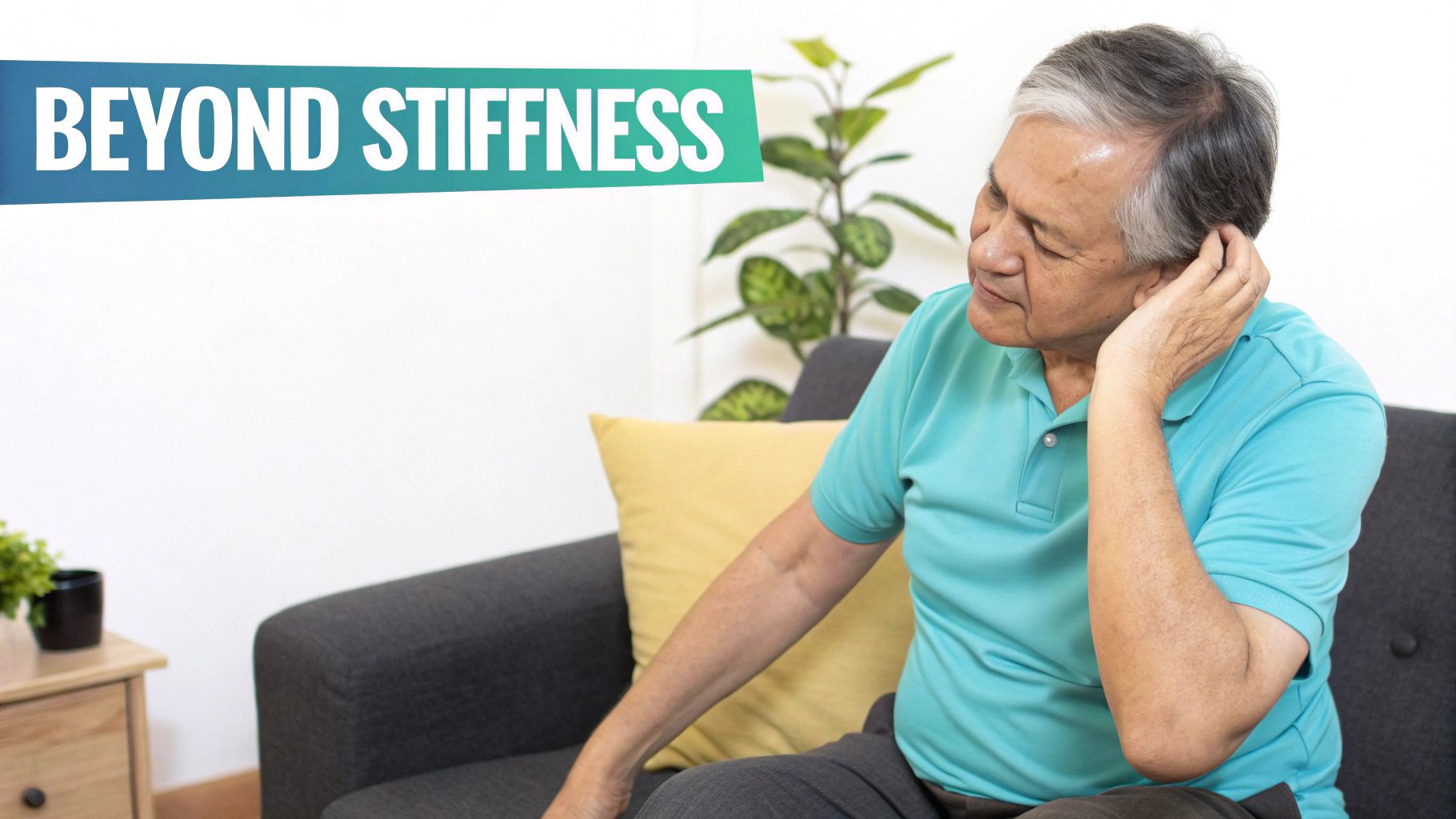
Unmasking the Diverse Symptoms of Neck Knots
When a muscle knot decides to set up shop in the complex web of muscles around your neck and shoulders, the symptoms can show up in ways you'd never expect. Learning to recognize these signs helps you connect the dots and understand just how much that knot is affecting you.
Here are some of the most common ways a neck knot makes its presence known, going far beyond just a stiff neck:
Tension Headaches: This is, by far, the most frequent partner in crime to a neck knot. Trigger points in the upper trapezius or the small muscles at the base of the skull can shoot pain right up into your head. It often feels like a tight band is squeezing your skull.
Jaw Pain and Discomfort: Ever have jaw pain that has nothing to do with your teeth? Knots in the sternocleidomastoid (SCM) muscle—that thick one on the side of your neck—are notorious for referring pain straight to the jaw and cheek. It can feel a lot like TMJ disorder, making chewing a real chore.
Radiating Shoulder and Arm Pain: It's not uncommon for a deep knot in the neck or upper back to send a cascade of tingling, numbness, or a dull ache down the arm, sometimes all the way to the fingers. It can be alarming, but it's often a classic signal of referred pain.
Earaches and Dizziness: This one really throws people off. Certain trigger points, especially in that same SCM muscle, have been linked to bizarre symptoms like unexplained earaches, tinnitus (ringing in the ears), and even a sense of dizziness or being off-balance.
A muscle knot in the neck is like a stone dropped in a pond. The initial splash is the local pain, but the ripples of referred pain can travel much farther, affecting your head, jaw, and arms, significantly disrupting your daily comfort and quality of life.
The Broader Impact on Daily Life
The fallout from a persistent muscle knot goes well beyond the physical pain. Before you know it, these nagging symptoms have crept into every part of your day, making even simple tasks feel like climbing a mountain.
The constant, grinding discomfort can wreck your sleep, as finding any comfortable position becomes impossible. This lack of good, restorative rest then messes with your mood, your focus, and your ability to cope, creating a vicious cycle of pain and exhaustion.
For our neighbours in Brampton, Mississauga, or Guelph, this can mean that turning your head to check a blind spot while driving becomes a painful, dreaded event. For caregivers, the radiating arm pain can make lifting or simply helping a loved one an incredibly difficult task.
Getting to the root of the problem—that stubborn knot—isn't just about making the pain stop. It's about getting your life back. It's about being able to sleep soundly, move without wincing, and fully participate in the things that bring you joy.
Safe and Gentle At-Home Relief Techniques
When you're dealing with a nagging muscle knot in your neck, finding some quick, safe relief at home becomes a top priority. While seeing a professional is really the best way to get lasting results, there are a few gentle things you can do to ease the discomfort and manage the pain between your massage appointments.
The key here is gentleness, especially for seniors or anyone with mobility challenges. Always listen to your body—these techniques should feel relieving, not cause any sharp pain.
Applying Gentle Moist Heat
One of the simplest yet most effective ways to soothe a tight muscle is with moist heat. Unlike a dry heating pad, moist heat has a knack for penetrating deeper into the muscle tissue, which helps those contracted fibres finally relax and boosts circulation to the area.
Why is more blood flow so important? It brings in a fresh supply of oxygen and nutrients that the tense muscle desperately needs, while also helping to flush out the metabolic junk that’s contributing to all that pain and soreness.
To use moist heat safely:
Grab a moist heat pack, a warm, damp towel, or simply hop into a warm shower or bath.
Apply it to the sore spot for about 15-20 minutes.
Always have a layer of cloth between the heat source and your skin to prevent any burns.
And a crucial reminder: never, ever fall asleep with a heating pad on.
That comforting warmth is a fantastic first step to coaxing that knotted muscle to let go.
Light Self-Massage with a Therapy Ball
A bit of gentle self-massage can work wonders by getting right to the source of the problem. Using a soft therapy ball—a simple tennis ball works great, or you can find specialized massage balls—puts you in complete control of the pressure.
Just place the ball between your neck or shoulder and a wall. Lean into it gently, applying mild, steady pressure on that tender spot. You can make small, slow movements to explore the area, but try to avoid any aggressive rolling, as that can just make the muscle angrier. When you find a sore point, hold the pressure for about 30 seconds and focus on taking deep, slow breaths. This helps signal to the muscle that it's okay to relax.
This technique is all about manually encouraging those tiny adhesions in the muscle fibres to release. You can learn more about the principles behind this by reading up on how to use a trigger point foam roller for muscle knots, as the concepts are very similar.
Important Precaution: If you're an older adult or have sensitive skin, it's a good idea to do this over a layer of clothing to avoid any friction. And if you have any underlying health conditions like osteoporosis, it’s always best to check with your doctor before trying any self-massage.
For more ideas tailored to home use, you can explore these self-massage techniques for seniors.
Seated Stretches for Neck Mobility
Stretching is vital for easing tension, but it has to be done carefully to avoid aggravating the knot. The goal is to gently lengthen the muscle, not force it into submission. The great news is all of these can be done safely while sitting in a sturdy chair.
Gentle Side Bend: Sit up tall and slowly tilt your right ear toward your right shoulder. Stop when you feel a light stretch along the left side of your neck. Hold it there for 15-20 seconds, breathe, and then switch sides.
Chin Tucks: Looking straight ahead, gently pull your chin backward as if you're trying to make a double chin. This creates a wonderful stretch at the base of your skull. Hold for just 5 seconds and repeat 5 times.
Shoulder Rolls: This one's a classic for a reason. Simply roll your shoulders up toward your ears, then back and down in a smooth, circular motion. Do this 5-10 times to release tension in those upper trapezius muscles where so many knots love to hide.
Remember, these home-care strategies are fantastic for temporary relief. Think of them as supportive players in your overall wellness plan. They are most effective when paired with professional care that gets to the root cause of why the muscle knot formed in the first place. For those in the Oakville, Halton, or Guelph area, combining these gentle home remedies with professional mobile massage therapy from an RMT like Taylor is a powerful way to find lasting comfort.
How Mobile Massage Therapy Unlocks Lasting Relief
While at-home remedies can offer some welcome, temporary relief from a stubborn muscle knot in your neck, they often just skim the surface. When that tight, painful spot simply won't let go, getting professional help is the surest way to find lasting comfort. This is where specialized, in-home care from a Registered Massage Therapist (RMT) like Taylor really shines, especially for our clients in Oakville, Milton, and Guelph.
The real magic of mobile massage therapy is that it removes barriers to getting care. For seniors or anyone with mobility challenges, just getting to a clinic can be a major source of stress and physical strain—the very things that cause muscle tension in the first place. By bringing professional treatment right to your home, Stillwaters Healing & Massage eliminates that hurdle, creating a calm, safe, and healing space where you're already most comfortable.
Specialized Techniques for Releasing Neck Knots
A professional RMT has a whole toolkit of techniques designed specifically to find and release those stubborn myofascial trigger points. Taylor's approach is always client-centred, which means every session is adapted to your specific health needs, your comfort level, and the unique nature of your neck pain.
Here are a few of the key methods that bring profound relief:
Trigger Point Release: This is the most direct approach. It involves applying precise, sustained pressure right on the muscle knot. This pressure temporarily cuts off blood flow, and when it’s released, a fresh wave of oxygen-rich blood floods the area. This helps flush out waste products and tells the contracted muscle fibres it's time to relax.
Myofascial Release: This is a much gentler, hands-on technique that targets the fascia—the thin web of connective tissue that wraps around all your muscles. By applying slow, steady pressure, we can stretch and release this tissue, which eases the pull on the knotted muscle and restores flexibility.
Deep Tissue Massage: When done with skill and sensitivity, deep tissue work can be incredibly effective. It focuses on the deeper layers of muscle to break down old adhesions and chronic tension patterns that keep those neck knots coming back.
Swedish Massage: This classic technique uses long, flowing strokes to improve circulation, reduce overall muscle tension, and promote deep relaxation, creating the perfect foundation for more targeted knot work.
Sports Massage Therapy: Not just for athletes, this approach uses a variety of techniques to address specific muscle groups, improve flexibility, and aid in recovery from strain, which is ideal for stubborn neck knots caused by repetitive activities.
When combined, these techniques create a powerful synergy that goes far beyond what you can achieve with self-massage alone.
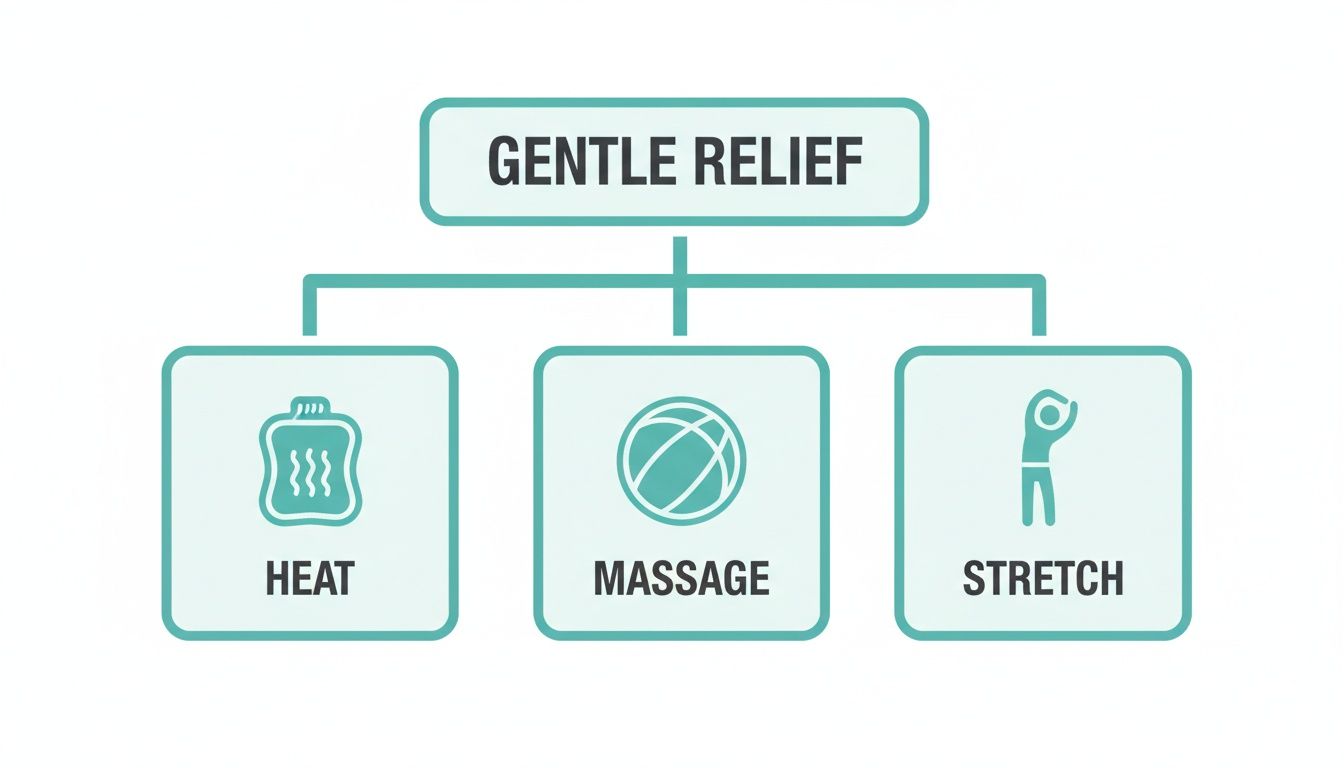
As you can see, heat, self-massage, and stretching form a trio of self-care that can play a big role in managing day-to-day discomfort.
Enhancing Mobility and Restoring Function
Getting rid of a muscle knot isn't just about stopping the pain; it's about restoring proper movement to your neck and shoulders. To help with this, Taylor often weaves additional modalities into a session, including Cupping Therapy, Joint Mobilization, Rehabilitation Massage, Geriatric Massage, Hydrotherapy applications, and even Energy Healing to address both physical and energetic blockages.
Cupping Therapy uses suction to gently lift the skin and underlying tissues. This decompresses tight muscles, boosts blood flow, and releases fascial restrictions, which can dramatically improve neck mobility and melt away stiffness.
Joint Mobilization involves gentle, passive movements of the neck and shoulder joints. This technique helps lubricate the joints, reduce stiffness, and restore a healthier range of motion that's often limited by the muscle guarding caused by a chronic knot.
The goal of a professional session isn't just to temporarily soothe the knot. It's to dismantle it at its source and re-educate the surrounding muscles and tissues to function correctly again, stopping the knot from quickly returning.
This multi-faceted approach is especially critical for our local communities. A recent study highlighted that muscle knots in the neck are a significant factor in chronic pain complaints among seniors in assisted living across the GTA. With a high percentage of adults over 60 experiencing them, often driven by stress and poor posture, the need for effective treatment is undeniable. You can find more information on these local musculoskeletal health trends.
By providing specialized care right in your home in areas from Brampton to Halton, we make it easier to get the consistent, professional treatment needed to finally break the cycle of chronic neck pain. To see how convenient this can be, check out our complete guide to at-home RMT care in Toronto. With the right support, you can move from just managing pain to achieving true, lasting relief.
Your Partner in Wellness, Serving the Greater Toronto Area
That stubborn knot in your neck can be more than just an annoyance; it can turn simple movements into a painful ordeal and truly disrupt your daily life. At Stillwaters Healing & Massage, we get it. Our mission is to help you find lasting relief and get back to feeling like yourself again.
We bring professional, compassionate care right to your home with our mobile Registered Massage Therapy services. This completely removes the stress and hassle of travelling to a clinic, which we know can be a major barrier for many.
Taylor, our dedicated male RMT, excels at creating a safe and therapeutic space wherever you are. This in-home approach is particularly beneficial for managing chronic neck pain, especially for seniors and anyone dealing with mobility challenges. We focus on getting to the root cause of those knots to restore proper function, helping you live more freely.
You can learn more about how our convenient services work in our guide to mobile massage therapy in the Greater Toronto Area.
We Come To You: Convenient In-Home Massage Across the GTA
We're proud to offer our mobile RMT services across a wide range of communities, ensuring that top-tier therapeutic care is always within reach. We serve the following areas: Brampton, Toronto, Etobicoke, Oakville, Caledon, Orangeville, Mississauga, Milton, Halton, and Guelph.
Here’s a quick look at the communities we serve.
Service Areas at a Glance
Region | Cities and Areas Served |
|---|---|
Peel Region | Brampton, Mississauga, Caledon |
Toronto | Etobicoke, Toronto |
Halton Region | Oakville, Milton, Halton |
Dufferin & Wellington | Orangeville, Guelph |
If you don't see your specific location listed, just reach out! We'll do our best to accommodate you.
Take the Next Step Towards a Pain-Free Life
You don’t have to let neck pain call the shots anymore. Professional, effective help is closer and more convenient than you might think.
Lasting relief from that nagging muscle knot in your neck isn't just a dream—it's a real possibility. Taking that first step is the most important part of the journey back to comfort.
Booking a session for yourself or a loved one is simple. Let us partner with you on your path to a healthier, more comfortable life. To schedule your in-home massage therapy appointment with Taylor, just visit our online booking page.
Your Questions, Answered
Deciding to try in-home massage therapy often comes with a few questions, especially when you're dealing with persistent pain. We’ve put together answers to some of the most common queries we get from clients across Brampton, Toronto, and the GTA, so you can feel completely at ease.
Is Deep Tissue Massage Safe for Seniors?
Yes, absolutely. When performed by our Registered Massage Therapist, Taylor, who is trained in geriatric care, every technique is carefully adapted for your safety and comfort.
Instead of aggressive force, we use gentle, sustained pressure that effectively releases a muscle knot in neck without causing any strain. Communication is key, and Taylor will check in with you constantly to ensure the pressure is just right, making it both a safe and deeply therapeutic experience.
What Should I Expect During an In-Home Massage Appointment?
Think of it as bringing a professional clinic to you, without any of the hassle. Our male RMT, Taylor, arrives with everything needed: a comfortable massage table, fresh linens, and high-quality lotion.
He’ll start with a brief chat about your health to customize the treatment perfectly for you. You'll be securely and comfortably draped the entire time, with only the specific area being worked on exposed. Our whole focus is on creating a calm, healing, and safe space right in your own home.
How Many Sessions Will It Take to Fix My Neck Knots?
This really depends on the individual. The number of sessions needed varies based on how deep-seated the knots are and how long they’ve been bothering you.
Many of our clients feel a significant difference after just one or two sessions. However, for more chronic, long-standing knots, a more consistent approach might be needed. Taylor will work with you to create a realistic treatment plan and even suggest simple exercises you can do to maintain the progress between visits.
Our goal isn’t just temporary relief. It’s to give you the professional support and self-care tools needed to manage and prevent future knots, truly improving your quality of life.
Do I Need a Lot of Space for a Mobile Massage?
Not at all! We're experts at adapting to different spaces. We regularly work in apartments, retirement residence rooms, and care facilities throughout Mississauga, Etobicoke, and Oakville.
All that’s needed is a small, clear area big enough for a standard massage table. We can easily make the session work comfortably and professionally within your space, ensuring a seamless and stress-free experience from start to finish.
Ready to finally do something about that persistent muscle knot in your neck and discover the convenience of in-home care? Stillwaters Healing & Massage brings professional, compassionate RMT services right to your door.
Book your appointment today by visiting: https://stillwatershealingmassage.clinicsense.com


