Physiotherapy vs Massage: Which Is Better for You?
- tmcpnet
- 6 days ago
- 15 min read
When you're dealing with pain or limited mobility, it’s easy to get tangled up trying to figure out if you need a physiotherapist or a massage therapist. They might seem similar, but their approaches are fundamentally different.
Here’s the simplest way to think about it: Physiotherapy is a clinical health science that diagnoses the root cause of your musculoskeletal issues and builds a plan to restore long-term function. On the other hand, massage therapy is a hands-on practice focused on manipulating your body's soft tissues to provide more immediate relief from pain and tension.
So, the right choice really hinges on what you need most: a structured rehabilitation program or direct, tissue-focused relief.
Choosing the Right Path for Your Recovery
Deciding between physiotherapy and massage often comes down to your main objective. Are you trying to recover from a specific injury and rebuild strength for the long haul? Or are you looking for a way to manage chronic muscle tightness, reduce stress, and just feel better now? Understanding their unique roles is the first step.
Physiotherapy is all about rehabilitation. A physiotherapist will assess, diagnose, and treat physical problems that stem from illness, injury, disability, or the natural aging process. Their approach is diagnostic and structured, usually involving prescribed exercises, manual therapy, and a lot of patient education. Think of it as a personalized roadmap designed to get your body working properly again.

Massage therapy, especially when done by a Registered Massage Therapist (RMT), zeroes in on the body’s soft tissues—that’s your muscles, connective tissues, tendons, and ligaments. The primary goal is to relieve pain, ease muscle tension, boost circulation, and encourage relaxation through skilled, hands-on manipulation. If you'd like to learn more, have a look at our guide to choosing a Registered Massage Therapist.
Qualifications and Scope: A Clearer Comparison
In Canada, the training and qualifications for these professions are quite distinct, which highlights their different scopes of practice. Physiotherapists typically hold a master’s degree and are trained extensively in clinical assessment, diagnostics, and long-term rehabilitation strategies.
Registered Massage Therapists, in contrast, complete intensive diploma programs—often 2,200 hours or more—that are heavily focused on anatomy, physiology, and mastering a wide range of hands-on techniques for soft tissue health.
Physiotherapy vs Massage at a Glance
For a quick side-by-side view, this table breaks down the core differences in a way that’s easy to digest. It’s a great starting point for figuring out which therapy aligns best with your immediate needs.
Attribute | Physiotherapy | Massage Therapy |
|---|---|---|
Primary Focus | Diagnosing injuries and movement dysfunctions to restore long-term functional ability. | Manipulating soft tissues (muscles, tendons) to relieve pain, reduce muscle tension, and improve circulation. |
Main Goal | Rehabilitation, functional improvement, mobility restoration, and injury prevention. | Immediate pain relief, stress reduction, relaxation, and maintaining tissue health. |
Common Techniques | Prescribed exercises, manual therapy (joint mobilization), education, and modalities like ultrasound or TENS. | Hands-on techniques like Swedish, Deep Tissue, Myofascial Release, and Trigger Point Therapy. |
Provider Qualifications | Licensed Physiotherapist (PT) with a master's degree. | Registered Massage Therapist (RMT) with a comprehensive diploma (e.g., 2,200+ hours). |
Ultimately, whether you're in Mississauga, Oakville, or Milton, knowing these key distinctions empowers you to choose the professional who is best equipped to help you on your recovery journey.
Understanding Your Therapist's Expertise
When you're deciding between physiotherapy and massage, it's easy to get them mixed up. But knowing the difference in their training and what they can actually do is key to picking the right person for your needs. It’s not just about the techniques they use; it’s about their education, their ability to diagnose issues, and the overall scope of what they’re allowed to do.
Think of it this way: a physiotherapist is a university-educated healthcare professional, usually with a master's degree. Their education is deeply clinical, zeroing in on things like anatomy, kinesiology (the science of body movement), and pathophysiology. This in-depth training gives them the skills to properly assess, diagnose, and treat some pretty complex musculoskeletal problems. They’re the ones who can build a complete rehabilitation plan that goes way beyond just hands-on treatment, often including specific exercises and lifestyle changes to get you back on your feet for good.

Essentially, a physiotherapist is like a detective for your body's movement. They dig in to find the root cause of your pain or mobility issue and then draw up a strategy to restore function over the long haul.
The Specialized Skill of a Registered Massage Therapist
A Registered Massage Therapist (RMT) in Ontario, like our own practitioner Taylor, follows a different but equally rigorous path. RMTs complete a demanding college diploma program that includes over 2,200 hours of focused education. While this training covers anatomy, physiology, and pathology, its real heart is the mastery of hands-on manual therapy.
This is where an RMT's expertise truly shines. All those hours are spent learning to feel and understand the condition of the body's soft tissues—your muscles, fascia, tendons, and ligaments—with incredible skill. If you want to learn more, we have a whole guide on what an RMT massage really is that explains how this specialized training helps you.
A physiotherapist is trained to design the blueprint for your recovery. An RMT is the skilled artisan who meticulously works on the materials—your muscles and tissues—to carry out a crucial part of that plan.
Scope of Practice in Action
Let’s put this into a real-world context. Say you’re dealing with chronic shoulder pain.
A physiotherapist would start by diagnosing what’s really going on. They might figure out it’s rotator cuff tendonitis caused by a combination of poor posture and weak muscles. Their game plan would involve targeted exercises to build strength, education on how to fix your posture, and maybe some manual therapy to get the joint moving properly again.
An RMT, on the other hand, would tackle that same pain by focusing directly on the tight and sore soft tissues. Taylor might use Myofascial Release to loosen up the connective tissue around your shoulder and neck. He could also use Trigger Point Release to calm down those painful knots in your muscles that are making everything worse.
This really gets to the heart of the difference. The physiotherapist is managing the big-picture rehabilitation strategy. The RMT provides the specialized, hands-on care to relieve pain, melt away tension, and improve the health of your tissues. For anyone in Brampton, Etobicoke, or Toronto, having an RMT who can perform specific techniques like Joint Mobilization means getting targeted treatment that perfectly complements a larger recovery plan. Their expertise is all about the direct, skillful application of touch for immediate relief and lasting benefits.
Comparing Treatment Goals and Techniques
While both physiotherapy and massage therapy are all about improving your well-being, they get there in very different ways. The real heart of the physiotherapy vs. massage debate comes down to their core purpose: a physiotherapist is focused on restoring your body's long-term function, while a massage therapist works on immediate relief and the health of your muscles and soft tissues.
Think of a physiotherapist as a mechanic for your body's movement system. Their job is to diagnose the root cause of a movement problem and then build a structured plan to fix it. If you’re in Oakville recovering from a hip replacement, a physio will create a detailed exercise program to rebuild strength, get your balance back, and help you walk properly again over several weeks or even months.
On the other hand, a Registered Massage Therapist (RMT) like Taylor has a much more immediate focus. His goal is to tackle the pain, tension, and stiffness you're feeling right now. For someone in Mississauga with that nagging neck and shoulder pain from sitting all day, Taylor’s work is about releasing muscle knots, calming inflammation, and getting flexibility back in that single session.
The Physiotherapist’s Toolkit
A physiotherapist uses a broad set of tools designed to rehabilitate the body and teach it how to move correctly again. Their approach is active—it requires you to be a participant in your own recovery.
Prescribed Therapeutic Exercise: This is the absolute cornerstone of physiotherapy. It’s not just any exercise; it’s a specific, targeted routine designed to strengthen weak muscles, stretch what’s tight, and improve your overall coordination.
Manual Therapy: This involves hands-on techniques, like mobilizing a stiff joint to get it moving better or performing manipulations to improve alignment.
Modalities and Equipment: Physios might also use tools like ultrasound, TENS (electrical stimulation) machines, or specialized gym equipment to help the healing process along.
At its core, their work is about fixing the underlying mechanical issue so that the problem doesn't keep coming back.
The RMT’s Specialized Techniques
An RMT’s toolkit is all about skilled, hands-on manipulation of the body’s soft tissues. Taylor, for instance, offers a few different techniques, each with a specific purpose.
Deep Tissue Massage: This isn't just a hard massage. It uses firm pressure and slow, deliberate strokes to reach the deeper layers of muscle and the connective tissue around them (fascia). It’s fantastic for chronic aches, pains, and those stubbornly tight spots in the upper back, legs, or shoulders.
Cupping Therapy: By creating a gentle suction on the skin, cupping helps lift and decompress the tissue underneath. This boosts blood flow and can release adhesions in the fascia that restrict movement and cause pain.
Myofascial and Trigger Point Release: These are very precise techniques aimed at "knots" or trigger points in your muscles. We go into more detail in our article on Myofascial Release and Trigger Points Explained. It's incredibly effective for that sharp, localized pain that sometimes seems to travel to other parts of the body.
Physiotherapy aims to change how your body moves in the future. Massage therapy aims to change how your body feels right now.
To make things even clearer, here’s a breakdown comparing the two approaches, specifically highlighting the services Taylor provides as an RMT for our clients in Etobicoke, Brampton, and the surrounding areas.
Detailed Comparison of Treatment Approaches
Aspect | Physiotherapy | Massage Therapy (Services by Taylor, RMT) |
|---|---|---|
Primary Objective | Restore long-term functional movement and correct biomechanical faults. | Provide immediate relief from pain, reduce muscle tension, and improve tissue health. |
Typical Scenario | Post-surgery rehabilitation, recovery from a major injury (e.g., ACL tear), or managing a neurological condition like a stroke. | Managing chronic back pain, relieving tension headaches, reducing stress, or addressing muscle soreness from daily activities. |
Core Techniques | Prescribed exercises, joint mobilizations, patient education, use of clinical equipment. | Hands-on manipulation of soft tissues using techniques like Swedish, Deep Tissue, Cupping, and Trigger Point Release. |
Expected Outcome | Improved strength, mobility, balance, and independence over a course of treatment. | Decreased pain, increased relaxation, improved flexibility, and reduced muscle soreness after a session. |
As you can see, even though their goals are different, these two therapies aren't mutually exclusive—in fact, they can work wonderfully together. As you weigh your options, think about other ways to find comfort at home, like a lift recliner with heat and massage for daily relaxation and minor pain relief.
Ultimately, the best choice comes down to one question: is your main goal to fix how your body functions, or to improve how it feels? Answering that will point you in the right direction.
Which Therapy Is Right for Your Condition?
Deciding between physiotherapy and massage isn't always straightforward. The best choice really comes down to the root of your problem. Are you recovering from a specific injury that’s holding you back, or are you trying to get a handle on the persistent ache of a chronic condition? The answer to that question will point you in the right direction.
Think of it this way: after a major event like a fall or joint replacement surgery, a physiotherapist is your go-to. Their entire focus is on structured rehabilitation. They’ll build a program from the ground up to restore strength, reclaim your range of motion, and get you back to doing things for yourself. It’s all about fixing the underlying mechanical issue.
On the other hand, if you're navigating the day-to-day challenges of a long-term condition, therapeutic massage brings a different kind of relief. It’s brilliant for easing pain, loosening up stiff joints, and generally making life more comfortable.
Arthritis and Joint Stiffness
For anyone living with arthritis, physiotherapy and massage therapy can be a powerful duo. A physiotherapist will concentrate on building up the muscles that support your sore joints. They'll also teach you how to move in smarter ways that reduce strain and prevent flare-ups.
Massage, particularly our specialized Geriatric Massage, approaches the problem differently. Our RMT, Taylor, uses incredibly gentle, precise techniques to soothe the pain and stiffness right at the source—in and around the joints. This boosts local circulation and can help calm inflammation, providing real comfort that makes it easier to keep up with your physio exercises.
Chronic Back and Neck Pain
That nagging pain in your back or neck? It often comes from a mix of muscle tension, poor posture, or deeper issues like sciatica. While a physiotherapist can get to the bottom of the why and give you exercises to correct it, massage therapy offers immediate, hands-on relief for those tight, overworked muscles.
Techniques like Deep Tissue Massage and Trigger Point Release are designed to break up the stubborn knots and fascial restrictions that keep you in a cycle of pain. Many people feel a significant improvement in comfort and flexibility right away.
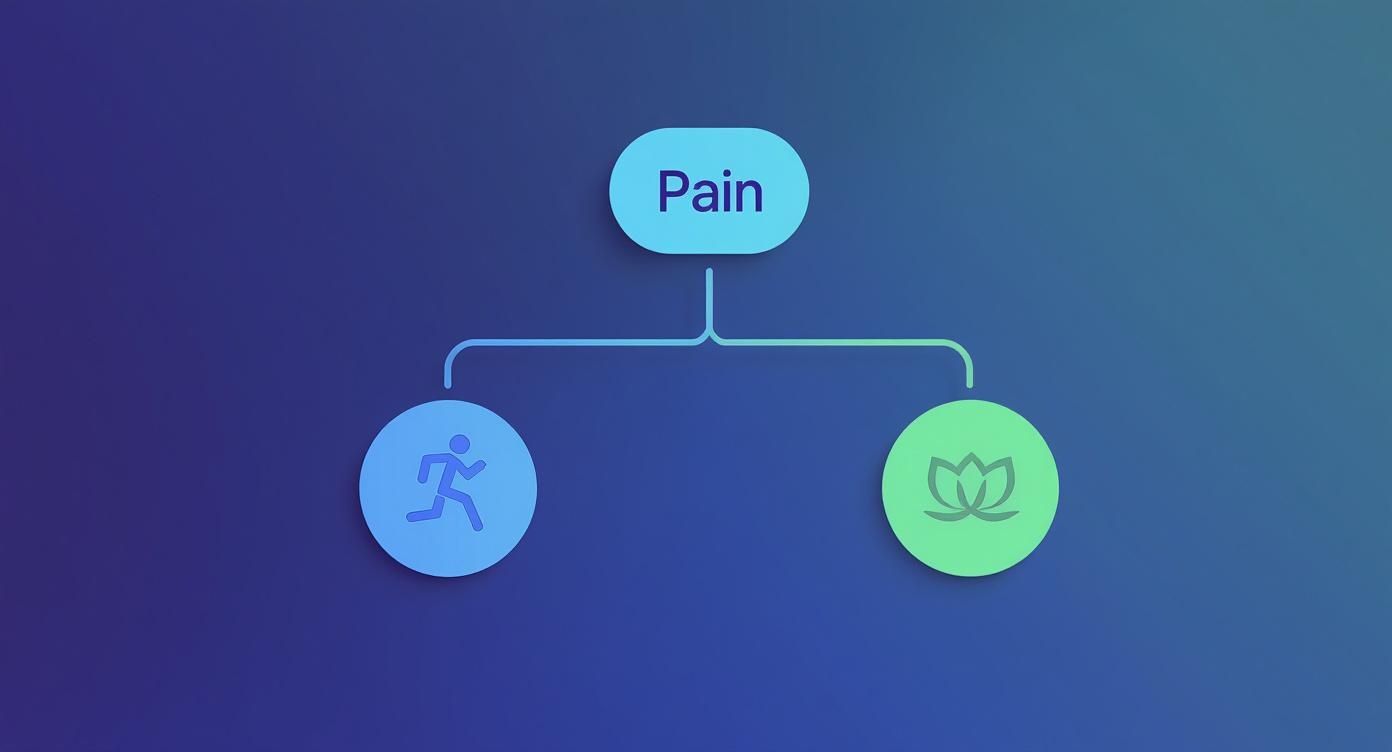
This decision tree can help you visualize which path might be more suitable for your initial concern.

As the visual shows, physiotherapy is often the first step for rebuilding function, while massage is fantastic for managing symptoms and relieving the tension that comes with pain.
Sports Injuries and Rehabilitation
For any athlete in Milton or Orangeville looking to get back in the game after an injury, physiotherapy is non-negotiable. A good physio will address the biomechanical faults that caused the injury, ensuring you don’t just heal, but come back stronger and more resilient.
But that's not the whole story. Our Sports Massage Therapy can be a game-changer for speeding up recovery. By reducing muscle soreness, breaking down scar tissue, and improving blood flow to the injured tissues, massage helps the body's natural healing processes work more efficiently. It keeps the supporting muscles healthy and flexible, which is crucial for making real progress in your rehab.
Choosing between therapies isn't always an "either/or" decision. Often, the most powerful approach involves using both. Massage can manage the pain and stiffness, making it easier to engage fully with your physiotherapy exercises.
Canadian research backs this up. For chronic low back pain, physiotherapy can lead to a 40% pain reduction. For knee osteoarthritis, massage therapy can result in a 30% pain reduction. But when used together? Patients have reported up to a 50% pain reduction and a 45% improvement in overall function. It’s clear they work incredibly well as a team.
As you weigh your options, don't forget how everyday habits, like how you sleep, can affect your recovery. Finding great tips for managing upper back pain during sleep can be a simple way to support the work you’re doing with a professional. In the end, taking a moment to understand your specific condition and goals will help you choose the right therapy—or combination of therapies—for your needs, whether you're in Halton, Guelph, or beyond.
How Combining Therapies Can Accelerate Healing
It’s often best not to think of this as an ‘either/or’ choice. Instead, consider how physiotherapy and massage therapy can work together. An integrated approach, where each professional leverages their unique skills, almost always leads to a faster and more lasting recovery. When these therapies are combined, they build on each other, creating a powerful effect that’s greater than the sum of its parts.
A great way to think about it is like building a house. The physiotherapist is the architect who draws up the blueprint for your recovery—they map out the exercises, the correct movement patterns, and the long-term goals for getting you back on your feet. The Registered Massage Therapist (RMT) is the skilled tradesperson who works on the building materials—your muscles, fascia, and other soft tissues—making sure they’re pliable and healthy enough to follow the architect’s plan.

This collaborative model creates a powerful cycle of positive reinforcement that can genuinely speed things up.
A Practical Scenario in Action
Let’s imagine a senior in Brampton who is recovering from a knee replacement. Their physiotherapist has given them a series of vital exercises to rebuild strength and get their range of motion back. The problem is, these exercises can leave them feeling incredibly sore and stiff, which might make them hesitant to stick with the program.
This is exactly where targeted massage therapy can make all the difference.
Before Physiotherapy: A session with our RMT, Taylor, can get the body ready for the work ahead. He might use techniques like Swedish Massage and gentle Joint Mobilization to warm up the muscles, boost circulation to the knee area, and improve tissue flexibility. This makes the physio exercises less painful and far more effective.
After Physiotherapy: A post-physio massage is perfect for dealing with the fallout. Taylor can use Rehabilitation Massage techniques to ease muscle soreness, help flush out metabolic by-products, and calm inflammation. This helps the body bounce back faster, so the patient feels more prepared and motivated for their next physio appointment.
This dual approach can transform a difficult rehab journey into a much more positive and manageable experience.
Enhancing Mobility and Function
For anyone living with a chronic condition or mobility challenges, combining these therapies is just as powerful. A physiotherapist might create a program to improve balance and coordination, but if muscles are tight and painful, it can feel like trying to move through molasses. For anyone looking for simple movements to do at home, our guide on 8 Essential Mobility Exercises for Seniors in 2025 is a great starting point.
By adding regular sessions focused on Myofascial Release or Trigger Point Release, our RMT can directly address the muscular knots and restrictions that are holding you back. This hands-on work improves how pliable your tissues are, reduces pain signals, and ultimately gives you more freedom of movement during your prescribed exercises.
A collaborative approach between your physiotherapist and RMT isn’t just a luxury; it’s a strategic advantage. It ensures that every aspect of your recovery, from functional movement to tissue health, is addressed, leading to faster, more complete healing.
Think of an athlete in Milton recovering from an injury. Our Sports Massage Therapy can help break down scar tissue and maintain muscle integrity, which perfectly complements their formal physiotherapy program. By working in tandem, physiotherapy and massage transform from two separate options into a powerful, unified wellness team.
Taking the Next Step Toward a Better You
You've done the hard part—learning the difference between physiotherapy and massage—so you can now make a confident choice for yourself or someone you care for. The next step is turning that knowledge into action and addressing the pain, stiffness, or mobility issues that are getting in the way of daily life.
If your main goal is to ease sore muscles, get a handle on chronic pain, or just improve your circulation and flexibility, massage therapy is a fantastic choice. Our Registered Massage Therapist, Taylor, specializes in providing compassionate, effective care right in the comfort of your home.
It's a physically demanding job; a survey of Ontario RMTs revealed that 60.3% experienced work-related pain from musculoskeletal conditions that developed over time. This really underscores the importance of choosing a highly trained professional like Taylor for treatment that is both safe and effective. You can read more in the full study on therapist well-being.
Your Path to Relief, Delivered to Your Door
Taylor brings a wide range of specialized treatments to you, whether you’re in Brampton, Toronto, Etobicoke, or Oakville. We design every session around your specific needs.
Our mobile services include:
Swedish Massage
Cupping Therapy
Deep Tissue Massage
Rehabilitation Massage
Myofascial Release
Trigger Point Release
Joint Mobilization
Hydrotherapy Applications
Geriatric Massage
Sports Massage Therapy
Energy Healing
Deciding to seek care is a powerful commitment to your own health. When you choose in-home massage, you're not just getting a treatment—you're removing travel barriers and putting your comfort, safety, and recovery first.
Book Your In-Home Massage Today
We are proud to serve communities across the region, including Caledon, Orangeville, Mississauga, Milton, Halton, and Guelph. Our entire focus is on making high-quality therapeutic care easy to access.
Ready to feel the difference professional, in-home massage can make? Don't put off finding relief any longer.
Take that final step. Book your session online now and let us bring the healing to you.
Your Questions, Answered
Deciding between different types of therapeutic care can feel overwhelming, so let's clear up a few common questions. Here are some straightforward answers to help you make the best choice for your health.
Do I Need a Doctor's Referral for Massage Therapy in Ontario?
No, you don't need a doctor's referral to see a Registered Massage Therapist (RMT) in Ontario. You can book an appointment directly to start working on your wellness goals whenever you're ready.
That said, many extended health insurance plans do require a physician’s note before they will cover the cost of treatment. It's always a good idea to check the details of your specific insurance policy before your first appointment with our RMT, Taylor. This simple step ensures there are no surprises when it comes to reimbursement.
Can Massage Help with Nerve Pain Like Sciatica?
Yes, it absolutely can. Therapeutic massage is often very effective for managing the pain that comes with nerve issues like sciatica. While a physiotherapist might focus on exercises to take pressure off the nerve root, an RMT tackles the muscular side of the problem.
For example, Taylor can use Deep Tissue and Trigger Point Release techniques to zero in on tight muscles, like the piriformis, which can be notorious for compressing the sciatic nerve. This hands-on work can bring significant relief and beautifully illustrates how massage and physiotherapy can work together to help you recover.
Is There a Difference Between a Spa Massage and a Therapeutic Massage?
There's a world of difference. The distinction really comes down to the practitioner’s training and the session’s purpose—a critical point when comparing physiotherapy vs massage.
A therapeutic massage from an RMT is a form of healthcare. It’s delivered by a regulated professional who has completed over 2,200 hours of intensive training in anatomy, patient assessment, and specific treatment techniques. The entire session is designed to address a particular musculoskeletal issue and achieve a clear clinical outcome. A spa massage, on the other hand, is all about general relaxation and isn't typically performed by a registered healthcare professional.
Think of it this way: therapeutic massage is a clinical intervention meant to fix a specific problem. A spa massage is a wellness experience focused on relaxation. When you choose an RMT, you're choosing care from a qualified practitioner.
How Often Should I Get a Massage if I'm Also in Physio?
There’s no single answer to this—it really depends on your specific condition, the treatment plan from your physiotherapist, and how your body is responding.
Many of our clients find that scheduling a massage a day or two after a tough physiotherapy session works wonders. It can help soothe muscle soreness, calm inflammation, and give your tissues a chance to recover before your next physio appointment. When Taylor first visits you in your Brampton or Mississauga home, he can help you figure out a schedule that complements your rehabilitation plan for the best possible results.
At Stillwaters Healing & Massage, our aim is simple: to provide clear answers and effective, compassionate care right in your home. Ready to feel the benefits for yourself?