top of page
Search

The Best Massagers for Sciatica: A Complete Guide

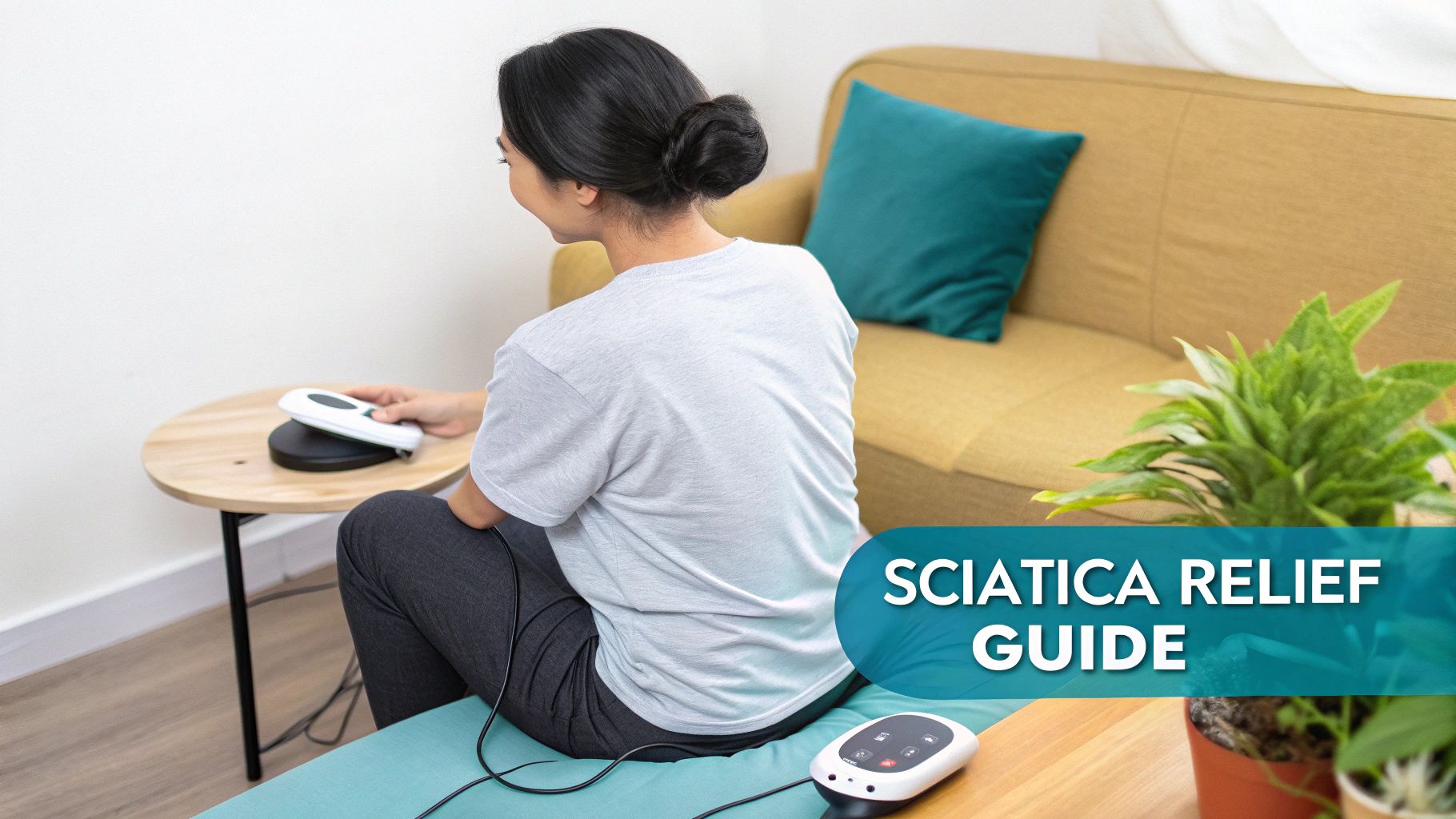
If you're wrestling with that sharp, radiating pain of sciatica, you've probably asked yourself: can an at-home massager actually do anything? The short answer is a resounding yes. When used the right way, massagers for sciatica can bring some much-needed temporary relief.


A good massager gets to work by relaxing those rock-hard muscles that are squeezing the sciatic nerve. It also boosts blood flow to the area and nudges your body to release its own natural painkillers, called endorphins.


Understanding At-Home Massagers for Sciatica


It's important to remember that sciatica isn't a diagnosis in itself; it's a symptom. That searing pain is usually a sign that something is compressing the sciatic nerve, often tight muscles like the piriformis or a problem in your lower back. Think of a massager as one powerful tool in your pain management kit—not a magic cure-all. They're fantastic for tackling the muscle-related side of sciatica in between professional treatments.


Before diving into the different types of massagers, getting a handle on the condition itself is a great first step. For a solid overview, resources on understanding sciatica can fill in the gaps. Knowing what's happening in your body helps you understand why a certain tool might bring relief.


A professional massage therapist in a polo shirt applying gentle pressure to a client's shoulder.


Comparing Home Tools to Professional Care


While these devices are great for managing day-to-day symptoms, they simply can't replace the trained hands and diagnostic eye of a Registered Massage Therapist (RMT). An RMT can pinpoint the root cause of your pain, something a machine just can't do. A massager follows a pre-set pattern, but a therapist can feel what's happening under the skin and adjust their pressure and technique in real time.


For anyone living in Brampton, Mississauga, Toronto, or the surrounding areas, blending at-home tool use with professional massage therapy creates a really solid strategy for long-term relief. An RMT can even show you how to use your own massager safely and get the most out of it.


At-home massagers offer incredible convenience for daily symptom management. But a professional RMT provides the crucial diagnostic insight and targeted, adaptive techniques needed to get at the underlying cause of your sciatic pain.

Here's a quick comparison of the most popular types of massagers to help you figure out what might work best for you.


Comparing At-Home Massagers for Sciatica


This table gives you a quick look at common massager types, how they help with sciatic pain, and who they are best suited for.


Massager Type

How It Helps Sciatica

Best Suited For

Key Consideration

Percussion Massager

Delivers deep, rapid pulses to break up muscle knots (especially in glutes and hamstrings) and increase blood flow.

Individuals with deep muscle tightness who can tolerate intense pressure.

Can be too intense for some; avoid direct use on the spine or bony areas.

Massage Pillow/Cushion

Uses rotating nodes to provide a kneading massage to the lower back and glutes, offering gentle, consistent relief.

People seeking convenient, hands-free relief while sitting at a desk or on the couch.

Lacks the precision of handheld devices for targeting specific trigger points.

TENS Unit

Sends low-voltage electrical currents to the skin to intercept pain signals and trigger endorphin release.

Those who need non-invasive pain signal interruption rather than deep tissue work.

Doesn't address the underlying muscle tension; proper pad placement is key.

Foam Roller

Allows you to use your body weight to apply sustained pressure to tight muscles like the piriformis, glutes, and IT band.

Active individuals who are comfortable with self-myofascial release techniques.

Requires some mobility and physical effort; can be painful if done incorrectly.

Manual Tools

Simple tools like massage balls or canes that let you apply precise, controlled pressure to specific trigger points.

Anyone wanting a low-cost, highly targeted option that puts them in full control.

Effectiveness depends entirely on your own effort and ability to reach the area.


Choosing the right tool often comes down to the specific nature of your pain and your personal comfort level. What works wonders for one person might not be the best fit for another, so it's always a good idea to listen to your body.


How Massage Can Actually Settle Down Sciatic Nerve Pain


Let’s think of it this way: picture your sciatic nerve as a garden hose. Now, imagine a tight, angry knot of muscle in your glute or lower back is like someone's heavy boot standing right on that hose. That pressure is cutting off the flow. The whole point of a good massage is to gently get that boot off the hose.


When you relieve that direct pressure—what we call compression—the nerve stops being squeezed. Once it's free, those sharp, shooting pain signals it's been firing off to your brain finally start to quiet down.


The Real Reasons You Feel Relief


Different types of massagers all aim for that same goal, but they get there in slightly different ways, each trying to copy what a professional therapist does. The core ideas are always the same: ease up muscle tension, get the blood flowing better, and calm your nervous system.


  • Percussion Massagers: Think of these as tiny jackhammers. Their rapid, drumming action gets deep into thick muscles like your glutes. This helps break up those stubborn knots and sticky spots (adhesions) that might be sitting on the nerve.

  • Massage Pillows: These are gentler, using a kneading motion to rhythmically stretch and soften tense muscle fibres. They're great for loosening up general tightness across your lower back and glutes.

  • Foam Rollers: These apply broad, steady pressure. When you roll over them, you’re basically giving yourself a myofascial release, working on the thin layer of connective tissue (fascia) that wraps around your muscles. Freeing up that fascia helps the muscles underneath relax.


Each method works to physically take the pressure off the nerve, reduce inflammation by boosting circulation, and interrupt the pain-signal traffic jam heading to your brain. You can learn more about how a professional massage accomplishes this in our detailed guide on whether massages help sciatica.


A Professional’s Touch vs. a Machine’s Program


At-home massagers are fantastic for day-to-day relief, but they do have their limits. They can mimic the actions of a massage, but they can’t think, feel, or adapt.


A machine follows a set program, but a skilled therapist brings an intuitive, adaptive touch. A Registered Massage Therapist like Taylor can actually feel the unique texture of a trigger point or trace the exact line of tension that’s causing your grief.

Our male RMT, Taylor, can zero in on the true source of the compression and adjust his pressure on the fly—something a device just can't do. For those living in areas like Etobicoke, Milton, and Oakville, pairing the daily convenience of a massager with the expert care of a mobile RMT can be a game-changer. This combination approach helps you manage symptoms day-to-day while also tackling the root of the problem for more lasting relief.


Choosing the Right Massager for Your Sciatic Pain


With so many massagers on the market, picking the right one for sciatica can feel a little overwhelming. Each tool takes a different approach to providing relief, and what works wonders for a deep, stubborn knot might not be the best choice for general muscle tightness. It really helps to understand what each one does best so you can make a smart decision for your own well-being.


The goal here is to match the tool to your specific pain patterns and what feels comfortable for you. Whether you're in Mississauga, Guelph, or Halton, having the right device on hand can become an invaluable part of your pain management plan.


Percussion Guns for Deep Knots


Percussion massagers, or massage guns as most people call them, are powerful. They work by sending rapid, deep pulses straight into your muscle tissue. Think of them as a jackhammer for stubborn knots, especially in dense muscles like your glutes and hamstrings—areas that often play a big role in sciatic nerve compression.


But that intensity is a double-edged sword. While great for muscles, that power means you should never use them directly over your spine, bones, or any area that's acutely inflamed. Always start on the absolute lowest setting to gauge how your body reacts before you even think about dialing it up.


Shiatsu Pillows for Gentle Relief


Shiatsu massage pillows are all about passive relaxation. They use rotating nodes to mimic the kneading feeling of a massage therapist's hands. This makes them fantastic for soothing general tightness in your lower back, especially while you’re stuck at a desk or just relaxing on the couch.


They're convenient and gentle, but they might not deliver the focused, intense pressure required to release those deep, pesky trigger points. They're more for overall muscle relaxation than for targeting a specific, deep-seated cause of nerve irritation. We dive deeper into how professionals tackle these spots in our guide on myofascial release and trigger points.


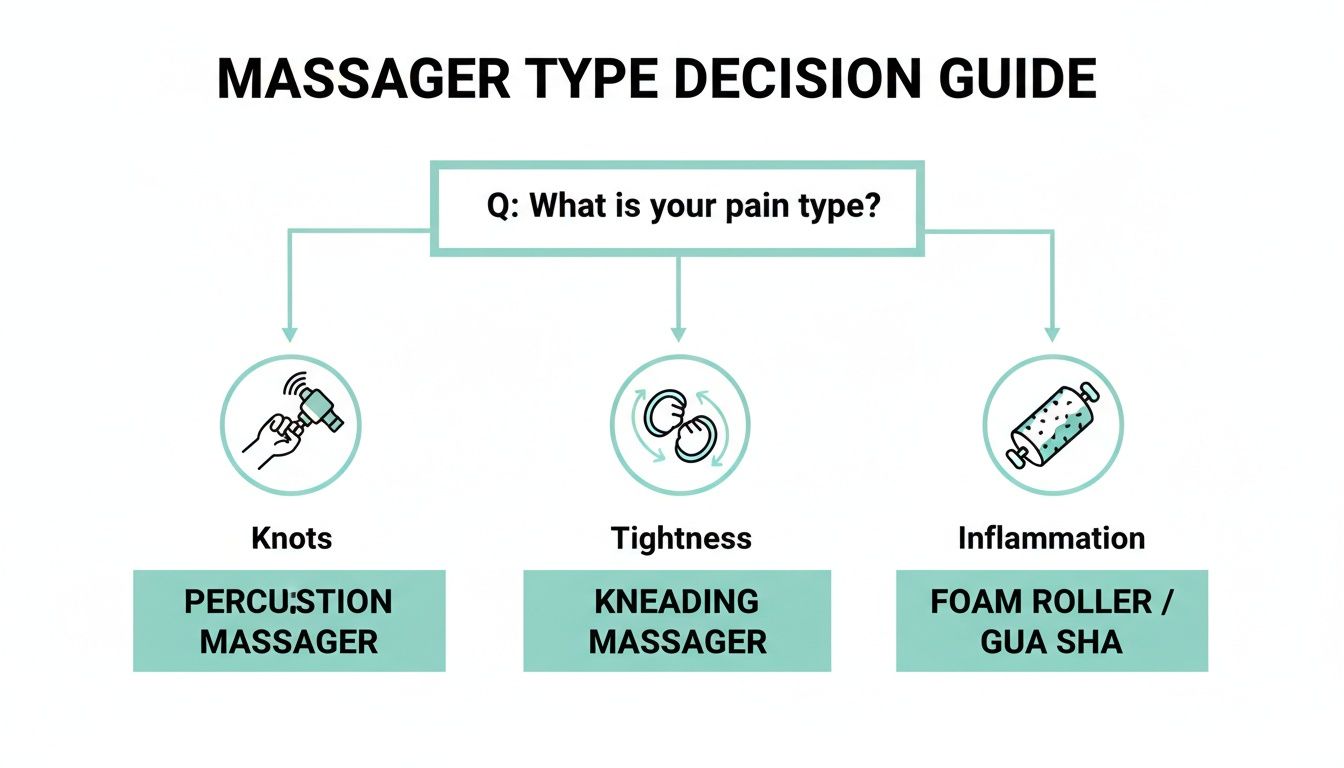
This quick guide can help you match a massager type to the kind of sciatic pain you're experiencing.


A therapeutic diagram showing how different types of massagers target specific areas for sciatica relief.


The key takeaway is that different tools are built to solve different problems, from deep, tight knots to more general inflammation.


TENS Units and Foam Rollers


Beyond the typical massagers, a couple of other tools offer some unique benefits for sciatic pain. They work very differently but can be just as effective.


  • TENS Units: These devices don't actually massage your muscles. Instead, they use a mild electrical current to essentially distract your brain, interrupting pain signals before they can be registered. They also encourage your body to release its own natural painkillers, called endorphins. Think of it as managing the pain signal itself, not the muscle.

  • Foam Rollers: A simple foam roller is a fantastic, low-cost tool for what's known as self-myofascial release. It lets you use your own body weight to apply sustained pressure to the piriformis muscle and other spots along your legs. This helps release the tight web of connective tissue (fascia) that can often be the culprit behind an aggravated sciatic nerve.


This growing interest in effective pain solutions isn't just anecdotal. The massage therapy industry as a whole is expanding quickly, with revenues projected to hit $18.9 billion nationally by 2025. This growth is a direct response to a real need for specialized care, especially for common conditions like sciatica that affect so many of us.


Safety Guidelines for At-Home Sciatica Massage


Using a massager for sciatica can be a game-changer, but using it the wrong way can make things a whole lot worse. It’s crucial to know the do's and don'ts, especially if you're a senior or have other health conditions. Think of these guidelines as your essential safety manual for getting relief without causing harm.


The absolute number one rule? Never, ever place a high-intensity massager directly on your spine, bones, or joints. Percussion massagers are built to work on muscle, not bone. Pounding away at your vertebrae is a recipe for serious injury.


Key Rules for Safe Massager Use


Always start on the lowest possible setting. This is non-negotiable. It lets you test the waters and see how your body reacts before you even think about cranking up the power. Remember, the goal here is to gently coax a muscle into relaxing, not to hammer it into submission.


Keep an eye on the clock, too. Limit your sessions to 10-15 minutes per muscle group. Going longer won’t speed up your recovery; it’ll just lead to bruising and irritated tissue. A few shorter, consistent sessions throughout the week will always beat one long, aggressive one.


Your body is incredibly smart and will send you clear signals. If you feel any sharp, shooting, or electric-like pain, stop immediately. That’s not the muscle releasing—that's your sciatic nerve telling you to back off.

Special Precautions for Vulnerable Individuals


Some health conditions just don't mix well with intense massage. If you have any of the following, you absolutely must talk to your doctor before trying any at-home massager:


  • Osteoporosis: Bones that are already fragile can fracture under the deep pressure of a percussion gun.

  • Deep Vein Thrombosis (DVT) or Varicose Veins: Massaging over these areas could potentially dislodge a blood clot, which is extremely dangerous.

  • Blood Thinners: If you're on anticoagulant medication, your risk of deep bruising is much higher.

  • Inflamed Skin or Open Wounds: Never massage over rashes, cuts, or any area where the skin is broken or inflamed.


Seniors should be especially careful, as skin naturally becomes thinner and more delicate with age. A gentle massage pillow might be a much safer and more effective choice than a powerful percussion massager. For a deeper dive into self-care, check out our guide on safe and effective at-home sciatica pain relief techniques. Following these simple rules will help you keep your massager as a trusted tool for relief, not a source of risk.


When to See a Professional RMT for Sciatica


At-home massagers can be a real game-changer for managing the day-to-day aches and stiffness that come with sciatica. They’re fantastic for getting some immediate, on-demand relief. But it's crucial to understand what they can and can't do. These devices are built to soothe the symptoms, not to figure out and fix the complex reasons why your sciatic nerve is getting pinched in the first place.


If the pain just won't quit, gets worse, or starts getting in the way of your daily routine, that’s your body sending a clear signal: it's time to call in a professional. A machine is just following a program. A skilled Registered Massage Therapist (RMT), on the other hand, brings something no device can ever have: diagnostic touch and years of clinical experience.


A professional male RMT in a polo shirt arriving at a client's home for an in-home massage therapy session.


The Diagnostic Advantage of a Professional RMT


A great RMT does so much more than just rub sore muscles. They perform a thorough assessment to uncover the why behind your sciatica. Is it a stubbornly tight piriformis muscle? Maybe an imbalance in your hip flexors? Or is it something else entirely? A therapist uses their hands as diagnostic tools, adapting their approach in real-time with advanced techniques a machine just can't replicate.


This hands-on treatment can include:


  • Swedish Massage: For general relaxation and improved circulation.

  • Deep Tissue Massage: To target deeper layers of muscle and connective tissue.

  • Cupping Therapy: To help with pain, inflammation, blood flow, relaxation and well-being.

  • Myofascial and Trigger Point Release: To release those specific, hyper-irritable knots deep within the muscle tissue.

  • Rehabilitation Massage: To support recovery from injury.

  • Joint Mobilization: Focused movements designed to improve the range of motion in your hips and lower back, easing pressure.


A massager can temporarily relax a tight muscle, but a professional RMT can figure out why that muscle became tight in the first place. This shift from temporary symptom management to addressing the root cause is the key to achieving long-term relief.

The Power of In-Home RMT Care


For anyone living in Brampton, Orangeville, Caledon, or the surrounding communities, mobile RMT services bring expert care right to your doorstep. This is an incredible benefit, especially for those who have a hard time getting around or whose pain makes travelling a stressful ordeal.


Getting treatment in the comfort of your own home means you can skip the travel hassle and truly relax, which can actually make the massage more effective. If you’re looking for the right practitioner, our guide on how to find a trusted Registered Massage Therapist in Ontario is a great place to start.


The need for this kind of skilled, accessible care is huge. In 2023, there were over 59.3 million Americans aged 65 and older, and many are looking for effective ways to manage chronic conditions like sciatica. This growing demand is why you see a high concentration of massage therapists in certain areas—it reflects a strong public trust in professional care for lasting relief.


While at-home tools are helpful, it’s smart to understand all your options. Exploring things like the benefits of chiropractor services for sciatica can help you build a more complete treatment plan. In the end, professional massage isn’t a luxury; it's a vital part of any successful strategy to get rid of sciatica for good.


Your Partner in Sciatica Relief Across the West GTA


At-home massagers can be fantastic allies in your fight against sciatica, offering much-needed daily relief from the muscle tension and aches that come with it. They are genuinely useful tools for managing the symptoms right when they flare up.


But to get real, lasting relief, we need to look beyond just managing the pain and get to the root of what’s causing it. That requires a more hands-on, professional approach.


Mobile RMT Care That Comes to You


This is where Stillwaters Healing & Massage steps in. We specialize in expert, personalized treatments designed to fit your unique situation, focusing on a complete strategy for your well-being, not just a quick fix.


Our male RMT, Taylor, brings advanced massage therapy right to your home. This is a game-changer, especially for seniors or anyone who finds travelling difficult. You get top-tier care without the stress, in the comfort of your own space. We proudly serve communities all over the West GTA, including Brampton, Toronto, Etobicoke, Oakville, Caledon, Orangeville, Mississauga, Milton, Halton, and Guelph.


We want to help you build a smart pain management plan—one that combines the convenience of your own tools with the skilled touch and diagnostic insight of a dedicated RMT. This integrated approach means you stop chasing the pain and start actively resolving the problem at its source. For a deeper dive into how we do this, read our post on sciatica and massage relief in the GTA.


The goal is to create a sustainable path to wellness. Combining self-care with professional guidance from an RMT provides the most effective and durable relief from sciatic pain.

The need for this kind of specialized care is on the rise, particularly as our population ages. By 2030, seniors are expected to make up 20.6% of the population in the US, and with that comes a greater demand for effective therapeutic services. We're already seeing that certified massage professionals who specialize in sciatica can reduce related muscle tension by an average of 35%—a clear sign of how effective professional treatment is. You can learn more about these trends in therapeutic massage.


Ready to take the next step on your healing journey? Book an in-home RMT consultation with Taylor today and start building a personalized plan for lasting sciatica relief.


Got Questions About Massagers and Sciatica? We've Got Answers.


When you're dealing with the sharp, shooting pain of sciatica, it's natural to have questions before trying a new tool. Let's tackle some of the most common concerns to help you find relief safely and effectively.


Can a Massager Actually Make My Sciatica Worse?


Absolutely, it can—if you use it the wrong way. The biggest mistake people make is applying intense, direct pressure right over the sciatic nerve pathway, or worse, onto a bone or a spot that’s already highly inflamed. This can seriously aggravate the nerve and make the pain much worse.


That’s why it’s so critical to stay away from the spine itself and always, always start on the lowest setting. A skilled RMT like Taylor can pinpoint the exact muscles you should be targeting—like the piriformis and glutes—so you’re relieving pressure on the nerve, not adding to it.


How Often Should I Be Using a Massager for Sciatica?


For most people, a good rhythm to start with is 10-15 minutes on the tight muscles in your hip and leg, maybe once or twice a day. The golden rule here is to listen to your body. If you feel any sharp pain or notice your symptoms getting worse, stop right away.


Remember, consistency trumps intensity every time. Gentle, regular sessions will do far more good than one long, aggressive massage that leaves you sore for days. For a routine that’s tailored to your specific needs, it’s always a good idea to chat with a healthcare professional first.

Heat or Percussion Gun: What’s the Better Choice for Sciatica?


This isn't really an "either/or" situation—they both have their place and can work beautifully together. Think of a heat massager as the warm-up act. It's fantastic for gently soothing muscle tightness and boosting circulation, which helps calm down that irritated nerve and gets the tissue ready for more focused work.


A percussion gun, on the other hand, is your deep-tissue specialist. It’s designed to get right in there and break up the stubborn knots in muscles (like the piriformis) that are often the real culprits behind sciatic nerve compression. The ideal approach? Use gentle heat first to relax the area, then follow up with targeted percussion. When you combine this home routine with professional massage therapy, you’ve got a powerful strategy for relief.


For a complete, professional assessment and personalized treatment plan brought directly to your home in Brampton, Toronto, Etobicoke, Oakville, Caledon, Orangeville, Mississauga, Milton, Halton, and Guelph, trust Stillwaters Healing & Massage. Book your in-home RMT session with Taylor today and take the next step toward lasting relief.


© 2024 by Stillwaters Healing & Massage | Sitemap

Stillwaters Healing & Massage
  • Black Instagram Icon
  • Black Facebook Icon
  • LinkedIn
bottom of page