


A Guide to Home Care Services for Seniors
When you hear "home care," what comes to mind? For many, it's about giving an elderly loved one the professional, personal support they need to stay safe and comfortable right where they want to be: in their own home.
It’s a flexible approach that can mean anything from simple companionship and help with daily chores to more specialized therapeutic care. At its heart, the goal is always to enhance their quality of life by letting them keep their independence and dignity in the place they know and love.
Why Families Are Choosing In-Home Senior Care
For families here in Brampton, Toronto, and across the Greater Toronto Area, deciding to get help for an aging parent is a big step. While moving to a care facility is one path, more and more people are realizing the incredible benefits of home care services for seniors. It’s not just about what’s convenient; it’s a conscious choice to respect a loved one’s wish to “age in place.”
Aging in place is a simple but powerful idea: letting seniors stay in the home and community they’ve known for years, surrounded by familiar faces and happy memories. This continuity makes a world of difference for their emotional well-being and sense of self. Instead of having to adjust to a new, unfamiliar environment, they get one-on-one care designed just for them, right where they feel most at ease.
The Value of Familiarity and Independence
Think about it this way: if you were getting over an illness, would you rather be in a sterile hospital room or tucked into your own bed? The comfort of your own space is naturally healing. For seniors, that feeling is amplified.
Home care allows them to stick to their personal routines, sleep in their own bed, and keep up with neighbours and local groups. That kind of stability is essential for mental health, cutting down on the stress and confusion that often come with big life changes. It gives them a sense of control and independence that's hard to hold onto in a more structured facility.
A Growing Trend Towards Home-Based Support
This desire to stay at home isn't just something we're seeing locally—it's a massive shift happening everywhere. As our population gets older, the need for in-home support is going through the roof.
Look at a place like California, where polls show that nearly 72% of residents want to remain at home if they need long-term care. With the number of adults over 60 there expected to hit 10 million by 2030, the demand for services like in-home rehab, mobility support, and comfort therapies is soaring. These numbers paint a clear picture of why accessible, local in-home care is so vital for helping our elders plan for a safe and dignified future. You can learn more about the rising demand for in-home senior support and its impact.
In the end, choosing home care is about finding a support system that fits your loved one, not asking them to fit into a system. It's a solution that can grow and change with their needs—from weekly companionship in Etobicoke to daily personal care in Mississauga, or even specialized therapeutic services in Oakville, Milton, and Guelph. This personalized approach ensures your family member gets exactly the right help to live a fuller, safer, and more connected life.
Understanding the Spectrum of Home Care Services
When families first start looking into home care, it's easy to feel overwhelmed. It’s not just one single service; it's more like a personalized support system you build, piece by piece, to fit your loved one's exact situation. Think of it like customizing a home to be perfectly safe and comfortable—you start with the essentials and then add the specific features that make life better.
The whole point is to create the right mix of support that allows them to continue living safely and happily in the place they know and love. All the different services work together to create a complete circle of care, always focused on helping them age with dignity and independence.
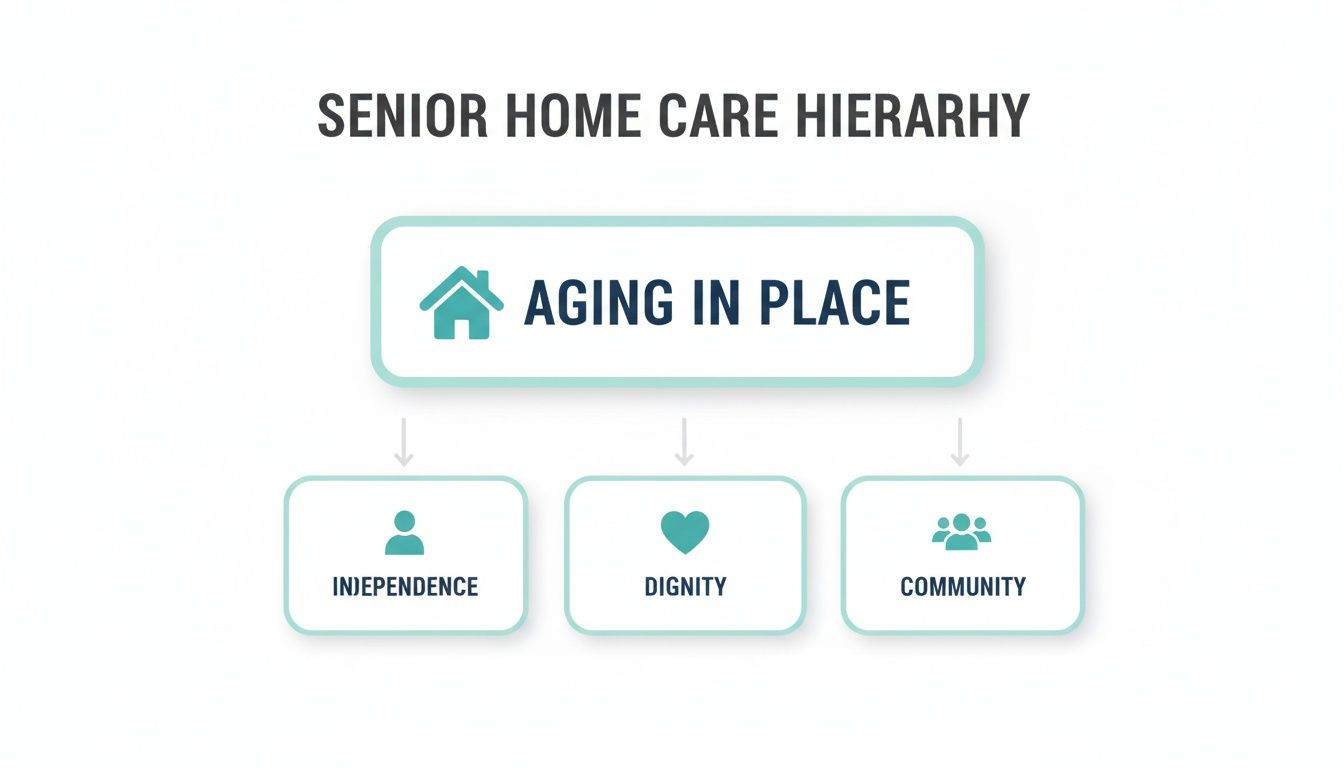
As you can see, every piece of the puzzle is designed to support a senior’s ability to live a meaningful life on their own terms, right in the heart of their community. Let’s break down what those pieces look like.
To make it easier to see how these services fit together, here's a quick overview of the most common categories of home care.
Service Category | What It Includes | Primary Goal |
|---|---|---|
Personal Care | Help with bathing, dressing, grooming, using the toilet, and moving around safely. | To assist with Activities of Daily Living (ADLs) while preserving personal dignity. |
Homemaking | Light housekeeping, laundry, meal preparation, grocery shopping, and keeping the home tidy. | To maintain a safe, clean, and healthy living environment. |
Companionship | Social interaction, sharing conversations, playing games, and accompanying to appointments or outings. | To combat loneliness and provide crucial emotional support and social connection. |
Therapeutic Services | In-home Registered Massage Therapy (RMT), physiotherapy, occupational therapy. | To actively improve physical well-being, manage pain, and enhance mobility and function. |
Specialized Care | Palliative support, dementia and Alzheimer's care, post-operative rehabilitation. | To provide expert care for complex health conditions and specific life stages. |
This table helps you start thinking about which areas of support might be most needed right now.
The Foundational Layers: Day-to-Day Support
For most families, a home care plan starts with a few core services that address the practical needs of daily life. This is the bedrock of keeping someone safe and comfortable at home.
Personal Care: This is all about hands-on help with what we call Activities of Daily Living (ADLs). It means providing respectful assistance with things like bathing, dressing, grooming, and mobility. It’s about ensuring a senior can maintain their personal hygiene and dignity without risk of a fall or injury.
Homemaking Services: As we age, keeping up with the house can become a real physical challenge. Homemaking support covers tasks like light housekeeping, laundry, preparing nutritious meals, and running to the grocery store, making sure the home remains a safe and orderly sanctuary.
Companionship and Errands: Loneliness is one of the biggest health risks for seniors. A companion can make all the difference, offering social interaction, sharing a cup of tea, playing a card game, or providing transportation to appointments and social outings.
These three pillars ensure the basics—safety, nutrition, and social connection—are firmly in place, creating a stable foundation for your loved one's well-being.
Adding a Therapeutic Layer for Enhanced Well-being
While taking care of daily needs is essential, a truly comprehensive care plan often includes a therapeutic element. This is where we go beyond just maintaining a person's current state and start actively improving their quality of life.
This layer is all about bringing specialized health services directly into the home to manage chronic conditions, alleviate pain, and restore physical function.
A key aspect of modern home care is its shift from passive assistance to active wellness promotion. It's about bringing restorative therapies directly to the individual, turning their home into a centre for healing and recovery.
One of the most powerful and accessible therapeutic services is mobile Registered Massage Therapy (RMT). This isn't a spa day; it’s a clinical healthcare service delivered by a licensed professional to address the real physical challenges that come with aging. For families in Brampton, Mississauga, Oakville, and surrounding areas, this means a qualified RMT can provide targeted treatments right at home, eliminating the stress and difficulty of travel.
This is especially vital when someone is managing more complex health issues. To see how specialized care can bring comfort home, you can read our guide on palliative care services explained.
Specialized Massage Techniques for Seniors
A mobile RMT who works with seniors doesn't use a one-size-fits-all approach. They are trained in specific techniques tailored to the needs of an older body. For example, our male Registered Massage Therapist, Taylor, is skilled in several modalities that deliver distinct benefits:
Geriatric Massage: Uses gentle, rhythmic strokes to improve blood flow, ease muscle stiffness, and calm anxiety.
Swedish Massage: A classic technique that promotes relaxation and relieves muscle tension.
Deep Tissue Massage: Focuses on deeper layers of muscle to address chronic pain and stiffness.
Sports Massage Therapy: Helps with injury prevention and recovery, adapted for the senior body.
Myofascial Release & Trigger Point Release: Targets stubborn knots and tight connective tissues to relieve chronic pain and improve flexibility.
Joint Mobilization: Involves careful, controlled movements to increase the range of motion in stiff joints, a game-changer for arthritis.
Rehabilitation Massage: Supports recovery after an injury, surgery, or illness by breaking down scar tissue and helping muscles regain function.
Cupping Therapy & Hydrotherapy Applications: Modern and traditional techniques to reduce pain and inflammation.
Energy Healing: A gentle approach to promote balance and well-being.
By integrating these kinds of therapeutic services, home care stops being just about getting by—it becomes a proactive tool for living better. This holistic approach helps seniors in our communities, from Caledon to Guelph, maintain their mobility, manage their pain, and truly thrive at home for as long as possible.
The Real-Life Benefits of Receiving Care at Home
Opting for home care is about so much more than just convenience—it has a genuinely positive impact on a senior's entire well-being. The true magic is in the consistent, one-on-one care delivered right in the place they know and love. This kind of personalized attention builds a deep sense of trust and security, and research has shown it can lead to better health outcomes and a brighter outlook on life.
When seniors can stay in their own homes, they hold onto a vital piece of their identity. They’re surrounded by a lifetime of memories, familiar belongings, and the simple comforts of their own routines. This stability is incredibly powerful, preserving their sense of self and helping to avoid the confusion and stress that often comes with moving to a new, unfamiliar environment.
More Than Just a House: Emotional and Social Well-being
Staying at home means staying connected to the life they’ve built. Seniors can keep tending to their gardens, chat with neighbours they've known for years, and welcome family into a space that is truly their own. These ongoing social ties are a crucial defence against the loneliness and isolation that can take a serious toll on mental and physical health.
A familiar setting is also a safer setting. Knowing the layout of their own home helps reduce the risk of accidents. For a deeper dive into making a home as safe as possible, check out our guide on how to prevent falls in elderly individuals with practical tips. Simple adjustments can make a world of difference in maintaining their independence.
The Power of Bringing Therapy Home
Today’s best home care goes a step further by integrating restorative therapies right into the plan. This transforms their home from just a place to live into a true sanctuary for healing and comfort. It means no more stressful trips to clinics in busy areas like Brampton or Toronto—the professional care comes directly to them.
Think about your father finally getting relief from that chronic shoulder pain with targeted trigger point release from a Registered Massage Therapist (RMT), making it easier for him to get dressed in the morning. Or picture your mother enjoying a gentle geriatric massage to improve the circulation in her legs, all while sitting in her favourite armchair.
Bringing clinical therapies into the home environment removes the physical and emotional barriers to receiving consistent care. It allows seniors to fully relax and gain the maximum benefit from each treatment, which is essential for managing chronic conditions.
For seniors who need help with mobility or simply want more comfort, home care can also help make improvements to their living space. This might involve something as simple yet impactful as finding the best adjustable bed base to dramatically improve their sleep quality and daily comfort.
A Focus on Holistic Health
Integrating therapeutic services like in-home massage creates a truly well-rounded approach to care. Our RMT, Taylor, works with seniors across Etobicoke, Oakville, and Mississauga to address specific physical challenges and goals.
Pain Management: Using techniques like myofascial release to gently ease the chronic discomfort from arthritis or old injuries.
Mobility Enhancement: Applying joint mobilization to help improve the range of motion in stiff hips, shoulders, and knees.
Stress Reduction: Utilizing calming Swedish massage and hydrotherapy applications to soothe anxiety and promote deep relaxation.
This kind of holistic care recognizes that a senior's well-being is about more than just checking boxes on a task list. It’s about actively improving their physical comfort, protecting their emotional health, and honouring their wish to live with dignity and independence in the place they call home.
How to Figure Out What Your Loved One Really Needs
Before you can find the right kind of in-home support, you need a clear, honest picture of where your loved one could use a hand. This isn’t about playing doctor or making a diagnosis. Think of it more like creating a "needs snapshot"—a practical overview that helps you have focused, productive conversations with potential care providers. Taking the time to do this thoughtfully is what empowers you to find a solution that genuinely improves their life.
The most important first step? Involve your loved one in the conversation right from the start. Their perspective, preferences, and feelings are the most critical part of this entire process. The goal is to build a plan together that respects their independence and boosts their quality of life, not to force one on them.

A Simple Framework for Your Assessment
To get a complete picture, it helps to look at your loved one’s needs from a few different angles. I like to think of it as looking at three main pillars of well-being: their physical health, their day-to-day living, and their emotional connection. A small challenge in one area often spills over into the others, so taking a broad view is key.
Use the following areas as a guide for your observations and gentle conversations. For a more detailed walkthrough, you can also check out our guide to caring for the elderly at home, which offers some extra insights.
Evaluating Physical Health and Mobility
This pillar zeroes in on their physical condition and ability to get around their home safely. It's often the most obvious area where help might be needed.
Mobility and Balance: Are they having trouble getting out of a chair, walking steadily, or handling stairs? Have there been any recent falls or close calls?
Pain Management: Are they dealing with chronic pain from something like arthritis or an old injury? Does this pain stop them from doing certain things or affect their mood?
Medication Management: Can they easily keep track of their medications, taking the right dose at the right time? Sometimes, the schedule just gets too complicated to manage alone.
An honest look here can show you where specialized support, like therapeutic massage or joint mobilization, could make a world of difference.
Assessing Activities of Daily Living (ADLs)
This category covers all the essential, routine tasks we all do to take care of ourselves. It’s often where families first notice that a little extra help might be in order.
Personal Care: Is bathing, dressing, grooming, or using the toilet becoming a struggle? Keeping up with personal hygiene is vital for both health and dignity.
Meal Preparation: Are they eating regular, nutritious meals? Telltale signs like an empty fridge, spoiled food, or noticeable weight loss are worth paying attention to.
Home Upkeep: Is the house tidy and safe? Piles of laundry, unwashed dishes, or general clutter can be signs that managing the household has become overwhelming.
An assessment should be a gentle, ongoing observation, not an interrogation. Pay attention to the small changes in routine and environment, as they often tell a bigger story about your loved one’s evolving needs.
Considering Emotional and Social Well-being
This final pillar is just as crucial as the others but is easily overlooked. For people of all ages, social connection is a powerful ingredient for good health.
Social Engagement: Are they still connecting with friends, family, or community groups? Pulling back from social activities can be a red flag for loneliness or even depression.
Cognitive Health: Have you noticed any changes in memory? Maybe some confusion or difficulty with making decisions?
Mood and Motivation: Do they generally seem happy and engaged, or have you noticed more anxiety, apathy, or sadness lately?
Building a solid support system has become an essential part of long-term planning for many families. To put it in perspective, policy analysis from California suggests that one in three people over 80 will struggle to remain at home without help, and one in five will face serious challenges with self-care. These numbers show why families are increasingly relying on a mix of family caregivers and private-pay services—including therapeutic options like in-home massage—to fill the gaps. Proactive planning is more important than ever.
Navigating Home Care Costs and Providers
Once you have a clearer picture of your loved one's needs, two big questions usually pop up: "How do we find someone we can trust?" and "How on earth are we going to pay for it?" For families right here in communities like Brampton, Milton, and Halton, these practical concerns are what it all boils down to. The good news is, there are local resources and different ways to fund care that can make getting high-quality home care services for seniors feel much more manageable.
Tackling the financial side first helps you set a realistic budget from the get-go. It's really helpful to understand all the potential funding sources, because it's rarely just one thing—a mix-and-match approach often works best.
Understanding Funding Options in Ontario
Here in Ontario, families have a few different avenues to explore when it comes to paying for home care. It's usually a combination of public programs and private funds.
Government-Supported Programs: Publicly funded home care in our province is handled by Home and Community Care Support Services (what we used to call the LHINs). They can provide a certain number of hours for personal support, nursing, and other therapies at no direct cost if you’re eligible. The catch? The hours provided can be limited and might not cover everything your family truly needs.
Private Insurance Benefits: This is a big one that often gets overlooked. Many seniors have private health insurance or workplace retirement plans that cover a whole range of therapeutic services. These benefits are incredibly valuable. For instance, most plans will cover a good chunk of services from a Registered Massage Therapist (RMT).
Out-of-Pocket Payments: For any services that aren't covered by public funding or insurance, families often pay out-of-pocket. This route gives you the most flexibility to choose your providers and set your own schedule, letting you fill in the gaps left by government-funded hours to create a complete support system.
Lots of families are genuinely surprised by what their insurance will actually cover. To get a better handle on how your benefits can work for you, feel free to check out our detailed guide to insurance-covered massage in Ontario.
Finding the Right Care Provider
With your budget in mind, the search for the right provider can begin. Whether you go with an agency or an independent professional like an RMT, doing your homework is absolutely essential for your peace of mind.
Choosing a caregiver is a decision built on trust. Take your time, ask detailed questions, and listen to your intuition. The right match will feel like a true partner in your loved one's well-being.
It’s a great idea to create a checklist of questions to ask every potential provider. This helps you cover all the bases and make sure they're qualified, reliable, and a good fit for your family.
Credentials and Insurance: Ask to see proof of their qualifications, certifications, and liability insurance. For an RMT, this means being in good standing with the College of Massage Therapists of Ontario (CMTO).
Experience with Seniors: Dig into their specific experience working with older adults, especially those with health conditions similar to your loved one’s.
References: Don’t be shy about this one. Always ask for and check references from other families they've worked with in areas like Orangeville, Guelph, or Caledon.
Communication and Care Plans: How do they create a care plan? How will they keep you in the loop about your loved one's progress and any concerns that pop up?
As you explore different care options, you might also find that you need help with the practical side of things. Services like downsizing assistance for seniors can be a huge help in managing the move and financial details of aging in place, ensuring all the logistical bases are covered.
Cost is a major concern for just about everyone. A recent survey found that 72% of Californians want to stay home as they age but worry about the expense, with median monthly costs for 40 hours of care a week hitting over $6,400. While we're in a different country, the sentiment is the same. This really shows why integrating affordable, targeted services—like in-home massage for pain relief—can be such a smart and effective way to support a senior's independence without having to jump straight to full-time care.
Integrating Therapeutic Massage Into Senior Care
Once you have a clear picture of your loved one’s daily needs and the kind of support they require, it’s time to think about enhancing their overall well-being. A truly effective care plan doesn’t just cover the basics; it actively looks for ways to improve both physical health and emotional state. This is where adding specialized therapies can make all the difference in providing top-notch home care services for seniors.
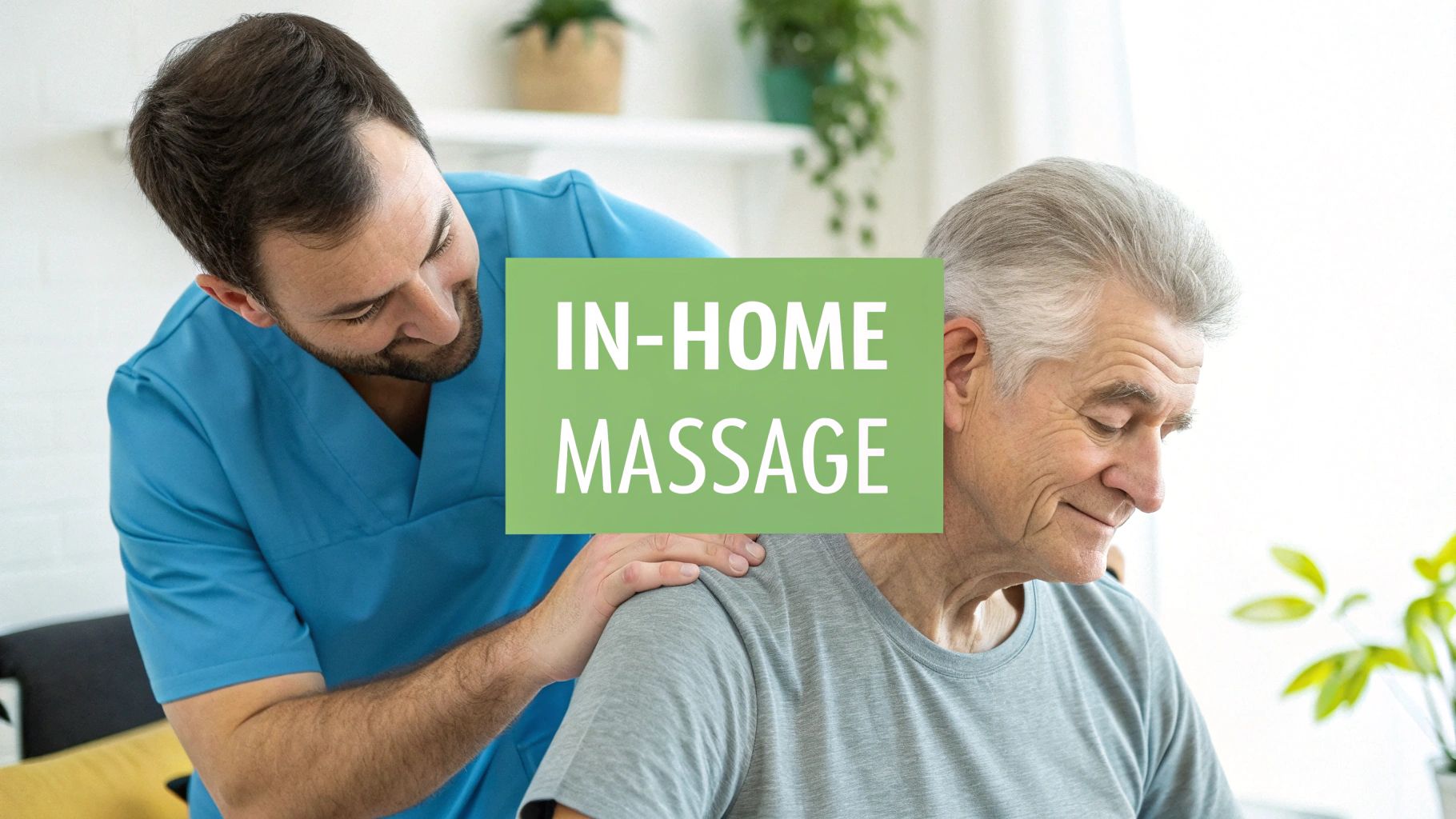
Mobile Registered Massage Therapy (RMT) isn't just a luxury treat. Think of it as a clinical healthcare service that brings powerful benefits right to their doorstep. It completely removes the stress and physical effort of getting to a clinic, which is a game-changer for seniors in places like Brampton, Toronto, and Etobicoke. They get to receive professional care in the one place they feel most comfortable: home.
A Partner in Your Loved One's Wellness
This is exactly what we specialize in at Stillwaters Healing & Massage. Our male RMT, Taylor, is not only fully licensed but also trauma-informed, ensuring a professional, compassionate, and safe experience in every single session. He works closely with families and other caregivers across Mississauga, Oakville, and Caledon to build a treatment plan that directly addresses the challenges that come with aging.
We tailor our services to solve common age-related problems:
Geriatric Massage: We use gentle, soothing techniques to boost circulation, ease anxiety, and provide comfort, especially for those with fragile skin or complex health issues.
Rehabilitation Massage: This supports recovery after a surgery or an injury. By working in a familiar, low-stress environment, we help restore mobility and function more effectively.
Myofascial Release: We target the deep connective tissues to relieve the chronic stiffness and pain that often come with arthritis or old injuries that never quite healed.
This focused approach means every session is more than just relaxing—it’s genuinely therapeutic and contributes to a better quality of life. To learn more about how this works, you can read our complete guide to in-home massage therapy for seniors.
Bringing a mobile RMT into a care plan is a proactive way to manage pain, improve mobility, and boost emotional well-being. It transforms the home into a space for healing, making professional therapy both accessible and powerful.
Care Tailored to Specific Needs
Taylor has extensive experience adapting his techniques for a wide range of needs. Whether it's using gentle joint mobilization to ease stiffness in hips and shoulders or applying trigger point release to work out stubborn muscle knots, the care is always personalized. This kind of specific attention is crucial for helping seniors maintain their independence for as long as possible.
By bringing these targeted therapies directly to your loved one in Milton, Halton, or Guelph, we make it incredibly simple to weave powerful wellness support into their weekly routine. The convenience, safety, and real therapeutic benefits of receiving expert care at home give families a way to provide a truly holistic support system.
Ready to add a layer of therapeutic comfort to your loved one's care? You can easily book a mobile massage session online.
Your Home Care Questions, Answered
Thinking about home care brings up a lot of questions, and that's completely normal. It’s a big decision. To help you navigate this path with a bit more confidence, here are some straightforward answers to the questions we hear most often from families just like yours.
How Do I Know When It’s the Right Time for Home Care?
Honestly, there’s no single "aha!" moment. It's more often a gradual realization built from small signs. Maybe you've noticed your parent is struggling more with meals, has had a recent fall, or just seems more lonely and withdrawn than before.
The right time is simply when you feel that a little extra support could make a real difference in their safety, health, and happiness. It's always best to start the conversation early, well before a crisis hits. This gives everyone time to think, plan, and make choices that honour your loved one’s wishes.
What’s the Difference Between Home Care and Home Health Care?
This is a really common point of confusion, so let's clear it up. Think of it like this: home care is all about non-medical support for daily living. This is the stuff that helps someone stay independent and comfortable at home—things like personal care, help around the house, companionship, and even therapeutic services like massage.
Home health care, on the other hand, is clinical medical care that a doctor prescribes. This is when a nurse comes to manage medications, a therapist helps with wound care, or a physiotherapist works on rehabilitation, often right after a hospital stay. The two often work hand-in-hand to create a complete circle of support.
A simple way to remember it: Home care helps a person live their life, while home health care helps them recover from an illness or injury. Both are vital, but they serve different needs.
Can We Choose Our Own Caregiver?
That depends on the route you take. If you work with a home care agency, they’ll handle the matching process. They’ll look at your loved one’s needs and personality to suggest a caregiver they think will be a good fit. If it's not working out, you can almost always request someone new.
When you hire a private provider directly—like an independent Registered Massage Therapist—you have total control. This is a huge benefit because you can personally select a professional like Taylor, who has specific, proven expertise in areas like geriatric massage or post-injury rehabilitation.
How Much Does Home Care Cost?
The cost really varies depending on the type and amount of care needed, as well as where you're located in the Greater Toronto Area. Most services are billed by the hour. While there are some publicly funded programs that can help, most families find they use a mix of private insurance and personal funds to build the right care plan.
Here's a helpful tip: don't forget that many private health insurance plans include coverage for services from a Registered Massage Therapist. This can make specialized, therapeutic care a much more affordable part of the plan.
Can We Change the Care Plan as Needs Evolve?
Absolutely—and you should expect to. A good care plan is never set in stone. A senior’s needs can shift, sometimes slowly over time, and sometimes quite suddenly after a fall or illness. Any quality provider will schedule regular check-ins with you and your loved one to review the plan and make sure it’s still working.
Whether that means adding more visit hours or bringing in a new service like rehabilitation massage to speed up recovery, the plan must adapt. The goal is always to ensure your loved one is getting the best possible support, no matter what changes come their way.
By bringing professional, compassionate support into your loved one's daily routine, you can make a profound difference in their comfort and quality of life. For specialized therapeutic care delivered right to your door in Brampton, Toronto, Mississauga, Oakville, Caledon, Orangeville, Milton, Halton, and Guelph, Stillwaters Healing & Massage is here to help.
Book a mobile massage session with Taylor online and bring restorative wellness home.


