


Deep Tissue Massage: Lasting Pain Relief in Brampton, Toronto, and Beyond
When you hear the term deep tissue massage, it’s easy to think it’s just about applying a lot of pressure. But it’s so much more than that. This is a highly focused, therapeutic technique designed to tackle severe tension and chronic pain by getting to the root of the problem—the deeper layers of muscle and connective tissue.
It relies on slow, deliberate strokes and firm, sustained pressure to methodically break down painful knots (adhesions) and old scar tissue. This makes it a very different experience from a massage that’s purely for relaxation. At Stillwaters Healing & Massage, our male RMT, Taylor, specializes in this technique to bring relief to clients across Brampton, Toronto, Etobicoke, and the surrounding areas.
Unlocking Relief with Deep Tissue Massage
Think of your muscles as a bundle of individual ropes. Over time, things like daily stress, repetitive movements, or an old injury can cause those ropes to develop stubborn, deep-seated tangles. A gentler, more superficial massage might smooth out the surface, but deep tissue massage is the specialized work required to meticulously untangle those deeper knots.
This powerful therapy is specifically designed to reach beyond the surface, targeting those inner layers of muscle and the web of connective tissue surrounding them, known as fascia. The goal isn't just about pushing hard; it's about using skilled, targeted techniques to release tension, restore proper movement, and bring lasting relief.
The Core Techniques Explained
A Registered Massage Therapist (RMT) like Taylor uses very specific methods to get these results. The whole process is unhurried, involving slow, firm strokes and direct, sustained pressure on the exact areas that are causing trouble. That deliberate pace is crucial—it allows the therapist to feel for adhesions, which are bands of rigid, painful tissue, and then carefully work to release them.
The two main techniques you’ll experience are:
Stripping: This involves deep, gliding pressure that moves along the length of the muscle fibres. Your therapist might use their elbow, forearm, or knuckles for this.
Friction: Here, pressure is applied across the grain of a muscle. This helps to realign tissue fibres and effectively break down those stubborn adhesions.
These methods are brilliant for breaking up scar tissue that often forms after an injury, which is a major cause of stiffness and limited mobility. By releasing this chronic tension, you’re also improving circulation. Blood and oxygen can finally flow more freely to your muscles, which speeds up healing and helps reduce inflammation. Other therapeutic services we offer that complement this approach include Myofascial Release, Trigger Point Release, and Sports Massage Therapy.
If you’d like to understand more about the "why" behind this, you can learn how myofascial release targets trigger points in our detailed guide.
Why It's More Than Just a "Hard" Massage
There’s a common myth that deep tissue is just a Swedish massage with more oomph. That’s not quite right. The intention behind each is completely different. A Swedish massage is all about promoting overall relaxation. Deep tissue work, on the other hand, is a problem-solving tool used to address chronic pain and restricted movement.
The objective of a deep tissue massage is to structurally change the muscle and fascia. It is a focused intervention designed to treat musculoskeletal issues, including strains and chronic pain patterns.
This focus makes it a cornerstone of therapeutic care for people dealing with persistent discomfort, whether they're in Brampton, Toronto, Oakville, or Guelph. Maybe you’re an office worker in Mississauga with nagging shoulder pain, or a senior in Caledon dealing with chronic stiffness—this targeted approach can offer real, significant relief.
Understanding its true purpose helps you decide if it’s the right fit for your wellness goals. Ready to feel the difference for yourself? You can book your session with Taylor online today.
The Real Benefits of Deep Tissue Massage
While targeted muscle work is the technique, the real magic of deep tissue massage is what it gives back to you: a better quality of life. This isn't just about feeling good for an hour. It's about restoring function, getting your mobility back, and making daily life easier and more enjoyable. The improvements are real things you can see and feel long after the session is over.
Think about someone in Brampton dealing with the sharp, radiating pain of sciatica or a nagging lower back ache. That kind of pain is often caused by deep, tight knots of muscle—adhesions—that are squeezing nearby nerves. A skilled RMT can methodically work on these tight bands of tissue, creating space and taking the pressure off. The result? Deep, lasting relief that makes simple things like walking, sitting, or even getting a good night's sleep possible again.
From Postural Strain to Pain-Free Movement
So many of us, especially office workers in Mississauga or Etobicoke, spend our days hunched over a desk. That posture takes a serious toll, leading to stubborn pain in the neck and shoulders. Deep tissue massage directly tackles this problem.
By focusing on the overworked muscles in the upper back and neck, it releases the chronic tension that pulls your head forward and rounds your shoulders. It doesn't just soothe the pain; over time, it can actually help correct your posture.
These aren't just vague feelings of improvement; they're tangible and measurable. To truly track progress, clinicians often rely on objective outcome measurement, which helps document changes in a client's range of motion, pain levels, and overall ability to function.
Relatable Scenarios, Real-World Results
The best way to understand the impact is to look at real-world situations we see all the time in the communities we serve, from Halton to Orangeville.
For the Senior Gardener: Picture a senior in Oakville who’s had to abandon their garden because of stiffness and pain in their back and hips. With careful, focused deep tissue work, Taylor can release the deep connective tissue—the fascia—that’s restricting their movement. When they regain that flexibility, they can bend, kneel, and get back to the hobby they love.
For the Weekend Athlete: An active person in Milton recovering from a hamstring strain can see huge benefits, too. Deep tissue massage is fantastic for breaking down scar tissue from an old injury. This improves the muscle's elasticity and stops that spot from becoming a chronic weakness, meaning a faster, stronger recovery and less risk of getting hurt again.
These examples really show how the work we do on the massage table translates into more freedom and a return to the activities that bring you joy.
The Science Behind the Relief
So, how does releasing a knot in your shoulder lead to such big changes? It’s all about what's happening on a physiological level.
By breaking down adhesions and releasing chronic muscle tension, deep tissue massage enhances blood flow, reduces inflammation, and restores the natural elasticity of your muscles and fascia. This is the foundation for improved movement and decreased pain.
When your muscles are constantly tight, they squeeze the blood vessels running through them. This chokes off circulation, meaning less oxygen and fewer nutrients get to the tissues. At the same time, metabolic waste products get stuck, which fuels pain and inflammation. The focused pressure of a deep tissue massage essentially acts like a pump, forcing fresh, oxygenated blood into these starved areas.
This boost in circulation helps to:
Flush out toxins and the chemical by-products of inflammation.
Deliver essential nutrients that your tissues need to heal.
Calm pain signals by helping the tense muscle fibres finally relax.
Ultimately, this whole process brings back flexibility, allowing your joints to move the way they’re supposed to—freely and without pain. This is a game-changer for conditions like arthritis, where releasing the tension in surrounding muscles can take a huge amount of stress off the affected joints. To learn more, check out our article on the role of massage in managing arthritis and joint pain.
Deep Tissue vs. Swedish Massage: Choosing Your Treatment
Trying to decide between different types of massage can feel a bit overwhelming, but it gets a lot simpler when you understand what each one is designed to do.
Think of it this way: Swedish massage is like a gentle, flowing river. Its main purpose is to help you relax, calm your nervous system, and boost circulation with long, gliding strokes. It's the perfect choice when you just need to unwind from a stressful week.
Deep tissue massage, on the other hand, is more like calling in a specialized repair crew. It’s not about all-over relaxation; it's a focused treatment meant to work on specific problem areas. It zeroes in on those stubborn muscle knots, old scar tissue, and adhesions that cause chronic pain and limit how you move.
Understanding this difference is the key to telling your RMT exactly what you need. Whether you're in Milton or Caledon, knowing what you want helps you pick the therapy that actually matches your wellness goals. Are you looking to de-stress, or do you need to finally tackle that nagging ache in your shoulder?
This little chart helps visualize how deep tissue massage can help, depending on what your main concern is.
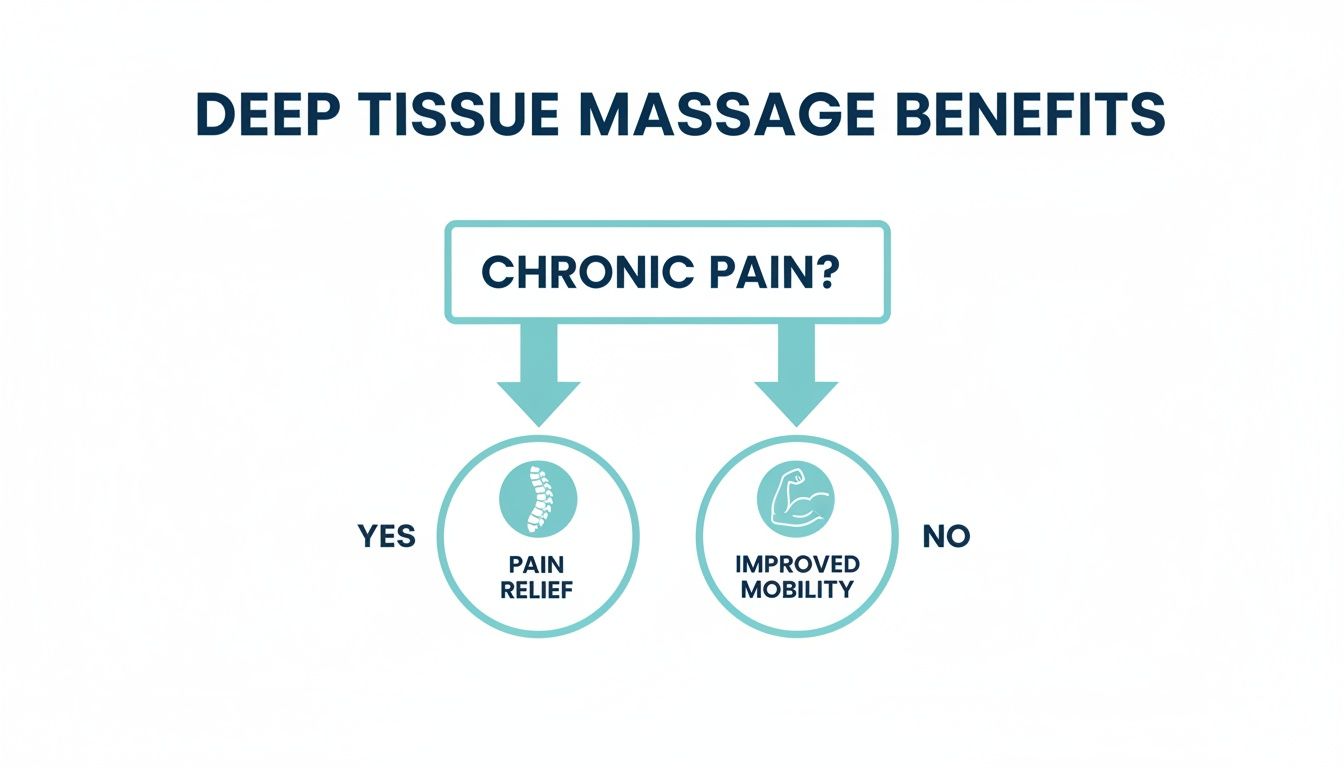
As the infographic shows, the path starts by figuring out your top priority—is it finding relief from chronic pain or getting back your full range of motion?
Key Differences in Goals and Techniques
The real contrast between these two popular massage styles boils down to intent and pressure.
Swedish massage uses lighter pressure with techniques like kneading and long, flowing strokes (called effleurage) to release tension in the muscles closer to the surface. The whole experience is meant to be calming and restorative.
A deep tissue session with RMT Taylor is a whole different ball game. He'll use much slower, more deliberate strokes and apply significantly more pressure. You can expect him to use his forearms, knuckles, and maybe even his elbows to reach those deeper layers of muscle and connective tissue (fascia). The goal here is to create real, structural change—to physically break down those adhesions and get your muscles working properly again.
Comparing Deep Tissue and Swedish Massage Therapy
To make the choice crystal clear, let's put the two therapies side-by-side. This comparison should help you pinpoint which approach is better for your current needs, whether you're in Brampton, Toronto, or anywhere in between.
Feature | Deep Tissue Massage | Swedish Massage |
|---|---|---|
Primary Goal | To release chronic muscle tension, break down scar tissue, and address specific pain points. | To promote full-body relaxation, reduce stress, and improve circulation and overall well-being. |
Pressure Level | Firm to deep, with sustained pressure on targeted areas. | Light to medium, with gentle, gliding strokes across the body. |
Technique Focus | Slow, deliberate strokes, friction across the grain of the muscle, and direct pressure on knots. | Long, flowing strokes (effleurage), kneading, circular movements, and tapping (tapotement). |
Ideal For | Chronic pain (e.g., lower back), postural problems, repetitive strain injuries, and limited mobility. | Stress relief, general muscle tension, improving sleep, and first-time massage clients. |
Sensation | Can create "therapeutic discomfort" or a "good hurt" in targeted areas; communication is key. | Generally soothing and relaxing, with minimal to no discomfort. |
The growing need for this kind of targeted therapy is clear. The global market for deep tissue massage, valued at USD 6.2 billion in 2025, is projected to more than double, hitting USD 13.1 billion by 2033. This surge is largely thanks to the rising number of people dealing with musculoskeletal issues, especially seniors managing conditions like arthritis and postural imbalances.
For a deeper dive, you might find our guide on choosing between Swedish and deep tissue massage helpful.
Ultimately, the best choice is all about you. If you need to soothe your mind and body, Swedish massage is a fantastic option. But if you have a specific, persistent issue that needs focused work, a deep tissue massage is the most effective path toward lasting relief.
Who Is a Good Candidate for Deep Tissue Massage?
While deep tissue massage is a powerful tool for unlocking chronic pain and stiffness, its intensity means it’s not the right fit for everyone. Knowing who benefits most—and when to proceed with caution—is key to a safe and effective treatment.
This focused style of bodywork can be a real game-changer for people struggling with long-term musculoskeletal problems. If you're dealing with stubborn aches from an old injury, postural strain from your job, or limited mobility because of tight, knotted muscles, a deep tissue massage can provide profound relief.
The Ideal Client for Deep Tissue Work
Many people in communities from Brampton and Mississauga to Milton find this therapy dramatically improves their quality of life. The ideal candidate isn't just looking for a bit of relaxation; they need targeted, specific work to address a root problem.
You might be a perfect candidate for deep tissue massage if you:
Live with chronic pain: This includes persistent lower back pain, a stiff neck, or sore shoulders that just won’t quit, even after trying gentler methods.
Have limited mobility: If tight muscles are holding you back and restricting your range of motion, this therapy can release the adhesions causing the problem.
Are recovering from old injuries: Deep tissue work is fantastic for breaking down scar tissue from past muscle strains, which helps improve flexibility and reduce the chances of hurting yourself again.
Suffer from repetitive strain: Anyone in a job with repetitive movements—whether you’re at a desk in Toronto or in a more physical role in Caledon—can develop the kind of deep knots this technique was designed to resolve.
It can also be incredibly effective for nerve-related pain. You can learn more about how this works in our guide on how massages help sciatica.
When We Need to Be Cautious and Adapt
Just as important as knowing who this therapy helps is understanding when to be careful. A well-trained and knowledgeable Registered Massage Therapist (RMT) like Taylor will always start with a thorough health history to make sure the treatment is right for you.
Deep tissue massage may not be suitable, or will need to be significantly modified, for people with certain health conditions. It's vital to have an open conversation with your therapist if you have any of the following:
Recent surgery, chemotherapy, or radiation
A history of blood clots or clotting disorders
Severe osteoporosis, where bones are more fragile
An open wound, skin infection, or rash in the treatment area
Nerve damage that impacts your sensation
The heart of responsible therapeutic care is personalization. A great RMT doesn't just perform a technique; they adapt it to the person on the table, making sure every session is safe and effective for that individual's unique body and health story.
A Modified Approach for Specific Health Needs
This is where a therapist’s expertise truly comes into play. For many clients in Halton or Guelph, especially seniors, a textbook deep tissue massage might simply be too much. Instead, Taylor modifies the treatment, carefully adjusting the pressure to protect delicate skin and working thoughtfully around sensitive joints.
It’s a similar story for people managing conditions like fibromyalgia or arthritis. The goal is to release tension without triggering a flare-up. This means a highly customized session that respects pain thresholds and focuses on bringing relief gently. Your feedback guides the entire treatment, ensuring the pressure is always therapeutic, never painful. This careful, personalized method gives both clients and their caregivers complete confidence in the care they receive right in their own home.
What to Expect From Your At-Home Deep Tissue Massage
One of the best things about in-home massage is that it completely removes the hassle of getting to and from a clinic. When we bring the treatment to you—whether you're in Orangeville, Caledon, or the surrounding areas—you can just focus on healing. From the moment your Registered Massage Therapist (RMT), Taylor, arrives, the priority is creating a space where you feel safe, comfortable, and ready to relax.
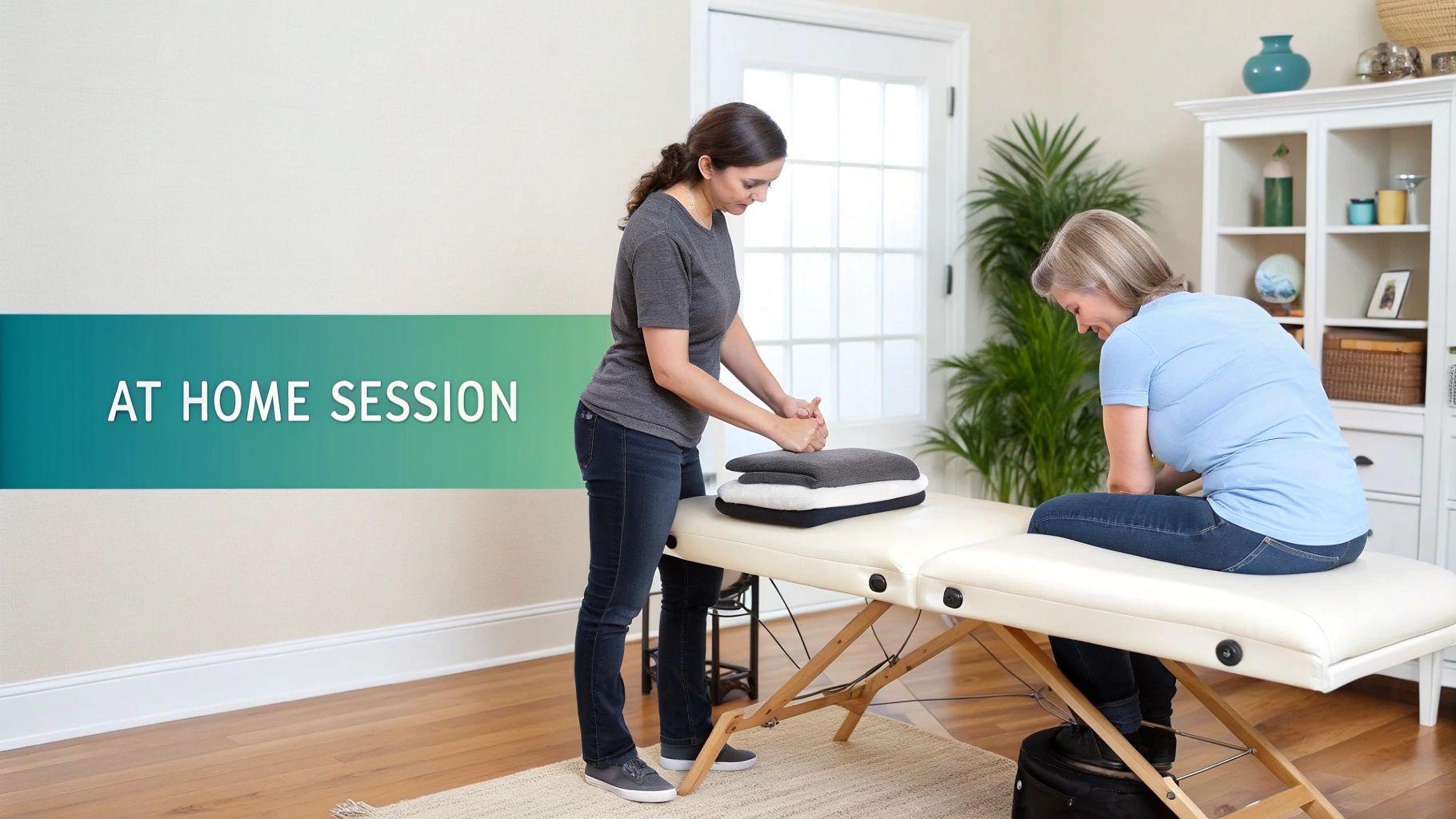
We bring everything needed for a professional, clinical-level experience: a sturdy massage table, fresh linens, and a calm, quiet presence. All you have to do is be there.
Your Initial Consultation and Goal Setting
The first thing we'll do is sit down and talk. Before any hands-on work begins, Taylor will review your health history and, most importantly, listen. We need to understand exactly what you're feeling and what you hope to achieve with a massage deep tissue session.
Are you struggling with a nagging pain in your lower back? Is it that same old stiffness in your neck and shoulders that just won't quit? This conversation is where we dial in the treatment plan, making sure every minute of the massage is focused on your specific needs.
Understanding the Sensation of Deep Tissue Work
People often ask, "Is it going to hurt?" It’s a great question, and it's important to draw a line between true pain and what we call "therapeutic discomfort." Deep tissue techniques are designed to reach those stubborn, deeper layers of muscle, and that can create an intense, focused pressure.
Many clients describe it as a "good hurt"—that feeling when a tight, knotted-up muscle finally begins to let go. But let's be clear: your comfort is always the priority.
Open and continuous communication is the cornerstone of a successful deep tissue session. You are always in control, and Taylor will encourage you to provide feedback to adjust the pressure at any time, ensuring the work remains within your comfort threshold.
This is a partnership. You should never feel like you have to just grit your teeth and bear it. We'll find that sweet spot where the work is effective but still feels productive and safe for your body.
A Commitment to Professionalism and Comfort
Your privacy and comfort are non-negotiable. We use professional draping throughout the entire session, which means you’ll be covered by clean linens at all times. Only the specific area being worked on—like your back, shoulder, or leg—will ever be undraped.
This practice isn't just about professional boundaries; it also helps you stay warm and relaxed, allowing your muscles to soften and respond much better to the treatment. It’s this dedication to professionalism that lets us deliver high-quality, restorative therapy right in the comfort of your home.
The need for this kind of specialized, in-home care is growing fast. The Bureau of Labor Statistics projects an 18% growth in massage therapy jobs from 2023 to 2033, and much of that demand is for modalities like deep tissue massage that provide real relief from chronic pain. For families and caregivers, finding an RMT who can provide services like Myofascial Release, Geriatric Massage, or Rehabilitation Massage at home means safer, truly personalized care that can help seniors improve their balance and flexibility.
By knowing what to expect, you can step into your session feeling confident and prepared for a truly healing experience. To learn more about the benefits and logistics of in-home care, check out our complete guide to at-home massage therapy.
What to Do After Your Session to Get the Best Results
The amazing effects of your deep tissue massage don’t just end when the session is over. In fact, what you do in the hours that follow is a huge part of the healing process.
Think of it this way: your massage therapist did the hard work of unlocking tight muscles. Your job now is to help your body accept and hold onto that new freedom.
The single most important thing you can do is drink water. Your massage helped release all sorts of metabolic by-products that were stuck in your muscle tissue, and plenty of water is what your body needs to flush them all out. This simple step can make a big difference in how sore you feel the next day.
Smart Steps for Post-Massage Care
It's completely normal to feel a bit tender after deep therapeutic work. That's actually a good sign—it means your muscles have really been worked on and positive change is happening. To handle this and keep your new flexibility, try these simple aftercare tips.
Move Gently: Don't jump right back into a heavy workout. For the next 12-24 hours, stick to light activities like a gentle walk or some easy stretches. This keeps blood flowing without overdoing it, helping your muscles settle into their new, more relaxed state.
Try Heat or Cold: A warm bath is a fantastic way to soothe any tenderness. Tossing in some Epsom salts can help relax your muscles even more. If you notice a specific spot that feels a little inflamed, a cold pack for 10-15 minutes can work wonders. This is a form of Hydrotherapy Application we often recommend.
Listen to Your Body: This is key. Pay close attention to how you're feeling. Your body just went through an intense therapeutic experience, so give it the rest it needs to recover and fully absorb the benefits of the treatment.
Aftercare isn't a chore; it's you taking an active role in your own health. By supporting your body after the massage, you make the treatment more effective and learn how to manage your own well-being long-term.
To keep that relaxed feeling going and support your muscles, you might also want to look into a magnesium oil spray for wellness and muscle comfort as part of your regular routine. By following these simple steps, you're not just getting a massage—you're partnering with your RMT to make a lasting investment in your health and ensuring every session delivers the best possible outcome.
Your Top Questions About Deep Tissue Massage
Deciding on a new type of therapy always comes with questions. It's completely normal to want to know what you're getting into, and feeling prepared is the first step toward a great session. Let's walk through some of the most common things people ask about deep tissue massage.
These answers are here to give you a clear picture of what to expect, so you can feel confident and ready for your in-home treatment.
How Often Should I Book a Deep Tissue Massage?
There's no single answer to this one—it truly depends on you. The right schedule is the one that matches your body's needs and your personal health goals.
If you're dealing with a fresh injury or a sudden flare-up of chronic pain, we might start with more frequent sessions. Your RMT, Taylor, may suggest coming in once a week at first to really get ahead of the muscle tension and break up those stubborn knots. As you start to feel better, we can ease back into a maintenance plan, maybe every few weeks or once a month, just to keep things loose and prevent old problems from creeping back.
Is a Deep Tissue Massage Going to Hurt?
This is easily the question I get asked the most, and for good reason! You can expect to feel a strong, concentrated pressure, and at times it might feel intense. But it should never be painful. The feeling is often described as a "good hurt"—that satisfying sensation when a tight, overworked muscle finally begins to let go.
The most important part of any deep tissue massage is communication. Taylor will check in with you constantly to make sure the pressure is just right for you. Your feedback is what guides the entire session, ensuring the treatment is effective without ever pushing you past your comfort zone.
Think of it as a partnership. You let us know what you're feeling, and we adjust to make it work for you.
Can This Help My Sciatica or Arthritis?
For many people, the answer is a resounding yes. Deep tissue massage can work wonders for conditions like sciatica and certain forms of arthritis. By getting deep into the muscle and connective tissues, it helps release the chronic tightness that can compress nerves (like the sciatic nerve) or put extra strain on your joints.
That said, we always start with a conversation. Before any hands-on work begins, Taylor will go through a detailed health history with you. Understanding your specific diagnosis and symptoms is crucial to making sure deep tissue is a safe and effective choice for your body. Other therapies like Joint Mobilization and Geriatric Massage are also excellent for managing these conditions.
What's the Big Deal About Mobile Massage?
Honestly, it boils down to two things: comfort and convenience. Bringing professional massage therapy right into your home takes the stress out of the equation. There’s no need to travel to a clinic, which is a huge plus for our clients in Brampton, Mississauga, or Oakville who may have mobility challenges.
Plus, after a really deep and effective massage, the best thing you can do is rest and let your body absorb the benefits. Being at home means you can go straight from the massage table to your favourite chair without having to get in a car and deal with traffic. It makes a huge difference in how well the effects of the treatment stick.
Ready to feel the difference that personalized, in-home therapy can make? At Stillwaters Healing & Massage, our male Registered Massage Therapist, Taylor, brings expert, compassionate care right to your door across Brampton, Toronto, Etobicoke, Oakville, Caledon, Orangeville, Mississauga, Milton, Halton, and Guelph. Book your deep tissue massage session today and take the first step toward feeling better.


