


swedish massage vs deep tissue massage: Best option for you
The biggest difference really boils down to what you're trying to achieve. Are you looking for overall relaxation and stress relief? Swedish massage is your go-to. Or are you trying to tackle chronic pain and stubborn muscle knots? That's where deep tissue massage comes in.
It's all about whether you need to calm your nervous system or get some serious repair work done on specific muscle issues.
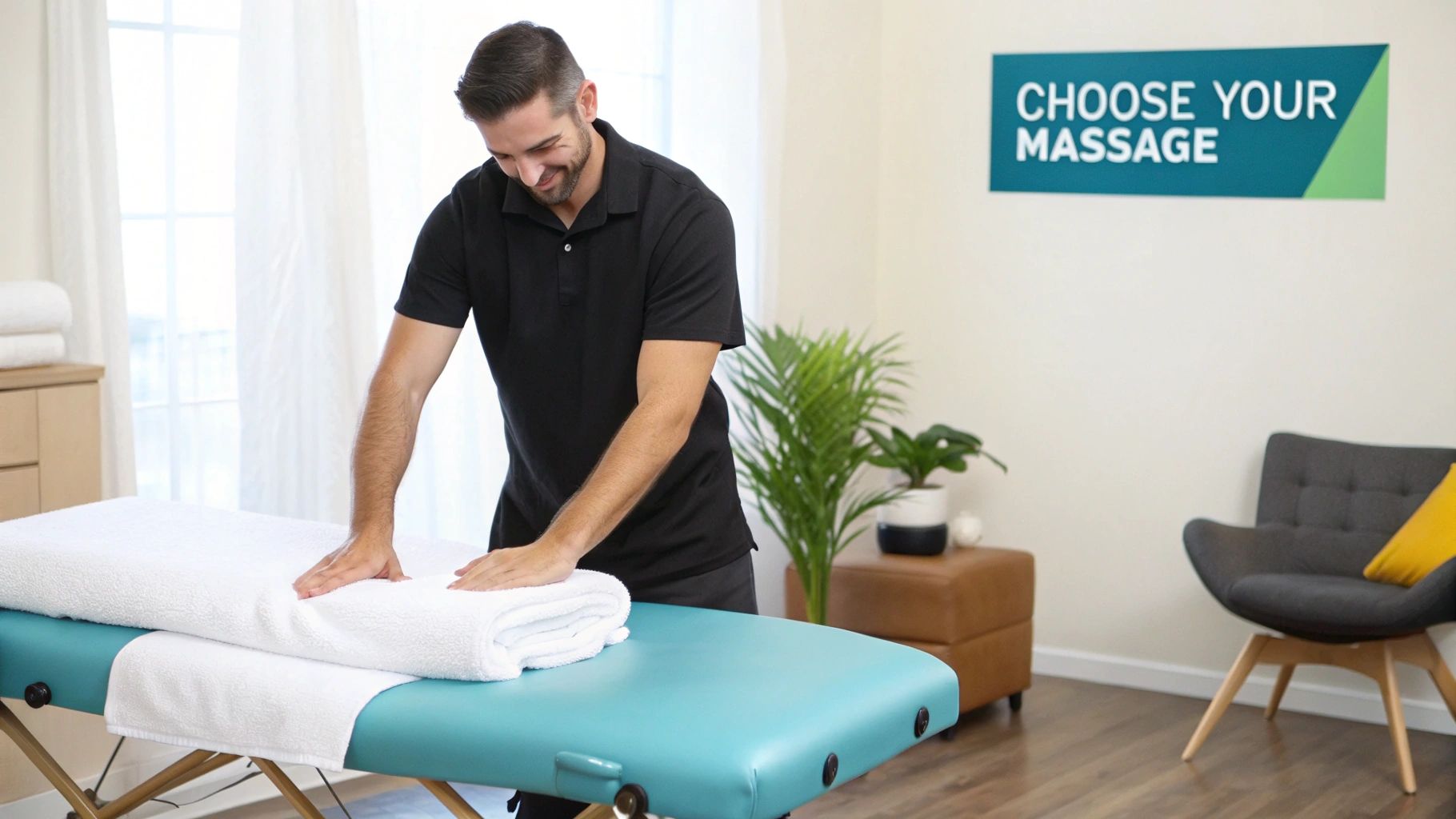
Understanding The Core Differences
Deciding between Swedish and deep tissue massage can seem tricky at first, but it gets a lot clearer once you know what each one is designed to do.
Think of it this way: Swedish massage is like a full-body tune-up designed to soothe your entire system. Deep tissue, on the other hand, is a focused repair job for problem areas. Each uses a completely different set of techniques to get you the results you need.
Our skilled male RMT, Taylor, works with clients all over Brampton, Toronto, and Mississauga to figure out which treatment is the right fit. Whether you're unwinding after a crazy week or dealing with a nagging injury, choosing the right type of massage makes all the difference.
Swedish vs Deep Tissue At a Glance
To make the choice a bit easier, let's put the main characteristics of each massage style side-by-side. This quick summary should help you see which one lines up with your needs.
Feature | Swedish Massage | Deep Tissue Massage |
|---|---|---|
Primary Goal | General relaxation, stress reduction, and improved circulation. | To release chronic muscle tension, knots, and adhesions. |
Pressure Level | Light to firm, focusing on a comfortable, soothing experience. | Intense and focused, applying sustained pressure to deeper layers. |
Technique Used | Long, gliding strokes (effleurage), kneading, and friction. | Slow, deliberate strokes, and deep finger pressure on specific areas. |
Ideal For | First-time clients, stress relief, and overall muscle wellness. | Chronic pain, postural problems, and repetitive strain injuries. |
Here in Canada, both Swedish and deep tissue are consistently the most requested types of massage. People love relaxation therapies like Swedish massage because they're fantastic for stress—they can even lower cortisol levels by up to 30%.
Deep tissue massage is usually the top choice for managing chronic pain. In fact, demand for massage therapy tends to spike in November, with a 51% jump in inquiries as Canadians look for relief from seasonal aches and holiday stress. You can learn more about these massage trends and their benefits to see what's popular.
At the end of the day, the right massage is the one that meets your immediate health and wellness goals. Now that you understand the key differences, you can feel confident you're picking the perfect therapy for your body. You can even book a session with Taylor online to talk through your specific needs.
The Art of Swedish Massage for Total Relaxation
When you imagine a classic, full-body massage, you’re almost certainly thinking of a Swedish massage. It's the foundation of Western massage therapy and for good reason—it’s built from the ground up for one primary goal: total relaxation. This isn't about aggressively digging into painful knots. Instead, it’s a gentle, flowing approach designed to melt away the physical and mental weight of daily life.
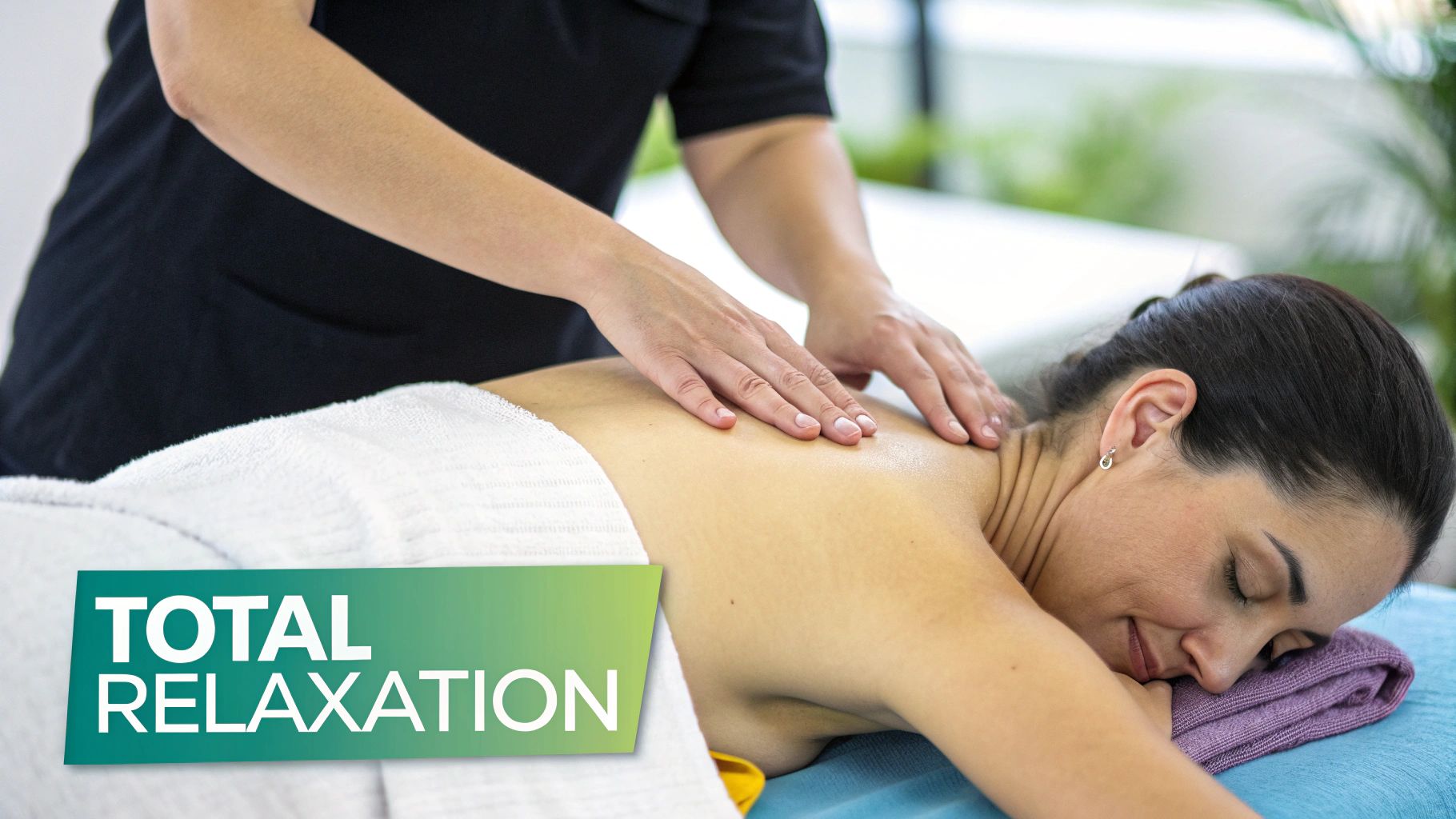
The whole experience is designed to be deeply soothing, making it a perfect starting point for anyone new to massage or for those who are sensitive to pressure. Many of our clients in Oakville and Caledon book this specific treatment to decompress after a long week, get a better night's sleep, or simply find their way back to a feeling of calm.
The Five Classic Strokes and Their Benefits
The real magic of a Swedish massage is in its five signature strokes. Each has a specific job, and when a skilled RMT weaves them together, they create a rhythmic, flowing session that quiets the entire nervous system. Getting a feel for these techniques really helps clarify the swedish massage vs deep tissue massage decision.
These core movements are:
Effleurage: These are the long, gliding strokes that start and end the massage. They warm up your muscles, get the blood flowing, and let the therapist feel for any tight spots without applying intense pressure.
Petrissage: This is all about gentle kneading, rolling, and lifting of the muscles. Think of it as a way to release surface tension, help with lymphatic drainage, and stretch muscle fibres without being invasive.
Friction: Using thumbs or fingertips, the therapist applies deep, circular movements. This technique is great for working on minor adhesions—those little "knots"—and bringing a fresh rush of blood to specific areas.
Tapotement: This is a rhythmic tapping or percussion, often done with the edge of the hand or cupped palms. It feels stimulating and is fantastic for waking up the body near the end of a session.
Vibration: Using rapid shaking or trembling movements over a muscle, this technique helps to soothe nerve endings and relax the tissues at a deeper level.
When combined, these strokes feel like a symphony of touch. They work together to boost circulation, bring more oxygen to your muscles, and help flush out metabolic waste, all while keeping you in a state of profound relaxation.
More Than Just Muscle Relaxation
While the physical perks are fantastic, the effect of a Swedish massage on your mental and emotional state is just as powerful. The gentle, consistent pressure helps lower cortisol (the body’s main stress hormone) while encouraging the release of serotonin and dopamine—the "feel-good" chemicals that contribute to happiness.
The primary goal of a Swedish massage is to soothe the nervous system for holistic calm. It's a powerful tool for managing anxiety and improving sleep patterns, making it a vital part of a comprehensive wellness routine.
This direct impact on the nervous system makes it an incredible choice for anyone dealing with day-to-day stress, anxiety, or trouble sleeping. For seniors, the gentle touch of a Swedish massage is a safe and effective way to ease the muscular stiffness and joint pain that can come with aging, without the intensity of a deeper massage. We delve into this connection in our guide on how Swedish massage therapy in Brampton helps reduce anxiety and stress.
At its heart, a Swedish massage is a restorative experience. It’s the perfect fit for anyone in Guelph, Halton, or the nearby communities who needs a complete physical and mental reset.
Deep Tissue Massage for Targeted Pain Relief
If a Swedish massage is about overall relaxation, deep tissue massage is the specialist you call in for a specific job. It’s a therapeutic technique focused squarely on chronic pain and mobility problems. We’re going deeper than the surface-level muscles to get at the root of the issue: the underlying layers of muscle and connective tissue, or fascia. This is where you’ll find those stubborn adhesions—what most of us call "knots"—that cause ongoing pain and limit how well you can move.

Our RMT, Taylor, uses slow, deliberate strokes with sustained pressure to zero in on these problem spots. It's a far cry from the flowing, continuous motion of a Swedish massage. This approach is patient and precise, giving tight muscles the time they need to finally let go. For our clients in Toronto and Mississauga struggling with postural strain from desk jobs or dealing with repetitive strain injuries, this kind of targeted work can be a real game-changer.
Understanding the Sensation: A "Good Hurt"
Let's clear up a common myth: deep tissue massage shouldn't be a painful ordeal. The goal is never to cause pain, but to work with your body’s threshold to release deeply held tension. The feeling is often described as a "good hurt"—an intense but productive sensation that signals a real release is happening, not that damage is being done.
A skilled RMT will always work within your comfort zone, checking in with you throughout the session to make sure the pressure is therapeutic, not torturous. The whole point is to feel a release, not to grit your teeth and endure it.
This is a key difference when comparing swedish massage vs deep tissue massage. A Swedish massage should feel soothing from beginning to end. Deep tissue, on the other hand, involves moments of intensity that pave the way for lasting relief. Taylor is an expert at reading both your words and your body's subtle cues to find that perfect pressure for an effective, comfortable treatment.
Techniques for Deeper Release
Getting to those deeper layers isn't just about pushing harder. Deep tissue massage relies on a specific set of techniques to unlock chronic tension safely and effectively.
Here are a few common methods you might experience:
Sustained Pressure: This involves holding direct, firm pressure on a specific knot or trigger point. It gives the muscle fibres a chance to relax and lengthen on their own terms.
Friction: The therapist applies pressure across the grain of the muscle. This is especially useful for breaking down old adhesions and stubborn scar tissue.
Stripping: This is a deep, gliding pressure that moves along the length of a muscle fibre. Taylor might use his thumb, forearm, or even his elbow to smooth out tight, ropy muscle bands.
Taylor often weaves in complementary techniques like Trigger Point Release to get even better results. This means applying focused pressure to tiny, hyper-irritable spots in the muscle that can send pain to other areas of the body. By combining these methods, he offers a much more complete path to pain management for clients all over our service area, from Caledon to Oakville.
If you're curious about the mechanics behind this type of work and how you can apply some principles yourself, looking into the science behind myofascial release and foam rolling is a great place to start.
Who Benefits Most From Deep Tissue Work?
Deep tissue massage is a lifeline for people dealing with chronic musculoskeletal issues. Its ability to break down scar tissue and release tight knots makes it a powerful tool. In fact, studies on athletes have shown massage can significantly boost both performance and recovery, which is why it's a staple in Canadian sports medicine for injury rehab and keeping athletes at their peak.
This type of massage is an ideal choice for:
Anyone with nagging, chronic lower back pain.
People suffering from repetitive strain injuries like carpal tunnel syndrome.
Athletes looking to recover from soreness or a specific injury.
Those with postural problems and the muscle tension that comes with them.
Ultimately, our approach to deep tissue massage therapy is all about creating real, functional change. We want to help you move more freely and live with less pain.
How Does the Experience Actually Feel? Goal, Sensation, and Aftermath
When you’re deciding between a Swedish and a deep tissue massage, it’s about more than just a list of techniques. The real difference comes down to the goal of the session and what you’ll actually feel on the table—and after you get off it. Knowing what to expect is the key to picking the massage that’s truly right for you, whether you’re after a mental escape or a deep physical fix.
The whole vibe of the session is dictated by its therapeutic goal. A Swedish massage is all about pure, head-to-toe relaxation. Its purpose is to soothe your nervous system, melt away stress, and ease that general, day-to-day muscle tension. It’s the perfect choice for clients in Etobicoke or Milton who just need to decompress and reset.
Deep tissue massage, on the other hand, is much more surgical in its approach. This is a targeted treatment designed to tackle chronic pain, break up those stubborn, painful knots (we call them adhesions), and get you moving freely again. The goal here isn’t just to relax you; it’s to create real, structural change and provide lasting relief.
Pressure and Sensation on the Table
How the pressure feels is probably the most immediate and obvious difference between the two. This is a huge factor when you’re weighing Swedish massage vs. deep tissue massage.
A Swedish massage feels rhythmic, flowing, and smooth. The pressure ranges from light to firm but should always stay comfortably within your tolerance. Think long, gliding strokes that cover big sections of your body, creating a seamless experience that quiets the mind.
Deep tissue is a completely different world. The pressure is slow, deliberate, and intense, zeroing in on very specific tight spots. You’ll feel sustained, focused pressure from Taylor’s fingers, thumbs, or even forearms. People often call this a “good hurt”—it’s an intensity that feels productive and signals a deep release, not a sharp or alarming pain.
Swedish massage soothes the nervous system for holistic calm, while deep tissue massage targets specific muscular structures for functional repair.
This contrast in sensation really gets to the heart of each massage’s purpose. One calms your entire system, while the other methodically works to fix a problem. Understanding this makes it much easier to choose the right therapy for what your body needs today. If you're still on the fence, our guide on what massage you should get can help you sort it out.
How You'll Feel After Your Session
What happens in the hours and days after your massage is just as important. The post-session feeling from Swedish and deep tissue can be worlds apart, so it’s good to know what’s coming.
After a Swedish massage, you’ll almost certainly feel an immediate sense of blissful calm. Clients often say they feel lighter, more peaceful, and totally serene. You shouldn't feel any soreness, which makes it a great choice if you have things to do later in the day and can't afford any downtime.
The day after a deep tissue massage often feels like the day after a tough workout. It’s pretty normal to have some muscle soreness for 24 to 48 hours while your body adjusts to the deep work and starts its healing process. This is a good sign that real change has happened! It’s also why drinking plenty of water after your session is so crucial.
To help you decide, here’s a quick guide based on common situations and goals.
Situational Guide: Choosing Your Massage
Choose This Massage If You Are... | Swedish Massage | Deep Tissue Massage |
|---|---|---|
New to Massage | ✓ (Great gentle introduction) | (Can be too intense for a first-timer) |
Dealing with Chronic Pain | (May offer temporary relief) | ✓ (Targets the root of the problem) |
Feeling Stressed & Overwhelmed | ✓ (Excellent for nervous system regulation) | (The intensity might be counterproductive) |
Recovering from an Injury | (Good for general circulation) | ✓ (Helps break down scar tissue) |
Seeking Overall Wellness | ✓ (A perfect maintenance massage) | (Best for specific, targeted issues) |
An Athlete with Tight Muscles | (Good for post-event relaxation) | ✓ (Ideal for releasing deep knots) |
Ultimately, choosing between these two fantastic therapies really boils down to your personal needs on any given day. In Canada, we see this reflected in client choices: about 30% of people pick Swedish massage specifically for stress relief, while 40% ask for deep tissue to manage pain. The other 30%? They rely on a professional consultation with their RMT to figure out the best game plan for their unique situation.
Whether you're in Orangeville, Guelph, or right here in Brampton, understanding these key differences will help you book the session that leaves you feeling your absolute best.
Making the Right Choice for Your Body
Knowing the technical differences between Swedish and deep tissue massage is one thing, but figuring out which one your body actually needs is the real goal. Your health, lifestyle, and what you want to achieve from the session are the deciding factors. To help you connect the dots, let's walk through a few common scenarios we see with our clients across Toronto, Brampton, and the surrounding areas.
Thinking about these real-world examples can help you pinpoint which massage style fits your immediate needs, setting you on the right path to feeling better.
Scenario-Based Recommendations
The best choice really boils down to context. What an athlete in Brampton needs is completely different from what a senior in Oakville might be looking for. Here’s a look at a few situations to help guide your decision.
The Stressed-Out Toronto Professional
Picture this: you have a demanding office job in downtown Toronto, buried under deadlines and endless screen time. Your shoulders feel like they're up by your ears, you're mentally drained, and sleep just isn't coming easily. Your main goal isn't to fix a specific injury—it's to simply unwind and quiet a busy mind.
Recommendation: Swedish Massage.
Why it works: The long, flowing strokes of a Swedish massage are perfect for calming the nervous system. This approach helps lower cortisol (the body's primary stress hormone) and encourages the release of serotonin, which can improve your mood and sleep. The gentle-to-firm pressure is ideal for easing that all-over muscle tension without being too intense for an already overstimulated system.
The Brampton Athlete with Sore Hamstrings
You're a runner from Brampton, training hard for your next marathon, but you’ve hit a wall. There's a persistent, deep ache in your hamstrings and glutes, full of stubborn knots that just won't release with stretching. You need functional repair—you want to break up that tension so you can get back to training without pain.
Recommendation: Deep Tissue Massage.
Why it works: This situation calls for a much more targeted approach. Deep tissue massage uses slow, firm pressure to reach those deeper layers of muscle and connective tissue where adhesions (knots) form. By applying friction across the muscle grain, a Registered Massage Therapist can break down old scar tissue, release that chronic tightness, and help restore your full range of motion.
This simple chart sums it up perfectly. Are you looking to relax your mind, or repair your body?
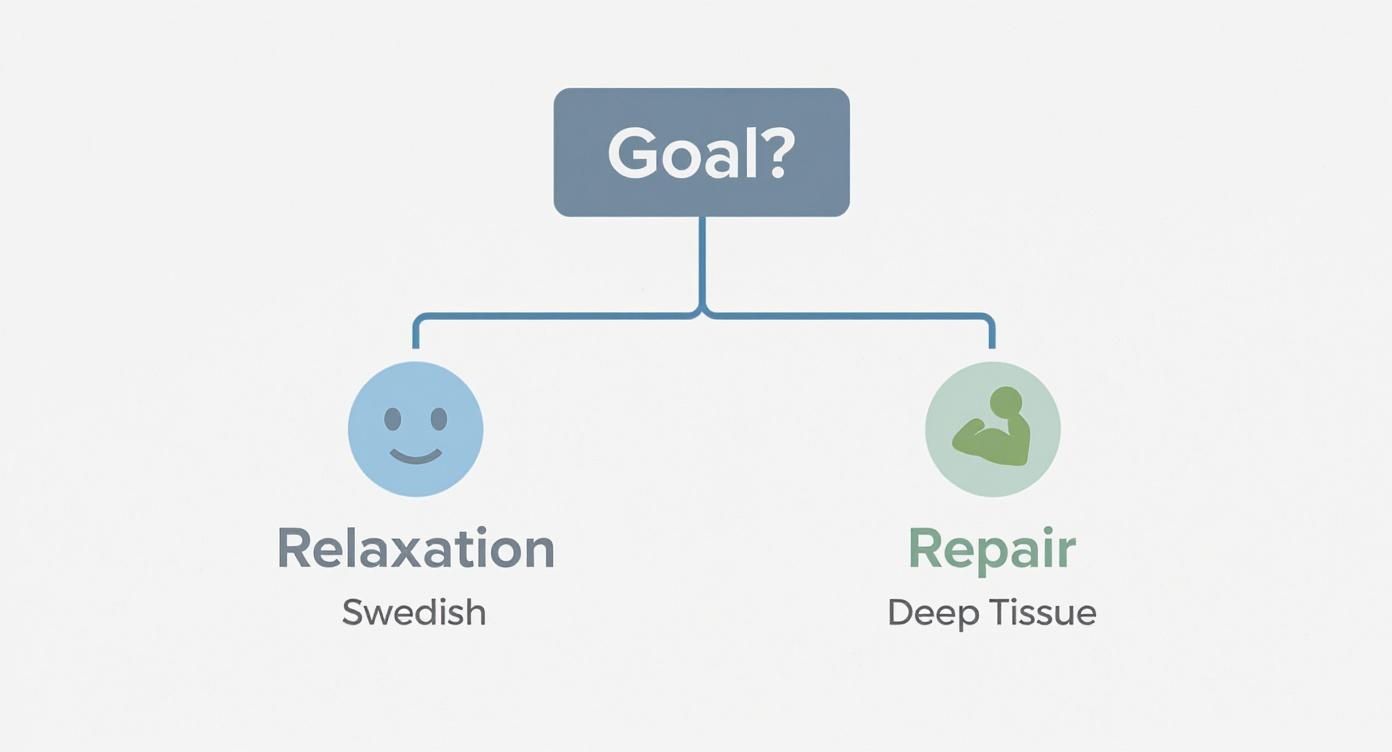
As the visual shows, your intention—be it for relaxation or repair—is the key to settling the Swedish vs. deep tissue debate for yourself.
Special Considerations and Safety
Choosing the right massage also means knowing when a certain style might not be the best or safest option. Both Swedish and deep tissue have contraindications, and respecting them is essential for a truly healing experience.
The Oakville Senior Seeking Gentle Relief
Let's consider an older adult in Oakville who is dealing with general aches and joint stiffness. They might also have more delicate skin or be taking blood-thinning medication. They want to improve their circulation and find some comfort, but without risking bruising or discomfort.
Recommendation: A Swedish Massage or a specialized Geriatric Massage.
Why it works: Deep tissue massage could be too intense, and potentially unsafe, for someone with osteoporosis, fragile skin, or for those on anticoagulants. The gentle, rhythmic strokes of a Swedish massage are fantastic for boosting circulation and easing muscle tension safely, making it a much better fit.
The Mississauga Resident with Chronic Back Pain
Now imagine someone in Mississauga who has been struggling with chronic lower back pain for years. The pain is deep and nagging, but they also have a history of blood clots (deep vein thrombosis).
Recommendation: A thorough consultation is crucial, but a modified Swedish Massage is the likely path.
Why it works: Deep tissue massage is a no-go for anyone with a history of blood clots, as the intense pressure could dislodge one. A skilled RMT would know to avoid the affected areas entirely and use lighter, circulation-focused techniques to provide relief safely.
Your safety always comes first. It is absolutely vital to share your full health history with your RMT. Things like recent surgeries, skin infections, a fever, or certain heart conditions will always require your therapist to modify the treatment or, in some cases, postpone your session.
This is exactly why a proper consultation with a qualified professional is non-negotiable. An experienced RMT can take a look at your unique health profile and design a treatment plan that is both safe and effective. To get a better idea of what to expect, check out your guide to a Registered Massage Therapist for more insights.
How to Prepare for Your In-Home Massage Session
Having a professional massage therapist come to your home in Brampton, Toronto, or our other service areas is all about bringing therapeutic care and convenience to you. To really get the most out of your time with Taylor, a little preparation goes a long way, whether you’re settling in for a calming Swedish massage or a more intensive deep tissue session.
Don’t worry about the logistics—Taylor handles all of that. He’ll arrive with everything needed for a complete, professional experience: a sturdy massage table, fresh linens, and high-quality oils or lotions. Your only job is to clear a quiet, private space with enough room for him to move freely around the table. That’s it!
Your Comfort and Communication
Your comfort is paramount. We adhere to strict professional draping protocols, which means you’ll be covered by a sheet or towel throughout the entire session. Only the specific area being worked on at that moment—like your back or one of your legs—will be undraped. This standard practice ensures you feel completely secure and respected from beginning to end.
Before the massage starts, Taylor will have a quick chat with you to go over your goals for the session. This is the perfect time to point out any sore spots, let him know your pressure preferences (light, firm, or somewhere in between), and discuss any relevant health history. Honest, open communication is what makes a good massage great, especially when figuring out if you need the gentle strokes of a Swedish massage or the focused work of a deep tissue massage.
A quick tip: Staying hydrated is always a good idea, but it’s especially important before and after a deep tissue massage. Drinking plenty of water helps flush out the metabolic waste that gets released from your muscle tissues, which can really help minimize any soreness you might feel the next day.
Maximizing Your Wellness Journey
To elevate your experience, try to take a few quiet moments to yourself before Taylor arrives. A warm shower can be a wonderful way to begin relaxing your muscles, making them more pliable and ready for massage. It’s a small step that can make a surprisingly big difference in the results you feel. For more insights on what to expect, take a look at your guide to professional massages at home.
At Still Waters Healing Massage, we offer more than just Swedish and deep tissue. Our goal is to support your overall wellness with services like Cupping Therapy, Rehabilitation massage, Myofascial release, Trigger point release, Joint mobilization, Hydrotherapy applications, Geriatric massage, Sports massage therapy, and Energy healing. We’re here to provide the comprehensive care you need.
Ready to feel the difference an in-home massage can make? You can book your session with Taylor today by visiting our online booking page.
Common Questions Answered
When you're exploring massage therapy, it's natural to have questions. Let's tackle some of the most common ones that come up when people are trying to decide between a Swedish and a deep tissue massage.
Can a Therapist Use Both Swedish and Deep Tissue Techniques in One Session?
Yes, and it’s actually a fantastic way to get the best of both worlds. A skilled RMT, like Taylor, will often blend techniques to create a session that’s perfectly suited to your needs.
Think of it like this: the session might start with the flowing, gentle strokes of a Swedish massage to warm up your muscles and ease you into a state of relaxation. Once your body is prepped, the therapist can then switch to more focused deep tissue work on those stubborn knots or areas of chronic tension. The key is to discuss what you want to achieve before the session starts.
For Chronic Pain, How Often Should I Book a Massage?
There's no one-size-fits-all answer here; it really depends on your specific situation. If you're dealing with a recent flare-up or acute pain, you might find that weekly deep tissue sessions get you the best results at first.
As you start to feel better and the pain subsides, you can often stretch that out to every two weeks, or even monthly for general maintenance. The goal is consistency. Regular massage helps keep that chronic tension from creeping back in. Taylor can help you map out a treatment schedule that evolves with your progress.
Remember, you are always in control. If the pressure ever feels too intense, speak up immediately. Deep tissue work should feel like a 'good hurt' or a productive ache, never sharp or unbearable pain.
Is Deep Tissue Massage a Good Idea for Seniors?
It can be, but it requires a very careful and considered approach. For an older adult with strong muscle tone and no major health complications, a modified, lighter-pressure deep tissue massage can be quite effective.
However, for seniors with conditions like osteoporosis, or for those taking blood-thinning medication, a classic deep tissue massage is often too risky. In these cases, a gentle Swedish massage or a session specifically designed as Geriatric Massage is the far safer and more appropriate choice. This is why a detailed health intake at the beginning of every appointment is so important—it ensures the session is tailored to be both safe and effective.
Ready to feel the benefits of a professional, personalized massage without leaving your home? Still Waters Healing Massage provides restorative mobile massage therapy across Brampton, Toronto, Etobicoke, Oakville, Caledon, Orangeville, Mississauga, Milton, Halton, and Guelph. Book your in-home session with Taylor today.


