


Explore feet massage reflexology for at-home relaxation
- tmcpnet
- Jan 21
- 13 min read
At-home feet massage reflexology isn't just a simple foot rub; it's a focused, therapeutic practice where you apply pressure to specific points on the feet to support the body's overall well-being. Think of it as a gentle, yet surprisingly effective, way to encourage deep relaxation and melt away tension from head to toe.
What Is At-Home Feet Massage Reflexology?
Welcome to the nurturing world of at-home foot reflexology, a practice designed to promote well-being right from the ground up. It’s a technique based on the principle that our feet are like maps of our bodies, with specific points corresponding to different organs, glands, and systems. By applying targeted pressure to these reflex points, you can help the body find its natural balance and achieve a profound state of calm.
This guide is written with both individuals and caregivers in mind, especially those who support seniors in communities like Brampton, Toronto, and Mississauga. My goal is to make this healing art accessible, focusing on the practical benefits for those who may have limited mobility.
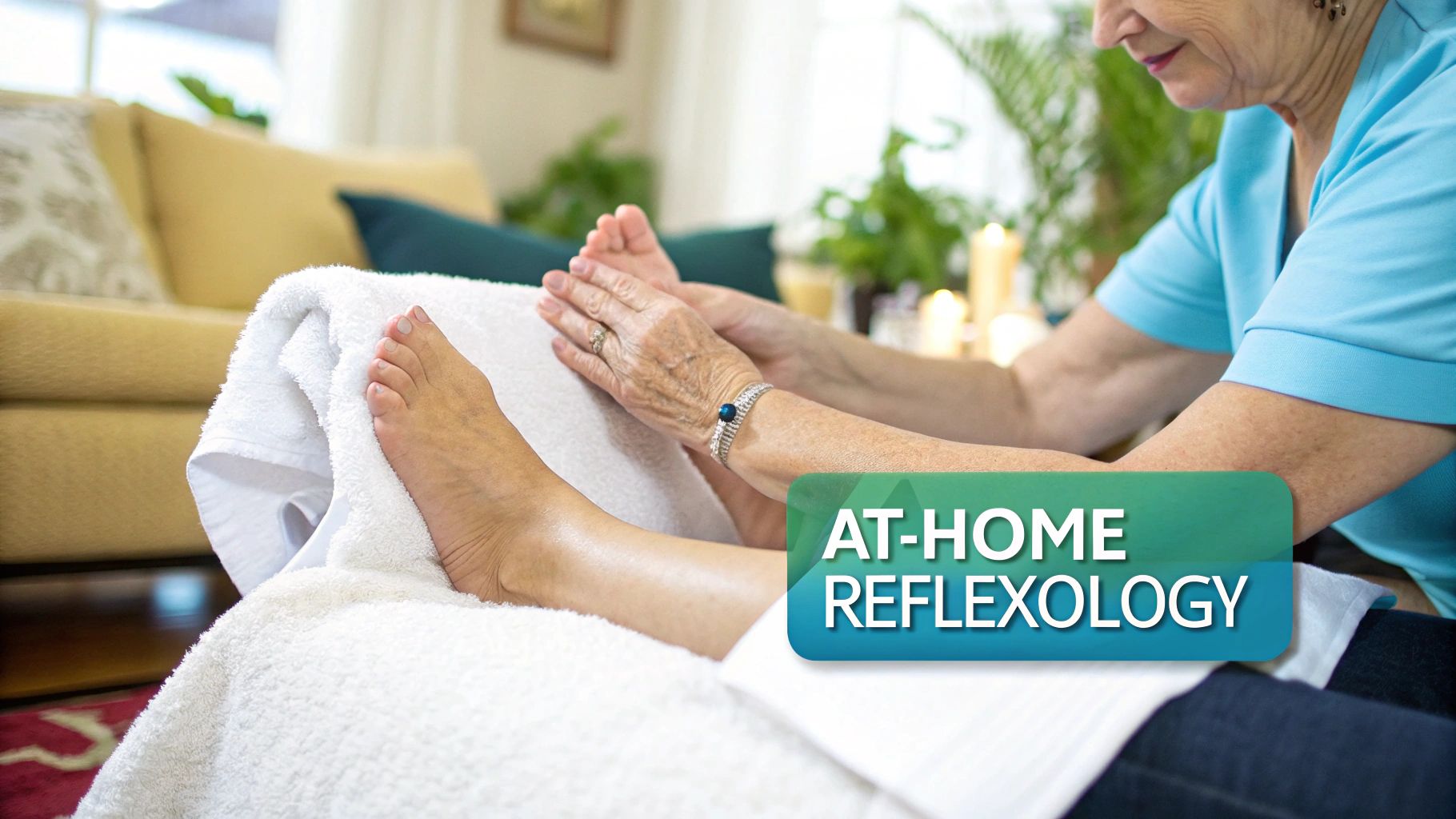
Core Benefits for Seniors and Caregivers
For older adults, the upsides of gentle foot reflexology are huge. It's a fantastic way to improve circulation, ease stress, and simply provide comfort without needing any strenuous movement. For a caregiver, it becomes a powerful way to connect and show you care through healing touch.
As an experienced male RMT, my name is Taylor, and I always put safety first to ensure every session is genuinely beneficial. The insights in this guide come directly from my practice, helping you provide a session that feels both professional and deeply caring. For a more detailed look, you might want to check out our complete guide to foot reflexology massage.
The Science Behind the Touch
While reflexology is often seen as a holistic practice, its clinical benefits—especially for seniors—are becoming more widely recognized. In fact, one study showed that when caregivers provided regular reflexology sessions, it led to a 51% reduction in hospital visits for older adults managing chronic conditions. It's a powerful reminder of how a simple, consistent routine at home can truly improve quality of life.
Of course, reflexology is just one piece of the wellness puzzle. Understanding related factors, like the impact of sleep on our overall health, can make your caregiving even more effective. After all, a relaxed body and a calm mind are perfectly primed for restorative rest.
Creating the Right Environment for a Relaxing Foot Massage
When you're giving a foot massage or reflexology session at home, the environment you create is just as important as the technique you use. Think of it as setting the foundation for relaxation. This is especially true when you're working with seniors or anyone with health sensitivities, where a feeling of safety and calm can make all the difference.
Find a quiet, comfortable spot where you won't be interrupted—a cozy living room corner or a peaceful bedroom is ideal. I always suggest dimming the bright overhead lights and using a soft lamp instead. If you want to take the ambiance a step further, a subtle scent from an aromatic candle can help melt away tension before you even begin.
Getting Your Toolkit Ready
A little prep work goes a long way. Having everything you need within arm's reach means the session can flow smoothly without any awkward interruptions.
Here’s what I recommend having on hand:
A couple of clean, soft towels. You'll use one under the feet for comfort and cleanliness, and the other to drape over the foot you aren't working on to keep it warm.
A good quality lotion or cream. Look for something hypoallergenic and unscented. You just need a tiny bit to help your hands glide—too much and you'll lose the precise grip needed for reflexology.
Pillows and cushions. These are your best friends for ensuring proper support. They help maintain comfortable alignment, which is crucial for anyone with stiff or sore joints.
Proper positioning is everything. Whether your loved one is in a recliner, on a bed, or in a wheelchair, use those pillows to prop up their knees and support their lower back. It’s a simple adjustment that relieves pressure on their joints and helps their whole body relax. For more in-depth ideas on creating a therapeutic space, our guide on at-home massage therapy offers a complete look into in-home healing.
Safety First: Knowing What to Look For and When to Stop
At-home reflexology is incredibly gentle, but safety should always be your top priority. Before you start, take a moment to visually inspect the feet. This isn't just a formality; it's a critical step to ensure you don't cause any harm.
The golden rule is simple: this should feel good, never painful. If you see something concerning or if the person expresses discomfort, the right thing to do is stop and get professional advice.
Keep an eye out for these clear red flags:
Open Wounds or Sores: Never, ever massage over broken skin. It’s painful and poses a serious risk of infection.
Gout Flare-Ups: During a flare-up, the joint is intensely inflamed and even the slightest touch will be agonizing. Avoid the area completely.
Signs of Deep Vein Thrombosis (DVT): If you notice unusual swelling, redness, and pain in just one leg, this could indicate a blood clot. Do not massage the leg and seek immediate medical help.
As a caregiver, you have a powerful intuition. Trust it. If something feels off, it probably is. And for those more complex health situations, it's always best to consult a professional RMT like myself, Taylor. I provide expert, tailored care to clients from Milton to Guelph.
Getting Started With Basic Foot Reflexology Techniques
Alright, let's get to the good part—the actual hands-on techniques for a fantastic at-home feet massage reflexology session. You don't need to be an expert with complex anatomical charts to make a real difference. We're going to focus on a few simple, foundational movements that bring a world of comfort and relaxation, perfect for a caregiver to learn.
The secret to a great session is starting slow. Before you even think about applying focused pressure, the feet need to be warmed up and receptive. This initial touch isn't just about physiology; it's about building trust, increasing blood flow, and helping the person's entire body begin to unwind.
The Gentle Warm-Up
Start by simply cradling one foot between both of your hands. Use long, soothing strokes with your thumbs, gliding from the ankle down toward the toes and back up again. Take your time. Do this several times until you feel the foot relax into your hands and the person gets used to your touch.
Next, gently turn your attention to the ankle. Support the ankle with one hand while cupping the heel with the other. Very slowly and carefully, rotate the foot three times clockwise, and then three times counter-clockwise. This is a wonderful way to loosen up the ankle joint, which can get incredibly stiff, particularly in seniors.
Before you go any further, making sure your environment is right is just as important as the technique itself.
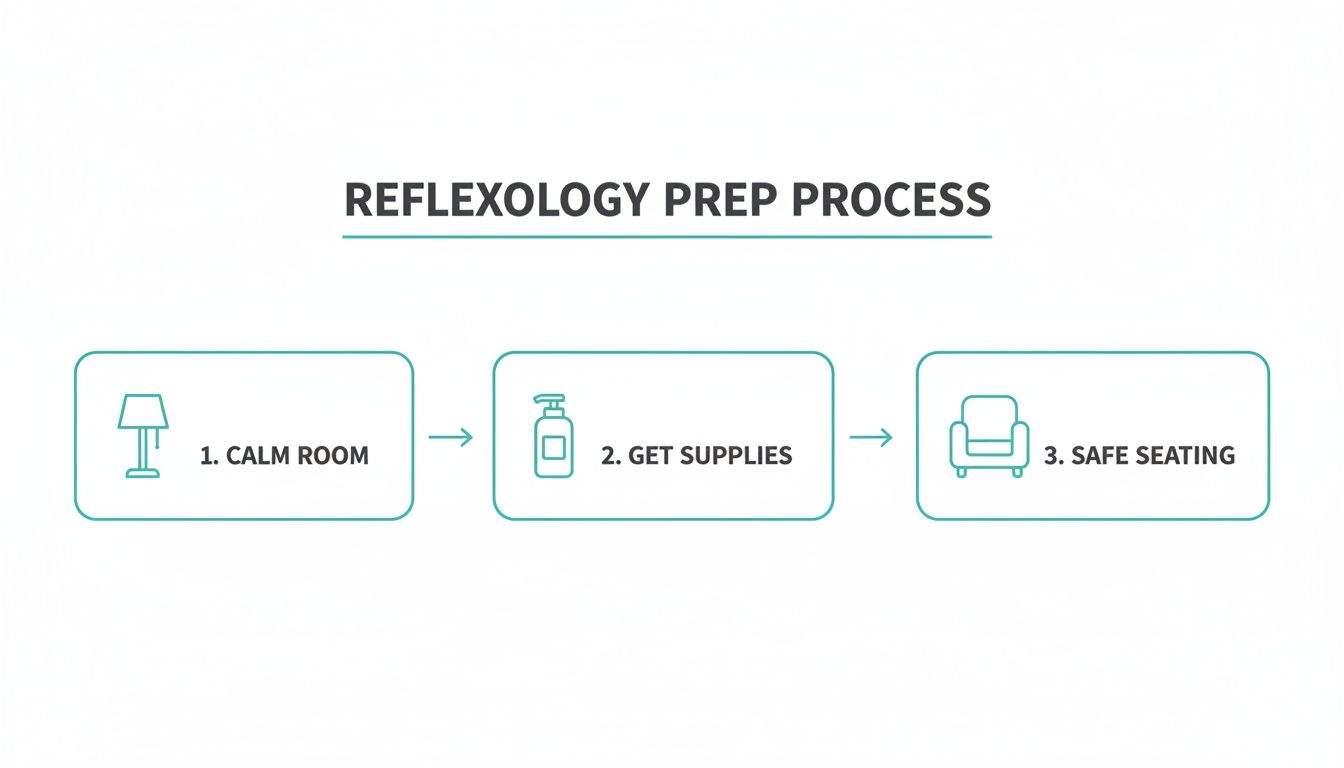
As this simple flowchart shows, creating a calm space, having your supplies ready, and ensuring the person is seated safely and comfortably are the real cornerstones of a successful, therapeutic experience.
Foundational Pressure Techniques
With the feet nicely warmed up, you can start introducing some basic reflexology pressure. The aim is always for steady, comfortable pressure—it should feel deep and satisfying, never sharp or painful. The two most valuable techniques you'll use are thumb walking and finger walking.
Thumb Walking: This is the workhorse of reflexology. Picture your thumb as a little caterpillar, inching its way across the sole of the foot. You'll bend and unbend your thumb joint to create a small, rhythmic, forward-crawling motion. It's perfect for applying consistent pressure across the larger surfaces of the foot.
Finger Walking: This is the exact same motion but using your index finger instead. It gives you more precision for working on the smaller, more delicate areas, like the tops of the feet or in between the tiny bones around the toes.
Communication is your single most important tool. You can’t feel what the other person is feeling. Check in constantly with a simple, "How does that pressure feel?" It builds trust and ensures the entire session is enjoyable and truly beneficial.
Focusing on Key Reflex Zones
Instead of trying to memorize a complex map, let's start with a few key zones known for promoting relaxation and easing common complaints. Think of these as the high-impact areas where you can make the biggest difference right away.
To make this easier, here’s a simplified chart of a few key reflexology zones that are particularly helpful.
Key Reflexology Zones and Associated Areas
Reflexology Zone on Foot | Corresponding Body Area | Technique Suggestion |
|---|---|---|
Pads of the Toes | Head & Brain | Use gentle, circular pressure with your thumb or index finger to calm the mind. |
Inside Arch (Heel to Big Toe) | Spine | Use the thumb walking technique along this entire line to help ease back tension. |
Ball of the Foot | Lungs & Chest | Apply steady, circular pressure to encourage deep, relaxed breathing. |
Centre of the Sole | Solar Plexus / Diaphragm | Press and hold gently with your thumb to release stress and emotional tension. |
By focusing on these specific points, you can provide a targeted and effective session without feeling overwhelmed. The spine reflex, for example, runs right along the inside arch of the foot. By "thumb walking" your way slowly from the heel to the base of the big toe, you're stimulating a line believed to correspond to the entire spine, helping to melt away tension held in the back.
Similarly, the head and brain reflex is found on the pad of the big toe. Applying gentle, circular pressure here can feel incredibly calming, almost like it’s quieting a busy mind or easing the pressure from a headache. If you're interested in learning more about how targeted work can help with specific issues, our post on therapeutic foot massage for lasting pain relief goes into greater detail.
Mastering these warm-ups and basic techniques gives you the power to provide a deeply therapeutic and comforting reflexology session. For those of you providing care in places like Caledon, Etobicoke, or Halton, these skills are an invaluable way to offer consistent, compassionate support right at home.
Tailoring Reflexology for Seniors' Unique Needs
When it comes to caring for seniors, a one-size-fits-all approach just doesn't work. This is especially true with hands-on therapies like reflexology. A gentle foot session that feels heavenly to one person might need a few tweaks to be comfortable for another. The real art of providing care is learning how to adapt your touch.
This is where you, as a caregiver, can make a huge difference. It’s about being present and paying close attention—listening not just to their words, but to how their body responds. This compassionate, responsive approach is crucial, whether you're caring for someone in assisted living, long-term care, or on a palliative journey.
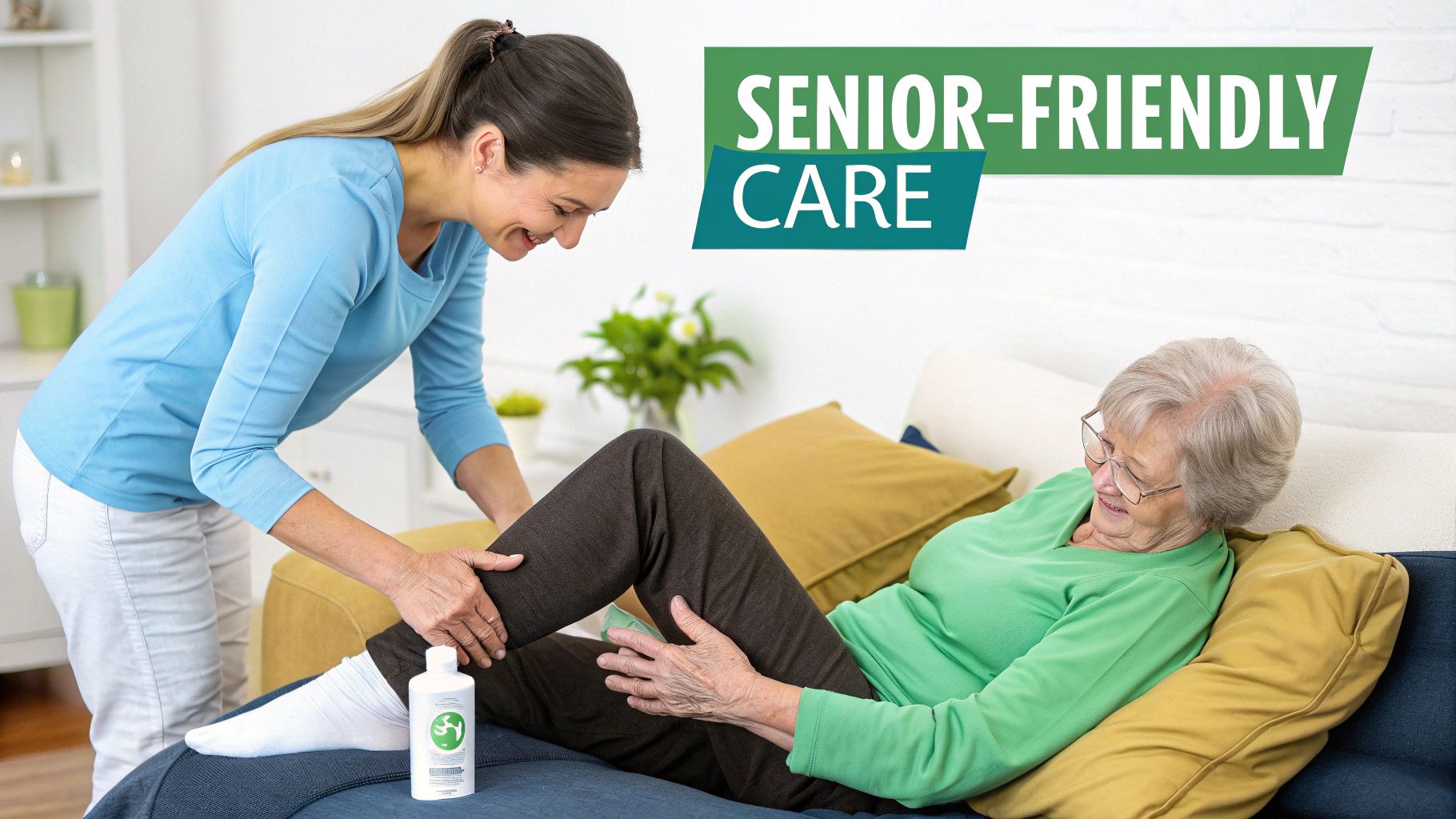
Making Adjustments for Common Health Conditions
Many older adults live with chronic conditions that call for a more mindful, modified approach to feet massage reflexology. Our goal is always to bring comfort and relief, never to cause strain or pain.
Here are a few practical ways to adjust your technique for common concerns:
Arthritis or Osteoporosis: With these conditions, joints are often tender and bones can be more fragile. Ease up significantly on the pressure. Think broad, gentle strokes using your whole palm instead of sharp, targeted pressure from a thumb or finger. Be sure to avoid pressing directly on any joints that look swollen or feel inflamed.
Neuropathy or Sensitive Skin: For anyone dealing with nerve sensitivity, a pointy, direct pressure can feel jarring or even painful. A great alternative is to use a good quality hypoallergenic lotion for smoother, gliding strokes. This way, they get all the soothing benefits of touch without overstimulating those sensitive nerve endings.
Swelling (Edema): If you notice swelling in the feet or ankles, the key is to be extremely gentle. Use very light, upward strokes, always moving in the direction of the heart to help encourage fluid movement. It's important to never apply deep or sustained pressure on swollen tissue.
The single most valuable tool in your kit is communication. Asking a simple, quiet question like, "How does that feel?" gives them control and provides you with immediate feedback. It makes the session a true partnership.
Getting the Positioning and Support Just Right
Comfort is everything. Before you even begin, getting the positioning right is half the battle, especially for anyone with mobility challenges from conditions like Parkinson's or severe arthritis. Proper support prevents muscle strain and allows the body to truly let go and relax.
Get creative with your props. Pillows, rolled-up towels, and soft blankets are your best friends here. Use them to support the knees, cushion the lower back, or cradle the feet.
If the person is in a wheelchair, make sure their feet can rest comfortably on a stool or ottoman. For someone who is bed-bound, try placing a pillow under their ankles. This small adjustment lifts the heels off the mattress and can relieve a surprising amount of pressure.
For more ideas on setting up a comfortable and secure space, take a look at our complete guide to safe foot massage therapy for seniors at home.
In the end, adapting your reflexology practice comes down to paying close, compassionate attention. Notice the little things—a slight tensing of a muscle, a subtle shift in breathing, a flicker of an eyelid. This mindful awareness ensures your healing touch is always a perfect fit, turning a simple foot massage into a profoundly restorative experience for both of you.
When to Seek Professional In-Home RMT Care
Giving a foot massage or performing simple reflexology at home is a beautiful way to offer comfort and connection. It can provide wonderful relaxation and gentle relief. But it's crucial to know the limits of what you can do at home and recognize when it's time to call in a professional.
Think of it this way: your compassionate touch is excellent for general well-being and maintenance. When you're dealing with something more stubborn, however—like chronic pain that just won’t quit, significant joint stiffness, or recovery from an injury—that’s a clear sign to seek the expertise of a Registered Massage Therapist (RMT).
The Value of a Clinical Assessment
An RMT like myself, Taylor, doesn’t just see a foot; I see the complex systems of anatomy, physiology, and pathology connected to it. This clinical lens allows for a proper assessment that goes far beyond simple relaxation. A professional can pinpoint the root cause of the discomfort and build a treatment plan that is both safe and truly effective for that person's specific health needs.
That professional plan might include reflexology, but it will likely integrate it with other powerful techniques for better results. My services include:
Swedish massage
Cupping therapy
Deep tissue massage
Rehabilitation massage
Myofascial release
Trigger point release
Joint mobilization
Hydrotherapy applications
Geriatric massage
Sports massage therapy
Energy healing
This integrated approach offers a level of care that a simple at-home routine just can't replicate. To learn more about how this works, check out our complete guide to at-home RMT care in Toronto.
Bringing Expert Care to Your Doorstep
Let’s be honest, getting to a clinic can be a huge hurdle for many people, especially seniors or anyone with mobility challenges. That’s where in-home RMT services make all the difference. For those in our service areas—from Brampton and Toronto to Oakville and Guelph—I bring professional, restorative care right to you.
This isn't just about convenience. Eliminating the stress of travel means the therapeutic benefits of the session can sink in deeper, as you can continue to rest and recover in your own familiar space right after treatment.
This kind of specialized mobile care is a growing and valued field. Data from job market analysis shows that therapists specializing in reflexology and geriatric massage are in high demand, particularly in communities looking for accessible in-home wellness solutions. You can find more insights on reflexology professional benchmarks on ZipRecruiter.com.
When you feel you’ve hit the limits of at-home comfort and are ready to address deeper therapeutic goals, professional in-home RMT care is the natural next step. You can easily book a mobile massage session with Taylor online to get started on a personalized treatment plan.
Your Top Reflexology Questions, Answered
As you start exploring at-home foot reflexology, you’re bound to have some questions. It’s completely normal! Here are answers to the most common queries I get from caregivers and clients across Brampton, Toronto, and our other service areas. My goal is to help you feel confident and safe as you practice.
Think of this as a quick-reference guide to troubleshoot those little uncertainties that pop up along the way.
How Often Should We Do At-Home Foot Reflexology?
For general wellness and a bit of relaxation, a 15-20 minute session two or three times a week is a great place to start. Honestly, the most important thing is to pay attention to how the body responds. If a particular spot feels a little tender the next day, just give it an extra day of rest before your next session.
Remember, consistency beats intensity. Shorter, regular sessions are far more beneficial than one long session every now and then. If you're hoping to support a specific health goal, it's always best to chat with a professional RMT like me to create a schedule that’s safe and works alongside existing medical advice.
What's the Best Lotion to Use for Reflexology?
Keep it simple. A basic, unscented, and hypoallergenic lotion or cream works perfectly. You only need a small amount—just enough to help your thumbs and fingers glide smoothly without slipping.
Heavy oils can actually make it harder to apply the steady, targeted pressure that reflexology requires.
Here’s a little tip from my own practice: always do a small patch test on the skin before slathering on a new product, especially if you’re working with the more delicate skin of an older adult.
Can Reflexology Help with Arthritis or Plantar Fasciitis?
Many people find that gentle reflexology can really help ease the discomfort that comes with conditions like arthritis. It’s thought to work by improving circulation in the feet and encouraging a state of deep relaxation. It's important to be clear, though—reflexology is a complementary therapy, not a cure.
For a diagnosed condition like plantar fasciitis, you must follow the treatment plan from a doctor or physiotherapist. An RMT can then provide supportive care, adapting techniques to be both safe and helpful. A properly trained professional will know never to apply deep, direct pressure to any areas that are actively inflamed.
Is It Normal for Some Spots on the Feet to Feel Tender?
Absolutely. Finding tender spots is one of the most common experiences in reflexology. According to reflexology theory, these tender points might signal a bit of stress or imbalance in the corresponding body part.
When you come across one of these spots, just work on it with gentle but firm pressure for a few seconds, maybe using small, circular motions. The golden rule is to never press to the point of causing pain. Keep checking in to make sure the pressure feels good and therapeutic, not uncomfortable.
For more complex health situations or to get the full benefit of a clinical treatment plan, nothing beats professional care. Stillwaters Healing & Massage brings expert, compassionate RMT services right to your door in Brampton, Toronto, Etobicoke, Oakville, Caledon, Orangeville, Mississauga, Milton, Halton, and Guelph.
Book your in-home session with Taylor today and let's build a personalized path to wellness together.


