


Finding Relief for a Sore Back Below Shoulder Blade
That stubborn, nagging ache right below your shoulder blade is one of the most common complaints we hear about. Usually, this discomfort, which we call interscapular pain, comes down to something simple like muscle strain or posture that’s a little off-kilter. It’s your body’s way of telling you that the intricate web of muscles tying your neck, spine, and ribs together is feeling the strain.
What Causes That Nagging Pain Below Your Shoulder Blade

It helps to think of your shoulder blade (the scapula) as a major hub for muscle traffic. When everyday activities like reading a book, spending time in the garden, or even just sleeping in a funny position cause one of those muscles to get tight, the whole area can protest. For seniors, these aches and pains can feel more pronounced because of natural age-related changes in our muscles and joints.
That feeling isn't always a straightforward ache, either. It can show up in a few different ways, which can make it tricky to figure out what's really going on.
You might feel a dull, persistent ache that seems to be buried deep in the muscle.
Sometimes it’s a sharp, focused pain that’s so specific you could point to it with one finger.
It could be a pain that gets worse when you move—flaring up when you reach for something, twist, or even take a deep breath.
Other times, the discomfort seems to travel, creeping up toward your neck or spreading across your upper back.
The Usual Suspects Behind the Discomfort
More often than not, that sore spot below the shoulder blade is a muscle issue. Repetitive motions can lead to overuse and strain, while sitting for long periods—especially slumped in a chair—can make muscles like the rhomboids and trapezius tired and tight. This often leads to those pesky muscle knots, which we dive into deeper in our guide to relieving knots on shoulder blades.
To help you get a clearer picture, here’s a quick rundown of what might be causing that ache.
Quick Guide to Potential Causes of Pain Below the Shoulder Blade
Cause | Common Symptoms | Best First Step |
|---|---|---|
Muscle Strain | A dull, aching pain that might feel tender to the touch. It often gets worse with movement. | Gentle stretching, rest, and applying a warm compress. |
Poor Posture | A persistent, burning ache between the shoulder blades, especially after sitting or standing for a long time. | Mindful posture adjustments and taking frequent breaks to move around. |
Herniated Disc | Sharp, shooting, or electric-like pain that might radiate into your arm. Sometimes accompanied by numbness. | Consult a doctor or physiotherapist for a proper diagnosis. |
Arthritis | A deep, achy stiffness, particularly in the morning, that may improve with gentle movement. | Speak with your doctor about pain management and gentle exercises. |
Keep in mind, this is just a starting point. It's always best to get a professional opinion if the pain is severe or doesn't go away.
Beyond how you move during the day, your sleep setup also plays a massive role. An unsupportive pillow can throw your spine out of alignment all night long. This guide to finding the best pillow for neck and shoulder pain is a great resource for making your rest more restorative.
Professional Care That Comes to You
Figuring out the "why" behind your pain is the first real step toward feeling better. Here at Stillwaters Healing & Massage, our male Registered Massage Therapist, Taylor, focuses on these exact kinds of issues. He brings compassionate, professional RMT care directly to the homes of seniors in Brampton, Toronto, Etobicoke, Oakville, Caledon, and the surrounding areas. We believe getting the care you need should be easy and comfortable, which is why we bring the healing to you.
Why Upper Back Pain Is So Common As We Get Older
It’s no secret that our bodies change as the years go by. These natural shifts can make certain spots, like the area right below your shoulder blade, more likely to feel sore or achey. For many seniors here in Mississauga and Oakville, that nagging pain is an all-too-common part of life, usually stemming from a mix of age-related changes and our daily routines.
A big piece of the puzzle is the natural decline in muscle mass, a process called sarcopenia. Just think of your muscles as the main support crew for your skeleton. As this crew gets a bit smaller over time, the muscles that are left—like the rhomboids and trapezius in your upper back—have to pick up the slack and work much harder just to keep you upright.
This extra workload can tire them out, making them much more vulnerable to strain from even the simplest of activities.
How Our Daily Lives Can Lead to Back Pain
The things we do every day, the activities that keep us busy and engaged, often play a surprisingly large role in upper back pain.
Gardening: All that bending and reaching can put a real strain on the muscles between your shoulder blades.
Lifting the Grandkids: That wonderful moment of scooping up a grandchild is a complex movement that can easily lead to a pull if your muscles aren't ready for it.
Reading or Hobbies: Think about how you sit when you’re lost in a good book, knitting, or working on a puzzle. Hours with your head tilted down puts constant tension on your neck and upper back.
These kinds of repetitive movements or long-held postures can create tight, painful knots in the muscle tissue. We call these trigger points. They’re essentially tiny, contracted spots within the muscle that can cause pain right where they are, or even send it radiating to other areas.
You can think of a trigger point like a tiny, stubborn cramp that won't let go. It doesn't just make the spot sore; it can also tighten up the whole area, restricting movement and leading to that deep, nagging ache you feel just below the shoulder blade.
Finding Relief That's Right for You
The good news is that understanding these pains are often muscular is the first step toward feeling better. This is where specialized massage therapy can make a world of difference. Rather than a one-size-fits-all rubdown, targeted techniques can get right to the root of the problem. To learn more about how massage is specifically adapted for older bodies, you can read our guide on massage therapy for seniors.
Here at Stillwaters, our RMT, Taylor, focuses on specific methods designed to release exactly this kind of muscular tension. Trigger Point Release, for instance, involves applying steady, direct pressure to those knots to convince them to relax. Another technique, Myofascial Release, works on the web of connective tissue that surrounds the muscles, helping to ease tightness and bring back flexibility. These approaches are perfectly suited for addressing the very issues that cause a sore back below the shoulder blade, offering gentle yet powerful relief for seniors in our community.
Knowing When to See a Doctor for Your Back Pain
Most of the time, that nagging sore spot just below your shoulder blade is a simple muscular issue that gets better with a bit of rest and some gentle care. But it's crucial to know when your body might be trying to tell you something more serious is going on.
Think of certain symptoms as your body’s “check engine light”—it's a clear signal that it’s time to get a professional medical diagnosis before booking a massage.
While therapeutic massage is an amazing tool for pain relief, your safety is always our first priority at Stillwaters. Our male RMT, Taylor, is an expert in muscular health, but he sees his role as part of your broader healthcare team. This is why we always encourage you to see a doctor for any new, severe, or unusual pain. We want to be sure you're getting the right care for the right problem.
Red Flags to Watch For
It’s a good idea to check in with your family doctor if your upper back pain comes with any of the following symptoms:
Sudden, severe pain that pops up out of nowhere, without any obvious injury.
Pain that is constant, seems to get worse at night, or doesn't ease up with rest.
Numbness, weakness, or tingling sensations that travel into your arms or chest.
Pain that’s accompanied by a fever, chills, or unexplained weight loss.
These symptoms don't automatically mean something serious is wrong, but they absolutely deserve a proper medical check-up to rule out other potential causes.
At Stillwaters Healing & Massage, we see ourselves as a partner in your wellness journey. Prioritizing a proper medical diagnosis for red flag symptoms ensures that any massage therapy you receive is not only effective but, most importantly, completely safe for your specific condition.
This simple decision tree can help you figure out when a common ache is just part of life, and when it's time to talk to a healthcare professional.
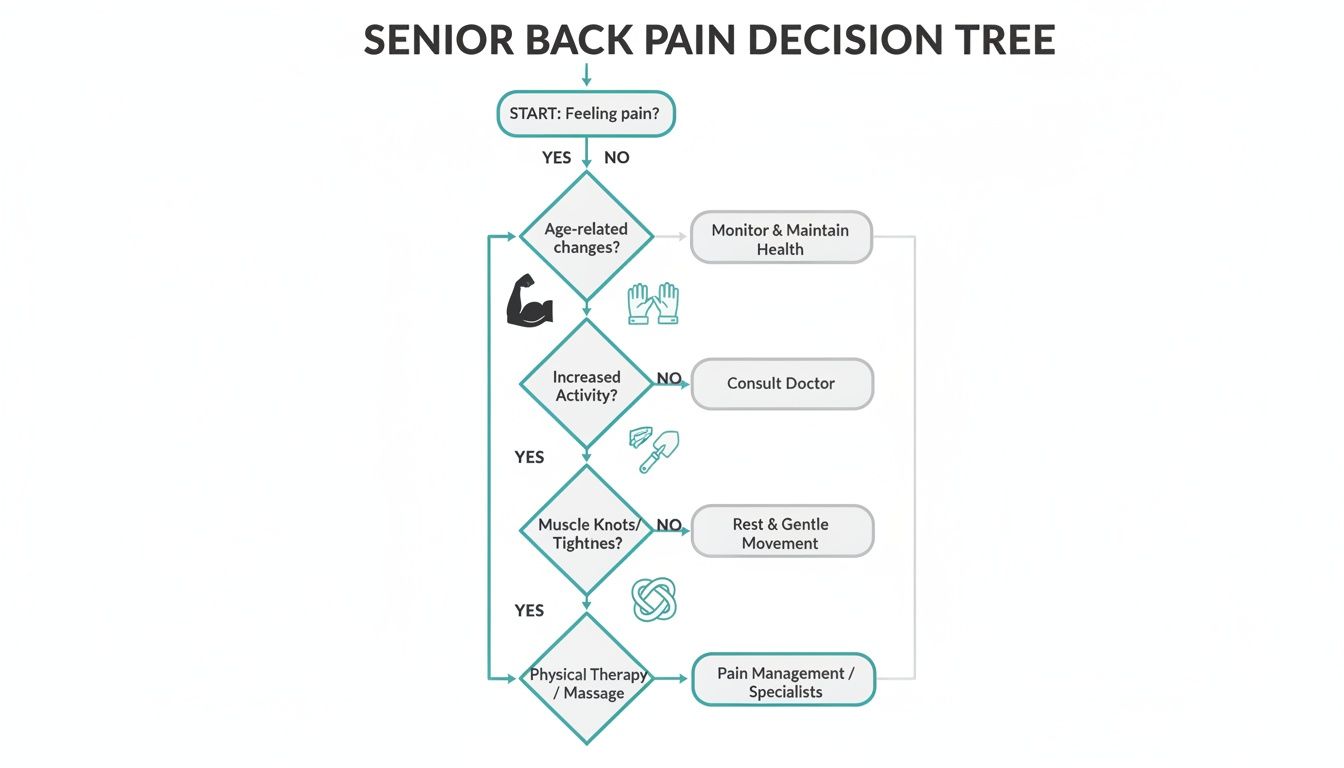
As the flowchart shows, most pain comes from manageable things like muscle knots or overdoing it a bit. However, any persistent or severe symptoms are your cue to get a medical opinion first. By taking that responsible step, you can then pursue treatments like massage therapy with total peace of mind.
How In-Home Massage Brings Relief Right to Your Doorstep
For many older adults in communities like Caledon and Halton, dealing with a sore back below the shoulder blade is tough enough. Add a trip to a clinic on top of that, and it can feel overwhelming, especially when mobility is a challenge. That’s precisely why we bring the healing to you. Our mobile massage service transforms your own home into a private, comfortable space for relief.
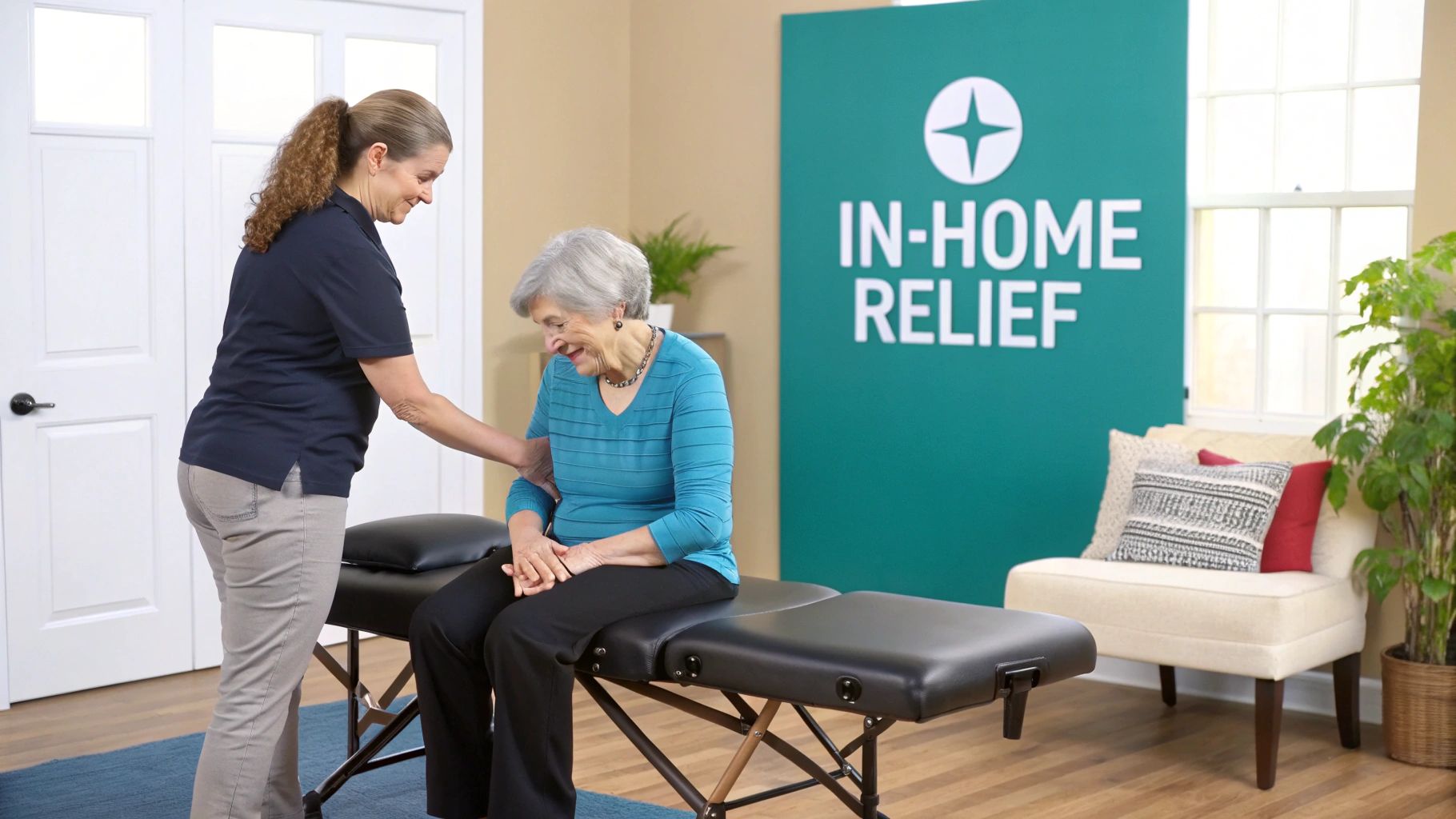
Our Registered Massage Therapist, Taylor, arrives with everything needed for a professional session—a sturdy, comfortable table, fresh linens, and years of specialized experience. But the real benefit isn't just the convenience. Being in your familiar surroundings helps you relax on a much deeper level, which is the key to letting tense muscles finally release their grip.
Targeted Therapies for That Nagging Upper Back Pain
When Taylor sets up in your home, the first step is always to listen and understand exactly what you're feeling. From there, he uses specific, targeted techniques to get to the root of the problem, always adapting the pressure and movements to suit your body and health needs.
Swedish Massage: This is often the starting point. Think long, flowing strokes that warm up the muscles and get the blood moving. Better circulation is like a healing delivery service, bringing fresh oxygen and nutrients to tissues that desperately need them.
Deep Tissue Massage: For those stubborn, deep-seated knots that just won't go away, Taylor uses slow, deliberate pressure. This technique focuses on releasing chronic tension that’s locked away in the deeper layers of muscle and connective tissue.
Cupping Therapy: An age-old technique that still works wonders. By creating gentle suction, cupping lifts the skin and underlying tissues. This action helps decompress the area, relieving pressure on nerves and drawing a fresh flow of blood to the sore spot to accelerate healing.
Rehabilitation Massage: Designed to aid recovery from injuries, this approach helps restore movement and function.
Myofascial Release & Trigger Point Release: These focused techniques address the connective tissue and specific knots causing your pain.
Joint Mobilization: Gentle movements to improve your range of motion and ease stiffness in the joints.
Hydrotherapy Applications: The therapeutic use of warm or cool compresses to reduce pain and inflammation.
Our approach is always geriatric-focused and trauma-informed. We work hard to create a safe, respectful space where you feel completely comfortable and in control. Building that trust is the first step toward true therapeutic healing.
Helping You Stay Safe and Stable at Home
Beyond just treating pain, our goal is to help you maintain the strength and mobility that prevent injuries in the first place. Falls are a major concern and a leading cause of injury-related emergency visits for residents in the Peel Region, often resulting in upper back injuries. By incorporating gentle joint mobilization and myofascial release, mobile massage can help you preserve muscle strength and flexibility, which directly reduces your fall risk. You can read this overview from Peel Region to learn more about these local injury trends.
This kind of holistic care also helps with related issues, like those stubborn knots that creep up into the neck and shoulders. To see how these techniques work, you can learn how to relieve a muscle knot in the neck with mobile massage in our related article. By bringing professional therapy right to your home in Mississauga or Guelph, we make it that much easier to manage pain and keep living an active, independent life.
Gentle Stretches You Can Do at Home for Lasting Relief
One of the best things you can do to manage that nagging soreness below your shoulder blade is to keep moving—gently and consistently. Think of it as homework that helps your massage therapy sessions work even better. These simple stretches are specifically chosen to be safe and effective for releasing tension around the scapula.
Just remember the golden rule: we're aiming for gentle relief, not pain. Always move slowly and pay close attention to what your body is telling you.
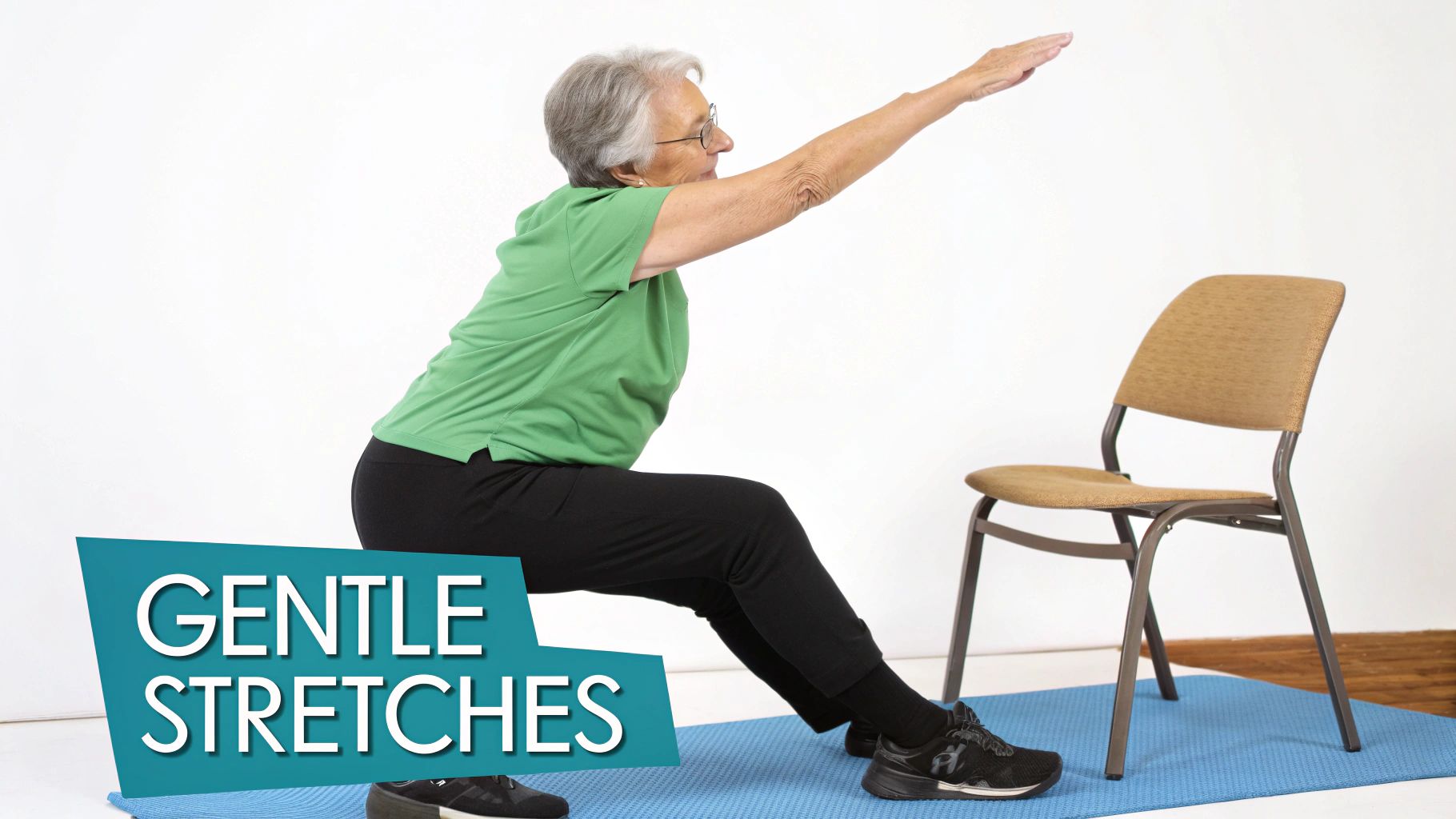
As you work through these movements, make sure to breathe deeply and stay in control. A sturdy chair (one without wheels!) is a fantastic prop to help you feel supported and stable.
Seated Cat-Cow Stretch
This is a classic for a reason. It's a wonderful way to bring some gentle movement into your spine, and it’s perfectly adaptable to do while seated.
Start by sitting tall on the edge of your chair. Plant your feet flat on the floor and rest your hands on your knees.
On an inhale (the "Cow" pose): Let your back arch gently as you lift your chest toward the ceiling. Look slightly up and feel your shoulder blades draw toward each other.
On an exhale (the "Cat" pose): Now, do the opposite. Slowly round your spine, tuck your chin toward your chest, and feel your shoulder blades gently pull apart.
Flow between these two positions for 5-8 repetitions, letting your breath guide the movement.
Cross-Body Arm Stretch
If you feel the tightness right between your shoulders, this stretch is for you. It gets right into the rhomboid muscles that often cause that ache.
Whether you're sitting or standing, extend your right arm straight across your chest.
With your left hand or forearm, gently guide your right arm closer to your body. You should feel a nice stretch across your upper back.
Hold it right there for 20-30 seconds, breathing steadily. Try to keep your shoulder relaxed and down, away from your ear.
Slowly release and then switch sides.
Seated Thoracic Rotation
Stiffness in the mid-back is a common culprit for shoulder blade pain. A gentle twist can work wonders for your mobility.
Sit upright in your chair with your feet anchored on the floor.
Slowly and gently twist your upper body to the right. You can place your left hand on the outside of your right knee and your right hand on the back of the chair to help guide the stretch.
Hold for 15-20 seconds, focusing on the feeling of release between your shoulder blades.
Come back to the centre and repeat on the other side.
Remember, the goal of stretching is to feel a gentle pull, not sharp pain. This mindful movement helps re-educate your muscles, encouraging them to relax. These exercises complement manual therapies that focus on muscle adhesions, which you can read about in our guide explaining myofascial release and trigger points.
For a bit more targeted self-massage, you might also want to look into upper back foam rolling exercises, but only if your mobility allows and you've got the okay from your doctor.
When you combine these gentle home-care strategies with professional massage from our RMT, Taylor, you create a powerful partnership for finding real, lasting relief.
Booking Your In-Home Massage in Peel and Halton
Finally deciding to do something about that nagging pain below your shoulder blade is a huge step. When you bring professional massage therapy into your home, you're not just easing discomfort; you're reclaiming your sense of well-being and independence, all without having to step outside. There's just something profoundly healing about getting care in the one place you feel most at ease.
Our male Registered Massage Therapist, Taylor, is committed to bringing that restorative care right to you. We've made it our mission to make relief accessible across a wide service area.
Our Mobile Service Areas
Stillwaters Healing & Massage provides in-home therapy throughout:
Brampton
Toronto
Etobicoke
Oakville
Caledon
Orangeville
Mississauga
Milton
Halton
Guelph
Ready to Schedule Your Appointment?
Booking your session with Taylor is designed to be simple. We coordinate directly with clients, their families, and even staff at assisted living or long-term care homes to make the entire process seamless. Our job is to make getting professional care feel effortless for you or your loved one.
Taking action on your pain is a powerful form of self-care. Professional in-home massage provides not just immediate relief, but a path toward sustained comfort and improved quality of life.
Ready to feel better? Just click the link below to use our straightforward online booking system. If you'd like a bit more information first, feel free to check out our guide to in-home massage therapy.
Your Questions About In-Home Massage Answered
It’s completely understandable to have questions before welcoming a healthcare professional into your home. We've gathered some of the most common queries we hear from seniors and their families about our mobile massage therapy, hoping to put your mind at ease. Our goal is always safe, professional, and genuinely personal care.
Is Massage Therapy Safe for Seniors with Arthritis or Osteoporosis?
Yes, it absolutely can be. Our RMT, Taylor, has specific training in geriatric massage, which is all about modifying techniques for conditions like arthritis and osteoporosis. He understands the importance of using gentle, soothing pressure and avoiding sensitive areas.
The focus is always on safely improving circulation and easing muscle tension, never on aggressive or deep work that could cause harm. Before he even begins, Taylor conducts a thorough health review to make sure the entire session is perfectly suited to your specific needs.
What Should I Expect During a Mobile Massage Appointment?
Think of it as the full, professional clinic experience, just without the hassle of travelling. Taylor brings everything needed for a comfortable and therapeutic session: a sturdy massage table, fresh linens, and high-quality lotions.
He’ll arrive a few minutes early to find a spot where you’re most comfortable—your living room, a spare bedroom, wherever works for you. The appointment always starts with a friendly chat about that nagging pain below your shoulder blade and what you hope to get out of the session. The entire experience is designed to be relaxing and completely stress-free.
How Often Should I Get a Massage for Chronic Upper Back Pain?
That’s a great question, and the honest answer is: it really depends on you. Everyone’s body responds a little differently. If you’re dealing with a recent, sharp flare-up, sometimes one or two sessions close together can be enough to break the pain cycle and bring significant relief.
For managing a more long-term, chronic issue, a regular session every two to four weeks often works wonders for keeping pain manageable and maintaining mobility. Taylor will always chat with you to develop a personalized treatment plan that makes sense for your body and your wellness goals.
Do I Need a Lot of Space for an In-Home Massage?
You’d be surprised how little space is needed. A standard professional massage table fits comfortably in a clear area of about 6 feet by 10 feet. This works perfectly in most living rooms, dens, or even a spacious bedroom.
Taylor is a pro at setting up in all sorts of home environments, from apartments to assisted living facilities in communities from Brampton to Guelph. We can almost always find a private, comfortable spot to make it work.
Ready to finally get some relief from that sore back below your shoulder blade, all in the comfort of your own home? Stillwaters Healing & Massage makes it easy to schedule professional, compassionate care with our RMT, Taylor.


