


Pain Below Shoulder Blade on Left: Causes and Relief
That stubborn, nagging pain right below your left shoulder blade is more than just a simple ache—it's your body trying to tell you something. While it's easy to blame it on muscle strain from poor posture or a stressful week, the real source of pain below the shoulder blade on the left can be surprisingly complex and sometimes even point to issues in a completely different part of your body.
Unravelling the Mystery Behind Your Shoulder Discomfort
It's a very specific, hard-to-reach spot that can disrupt everything from your sleep to your ability to focus at work. The sensation can range from a dull, persistent throb to a sharp, stabbing feeling that seems to come out of nowhere. For too many people, this discomfort lingers, becoming a chronic problem that seriously gets in the way of enjoying life.

If you're dealing with this, you are far from alone. In Canada, chronic pain is a reality for nearly 19% of adults. Here in areas like Brampton, Mississauga, and Oakville, that pain often settles right into the upper back. When you look at the national data from the Canadian Community Health Survey, you'll see that while 6.1% of people report shoulder pain overall, that number skyrockets to 11.2% for those already living with chronic pain. It’s clearly a significant issue.
Finding the Right Path to Relief
Think of this guide as your map. We're here to help you navigate the potential causes of your pain and show you safe, effective ways to find relief.
We'll break down:
The most common culprits, like muscle knots and strains.
The possibility that your pain is a signal from another organ or system.
How compassionate, professional in-home massage therapy can be a game-changer.
Getting to the root of the problem is always the first, most important step. While your attention is fixed on that one spot below your left shoulder blade, understanding the context of general shoulder pain can offer some valuable clues. These issues are often linked, and a small knot can easily create a wider web of discomfort. For more focused tips, you can check out our guide on finding relief from knots on your shoulder blades here: https://www.stillwatershealing.ca/post/knots-on-shoulder-blades-quick-relief-treatment-guide
At Stillwaters Healing & Massage, our male RMT, Taylor, brings professional care right to your doorstep in Brampton, Toronto, Etobicoke, Oakville, Caledon, Orangeville, Mississauga, Milton, Halton, and Guelph. He’s an expert at helping people figure out what's really going on and start the journey back to feeling good.
Why Your Muscles and Bones Might Be the Cause
When you feel that persistent, nagging pain below the shoulder blade on the left, there’s a good chance the culprit is your musculoskeletal system. Your shoulder blade, or scapula, is like a major hub where several important muscles connect—the rhomboids, trapezius, and levator scapulae all meet here. If they get overworked or injured, the whole system can get jammed up, causing that localized pain.
It’s an incredibly common complaint, especially for those of us living in busy places like Mississauga and Brampton. We spend our days hunched over desks, craning our necks at screens, or doing repetitive tasks. It's a modern-day posture problem, and over time, it creates serious muscle imbalances and strain.
Common Muscular Issues Causing Pain
The muscles around your shoulder blade are built for movement, but our lifestyles often lock them into static, stressful positions. This is where the trouble usually starts.
Muscle Strain: This is what happens when you overstretch or tear muscle fibres. It could be from lifting something too heavy or from a sudden, awkward twist.
Repetitive Stress: Think about doing the same motion all day long. Whether it's on a factory line in Oakville or while gardening in your Caledon backyard, those repeated actions can lead to tiny injuries and inflammation that build up.
Poor Posture: Slouching is a major one. When you constantly hunch forward, you put relentless tension on your upper back muscles, which have to struggle to hold your head up.
This constant strain often leads to the formation of painful knots in the muscle, which are technically called trigger points. These are basically tight, irritable little spots that can shoot pain to other areas—and very often, that area is right under your shoulder blade. To really understand how these knots work, it’s helpful to see the connection between myofascial release and trigger points.
How Everyday Life Contributes to Shoulder Blade Pain
For many people I see, particularly seniors in our community, the pain is directly tied to their daily routines and the aids they use to get around.
Spending most of the day in a wheelchair, for instance, puts a very specific kind of strain on the upper back and shoulders. The muscles used to propel the chair and transfer in and out of it are working hard. In the same way, leaning on a walker can encourage a forward-hunching posture, placing non-stop stress on those muscles between your shoulder blades.
Think of your muscles like rubber bands. If you constantly keep a rubber band stretched in one position (like slouching), it eventually loses its elasticity and becomes weak and sore. This is what happens to your back muscles from poor posture.
Even seemingly small habits can be a factor. Carrying heavy grocery bags on one side, sleeping in a strange position, or cradling a phone between your ear and shoulder can all contribute to this very specific pain. The muscles that are supposed to keep your shoulder blade stable just get tired and irritated, and they let you know it with a sharp pain in that one spot.
While it’s a frustrating issue, the good news is that these musculoskeletal causes are the most frequent reason for left-sided shoulder blade pain—and they are also highly treatable. Recognizing that your daily habits are often at the root of the problem is the first real step toward finding lasting relief.
When the Pain Is Coming from Somewhere Else
Sometimes, that nagging ache you feel just under your left shoulder blade isn’t actually a back problem. Our bodies are wired in incredibly complex ways, and every so often, a problem in one area triggers a pain signal that pops up somewhere completely different. We call this phenomenon referred pain.
A good way to think about it is like a glitch in a home’s electrical system. A short circuit in the basement could easily make a light flicker two floors up in the bedroom. In the same way, an issue with an internal organ or even a pinched nerve root in your neck can show up as a very real, very distinct ache right under your left scapula.
Understanding Referred Pain and Red Flags
Grasping this concept is key, because it helps you tell the difference between a simple muscle knot and a symptom that needs a doctor's eye. For example, problems with organs like the pancreas, stomach, or even the heart can sometimes send pain signals that land in that specific spot on your back. Another frequent culprit is cervical radiculopathy—basically a pinched nerve in the neck—which can send shooting or aching pains down into the shoulder blade area.
The goal here isn't to cause alarm, but to be aware. Learning to spot certain "red flag" symptoms can help you make the right call for your health.
Think of it this way: if your shoulder blade pain shows up with other serious symptoms, your body is sending you an important message. These are clues that shouldn't be ignored.
You should seek immediate medical attention if that pain is coupled with any of these symptoms:
Shortness of breath or finding it hard to breathe
Chest pain or a sensation of pressure
Dizziness, feeling light-headed, or fainting
Sudden and unexplained weight loss
Pain that gets worse when you lie down or that wakes you from sleep
This decision tree gives a great visual of how to think through common musculoskeletal pain, walking you through potential causes like posture and repetitive strain.
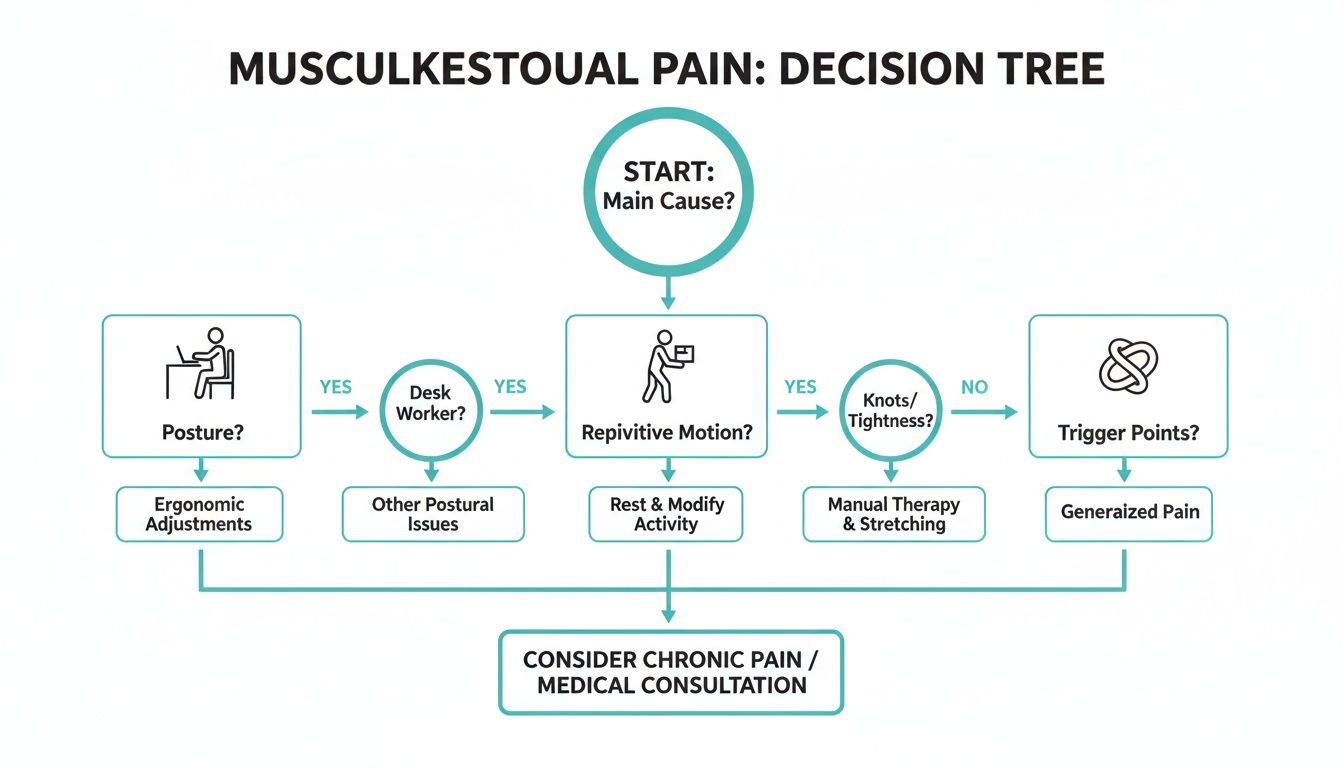
As the chart shows, everyday activities are often the direct source of shoulder blade discomfort—the kind that responds incredibly well to therapeutic massage.
When a Deeper Issue Is at Play
In Canada, shoulder pain is a major reason people visit their doctors, especially in communities like Brampton and Halton. While plenty of these cases are muscular, nerve-related problems such as rotator cuff impingement are incredibly common, particularly for those over 40. These conditions often cause pain at night and can settle right near the scapula, feeling a lot like a simple muscle ache.
For seniors, this kind of pain can come on gradually and be quite sneaky, contributing to the 11.2% rate of chronic shoulder issues within this age group. You can dig deeper into these provincial healthcare trends by checking out the primary care pathways from Alberta Health Services.
Knowing the difference is empowering. If your pain feels purely muscular and doesn't come with any red flags, massage therapy with an RMT like Taylor is a fantastic route to relief. But if any of those warning signs are present, seeing your doctor first is always the right move.
How In-Home Massage Therapy Provides Relief
When you're dealing with that nagging, persistent pain under your left shoulder blade, the last thing you want to do is navigate traffic to get to an appointment. That's where in-home massage therapy really shines. It brings professional, targeted care right to your door in places like Brampton, Toronto, and Guelph, taking the stress of travel completely out of the equation.
For many people, especially seniors or anyone with mobility challenges, this isn't just a luxury—it's essential. The whole process is built around you. A Registered Massage Therapist like Taylor starts by getting a full picture of what's going on—your specific symptoms, daily habits, and health history—before even thinking about a treatment plan.

Targeted Techniques for Shoulder Blade Pain
Once we’ve pinpointed the likely muscular culprits, we can get to work with specific techniques designed to bring you relief. Our RMT, Taylor, is skilled in a wide range of modalities to address the complex layers of muscle and connective tissue around your scapula.
Swedish Massage: Ideal for relaxation and improving circulation to the sore area.
Deep Tissue Massage: Using firm pressure and slow strokes, this technique gets down into the deeper layers of muscle and fascia, breaking up the stubborn tension that so often causes shoulder blade pain.
Trigger Point Release: Taylor will find those tight, painful knots—trigger points—in your rhomboid or trapezius muscles. Applying direct pressure can make the knot release, which often stops the referred pain settling under your shoulder blade.
Myofascial Release: This technique focuses on the fascia, the connective tissue web that encases your muscles, helping to free up restrictions and restore proper movement.
Cupping Therapy: By creating suction on the skin, cupping draws fresh blood flow to the area, which can help reduce inflammation and loosen tight muscles.
Joint Mobilization: Gentle movements to improve the range of motion in your shoulder and thoracic spine.
Rehabilitation Massage: Focused work to support recovery from injury and restore function.
Other specialized services include: Hydrotherapy applications, Geriatric massage, Sports massage therapy, and Energy healing.
In-home massage therapy is about so much more than convenience. It's about receiving truly personalized care in a space where you feel completely safe and comfortable. This trauma-informed approach is at the core of making sure you feel supported every step of the way.
A Compassionate Approach for Seniors and Those with Limited Mobility
Mobile RMT services are a true game-changer for seniors and people managing neurological conditions in communities like Milton and Orangeville. It's a sobering fact that over one-third of Canadians with conditions like Parkinson's or MS live with chronic pain, and the shoulder is a common trouble spot, often from relying on mobility aids. It’s particularly common for those who use wheelchairs, where scapular pain is a frequent complaint. You can read more in Statistics Canada's survey on living with neurological conditions.
A skilled RMT like Taylor knows how to adapt techniques for clients who may be seated, in a wheelchair, or even in bed. Bringing professional care into the home environment ensures that everyone, regardless of their mobility, can get the relief they need.
You can learn more in our complete guide to in-home healing. When you’re ready to start your journey toward relief, you can book an appointment with Taylor online.
Gentle Stretches You Can Do at Home
While nothing replaces a professional massage for getting to the root of that nagging pain, there are absolutely things you can do at home to find some relief. Think of these gentle stretches as supportive care—they help increase blood flow, ease stiffness, and can take the edge off the discomfort between your sessions.
A great way to start is by warming up the area first. Applying a warm compress or heating pad to the sore spot for about 10-15 minutes can work wonders. It helps coax those tense muscles into relaxing, making them much more willing to stretch without putting up a fight.
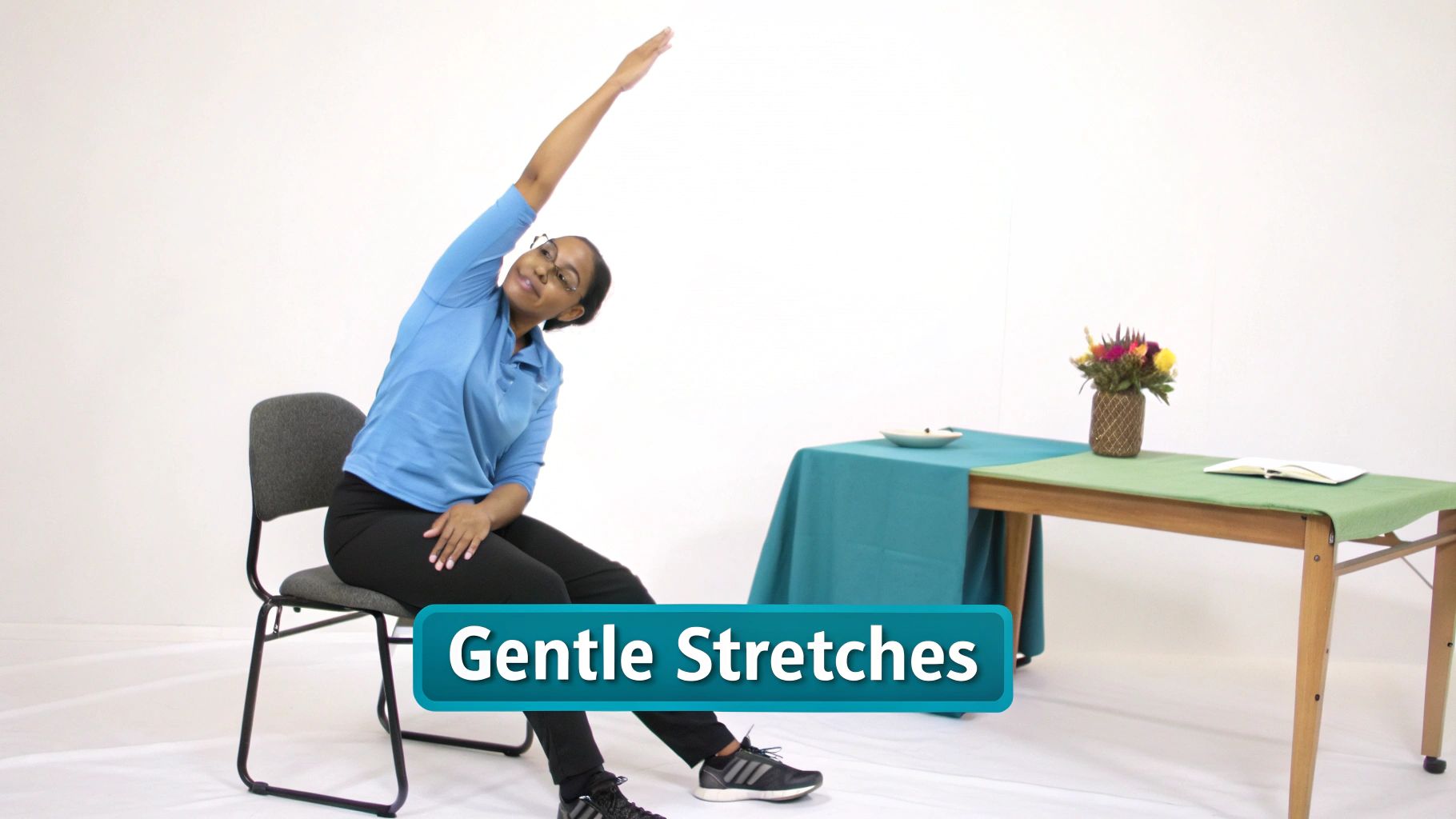
A Table of Gentle At-Home Stretches for Shoulder Blade Relief
The following movements are designed to be safe and accessible, whether you're standing or seated. The golden rule is to always listen to your body—a stretch should feel like a gentle, satisfying pull, never a sharp or searing pain.
Here is a quick guide to some simple yet effective stretches you can easily incorporate into your daily routine.
Stretch Name | How to Perform (Seated/Standing) | Focus Area | Safety Tip |
|---|---|---|---|
Cross-Body Arm Stretch | Gently pull your left arm across your chest using your right arm for support. Hold for 20-30 seconds. Repeat on the other side. | Rhomboids (muscles between the shoulder blades) and rear deltoids. | Keep your shoulder relaxed and down, away from your ear. Don't pull on your elbow joint directly. |
Corner Pectoral Stretch | Stand in a corner, placing a forearm on each wall with elbows slightly below shoulder height. Lean forward gently. Hold for 20-30 seconds. | Chest (pectorals) and the front of the shoulders. | Only lean forward until you feel a comfortable stretch. Avoid arching your lower back. |
Seated Chest Opener | Clasp your hands behind your back, straighten your arms, and gently squeeze your shoulder blades together. Hold for 20-30 seconds. | Opens up tight chest muscles that often contribute to upper back tension. | If you can't clasp your hands, hold a towel or strap between them. Keep your chin level. |
Remember, consistency is far more important than intensity. These simple movements, done regularly, can make a real difference in how you feel day-to-day.
More Ways to Find Comfort
Beyond targeted stretches, learning how to relieve upper back tension in general can be a game-changer. Small adjustments to your posture, taking mindful breaths, and getting up to move around throughout the day all add up.
We know that prolonged sitting is a major culprit for this kind of pain. If that sounds like you, you might find some useful strategies in our guide on how to https://www.stillwatershealing.ca/post/sitting-all-day-here-are-3-tips-to-relieve-back-and-shoulder-pain.
Think of these at-home practices as an extension of your massage therapy. They empower you to take an active role in your own healing, helping to maintain the progress you make with your RMT and keeping your body feeling more mobile and free.
Your Next Steps to Lasting Pain Relief
You’ve done the hard work of understanding why you might be feeling that persistent, nagging pain below your left shoulder blade. That’s a huge first step. But knowing the cause is only half the battle; real, lasting relief comes from taking the right action.
Whether that ache stems from a knotted muscle, hours spent hunched over a desk, or something a little more complex, your body is sending you a clear signal. You’ve explored the self-care options, and now it’s time to bring in a professional who can help you move forward.
For anyone living in Brampton, Mississauga, Toronto, Etobicoke, Oakville, Caledon, Orangeville, Milton, Halton, and Guelph, getting that expert help is easier than you think. At Stillwaters Healing & Massage, we bring the entire clinic experience right to your doorstep. It’s a fully mobile service, perfect for anyone in a private home, assisted living facility, or long-term care residence.
This is especially helpful for seniors and those with mobility challenges who find travelling to appointments difficult.
Book Your In-Home Consultation Today
Forget about dealing with traffic, finding parking, or arranging a ride. Our RMT, Taylor, will come to you, ready to assess and treat the root of your upper back pain. He is skilled at creating a personalized plan that addresses exactly what your body needs, delivered with genuine care.
Sometimes, a focused approach is what it takes to finally get relief. To get a better idea of the techniques we might use, feel free to read our guide on deep tissue massage therapy.
Don't let that discomfort call the shots in your life anymore. A professional, targeted massage is a powerful way to reclaim your comfort, improve your movement, and find some well-deserved peace of mind.
Your path to feeling better can start right now. To schedule your in-home appointment with Taylor, just head over to our online booking page and take that next step toward lasting relief.
Common Questions About In-Home Massage for Shoulder Pain
If you're thinking about massage for that nagging pain under your left shoulder blade, you probably have a few questions. That’s completely normal. Let's walk through some of the most common ones so you know exactly what to expect.
How Long Should My First Massage Appointment Be?
Taylor always recommends booking a 90-minute session for your first appointment. This gives you ample time to do a proper assessment—you’ll talk about your health history, figure out what’s going on with your shoulder, and still have plenty of time for an effective, focused treatment. After that, you can decide together what works best for you, typically a 60 or 90-minute follow-up.
Is Deep Tissue Massage Supposed to Hurt?
This is a big one. While deep tissue work is firm and designed to reach deeper layers of muscle, it should never be painful. The goal is to release tension, not to grit your teeth through it. Taylor will check in with you constantly to make sure the pressure is just right—what we call a "therapeutic discomfort," not pain. It’s all about working with your body.
Can Massage Actually Help with Arthritis Pain?
Absolutely. Gentle, specialized massage is fantastic for managing arthritis discomfort. We focus on techniques that reduce inflammation, ease stiffness in the joints, and relax the tight muscles that are overcompensating. The result is often less pain and noticeably better movement.
What Do I Need to Do to Prepare for an In-Home Massage?
Honestly, not much at all. Your job is simply to relax. Taylor brings everything needed for a professional session right to your door: the massage table, fresh linens, and high-quality lotions. All he needs from you is a quiet, comfortable space in your home where you can unwind and let the healing begin.
Ready to finally do something about that persistent shoulder blade pain? Stillwaters Healing & Massage brings professional, compassionate care directly to your home in Brampton, Toronto, Etobicoke, Oakville, Caledon, Orangeville, Mississauga, Milton, Halton, and Guelph.


