


Physiotherapy vs Chiropractic: Which Is Right for Seniors?
When you're weighing physiotherapy against chiropractic care, it really boils down to their core philosophies. Think of it this way: physiotherapy is all about restoring your functional movement using exercise and rehabilitation, while chiropractic care zeroes in on spinal adjustments to help your nervous system function better and, in turn, relieve pain. The right choice for you hinges on whether you need a broad-based recovery plan or more targeted relief for specific joint and spinal issues.
Choosing Your Path to Pain Relief
For seniors and their families in Brampton, Mississauga, and the surrounding areas, getting a handle on the differences between these two well-respected professions is the crucial first step toward managing pain effectively. Both offer fantastic non-surgical ways to tackle musculoskeletal problems, but they come at it from different angles and use their own unique sets of techniques.
To make a truly informed decision, you need to look a little deeper. Physiotherapy tends to take a wider, more holistic view. A physiotherapist looks at the entire kinetic chain—that’s the intricate system of how your muscles, joints, and nerves all cooperate to create movement. This comprehensive approach makes it the go-to for things like post-operative recovery, fall prevention programs, and managing chronic conditions that impact overall mobility, such as arthritis.
Chiropractic care, on the other hand, is much more specialized. Its primary focus is the spine and its intimate connection with the nervous system. A chiropractor is an expert at identifying and correcting joint restrictions, especially in the spinal column, with the goal of easing pain and tapping into the body's own natural healing capabilities.

Comparing Physiotherapy and Chiropractic Care
To break it down even further, here’s a straightforward table that puts the two disciplines side-by-side. It’s designed to give you a quick, at-a-glance understanding of their core philosophies, common techniques, and the conditions they’re best known for treating.
Aspect | Physiotherapy | Chiropractic Care |
|---|---|---|
Primary Goal | Restore function, improve mobility, and manage pain through movement and exercise. | Correct spinal alignment, improve nervous system function, and relieve pain through adjustments. |
Core Philosophy | Based on the science of movement (kinesiology) to improve overall physical function. | Focuses on the relationship between the spine and nervous system for overall health. |
Main Techniques | Therapeutic exercise, manual therapy, joint mobilization, and patient education. | Spinal and joint adjustments (manual manipulation), soft-tissue therapy, and lifestyle advice. |
Commonly Treats | Post-surgery rehab, arthritis, sports injuries, balance issues, stroke recovery. | Acute back/neck pain, sciatica, headaches, joint dysfunction, and whiplash. |
At the end of the day, one isn't "better" than the other—they just have different strengths for different situations. The best path forward really depends on your specific symptoms, your diagnosis, and what you want to achieve for your long-term health. For instance, someone recovering from a knee replacement would likely find huge benefits from a physiotherapist's strength-building program. In contrast, another person dealing with a sudden bout of lower back pain might get immediate relief from a chiropractor's adjustment.
To get an even fuller picture of your options, it can be helpful to see how other therapies compare. For more on this, you can learn more about the differences between physiotherapy and massage therapy in our detailed guide. This helps build a complete understanding of all the tools available for your well-being.
Understanding Core Philosophies and Training
When you’re trying to choose between a physiotherapist and a chiropractor, the best place to start is right at the beginning—with their core philosophies and training. While both are highly skilled professionals dedicated to getting you out of pain and moving better, they approach the body from fundamentally different perspectives.
Think of it this way: their education sets them on distinct paths, which in turn shapes every aspect of the care you receive. It's the difference between a treatment plan built around rehabilitative movement versus one centred on precise spinal adjustments.
The Physiotherapist's Approach: Movement is Medicine
A physiotherapist's entire world revolves around the science of movement, or kinesiology. Their education is deeply rooted in understanding how the whole body works together as a functional unit. In Canada, becoming a physiotherapist is a serious academic commitment, requiring a Master's degree on top of a university undergraduate degree.
This extensive, evidence-based training gives them a broad perspective. They don't just zero in on the single point of pain; they look at the entire kinetic chain. A physiotherapist sees your body as an interconnected system and asks, "What underlying weakness or movement pattern is causing this problem?" Their goal is to restore overall function, build strength, and help you regain independence.
The Physiotherapist's Educational Path
The road to becoming a registered physiotherapist in Ontario is long and intensive, blending deep scientific knowledge with hands-on clinical experience.
University Foundation: It starts with a four-year bachelor's degree, usually in a field like kinesiology or health sciences.
Master's Degree: Next comes a two-year Master of Physical Therapy (MPT) program from an accredited university. This is where they dive into the specifics of anatomy, biomechanics, and neurology.
Extensive Clinical Hours: Before they can graduate, students must complete over 1,000 hours of supervised clinical work in real-world settings like hospitals, rehab centres, and private clinics.
National Licensing Exam: The final step is passing the tough national Physiotherapy Competency Examination (PCE) to earn their license from the College of Physiotherapists of Ontario.
This rigorous process ensures they are prepared to handle everything from post-stroke rehabilitation to helping a senior in Oakville improve their balance to prevent falls. It’s an approach focused on empowering you through education and active recovery. This is just as important to grasp as the difference between a physiotherapist and a massage therapist when deciding on your care.
The Chiropractor's Approach: The Spine is Central
A chiropractor, on the other hand, comes from a more specialized perspective that puts the spine and nervous system at the centre of the body’s health. The foundational principle of chiropractic care is that misalignments in the spine, which they refer to as vertebral subluxations, can interfere with the nerves and cause pain or other health issues.
To become a chiropractor in Canada, one must complete a demanding, four-year Doctor of Chiropractic (DC) degree after at least three years of undergraduate university study. This program is laser-focused on the neuromusculoskeletal system.
The core of a chiropractor's education is an incredibly deep understanding of spinal anatomy, diagnostic imaging, and, of course, mastering the art of the adjustment—that specific, controlled force applied to a joint to restore proper movement and function.
Their training and licensing requirements are every bit as stringent as a physiotherapist's.
The Chiropractor's Educational Path
Pre-Chiropractic University Study: Candidates need a minimum of three years of undergraduate study before they can even apply to a chiropractic college.
Doctor of Chiropractic (DC) Program: This is a four-year, full-time professional degree from an accredited institution, like the Canadian Memorial Chiropractic College in Toronto.
Intense Focus on Anatomy: The curriculum involves thousands of hours dedicated to anatomy, neurology, and diagnostics, including how to properly take and interpret X-rays.
National Board Exams: After graduating, they must pass a series of comprehensive national board exams from the Canadian Chiropractic Examining Board (CCEB) to be licensed by the College of Chiropractors of Ontario.
This specialized training makes chiropractors the go-to experts for diagnosing and treating issues related to the spine. Think of the resident in Etobicoke with sudden, acute low back pain or the professional in Milton suffering from tension headaches that trace back to their neck—these are classic cases where a chiropractor’s focused skills shine.
What to Expect During a Treatment Session
While both physiotherapists and chiropractors want to get you out of pain and back to living your life, what that looks like in the treatment room can be quite different. Knowing what goes on behind the clinic door can make all the difference in feeling comfortable and making the right choice.
In a nutshell, a physio session is usually more active and educational, built around restoring how you move. A chiropractic session, on the other hand, is often centred on precise adjustments meant to get your joints moving freely and help your nervous system function better.
The Physiotherapy Session: A Dynamic and Educational Approach
When you see a physiotherapist, think of it as an interactive and empowering experience. The goal isn't just to patch up your current symptoms; it's to give you the tools and understanding to manage your condition and keep it from coming back.
A typical physio appointment usually mixes a few different approaches to create a complete treatment plan.
Therapeutic Exercise: This is the heart of physiotherapy. Your therapist will guide you through specific movements and exercises designed to build strength, improve flexibility, and get you moving more easily. For a senior who's had a fall, this could mean working on balance and simple leg-strengthening exercises.
Manual Therapy: This is the hands-on part. The physio will use their hands to work on your soft tissues and joints. This might involve gentle joint movements (mobilizations), soft tissue massage, or stretching to ease stiffness and pain.
Modalities: Depending on what’s wrong, your physio might use some equipment to help things along. This could be ultrasound to help tissues heal, a TENS machine for pain relief, or simply heat and ice packs to calm down inflammation.
Patient Education: A huge chunk of the session is spent helping you understand your own body. Your therapist will explain what’s going on, show you how to change daily activities to avoid strain, and send you home with an exercise program.
Think of a physiotherapist as both a hands-on practitioner and a personal health coach. They want to make you an active partner in your own recovery, giving you strategies that stick with you long after the appointment is over.
For example, a senior in Guelph with an arthritic knee would likely have a session focused on strengthening the muscles around the knee (like the quads and hamstrings), doing gentle range-of-motion exercises, and learning the safest way to tackle stairs at home.
The Chiropractic Session: Focused and Precise Adjustments
A chiropractic session is typically built around its main technique: the adjustment. While chiropractors do use other methods, the core of their work is to restore proper alignment and movement to joints, especially in the spine.
Chiropractic care has become a well-established part of musculoskeletal health in Canada. The number of Canadians using chiropractic care rose from 11.0% in 2001 to 11.4% in 2010. By 2018, the age-standardized prevalence of those receiving regular chiropractic care was 7.9%, showing its solid role in helping people with common problems like chronic back pain. You can read the full research about these trends in Canadian healthcare for more detail.
Here’s what you can generally expect when you visit a chiropractor:
The Adjustment (Spinal Manipulation): This is the signature move of chiropractic care. The chiropractor uses their hands or a small instrument to apply a quick, controlled thrust to a specific joint. The goal is to get it moving properly again. You might hear a "pop" or "crack," which is just the sound of gas releasing from the joint fluid—nothing to worry about!
Soft-Tissue Therapy: Many chiropractors will also use massage or other techniques to relax the muscles around a stiff joint before an adjustment. This can make the adjustment feel more comfortable and work even better.
Lifestyle and Ergonomic Advice: Your chiropractor might also give you tips on your posture, nutrition, or how to set up your workspace to support your spine and stop the problem from coming back.
Let's imagine an older adult from Caledon who wakes up with sudden, sharp neck pain after sleeping funny. A chiropractor's session would likely involve a careful check of the neck, followed by a specific adjustment to the misaligned vertebra to bring immediate relief and restore movement. The focus here is very precise, targeting the direct source of the joint restriction.
Matching Your Condition to the Right Specialist
So you understand the core differences between physiotherapy and chiropractic care, but the real question is: which one is right for you? It's the most important piece of the puzzle. While both professions are fantastic at treating pain and getting you moving again, their unique strengths make them better suited for different problems.
Think of it this way: you wouldn't use a wrench to hammer a nail. Picking the right therapy for your specific issue will get you on a much faster and more effective path to feeling better.
When to See a Physiotherapist
Physiotherapy is all about the big picture—restoring function and movement across your entire body. If your goal is broad rehabilitation that involves rebuilding strength, improving balance, and getting back to your daily activities with confidence, a physiotherapist is your go-to expert.
A physiotherapist should be your first call for things like:
Post-Surgery Rehabilitation: After a hip or knee replacement, a physiotherapist is absolutely essential. They’ll guide you through structured exercises to get your range of motion back, strengthen the muscles that support the new joint, and help you walk safely again.
Neurological Conditions: For managing the symptoms of Parkinson’s disease, Multiple Sclerosis, or recovering from a stroke, physiotherapy is key. It helps improve coordination, walking patterns, and overall functional mobility, making a huge difference in day-to-day life.
Balance and Fall Prevention: This is a major concern for many older adults. A physiotherapist can directly address poor balance with targeted exercises that build stability and dramatically reduce the risk of a fall. In fact, our guide on 8 essential mobility exercises for seniors in 2025 offers a great starting point to complement what you learn in physiotherapy.
Chronic Conditions like Arthritis: Physiotherapy can be a game-changer for managing osteoarthritis. By strengthening the muscles around sore joints, you take a lot of strain off them, which helps to significantly reduce pain.
For anyone recovering from a major neurological event, physiotherapy is a cornerstone of regaining independence. You can learn more about specialized after-stroke care to see just how central this kind of structured rehabilitation is.
This simple decision tree can help you visualize which path might be best based on your symptoms.
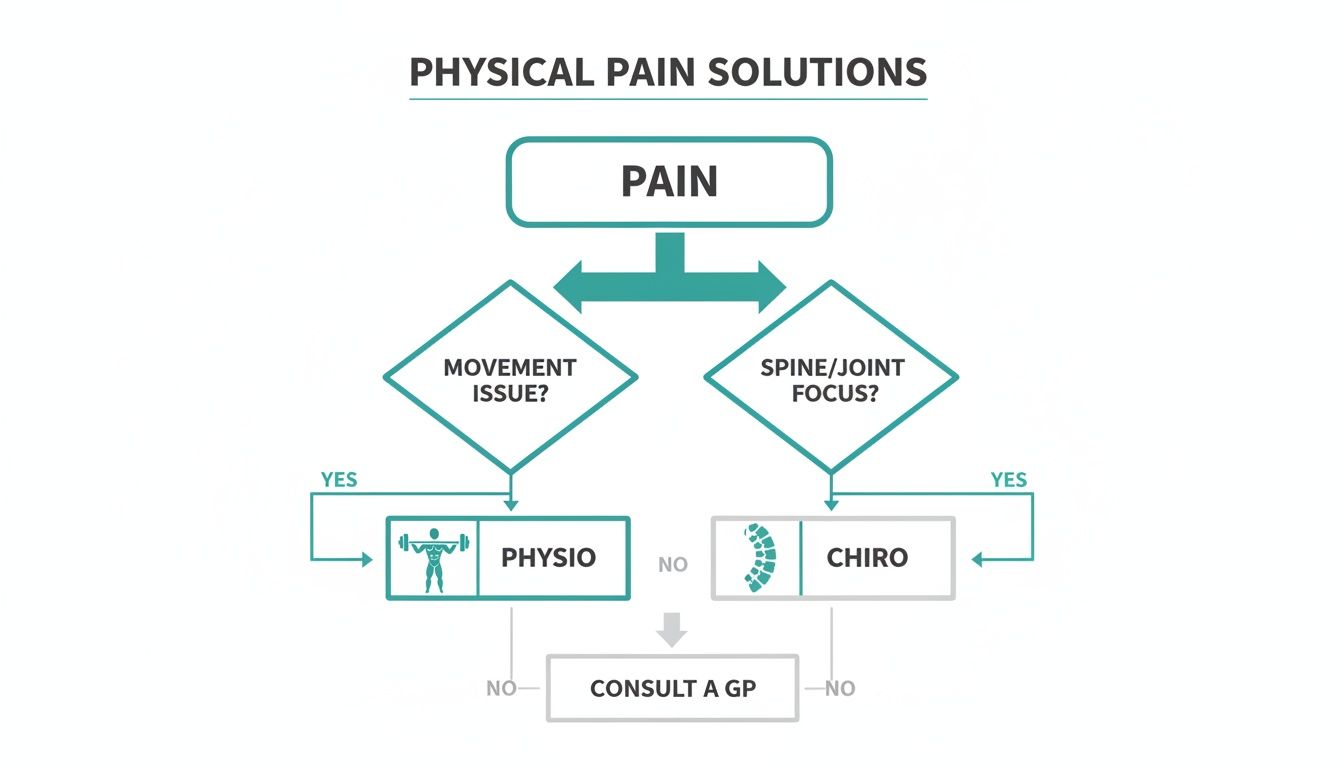
As the flowchart shows, if your problem is about overall movement, weakness, or recovering function, physiotherapy is usually the best bet. But if the pain is sharp and located in a specific joint or your spine, that’s where chiropractic care often comes in.
When to See a Chiropractor
Chiropractic care is laser-focused on diagnosing and treating specific issues within the neuromusculoskeletal system, especially the spine. This targeted approach is fantastic for providing quick relief from acute pain that stems from a joint that just isn’t moving right.
A chiropractor is often the best specialist for:
Acute Lower Back and Neck Pain: This is the bread and butter of chiropractic care. If you’re dealing with sharp, localized pain that’s locking you up, a spinal adjustment can often restore movement and bring almost immediate relief.
Sciatica: That shooting pain down your leg? It’s often caused by an issue in your lower back irritating the sciatic nerve. Chiropractic adjustments can help decompress that nerve and ease the symptoms.
Headaches: Many tension headaches and even some migraines actually start in the neck (these are called cervicogenic headaches). By adjusting the cervical spine, a chiropractor can often get to the root cause of the pain.
Joint Dysfunction: If a joint in your shoulder, hip, or wrist just feels "stuck," "out of place," or isn't moving properly, a chiropractor's adjustment can be incredibly effective at restoring normal motion.
The greatest strength of a chiropractic adjustment is its precision. It’s designed to fix a very specific mechanical problem—a joint that isn’t moving correctly—to restore function and shut down those pain signals.
In Canada, chiropractic care is a crucial part of managing muscle and joint pain. Chiropractors here treat around 4.5 to 4.7 million patients every year. Even more telling is that a whopping 90% of Canadians who see a chiropractor for muscle or joint pain say it improved their quality of life. This really speaks to how effective this hands-on approach is for the specific conditions it's designed to treat.
How Physiotherapy And Chiropractic Work Together
When you’re dealing with pain, it's easy to think you have to choose: physiotherapy or chiropractic care? But the truth is, this isn't always an "either/or" decision. For many people, especially those with long-standing or complex musculoskeletal problems, the most powerful results come from an integrated approach.
Think of it like building a house. A chiropractor acts as the foundation specialist, making sure the frame—your spine and joints—is properly aligned and moving correctly. That structural integrity is absolutely essential. From there, a physiotherapist comes in as the builder. They strengthen the walls and support beams—your muscles and connective tissues—to ensure the whole structure is stable, strong, and can handle the demands of daily life.
By working together, this collaborative model addresses your health from two crucial angles: structural alignment and functional strength.

A Collaborative Model For Better Outcomes
More and more healthcare professionals are seeing the immense value in teamwork. A 2022 cross-sectional study of Canadian chiropractors highlighted this growing trend, finding that 32.9% now work in interdisciplinary rehabilitation settings. This model helps ensure patients get the right care at the right time, and it's particularly effective for common issues like low back pain, often helping people avoid more invasive treatments.
Let’s walk through a real-world example. Imagine a senior living in Mississauga is struggling with chronic lower back pain and sciatica.
Chiropractic First: They might begin their journey with a chiropractor. The chiro performs specific spinal adjustments to the lower back, which can help decompress the irritated nerve root and restore mobility to stiff, locked-up joints. This often provides significant and fairly immediate pain relief.
Physiotherapy Next: Once the acute joint restriction and nerve pain are under control, the patient moves on to a physiotherapist. The physio assesses their core stability, posture, and movement habits, then prescribes targeted exercises to build strength in the deep abdominal and back muscles. This newfound strength creates long-term support for the spine, making a recurrence of the problem much less likely.
By combining these treatments, the patient gets the best of both worlds: immediate relief and structural correction from the chiropractor, followed by the stabilizing, preventative strength training from the physiotherapist.
For a deeper look at how both professions tackle a common problem, you can explore a patient's guide to Degenerative Disc Disease treatment options, which details how physical therapy works alongside other approaches.
Adding Mobile RMT For A Complete Circle Of Care
This synergy doesn’t have to stop with just physio and chiro. For seniors in Brampton, Oakville, and Etobicoke who may find travel difficult, adding in-home Registered Massage Therapy (RMT) from Stillwaters Healing & Massage can truly complete the circle of care.
Our male RMT, Taylor, can play a critical role at every stage of your recovery plan. Having professional, therapeutic care delivered right to your door eliminates the stress of travel and lets you heal in the comfort of your own home. Our services include Swedish massage, Cupping therapy, Deep tissue massage, Rehabilitation massage, Myofascial release, Trigger point release, Joint mobilization, Hydrotherapy applications, Geriatric massage, Sports massage therapy, and Energy healing.
Here’s how our mobile massage services fit into the big picture:
Pre-Adjustment Preparation: A Myofascial Release or Swedish Massage before a chiropractic visit can work wonders. It relaxes the tight muscles around the spine, making the subsequent adjustment more comfortable and often more effective.
Post-Physiotherapy Recovery: After a tough physiotherapy session, your muscles are bound to be sore. A Deep Tissue Massage or a focused Rehabilitation Massage helps reduce that soreness, boosts circulation to healing tissues, and speeds up your overall recovery.
Managing Chronic Conditions: For persistent issues like arthritis, regular massage therapy is invaluable for managing inflammation and maintaining joint flexibility. This perfectly complements both the exercises from your physiotherapist and the adjustments from your chiropractor. You can learn more about this in our guide on the role of massage in managing arthritis and joint pain.
By creating this three-pronged approach, you build a truly robust support system for your health—addressing alignment, function, and tissue health all at once.
Your Questions About Physiotherapy and Chiropractic Answered
When you’re trying to navigate healthcare options, a lot of questions can pop up. This is especially true when you're looking at physiotherapy versus chiropractic care. For seniors and their families in communities from Brampton to Guelph, getting clear, straightforward answers is the first step to feeling confident about managing pain and staying active.
Let's dive into some of the most common questions we hear.
Do I Need a Doctor's Referral in Ontario?
One of the first things people usually ask is whether they need to see their family doctor first. The simple answer is no. In Ontario, both physiotherapists and chiropractors are considered primary healthcare providers, which means you have direct access. You can book an appointment with either professional without getting a referral.
This is great news because it lets you seek help right when you need it, which can make a huge difference for acute pain or when you’re eager to start rehab.
But there’s a small catch: your insurance plan. While a referral isn't required by law, some extended health insurance companies do ask for one. It's always a smart move to check your policy details before your first visit to see if a doctor's note is needed to get reimbursed.
Which Is Better for Arthritis Pain?
Arthritis is such a widespread issue for older adults, and thankfully, both professions have solid strategies for managing it. The “better” choice really comes down to what kind of arthritis you have and which joints are giving you the most trouble.
Physiotherapy is often the go-to for osteoarthritis in large, weight-bearing joints like your knees and hips. A physio will put together a program to:
Strengthen the muscles that support the joint, which takes a lot of pressure off the damaged cartilage.
Improve your range of motion with gentle, carefully controlled exercises.
Teach you better ways to do daily activities to reduce strain and pain.
On the other hand, chiropractic care can be a game-changer for arthritis that affects the spine, such as in your neck or lower back. Gentle, low-force adjustments can:
Help restore mobility to stiff spinal joints.
Reduce pain and inflammation around the affected vertebrae.
Improve how your nervous system functions, which can help manage the pain signals themselves.
Many people find that a one-two punch works best. Using physiotherapy to build functional strength and chiropractic care to maintain spinal alignment can offer the most complete and lasting relief from arthritis pain. Inflammation is a major player in arthritis, so getting a handle on it is key. For more on this, take a look at our guide on how to reduce inflammation naturally, written specifically for seniors.
How Do I Choose Between Adjustments and Exercises?
Trying to decide between a plan focused on spinal adjustments and one centred on therapeutic exercise can be confusing. Nothing beats a professional assessment, of course, but you can use your symptoms as a rough guide.
As a rule of thumb, if your pain is sharp, located in a specific spot on your spine, and you feel "stuck" or "locked up," a chiropractic evaluation is a very logical place to start. If your main problems are muscle weakness, poor balance, or trouble with everyday movements like getting out of a chair, then a physiotherapist is likely the best person to help you reach those functional goals.
It helps to think about the primary goal. A chiropractor is an expert at restoring proper motion to a joint that isn't moving right. A physiotherapist is a specialist in restoring overall movement patterns and building the strength you need to live independently.
How Can Mobile Massage Therapy Complement My Care?
This is where everything can come together. Mobile Registered Massage Therapy (RMT) from Stillwaters Healing & Massage acts as a powerful link, enhancing both physiotherapy and chiropractic treatments. The sheer convenience of having a professional come to your home in Milton, Caledon, or anywhere in the Halton region removes the stress of travel, making it far easier to stay on track with your recovery.
Our male RMT, Taylor, can customize each session to support exactly what you're working on. Here’s how it fits in:
Before a Chiropractic Visit: A Myofascial Release session can relax the tight muscles and connective tissue around your spine. This preparation often makes the subsequent adjustment feel more comfortable and effective.
After a Physiotherapy Session: A Rehabilitation Massage or Deep Tissue Massage is perfect for soothing the muscle soreness that comes after a tough exercise session. This helps cut down on recovery time so you can get the most out of every physio appointment.
This kind of collaborative approach ensures that your body's structural alignment, functional strength, and tissue health are all getting the attention they need, creating a much more robust and supportive path to wellness.
At Stillwaters Healing & Massage, we are dedicated to bringing compassionate, professional mobile RMT care to your doorstep. We serve clients across Brampton, Toronto, Etobicoke, Oakville, Caledon, Orangeville, Mississauga, Milton, Halton, and Guelph. We invite you to experience how our in-home services can support your health journey. Schedule your appointment with Taylor today by visiting our booking page at https://stillwatershealingmassage.clinicsense.com.


