


Unlock Pain Relief with Therapeutic Massage Deep Tissue
Therapeutic deep tissue massage is so much more than a simple relaxation treatment. It’s a highly focused therapy designed to get to the root of chronic muscle tension and break up those stubborn, painful adhesions. Think of it as a methodical way to untangle deep-seated knots, leading to real functional improvement and lasting pain relief.
Unlocking Relief with Therapeutic Deep Tissue Massage
If you’ve ever had a persistent muscle knot, you know how frustrating it can be. It’s like a tangled ball of yarn. A lighter, more superficial massage might smooth the surface for a little while, but therapeutic deep tissue massage is about carefully finding and unravelling each individual knot, deep within the muscle fibres. It's a targeted approach that aims for lasting change, not just a fleeting sense of comfort.
This powerful therapy uses slow, deliberate strokes and sustained, firm pressure to reach into the deeper layers of your muscles and the connective tissue that surrounds them, called fascia. This is precisely where chronic pain patterns, adhesions (those painful, rigid bands of tissue), and trigger points tend to live.
Understanding the Core Concepts
A qualified Registered Massage Therapist (RMT) doesn’t just apply random pressure. The entire process is precise and, most importantly, collaborative. It's about working with you and your body to identify the root cause of your discomfort—whether you're in Brampton, Toronto, or Mississauga—and gently coaxing the muscle to release that tension.
Here’s what a session really focuses on:
Reaching Deeper Layers: The main goal is to access those underlying muscle structures that are often the true source of long-term aches and limited mobility.
Breaking Down Adhesions: By applying focused, sustained pressure, the RMT helps to break down old scar tissue and adhesions that can cause pain, stiffness, and restrict your natural range of motion.
Open Communication: While the pressure is definitely firm, it should never feel unbearably painful. A good deep tissue massage relies on constant feedback between you and your RMT to ensure the pressure is productive and stays within your comfort zone.
This flowchart helps visualize where deep tissue massage fits within the broader spectrum of massage therapies.
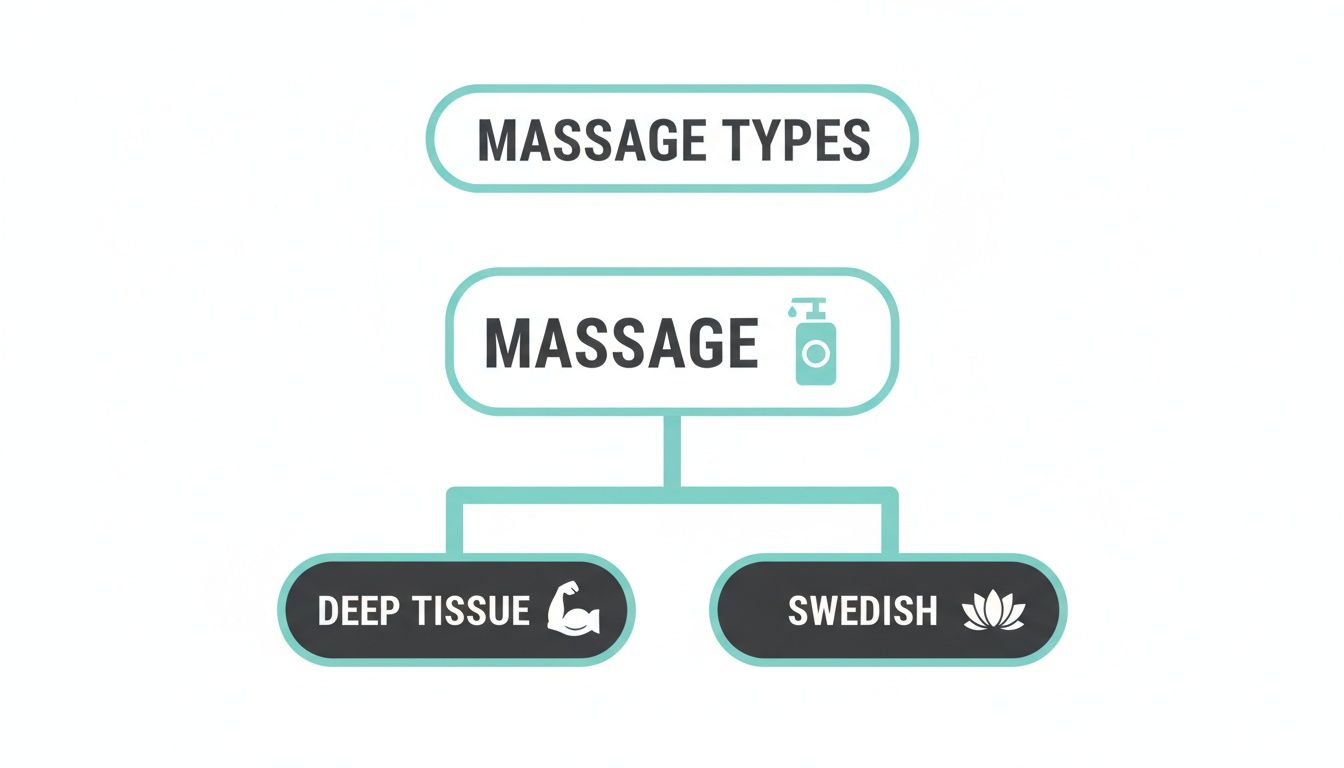
You can see how it’s distinctly different from a more relaxation-focused modality like Swedish massage, which you'll often see offered at spas.
Deep Tissue Massage vs. Swedish Massage At a Glance
To quickly see the differences, this table breaks down the two most common types of massage. It helps to clarify what you're asking for and what to expect.
Feature | Therapeutic Deep Tissue Massage | Swedish Massage |
|---|---|---|
Primary Goal | Release chronic muscle tension, treat musculoskeletal issues, and reduce pain. | Promote relaxation, relieve general muscle tension, and improve circulation. |
Pressure | Firm to deep, applied slowly and deliberately to targeted areas. | Light to firm, using long, flowing strokes across the body. |
Techniques | Stripping, friction, and trigger point therapy to break down adhesions. | Effleurage (gliding), petrissage (kneading), and tapotement (tapping). |
Focus | Deepest layers of muscle, tendons, and fascia. | Superficial layers of muscle. |
Best For | Chronic pain, limited mobility, muscle injury recovery, and conditions like sciatica. | Stress relief, general relaxation, and as an introduction to massage. |
Ultimately, the right massage for you comes down to what you want to achieve—are you looking for relief from a specific problem, or just an hour of blissful calm?
A Suite of Therapeutic Services
While deep tissue is a powerful tool, it's just one part of a comprehensive approach to wellness. To provide the most effective and personalized treatment, Taylor integrates a variety of proven modalities. This ensures your session is tailored specifically to your body's needs. Our services include:
Swedish Massage: For general relaxation and stress reduction.
Deep Tissue Massage: To target chronic pain and deep muscle knots.
Cupping Therapy: To increase blood flow and release fascial restrictions.
Rehabilitation Massage: To support recovery from injuries and surgeries.
Myofascial Release & Trigger Point Release: To address restrictions in connective tissue and resolve specific pain points.
Joint Mobilization: To improve range of motion and reduce joint stiffness.
Hydrotherapy Applications: Using heat or cold to reduce inflammation and promote healing.
Geriatric Massage: Gentle techniques adapted for the needs of older adults.
Sports Massage Therapy: Focused work to enhance athletic performance and prevent injury.
Energy Healing: A gentle approach to support your body's energetic balance.
The core principle of therapeutic deep tissue massage is not about enduring pain for the sake of it. It’s about clear communication with your therapist to release chronic tension effectively and safely. Think of it as a partnership focused on restoring your body's natural state of ease and mobility.
While deep tissue massage shares some strokes with other styles, its intent is what makes it unique. To learn more, feel free to explore our detailed guide comparing Swedish massage vs deep tissue massage to find the best option for your wellness goals.
How Deep Tissue Massage Promotes Natural Healing
Think of those stubborn muscle knots, or adhesions, as a frustrating traffic jam on a major highway. When muscle fibres get all tangled and tight, they completely block the flow of blood, oxygen, and all the good stuff your tissues need to thrive. This bottleneck is what causes that familiar pain, stiffness, and inflammation. Everything just grinds to a halt, and waste products get stuck, creating a nasty cycle of pain and dysfunction.
That’s where the targeted, firm pressure of deep tissue massage comes in. It’s like bringing in an expert traffic controller to clear the congestion. Taylor, our RMT, doesn't just skim the surface; he applies slow, deliberate pressure that methodically breaks up these blockages right at the source. This technique physically unsticks those glued-together muscle fibres, clearing the way for your body’s natural healing resources to get moving again.
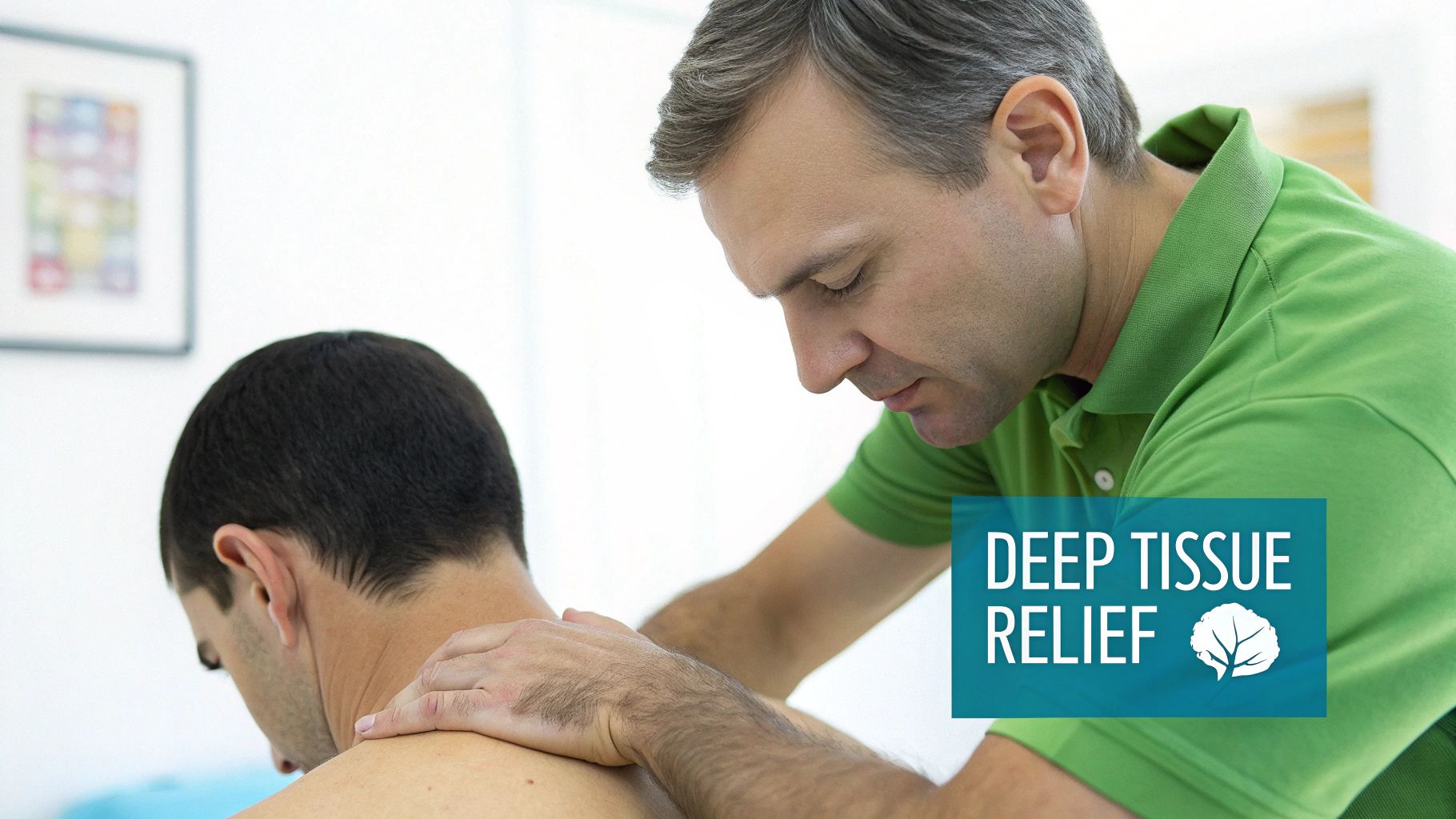
Once the "road" is clear, circulation is restored, bringing a fresh supply of oxygen-rich blood straight to those deprived tissues. At the same time, this improved flow flushes out all the metabolic junk—like lactic acid—that makes you feel sore and tired. It's this one-two punch that really kicks recovery into high gear and dials down the pain.
Calming Your Nervous System
But the benefits of a therapeutic massage deep tissue session go way beyond just muscle work. This kind of intentional touch has a powerful effect on your nervous system. It helps coax your body out of that high-alert, "fight-or-flight" mode and into a much calmer "rest-and-digest" state where real healing can happen.
During a session, the sustained, deep pressure helps turn down the volume on stress hormones like cortisol and adrenaline. We know that constantly elevated cortisol is linked to everything from chronic inflammation to anxiety. By bringing these levels down, deep tissue massage gives your body a genuine chance to relax and repair.
At the same time, this kind of massage is known to boost the release of your body's "feel-good" chemicals. We're talking about:
Serotonin: The key player in regulating your mood, sleep, and even appetite.
Dopamine: The neurochemical linked to pleasure, motivation, and that feeling of reward.
Endorphins: Your body's very own natural painkillers.
This shift in your body's chemistry doesn't just lift your spirits; it creates an internal environment that’s perfectly primed for healing.
Directly Combating Inflammation
From tendonitis to arthritis, chronic inflammation is often the sneaky villain behind persistent pain. While a little bit of inflammation is a normal part of your body's healing process, when it sticks around too long, it can actually damage tissues and stop recovery in its tracks. Deep tissue massage offers a direct, drug-free way to tackle this.
Research actually shows that deep tissue techniques can significantly lower the levels of inflammatory markers in the body. By getting the circulation moving and easing muscle tension, the massage helps clear out the substances that promote inflammation, allowing your body's natural anti-inflammatory processes to take over.
This isn't just about a temporary fix. The real magic is in the cumulative effect. The physiological changes from a deep tissue massage—better blood flow, fewer stress hormones, and less inflammation—all work together to support your body's incredible, innate ability to heal itself from the inside out.
Many of the specific techniques we use, like friction and stripping, zero in on the fascial system—that intricate web of connective tissue that wraps around all your muscles. Releasing restrictions in the fascia is absolutely crucial for lasting relief. If you're curious to learn more, our guide on myofascial release and trigger points explained takes a deeper dive into how these specialized methods resolve chronic pain. Understanding this process, whether you're in Oakville, Halton, or Guelph, empowers you to be an active partner in your own recovery.
How Deep Tissue Massage Actually Helps Your Aches and Pains
Knowing the science is great, but what you really want to know is: how will this help me? This is where the rubber meets the road—where all that physiology turns into real, noticeable relief for the pains that are holding you back, whether you're in Toronto, Brampton, or anywhere in our service area.
Let's look at some everyday examples to bring this to life.
Picture yourself as an office worker in Mississauga. You spend eight hours a day hunched over a laptop. That constant, nagging ache in your neck and shoulders? That's what we call "tech neck," and it’s more than just a nuisance. It's a sign that your muscles are chronically tight and your nerves are being compressed.
A therapeutic deep tissue session is designed for exactly this. An RMT like Taylor won't just rub your shoulders; he’ll use specific, focused techniques to release the tension deep within your trapezius and levator scapulae muscles—the usual suspects. By applying that targeted pressure, we create space around the nerves, which eases that relentless pain and helps you sit up straight again without even thinking about it.
From Weekend Warriors to Long-Term Conditions
Or maybe you’re a weekend warrior from Caledon who’s dealing with an old hamstring strain that just won't quit. When an injury heals, the body often lays down scar tissue, which isn't nearly as flexible as healthy muscle. That's what causes that feeling of tightness, limits your movement, and unfortunately, makes you more likely to get hurt again.
This is where deep tissue massage really shines. It's one of the best tools we have for breaking down that stiff, restrictive scar tissue. By using precise friction across the muscle fibres, Taylor can help them realign properly. The result? Better flexibility and a much safer return to the activities you love.
This kind of focused work brings incredible relief for all sorts of common issues:
Chronic Lower Back Pain: We can target the deep muscles in your lower back, like the quadratus lumborum, to finally release the tension that’s been causing that persistent ache for years.
Sciatica: By working on the gluteal and piriformis muscles, we can ease the pressure on the sciatic nerve. This is often the key to alleviating that sharp, shooting pain down your leg.
Repetitive Strain Injuries: If you’re dealing with something like tennis elbow or carpal tunnel, we can release the adhesions in your forearm muscles and tendons to reduce inflammation and get your hands and wrists working properly again.
The need for this kind of hands-on, effective pain management is only growing. For example, recent industry reports show a significant trend toward therapeutic modalities, with people actively seeking out treatments like deep tissue massage to manage chronic pain without relying on medication. You can read more in this report on massage therapy statistics in the United States.
How Deep Tissue Massage Helps Specific Ailments
Because deep tissue work is so adaptable, it can be tailored to all sorts of lifestyles and health concerns we see across our communities, from Guelph to Etobicoke. This table breaks down how we apply the therapy to some common situations.
Condition / Lifestyle | Primary Area of Focus | Key Therapeutic Benefit |
|---|---|---|
Desk Worker / "Tech Neck" | Neck, Shoulders, Upper Back | Releases nerve compression and corrects postural strain. |
Athlete / Sports Injury | Injured Muscle Group (e.g., Hamstrings) | Breaks down scar tissue and restores flexibility. |
Chronic Low Back Pain | Lumbar Region, Glutes, Piriformis | Alleviates deep muscle tension and addresses trigger points. |
Arthritis Sufferer | Muscles surrounding affected joints | Eases stiffness and improves joint mobility. |
Manual Labourer | Forearms, Lower Back, Shoulders | Reduces repetitive strain and prevents chronic injury patterns. |
This table shows just how targeted this therapy can be. It’s about finding the source of the problem and working on it directly.
The true value of therapeutic deep tissue massage lies in its specificity. It’s not just a general rub-down; it's a strategic treatment designed to solve a particular problem, connecting your specific pain to a direct therapeutic outcome.
Whether you're struggling with the daily stiffness of arthritis or recovering from an injury you got years ago, the techniques are always customized for you. This is especially true for managing joint pain, which can be tricky. For a deeper dive on that topic, you might find our article on the role of massage in managing arthritis and joint pain helpful.
Once you see how this therapy connects directly to your life and your pain, you start to see it for what it is: a powerful way to take back control of your health and well-being.
Your First Deep Tissue Session with RMT Taylor
Walking into any new therapy session for the first time can bring up some questions. It's totally normal to feel a little uncertain. I want to pull back the curtain on the whole process, giving you a clear picture of what to expect when Taylor arrives for your therapeutic deep tissue massage, right in the comfort of your home. Knowing what’s coming helps you relax and get the absolute most out of your treatment.
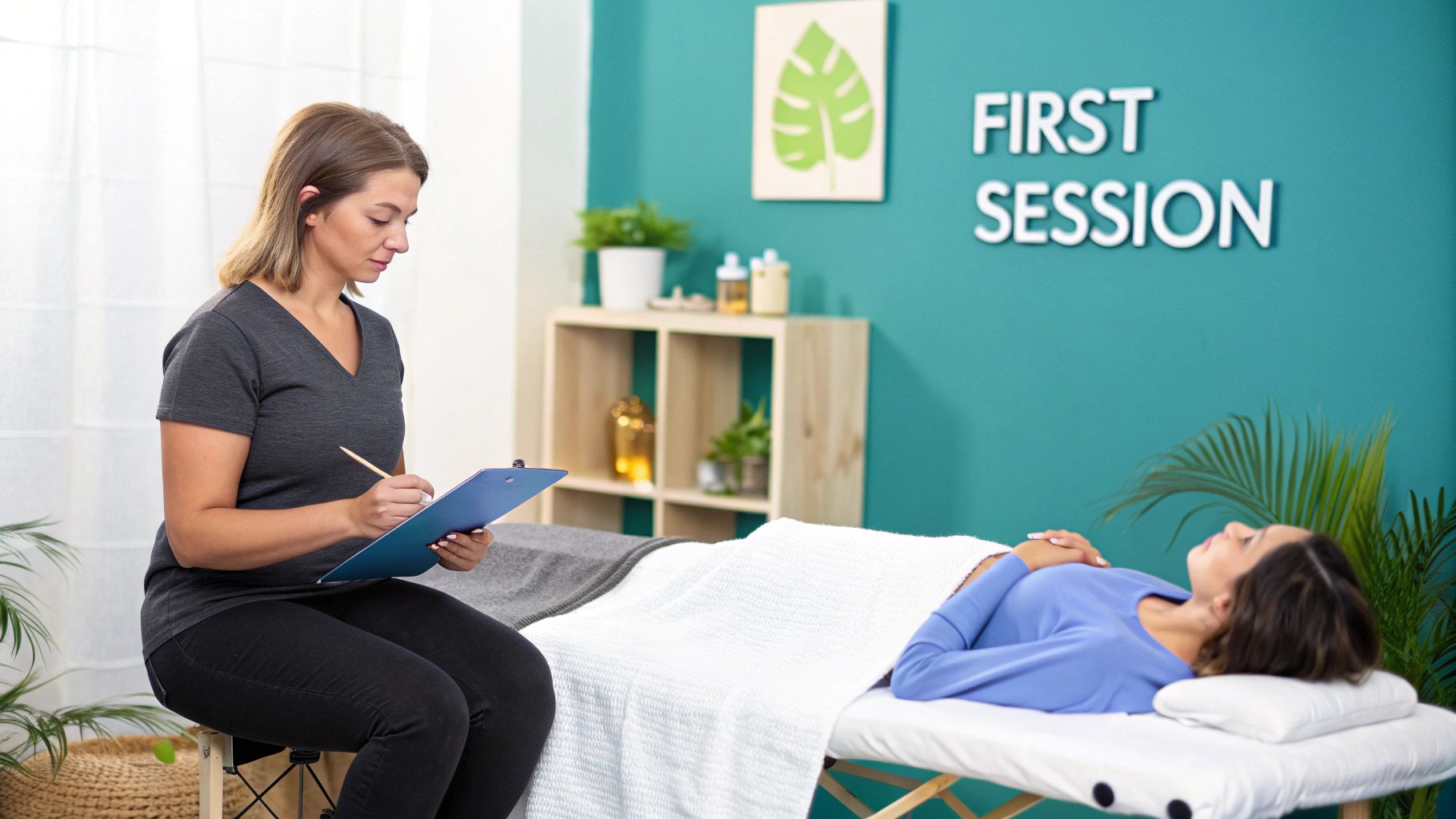
The journey doesn't actually start on the massage table. It begins with a simple conversation. This initial chat is probably the most important part of the entire session—it’s the foundation for a safe, effective, and truly personal treatment plan.

The Initial Consultation and Health History
Before any hands-on work starts, Taylor will sit down with you to go over your health history. This isn't just a formality or filling out paperwork; it’s a crucial step where he gets to understand your specific goals, pain points, any old injuries, and underlying health conditions you might have.
This confidential discussion is your time to share what brought you to us. Whether it's a nagging backache that’s been bothering you for months or you're looking to find relief from an old injury, Taylor will listen carefully. He’ll ask thoughtful questions to build a complete picture of your health, ensuring your therapeutic deep tissue massage is built just for you.
What Happens During the Session
Once we have a clear, personalized plan, the hands-on portion of the session begins. Your comfort and privacy are the top priorities. Taylor uses professional and secure draping techniques, which simply means you'll be comfortably covered by a sheet or blanket the whole time. He will only uncover the specific area being worked on, like your back or shoulder.
The secret to a great session is open communication. Deep tissue massage should feel productive and effective, not just painful. Taylor will check in with you regularly about the pressure, and he really encourages you to speak up and give feedback. This constant dialogue ensures the intensity stays within your comfort zone, hitting that sweet spot of a "good ache" that tells you tension is releasing, rather than causing outright pain.
Throughout the session, your active participation through feedback is what transforms a standard massage into a truly therapeutic experience. It’s a partnership focused on achieving your wellness goals safely and effectively.
To give you the best results, Taylor might weave in other powerful techniques alongside the deep tissue work. These could include:
Myofascial Release: This helps address tightness in the web of connective tissue that surrounds your muscles.
Trigger Point Therapy: This is for targeting and releasing those specific, hyper-irritable knots in a muscle.
Joint Mobilization: Gentle movements designed to improve your range of motion and ease stiffness.
After the Massage: What to Expect
When your session wraps up, it's very common to feel a wonderful sense of deep relaxation and release. You might also notice a little muscle soreness for a day or two, which feels a lot like the ache you get after a good workout. Don't worry—this is a positive sign that your muscles are responding and starting to heal.
This "good ache" is just your body adapting to the changes we’ve made. Taylor will always provide simple aftercare advice, like the importance of staying hydrated, to help you feel your best and maximize the benefits of your session.
Feeling confident in your care starts with understanding your practitioner's qualifications. To learn more about the extensive training and professional standards RMTs adhere to, feel free to explore our post on your guide to a Registered Massage Therapist.
Ready to start feeling better? You can book your personalized session online with Taylor today.
Maximizing Your Treatment With Aftercare
The benefits of your therapeutic deep tissue massage don't just stop when the session ends. What you do in the hours and days that follow is a massive part of the healing process. Think of it as teamwork—your RMT does their part on the table, and your aftercare is you carrying that progress forward.
Right after your massage, your number one job is to hydrate. A deep tissue session gets your circulation moving and encourages muscles to release built-up metabolic waste. Drinking plenty of water is the best way to help your body flush all of that out, which can dramatically cut down on any post-massage soreness and help you recover faster.
Your Post-Massage Toolkit
Beyond just chugging water, a few other simple actions can make a world of difference in how you feel, ensuring you get the absolute most out of every single treatment.
Here are a few of our go-to recommendations:
Take a Warm Epsom Salt Bath: There's nothing quite like a warm soak. Adding Epsom salts (magnesium sulphate) to the tub is a wonderful way to soothe any tenderness. The warmth helps your muscles relax even further, and magnesium is fantastic for reducing inflammation.
Perform Gentle Stretches: For the next 24 hours, it's best to avoid any heavy lifting or intense exercise. Instead, focus on some light, gentle stretches. This helps you hang on to that great new mobility and flexibility your RMT just worked to restore.
Listen to Your Body: It's completely normal to feel a bit tender, much like you would after a good workout. That's just a sign that your muscles are responding and beginning to heal. Give yourself permission to rest and take it easy.
Post-massage care is your opportunity to lock in the progress made during your session. Simple actions like hydrating and gentle movement empower you to prolong relief, reduce soreness, and enhance the overall therapeutic effect.
Continuing Your Wellness Journey
The real magic happens when you maintain the benefits between your appointments. This is how you achieve long-term results.
Incorporating a few simple self-care habits can really bridge the gap from one session to the next. To keep that calm, relaxed feeling going and support your skin's health, you might consider natural remedies. For example, there are many proven benefits of essential oils for skin health that can beautifully complement your routine.
If you're looking for more practical ideas, we've put together a guide with 10 pain relief tips in between massages. This kind of commitment to your own aftercare is what ensures you feel your best long after your RMT has packed up their table.
Common Questions About Deep Tissue Massage
We get a lot of great questions from clients across Brampton, Toronto, and our entire service area from Orangeville to Halton. Let's clear up some of the most common ones so you can feel completely confident about whether this is the right path for you.
Is Therapeutic Deep Tissue Massage Supposed To Be Painful?
Absolutely not. A therapeutic session should never be an exercise in gritting your teeth.
While you'll definitely feel firm, deep pressure, and there might be some moments of discomfort when Taylor is working on a particularly stubborn muscle knot, it’s what we often call a "good pain." It's that feeling of a long-held tension finally starting to let go.
The key is communication. As your RMT, Taylor will constantly check in to make sure the pressure is productive and well within your comfort zone. The whole point is to release those muscle adhesions, not to cause you unnecessary pain.
How Often Should I Get a Deep Tissue Massage For Chronic Pain?
When you're dealing with a chronic condition, we need a consistent plan to make real headway. Initially, that means more frequent sessions.
A common starting point is weekly sessions for three to four weeks. This allows us to effectively break down those long-standing patterns of muscle tension and pain.
As your symptoms begin to ease up and your body starts to hold onto the positive changes, we can start spacing out the appointments. Many of our clients in Etobicoke and Oakville find that a maintenance session every two to four weeks is the sweet spot for managing their condition and keeping flare-ups at bay. We'll figure out that personalized plan together.
Will I Be Sore After The Massage?
It’s very common to feel some muscle soreness for 24 to 48 hours after a deep tissue session. Think of it like the feeling you get after a really effective workout you haven't done in a while.
This temporary tenderness is your body's natural response. It’s a positive sign that we’ve successfully addressed deep-seated muscle adhesions, and your body is now kicking into its healing and realignment process.
Following the aftercare advice Taylor gives you—especially drinking plenty of water and doing some gentle stretches—can make a huge difference in minimizing this soreness and helping you bounce back even faster.
What Makes an RMT Different From a Regular Massage Therapist?
This is a great question. In Ontario, a Registered Massage Therapist (RMT) is a regulated health professional, which is a significant distinction.
To become an RMT, we have to complete extensive, competency-based education at an accredited school and then pass a demanding set of provincial board exams. Our training is heavy on anatomy, physiology, pathology, and clinical assessment.
This deep clinical knowledge is what allows us to safely and effectively treat specific health conditions and injuries, going far beyond what a simple relaxation massage can do. It's this expertise that's essential for providing true therapeutic work for my clients, from Caledon all the way to Milton.
At Stillwaters Healing & Massage, Taylor brings professional, compassionate, and effective therapeutic care right to your door. Serving Brampton, Toronto, Mississauga, Oakville, and the surrounding regions, we are dedicated to helping you achieve your wellness goals. If you're ready to tackle chronic pain and get back to living a fuller life, you can book your in-home session here.


