


Your Guide to Deep Tissue Massage for Pain Relief
Deep tissue massage is a highly specific therapeutic technique, laser-focused on relieving chronic muscle tension and those stubborn "knots" that just won't seem to go away. It’s all about applying firm, sustained pressure with slow strokes to reach the deeper layers of muscle and fascia—the web of connective tissue that wraps around everything. This makes it an incredibly effective tool for achieving real, lasting pain relief.
What Is Deep Tissue Massage, Really?
When people hear “deep tissue massage,” their minds often jump to intense, maybe even painful, pressure. And while the pressure is certainly firm, it’s never random. It’s highly strategic.
Think of it less like a gentle, all-over relaxation massage and more like a skilled mechanic methodically working on a car's engine to fix a deep, persistent problem. The main goal here is to find and break down adhesions.
Adhesions, which we all know as knots, are tight, painful bands of tissue that can develop in our muscles, tendons, and ligaments. These knots are more than just a nuisance; they can block circulation, cause significant pain, restrict your movement, and lead to inflammation. A deep tissue massage is designed to meticulously work through these problem spots to get you back to feeling and moving normally.
The Focus on Deeper Muscle Layers
Unlike other types of massage that primarily work on the surface for general relaxation, deep tissue gets right into the deepest layers of muscle tissue, tendons, and fascia. This is where chronic tension loves to hide out.
To reach these areas, your Registered Massage Therapist (RMT), Taylor, uses very deliberate, slow strokes with more intense pressure. You'll often feel him using his knuckles, forearms, or even elbows to apply the right amount of targeted force.
This methodical approach gives your surface muscles a chance to relax, allowing the therapist to access the underlying structures. It’s this deep focus that makes the technique so powerful for conditions rooted in chronic muscle tightness and pain.
Setting It Apart From Swedish Massage
It’s a common mistake to think deep tissue is just a "harder" version of a regular massage. In reality, the two have completely different goals and use very different techniques.
Swedish massage uses long, flowing strokes aimed at relaxation and boosting circulation in the more superficial muscles. Deep tissue, on the other hand, is a clinical approach designed to create structural change deep within the muscle and fascia.
For a more detailed breakdown, you can explore a full comparison of Swedish massage vs. deep tissue massage to figure out which one is right for your needs.
A deep tissue massage doesn't just press harder; it works smarter. The technique is about precision and anatomical knowledge, applying sustained pressure to specific points to unlock chronic patterns of tension held deep within the body's structure.
To help you see the difference clearly, let's break it down.
Deep Tissue vs Swedish Massage at a Glance
Here’s a quick comparison table to highlight the key distinctions between these two popular massage styles.
Feature | Deep Tissue Massage | Swedish Massage |
|---|---|---|
Primary Goal | To release chronic muscle tension, knots, and adhesions. | To promote relaxation and ease surface muscle tension. |
Pressure | Firm, deep, and concentrated on specific areas. | Generally lighter, ranging from gentle to medium. |
Techniques | Slow strokes, friction, and direct pressure on deep layers. | Long gliding strokes, kneading, and circular movements. |
Ideal For | Chronic pain, injury rehabilitation, and limited mobility. | Stress relief, general relaxation, and improving circulation. |
Ultimately, while both are beneficial, they serve very different purposes. One is for targeted, therapeutic repair, while the other is for overall relaxation and stress reduction.
How Deep Tissue Massage Heals Your Body from Within
It’s a common misconception that deep tissue massage is just about applying really firm pressure. It's much more than that. This is a highly targeted therapy designed to create real, lasting change deep inside your muscle tissue. Its primary job is to break down those stubborn, painful adhesions—what most of us call "knots"—that are so often the source of chronic stiffness and limited movement.
Think of it like a garden hose with a nasty kink. The water can't get through properly, slowing to a trickle. Muscle adhesions do something similar, constricting blood vessels and essentially starving the surrounding tissues of the oxygen and nutrients they desperately need to function and heal. This is what leads to that nagging pain, inflammation, and frustrating loss of mobility.
A deep tissue massage is like a skilled hand carefully working that kink out. Our male RMT, Taylor, uses slow, deliberate, and sustained pressure to physically break apart those rigid bands of tissue. As soon as the knots begin to release, circulation floods back into the area. This rush of oxygen-rich blood helps flush out metabolic waste and dials down inflammation, effectively kick-starting your body's natural healing process.
This image breaks down the core ideas behind a deep tissue session.
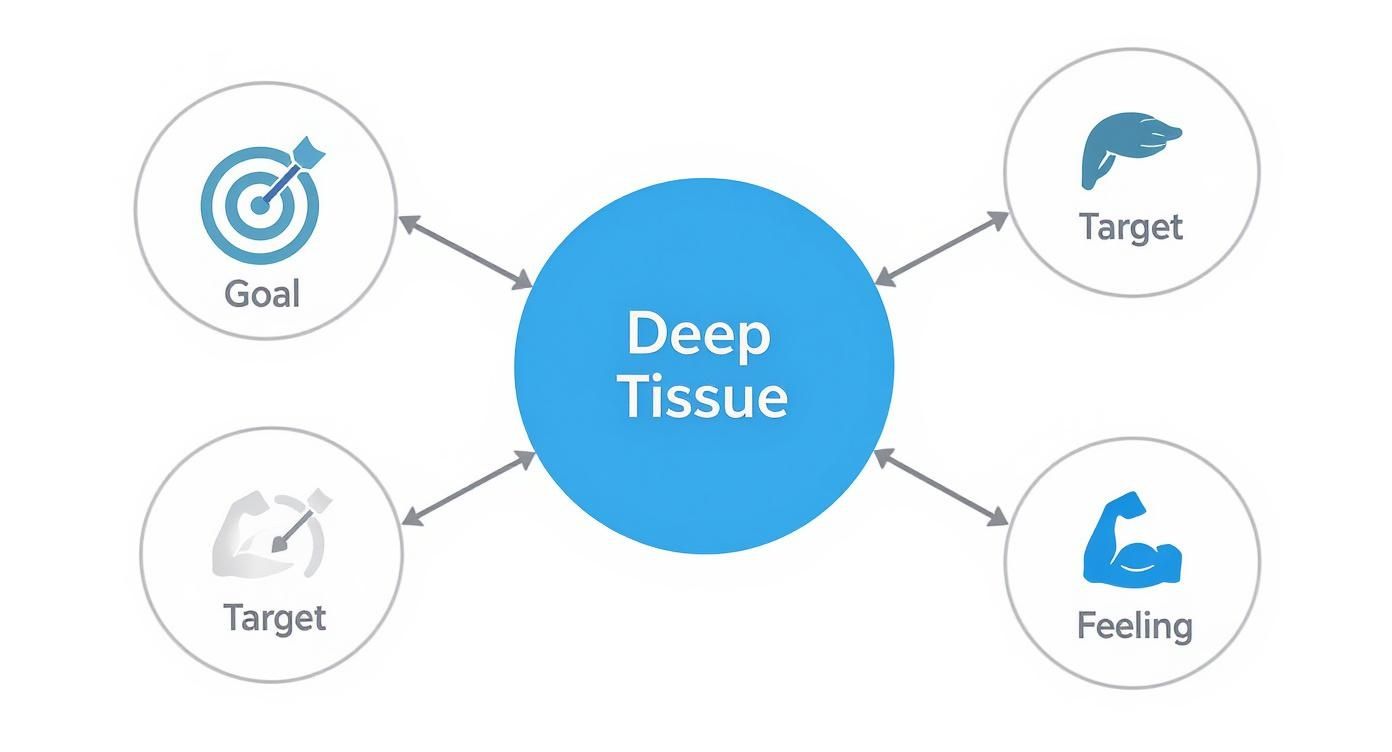
As you can see, the goal is always release. By targeting those deep muscle layers with strong, therapeutic pressure, the massage gives overworked and injured tissues a fundamental reset.
Resetting Muscle Communication
But the benefits don't stop at just the physical release of knots. Deep tissue therapy also plays a vital role in recalibrating the communication lines between your brain and your muscles.
When you're dealing with chronic tension, your body can get stuck in a feedback loop. Your muscles stay partially contracted, even when you're resting, and they forget how to fully let go. It's a neurological pattern that can be tough to break. The focused, intense pressure of a deep tissue massage interrupts those faulty signals, encouraging overactive muscles to finally relax and "reset" to a more neutral state. This neurological release is absolutely key for long-term pain relief and restoring healthier movement patterns.
Specialized Techniques for Deeper Healing
To get these kinds of results, Taylor often integrates specialized techniques that are the cornerstones of effective deep tissue work. These methods allow for an even more precise and effective treatment, especially for complex musculoskeletal problems.
Two of the most powerful techniques are:
Trigger Point Release: This involves applying direct, steady pressure to a very specific, hyper-irritable spot—the "trigger point"—within a tight muscle band. Releasing this one tiny point can miraculously relieve pain over a much larger area, something we call referred pain.
Myofascial Release: This technique focuses on the fascia, which is the thin, tough connective tissue that wraps around every single muscle and organ. Using gentle, sustained pressure, myofascial release stretches and unbinds this connective web, which can dramatically improve mobility and ease widespread stiffness.
These aren't just fancy add-ons; they are fundamental to how deep tissue massage truly heals from the inside out. You can dive deeper into how Taylor uses these methods in our guide to Myofascial Release and Trigger Points Explained. It’s all part of an approach that focuses on the root cause of your discomfort, not just the symptoms.
To get the most out of your sessions, it helps to combine professional therapy with smart self-care. Exploring effective muscle recovery strategies, including proper nutrition, can significantly boost your body’s ability to heal. Whether you're in Brampton, Mississauga, or Guelph, our mobile service is here to support every step of your recovery journey.
Clinical Benefits for Chronic Pain and Mobility
Beyond just feeling good, deep tissue massage delivers some serious, evidence-backed results for nagging health issues. It’s a targeted treatment that gets right to the root of chronic pain and stiffness—deep inside the muscle and connective tissues. This is where its clinical value really shines, offering a path to real, lasting improvement for conditions that can otherwise feel completely overwhelming.
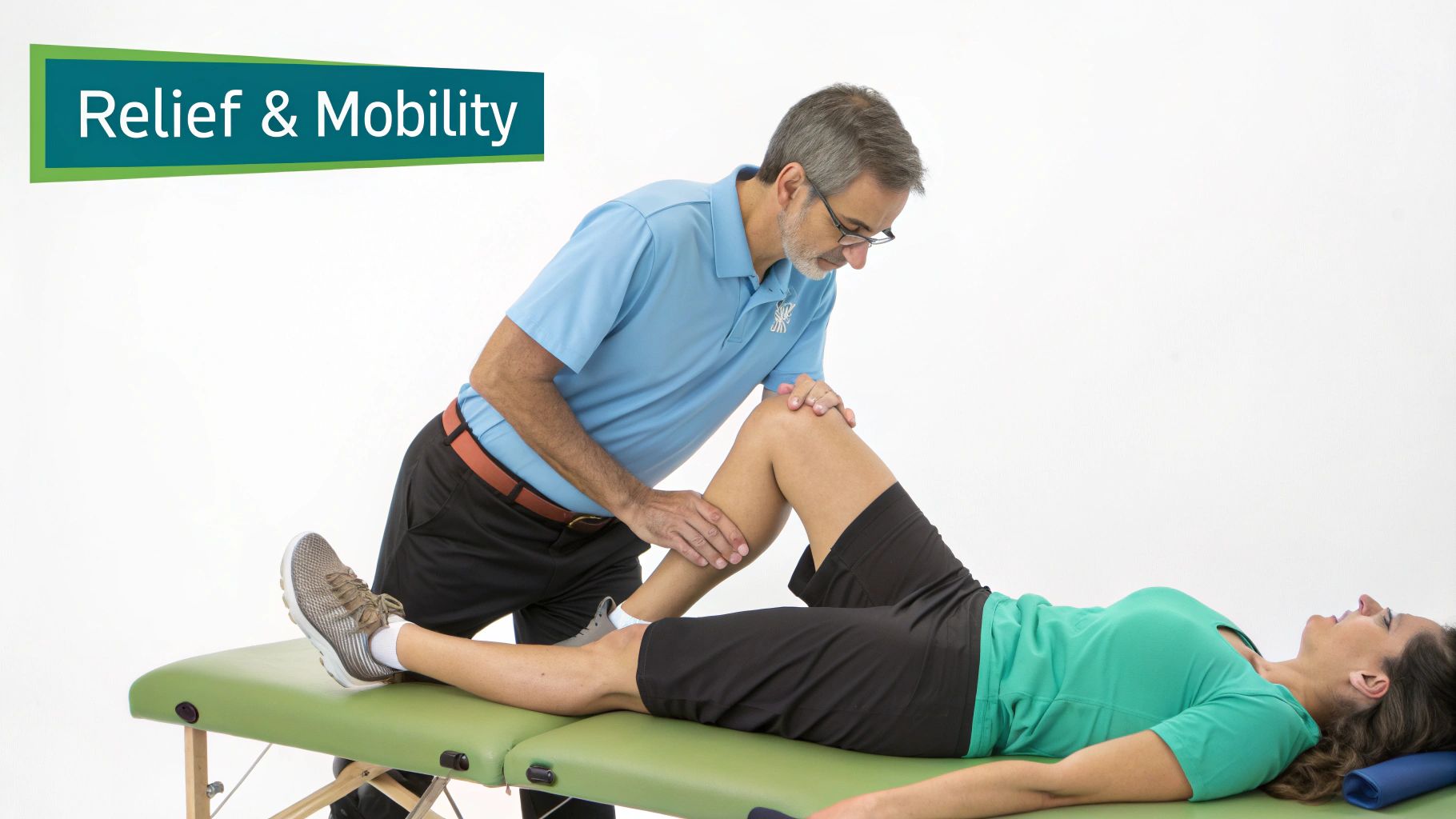
What makes this approach so effective is that it doesn’t just mask symptoms; it creates actual structural change. By meticulously working to release those stubborn knots and adhesions, a deep tissue massage can fundamentally alter the pain signals and mechanical problems that define so many chronic conditions.
Addressing Specific Chronic Conditions
So many common aches and pains come from specific muscular imbalances or a nerve getting pinched somewhere along the line. A deep tissue massage, when done by a skilled RMT like Taylor, can zero in on these exact problem spots to provide relief.
Here’s how it works for a few common culprits:
Chronic Low Back Pain: This is a classic. It’s often caused by incredibly tight muscles in the lower back and glutes. Deep tissue techniques work to release these muscle groups, taking that constant strain off your spine and helping to correct your posture.
Sciatica: That shooting pain down the leg? It often starts when the piriformis muscle, buried deep in your glutes, gets tight and clamps down on the sciatic nerve. A focused deep tissue massage can release that muscle, taking the pressure right off the nerve.
Plantar Fasciitis: If you've ever had this, you know the intense heel pain. By applying deep, specific pressure to the calf muscles and the arch of the foot, we can release the tension in the plantar fascia—that band of tissue causing all the trouble.
Fibromyalgia: Here, the approach has to be modified. Gentle but firm deep tissue work can help ease the widespread muscle pain and tenderness that come with fibromyalgia, often leading to better sleep and less fatigue.
The true strength of deep tissue massage lies in its specificity. It's not about generalized pressure; it’s about having the anatomical knowledge to identify and release the exact muscle or fascial restriction that is causing the dysfunction.
A Cornerstone of Injury Rehabilitation
Deep tissue massage is also a vital part of recovering from an injury, whether you’re a serious athlete or just tweaked something in the garden. When you get hurt, your body often forms scar tissue. The problem is, this tissue isn't as flexible as healthy muscle, and it can restrict movement and cause ongoing pain.
This is where deep tissue massage really helps. The focused pressure helps to break down that restrictive scar tissue, improving flexibility and restoring normal function to the injured area. It also boosts blood flow right to the spot that needs it most, delivering the oxygen and nutrients that speed up the healing process.
Athletes and anyone recovering from strains or repetitive stress injuries find it invaluable for getting back in the game faster and with less risk of it happening again. Broader scientific studies back this up, showing that deep tissue massage effectively reduces pain and improves function. In fact, clinical trials have demonstrated that patients see significant drops in pain scores and disability, supporting its role in treatment plans for everything from chronic back pain to arthritis. You can even read the full research on its effectiveness to see the medical validation for yourself.
Improving Joint Mobility and Function
While deep tissue massage works on muscles, the benefits ripple out to your joints. Think about it: chronically tight muscles are constantly pulling on your joints, limiting their range of motion and contributing to issues like arthritis.
By releasing all that surrounding muscular tension, the massage allows the joints to move more freely and with a lot less pain. For anyone struggling with stiffness, especially in the hips, shoulders, or knees, this can be a game-changer for daily life.
For more on this, check out our guide on the role of massage in managing arthritis and joint pain. In places like Brampton, Caledon, and Orangeville, where we serve many clients with mobility concerns, this aspect of deep tissue therapy is especially important.
Adapting Deep Tissue Massage for Seniors and Mobile Care
When most people hear "deep tissue massage," they often picture intense, almost painful pressure. But the real art of this therapy isn't about brute force; it's about adaptability. For seniors and those receiving care at home, the foundational principles of deep tissue can be thoughtfully modified to bring incredible relief from chronic pain and stiffness, all while keeping safety and comfort as the top priorities. It’s not about watering down the technique—it’s about applying it with greater skill, awareness, and care.
This specialized, client-first approach is exactly what we do here at Stillwaters Healing & Massage. Our male RMT, Taylor, brings professional therapeutic care right to the client's doorstep in Brampton, Toronto, Etobicoke, and the surrounding areas. This completely removes the stress and physical strain of travel for anyone with mobility challenges, allowing them to receive treatment in the one place they feel most comfortable: their own home.

Customizing Pressure with Care and Communication
The single most important part of geriatric massage is open communication. Before a session even begins, Taylor conducts a thorough intake to understand the unique factors at play for older adults. We talk about everything from skin elasticity and medication use (like blood thinners) to existing health conditions such as osteoporosis or arthritis. This conversation ensures every part of the treatment is safe and effective.
The pressure itself is always adjusted to be therapeutic without ever causing discomfort. Instead of the aggressive, fast strokes you might see in a sports massage, Taylor uses slower, more sustained pressure focused on specific muscle groups. This method gives the muscles time to release gradually and safely, which prevents bruising and makes the entire experience both deeply effective and wonderfully relaxing.
For older adults, deep tissue massage is less about force and more about finesse. The goal is to gently persuade tight muscles to release, improving circulation and easing pain without overwhelming the body’s delicate systems.
Safety Modifications for In-Home Geriatric Massage
Adapting a deep tissue session for an older client involves a number of key modifications that are non-negotiable for us. This customized approach ensures the treatment is not only beneficial but completely safe from start to finish.
Here's a quick look at how we tailor our approach to ensure every session is safe and effective.
Safety Modifications for Geriatric Deep Tissue Massage | |
|---|---|
Consideration | Modification and Approach |
Skin Fragility | Taylor uses high-quality, hypoallergenic lotions to reduce friction and protect delicate skin. We avoid any techniques that could cause shearing or bruising. |
Medical Conditions | The session is built around conditions like arthritis, osteoporosis, or heart issues. Pressure is carefully adjusted, and certain areas might be avoided entirely. |
Medication Side Effects | Being aware of medications, especially blood thinners, is crucial. We use lighter, broader pressure to eliminate any risk of bruising or other complications. |
Client Positioning | Comfort is everything. Clients can be positioned with extra pillows and bolsters for support, or even receive the massage while seated if lying down isn't comfortable. |
These adjustments aren't limitations; they're simply smart, compassionate ways to deliver the best possible care.
The Benefits of Mobile Massage for Seniors
Let's be honest—for many seniors, the simple act of getting to a clinic can be a huge barrier to care. Our mobile service gets rid of that obstacle. We bring the healing benefits of massage therapy directly to homes, retirement residences, and long-term care facilities throughout Mississauga, Oakville, and Guelph.
This in-home model offers some pretty clear advantages:
Convenience: No more arranging transportation or navigating unfamiliar buildings.
Comfort: Clients can truly relax in their own space, which amplifies the therapeutic effects of the massage.
Consistency: It's far easier to stick to a regular treatment schedule for managing chronic conditions when the therapist comes to you.
By improving muscle tone, flexibility, and balance, regular massage therapy can be a powerful tool for helping seniors maintain their independence. When integrated into a broader care plan, these sessions can significantly improve strength and coordination, perfectly complementing fall prevention services and helping seniors stay active and safe.
To learn more about how we personalize our sessions for older adults, feel free to explore our detailed guide on mobile massage therapists for senior wellness. Our mission is to provide compassionate, expert care that meets you right where you are.
Getting Ready for Your Massage Session
To really get the most out of your deep tissue massage, a little bit of prep can make a world of difference. Think of it as setting the stage for healing—a few simple things you can do to help our RMT, Taylor, work his magic. When you’re an active participant in your own care, the results are always better.
Proper preparation isn’t just about being a good client; it’s about making your body more receptive to the work being done. The same goes for what you do after the session, which is key to managing any soreness and making the benefits last as long as possible.
Before Your Session Begins
A few thoughtful steps before Taylor arrives can have a surprisingly big impact on how your body responds to the treatment. These aren't complicated things, but they help relax your body and mind, making it that much easier to release stubborn muscle tension.
Here’s a quick checklist to get you started:
Stay Hydrated: Try to drink plenty of water in the 24 hours leading up to your appointment. Hydrated muscles are more supple and less likely to feel intensely sore afterwards. Imagine trying to work with a dry, stiff sponge versus a nice, pliable wet one—your muscles are the same way.
Eat a Light Meal: It's best to avoid a heavy meal right before your massage. A light snack an hour or two beforehand is ideal. This way, you won't feel bloated or sluggish on the table.
Communicate Openly: Be prepared to chat about your health history and point out exactly where it hurts. The more Taylor understands about what you’re feeling, the more he can focus the session on what you truly need. When it comes to your care, there's no such thing as oversharing.
Setting the Right Expectations
It's really important to know what a deep tissue massage is supposed to feel like. A lot of people hear "deep" and immediately think "painful," but that's not quite right. A better way to describe it is "good pain"—that intense, therapeutic pressure that gets right to the root of the problem.
You'll definitely feel firm, focused pressure, especially on those tough, persistent knots. But you are always, always in control. Taylor will check in with you constantly to make sure the pressure feels productive, not just painful. Your feedback is what makes the treatment work.
The goal of a deep tissue massage is therapeutic release, not an endurance test. The intensity is a tool used with precision to unlock chronic tension, and your comfort is always the top priority throughout the session.
After Your Massage: What to Do Next
What you do after your session is just as important as what you do before. Your muscles have just had a serious workout, and just like after hitting the gym, they need a little support to recover properly. It’s completely normal to feel a bit tender for a day or two—that's actually a good sign your body is healing and adapting.
Here are a few easy tips to help you feel great and extend the benefits of your massage:
Continue Hydrating: Keep sipping on water. This helps your body flush out any metabolic byproducts that were released from your muscle tissue during the session.
Take a Warm Bath: A warm bath is a fantastic way to soothe any lingering tenderness. If you have some Epsom salts, throw them in—they work wonders for muscle soreness.
Gentle Stretching: Some light, gentle stretching can help you hold onto that new-found flexibility and stop your muscles from tightening back up.
Following these simple steps can make a huge difference in your overall experience. For even more advice, check out our guide on the 5 tips to get the best out of your massage. When you put a little effort into both prep and aftercare, you ensure every session delivers real, lasting value.
Your Questions About Deep Tissue Massage, Answered
Deciding to try a new kind of therapy always brings up a few questions. That’s completely normal, especially for a technique as specific as deep tissue massage. This section is all about answering the common queries we hear from our new clients and their caregivers across Brampton, Toronto, and our other service areas. We want you to feel confident, informed, and ready for your session.
Will a Deep Tissue Massage Hurt?
This is probably the most common question we get, and it’s a great one. The feeling of a deep tissue massage is more therapeutically intense than outright painful. You’ll definitely feel firm, focused pressure as our RMT, Taylor, hones in on specific tight spots.
When he finds a stubborn knot or adhesion, you might experience some discomfort—many people describe it as a "good pain"—but it should never cross the line into being unbearable. Your comfort is the absolute priority.
Taylor checks in with you constantly throughout the session, making sure the pressure feels productive and is well within your personal tolerance. The goal is always to release tension, not to cause pain. If you feel a bit of soreness the next day, that's temporary and actually a good sign that your muscles are starting the healing process.
How Is This Different from Cupping or Myofascial Release?
While all these therapies are fantastic for healing, they work in very different ways. Think of them like specialized tools in a mechanic's toolbox—each one is designed for a specific job.
Deep Tissue Massage uses sustained, direct pressure from knuckles, forearms, or elbows to manually break apart adhesions deep within your muscle layers.
Cupping Therapy works in the opposite way, using suction. The cups create a vacuum that lifts and decompresses the tissue underneath, pulling stagnant blood to the surface and flooding the area with fresh circulation.
Myofascial Release is a gentler approach that uses sustained stretching. It targets the fascia—that thin, web-like connective tissue wrapping all your muscles—to ease widespread restrictions and improve your overall mobility.
Taylor often blends these techniques to get better results. For instance, he might use cupping first to loosen up a really stubborn area, which helps the tissue become more receptive to the deeper work that follows. It's this combined approach that often leads to a more complete and lasting release.
How Often Should I Get a Deep Tissue Massage?
The right frequency really comes down to your personal goals and what you're trying to resolve. There isn't a one-size-fits-all answer; it’s about finding a rhythm that works for your body.
For managing acute or chronic pain, starting with more frequent sessions usually yields the best results. A good starting point might be weekly appointments for about 4 to 6 weeks. That consistency gives us a real opportunity to break down long-held tension patterns and help your muscles find a new normal.
Once you’re feeling a solid improvement, we can shift to a maintenance plan. Many clients find that a session every couple of weeks or once a month is perfect for keeping pain away and stopping old problems from returning. For general wellness and stress management, a monthly deep tissue massage can work wonders.
The best treatment schedule is one we create together. Taylor will work with you to build a personalized plan based on your health needs, your progress, and your lifestyle, ensuring every session delivers maximum benefit.
Is Deep Tissue Massage Safe for Everyone?
Deep tissue massage is incredibly helpful for a lot of people, but it isn't the right choice for everyone. Your safety is our number one priority, which is why we do a thorough health intake before your first session. Certain health conditions just require extra caution.
This therapy should be avoided if you have a history of blood clots (like deep vein thrombosis or DVT), as the deep pressure could potentially dislodge a clot. We also cannot perform deep work directly over:
Open wounds or skin infections
Recent fractures or surgical sites
Tumours or areas with active cancer
Varicose veins
Additionally, conditions like osteoporosis call for a much gentler, modified massage to avoid any risk of injury. It's absolutely crucial that you share your complete health history with your RMT. Taylor is professionally trained to spot contraindications and will always adapt the treatment to make sure it's both safe and effective for you. Providing responsible, professional care to all our clients in Etobicoke, Milton, Halton, and beyond is what we're all about.
Ready to experience the benefits of a professional, in-home deep tissue massage? At Stillwaters Healing & Massage, Taylor brings expert, compassionate care directly to your door in Brampton, Toronto, Etobicoke, Oakville, Caledon, Orangeville, Mississauga, Milton, Halton, and Guelph. Book your session today and take the first step toward lasting relief.


