


What Is Deep Tissue Massage A Complete Guide
- tmcpnet
- Dec 28, 2025
- 16 min read
When you hear “deep tissue massage,” you might immediately think of intense, almost painful pressure. While it definitely involves firm pressure, that’s only a small part of the story. It's a highly specific therapeutic technique designed to reach the deeper layers of your muscle and the connective tissues surrounding them.
This isn't your typical relaxation massage. We're not just gliding over the surface. The real goal here is to address chronic aches and pains—think of that nagging stiff neck, persistent low back pain, or those perpetually sore shoulders that just won't quit. We're aiming to break up old scar tissue and release those stubborn muscle "knots," also known as adhesions.
Beyond Just "More Pressure"
A common myth is that deep tissue is just a Swedish massage done harder. That couldn't be further from the truth. It's a completely different approach with a different goal.
Imagine a Swedish massage is like a gentle, relaxing car wash—it feels great and makes everything look better on the surface. A deep tissue massage, by contrast, is the detailed engine work. We're getting under the hood to diagnose and fix the specific mechanical issues that are causing the problem.
This is about creating real, lasting change in your body's tissues. We're carefully and intentionally working on the deep layers of muscle, the tendons, and especially the fascia—that intricate web of connective tissue that encases every single muscle and organ.

The Core Purpose: Releasing What’s Stuck
At its heart, deep tissue work is about tackling chronic muscle tension and those painful, rigid bands of tissue we call adhesions or "knots." These knots can disrupt circulation, cause pain and inflammation, and severely limit your range of motion.
To get the job done, your Registered Massage Therapist, Taylor, uses a very distinct set of tools and techniques.
To give you a clearer picture, here’s a quick breakdown of what makes deep tissue massage so unique.
Deep Tissue Massage at a Glance
Component | Description | Primary Goal |
|---|---|---|
Pressure | Firm, sustained, and focused on specific problem areas. | To access deeper muscle and fascial layers without causing damage. |
Strokes | Slow, deliberate, and often moving against the muscle grain. | To physically break down adhesions and lengthen muscle fibres. |
Techniques | Use of knuckles, forearms, and elbows for targeted application. | To apply precise pressure to knots and restricted tissue. |
Pacing | Methodical and patient, allowing time for tissues to respond and release. | To work with the body's natural release, not force it. |
This table highlights that it's a strategic, methodical process, not just about applying force. It’s all about listening to the body and responding appropriately.
What It Aims to Achieve
Ultimately, the objective is to bring your body back into balance. By breaking down the adhesions that are causing pain and blocking circulation, deep tissue massage helps restore normal, pain-free movement.
Now, the process can feel intense at times, but it should never be outright painful. This is where clear communication with your therapist is absolutely essential. The pressure needs to be "good pain"—therapeutic and productive, not harmful.
This modality often pairs beautifully with other techniques. To see how it connects to releasing those pesky knots, you can learn more in our guide on Myofascial Release and Trigger Points. Think of this as your starting point for understanding how this powerful therapy can help get you moving freely again.
How Deep Tissue Massage Unlocks Your Body's Healing
To really get what deep tissue massage is all about, you have to think beyond just the muscles. Picture a web of connective tissue, thin but incredibly strong, that wraps around and weaves through every muscle, bone, and organ in your body. This amazing network is called fascia.
When everything is working as it should, your fascia is slippery and flexible, letting your muscles slide past each other without a problem. But life happens. Things like an old injury, sitting at a desk all day, repetitive movements, or even just chronic stress can cause this web to get tight, sticky, and bunched up.
Eventually, these tight spots can turn into dense, painful knots of tissue we call adhesions. These aren't just sore spots—they're literal traffic jams in your body. They can restrict your movement, put pressure on nerves, and choke off blood flow, which often leads to that stubborn, nagging pain and inflammation you can't seem to shake.
The Science of Releasing Knots
This is exactly where the focused, intentional work of a skilled Registered Massage Therapist like Taylor makes all the difference. A proper deep tissue massage isn't about just digging in with as much force as possible. It's a strategic process designed to coax these fascial adhesions to let go and get your tissues working properly again.
Taylor uses slow, deliberate strokes with sustained pressure. This approach warms up the muscles first, allowing access to those deeper layers where the real problems often hide. Here's what's happening on a physiological level:
Breaking Down Adhesions: The targeted pressure helps to physically un-stick the tangled fibres that make up the adhesion, encouraging them to release their grip.
Boosting Blood Flow: Once those blockages are cleared, circulation can finally get back into the area. This rush of fresh blood brings the oxygen and nutrients your tissues desperately need to start repairing themselves.
Reducing Inflammation: Better circulation also acts like a cleanup crew, flushing out the metabolic waste and inflammatory by-products that get trapped in tight tissues. This helps calm everything down.
The real aim is to reintroduce space and movement back into the tissue, helping it remember its supple, healthy state. Think of it like patiently untangling a badly knotted necklace—you have to be methodical to restore its function without making things worse.
This process is what leads to that feeling of profound relief. For anyone dealing with things like chronic low back pain, sciatica, or the aches of fibromyalgia, releasing these deep knots can feel like finally finding the right key for a lock that's been stuck for years.
Connecting Technique to Relief
The benefits of deep tissue work don't stop at the muscles. When your muscles are chronically tight, they're constantly sending distress signals to your brain, keeping your nervous system on high alert. This is a huge factor in amplifying pain perception and preventing restorative rest.
By releasing that deep-seated tension, deep tissue massage helps tell your nervous system that it's okay to stand down. This can help dial back your body's stress response, which often translates to better sleep, less anxiety, and an overall sense of calm. The impact is huge, especially for seniors and individuals managing neurological conditions. In fact, research highlights how effective it can be for managing lower back pain and arthritic flare-ups by precisely targeting and releasing those adhesions. To get a better sense of the wider impact, check out these massage therapy statistics in the United States.
Of course, keeping that feeling of relief going between appointments is key. Learning a few simple ways to manage muscle tension on your own can make a world of difference. We cover some great, easy-to-use options in our guide on 3 tools you can use in between massages. At the end of the day, deep tissue massage is a powerful way to help your body’s own systems work together to heal from the inside out.
Deep Tissue Versus Swedish Massage: Choosing What You Need
It’s the classic question we get all the time: "Should I book a deep tissue or a Swedish massage?" While both are fantastic therapies, they're designed for very different outcomes. Picking the right one really boils down to what you want to achieve in your session.
Think of a Swedish massage as a gentle, flowing river. The whole point is to encourage relaxation across your entire body. It helps ease that surface-level muscle tightness, gets your circulation moving, and dials down your nervous system. The strokes are long, gliding, and rhythmic—perfect for soothing your body and mind.
A deep tissue massage, on the other hand, is more like calling in a specialist for a structural repair. It’s a focused, methodical treatment aimed at fixing specific problems deep within your muscles and connective tissues, like stubborn knots, old scar tissue, or chronic tension. The goal isn't just relaxation; it's about creating lasting change in those painful, restricted spots.
This little decision tree can help you picture which path makes the most sense for you right now.
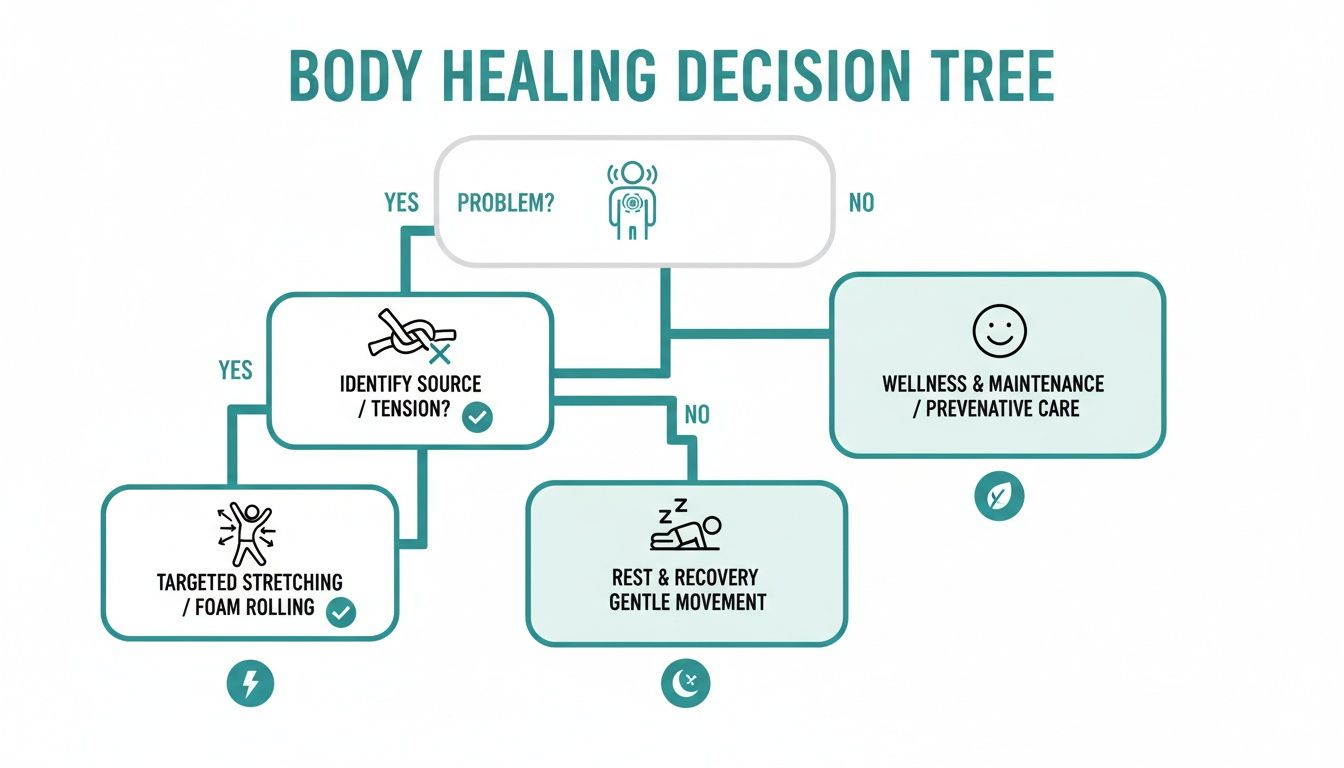
As you can see, the choice becomes pretty clear. If you're dealing with a specific issue like pain or a knot that just won't quit, targeted therapeutic work is your best bet. If you're after general wellness and stress relief, a more relaxing approach is the way to go.
The Key Differences in Technique
The real difference is in how the work is done. A Swedish massage relies on techniques like effleurage (those long, sweeping strokes) and petrissage (kneading) to cover large areas. The pressure is usually light to moderate, creating a feeling of calm and well-being.
Deep tissue work is a whole different ball game. The strokes are much slower, and the pressure is more sustained and direct. Your RMT, Taylor, might use his knuckles, forearms, or even elbows to apply pinpoint pressure on specific "adhesions" or knots. This lets him work through the top layers of muscle to get to the deeper fascia and tissue where chronic problems live. It's a deliberate pace that gives your tissues time to respond and let go.
To put it simply, here’s a side-by-side look at the two.
Feature | Deep Tissue Massage | Swedish Massage |
|---|---|---|
Primary Goal | Therapeutic relief for chronic pain & knots | General relaxation and stress reduction |
Pressure | Firm, deep, and sustained | Light to moderate |
Pace | Slow and deliberate | Flowing and rhythmic |
Focus | Specific muscle groups and problem areas | Full-body focus |
Sensation | Can be intense; "good pain" | Soothing and calming |
This table highlights that while both are forms of massage, their application and intent are fundamentally distinct.
When to Choose Deep Tissue
You'll want to lean towards a deep tissue massage if you're dealing with things like:
Chronic Pain: That nagging lower back pain, a stiff neck that never seems to loosen up, or perpetually sore shoulders.
Limited Mobility: Feeling like tight muscles are holding you back and restricting your range of motion.
Recovery from Injury: Once you're past the initial inflammation, deep tissue can be brilliant for breaking down scar tissue and restoring function.
Repetitive Strain: Issues like carpal tunnel syndrome or tennis elbow often come from deep-seated tension that needs specific attention.
When Swedish Massage Is the Better Option
A Swedish massage is your go-to when what you really need is:
Stress Reduction: If you're feeling overwhelmed, anxious, or just plain mentally exhausted, the calming nature of a Swedish massage is just the ticket.
General Relaxation: Sometimes you just need to unplug and give your body a break. This is perfect for that.
Improved Circulation: The long, flowing strokes are excellent for encouraging blood and lymph flow.
Your First Massage: New to massage? Swedish is a wonderful, gentle introduction to the world of therapeutic touch.
Ultimately, the choice is always yours. Both are incredibly effective therapies, but knowing what each is designed for is key to getting the results you’re looking for. If you're still on the fence, we've put together a more detailed guide comparing Swedish massage vs. deep tissue massage to help you find the perfect fit.
Real-World Relief for Aches, Pains, and Stiff Joints
It's one thing to talk about the techniques of deep tissue massage, but it’s another thing entirely to see what it can do in the real world. This is where the theory meets the road—especially for anyone dealing with chronic conditions, mobility challenges, or that deep-seated stiffness that can creep in with age.
For so many people, deep tissue work isn't just a luxury; it's a lifeline. It’s a way to get back a little bit of freedom and make daily life less of a struggle.
Easing Chronic Pain and Getting You Moving Again
One of the biggest reasons people seek out deep tissue massage is for chronic pain. Conditions like a bad back that just won’t quit, sciatica, or fibromyalgia are often rooted in muscle tension and fascial adhesions buried deep below the surface. By zeroing in on these specific problem spots, the massage gets to the source of the pain.
Think about the simple freedom of getting out of a chair without that sharp intake of breath, or bending down to tie your shoes without that familiar, nagging ache. That’s the kind of practical, day-to-day difference this therapy can make. For folks in Brampton, Toronto, and Mississauga who want to stay active, getting that easy movement back is priceless.
Here’s a look at how it helps with specific issues:
Nagging Back Pain: By working on deep muscles like the quadratus lumborum (in the lower back) and the glutes, it can relieve the constant strain that causes that dull, persistent ache.
Sciatica and Nerve Pain: Sometimes, a tight muscle like the piriformis can press on the sciatic nerve. Releasing it can reduce that sharp, shooting pain down your leg.
Arthritic Flare-Ups: While massage can't cure arthritis, it does wonders for the muscle tightness and stiffness that builds up around sore joints. This can make a huge difference in comfort and mobility.
This kind of focused work is becoming more and more important, especially for our aging population. In fact, the demand for massage therapy is set to grow by 7.2% CAGR between 2025-2035, largely driven by the needs of seniors and those in palliative care. For people with conditions like Multiple Sclerosis or cancer, deep tissue massage can help ease joint stiffness and improve flexibility, offering some much-needed comfort. You can read more about what’s driving this trend in this market analysis.
Unlocking a Fuller, More Active Life
The ripple effect of better mobility goes way beyond just feeling less pain. When moving is easier, a world of activities that felt impossible starts to open up again.
It means having the stamina to play with your grandkids, enjoying a stroll through a park in Caledon or Oakville, or just getting through your daily routine with more confidence.
For many older adults and people with mobility issues, the real gift of deep tissue massage isn’t just the pain relief. It’s getting back the ability to fully participate in their own lives. It's about restoring function, independence, and a sense of control.
This is particularly true for anyone managing a condition that affects their joints. To see how massage can specifically help with this, take a look at our detailed guide on the role of massage in managing arthritis and joint pain. With the gentle, geriatric-sensitive approach our RMT, Taylor, brings to every mobile session, clients across Halton and Guelph can experience these benefits right at home, helping them stay active and engaged in their communities.
Your In-Home Deep Tissue Massage Experience
Having a massage therapist come to you should be a professional, safe, and genuinely comfortable experience. The beauty of mobile massage is the convenience—no traffic, no parking, no stress—which is a huge plus for anyone with mobility challenges or who simply prefers the privacy of their own home. Knowing what to expect helps you relax and get the absolute most out of every session.
Your therapist, Taylor, transforms your living room, bedroom, or any quiet corner into a personal treatment space. He brings everything needed—a professional table, fresh linens, and high-quality lotions. This means you get the full clinical experience without ever having to leave your house, a major advantage for clients across Brampton, Etobicoke, and the Halton region.

Setting the Stage for Effective Therapy
Before a single muscle is worked on, the session always starts with a chat. This initial assessment is absolutely crucial. Taylor will ask about your specific pain points, review your health history, and discuss what you're hoping to achieve. This is your chance to point out that stubborn knot in your shoulder or describe the lower back ache that’s been bothering you.
This conversation opens a line of communication that stays open for the entire massage. Remember, "deep" should always feel therapeutic, not agonizing. You are 100% in control of the pressure. Speaking up ensures the work is productive—what many of us call a "good pain"—and perfectly suited to what your body needs.
Privacy, Comfort, and Professionalism
Your comfort and privacy are the top priority. Professional draping is non-negotiable, meaning you'll be covered by a sheet or blanket the entire time. Only the area being worked on, like your back or one leg, will ever be undraped. This standard practice maintains professional boundaries and helps you feel secure and at ease.
A truly therapeutic experience is built on trust and safety. The goal of an in-home session is to provide clinic-level care in an environment where you feel completely at ease, allowing your body to fully relax and respond to the treatment.
Once the hands-on work is finished, Taylor will walk you through some aftercare advice. This step is just as important as the massage itself for extending the benefits of your deep tissue treatment.
Aftercare for Lasting Relief
A little post-session care can make a world of difference in your results and how you feel the next day. Here are a few key things to do:
Hydrate Well: Drink plenty of water. Deep tissue work can stir up metabolic waste from your muscles, and staying hydrated helps your body flush everything out.
Gentle Movement: It's best to avoid any intense workouts for at least 12-24 hours. A gentle walk or some light stretching is great, but give your muscles time to recover and settle.
Warm Bath: Soaking in a warm bath, maybe with some Epsom salts, is a fantastic way to soothe any lingering soreness and help your muscles relax even further.
Following these simple steps helps your body lock in the benefits of the massage. If you're curious about making mobile massage a regular part of your wellness routine, you can explore our guide to in-home massage therapy in Brampton to learn more.
Is Deep Tissue Always the Right Choice?
Deep tissue massage is an incredible tool for unlocking chronic tension, but it’s not a one-size-fits-all solution. Think of it less like a universal remedy and more like a specific key for a particular lock. Knowing when to reach for that key—and when a gentler approach is needed—is a crucial part of taking charge of your own wellness journey.
Your safety is always the top priority. A thorough and thoughtful therapist, like Taylor, will always start with a detailed health history to make sure deep tissue is genuinely the right fit for you. Some health conditions, which we call contraindications, mean this powerful technique could actually be counterproductive or even harmful.
When to Pause and Reconsider
It's so important to be open with your RMT, especially if any of the following situations sound familiar. In these cases, a different style of massage might be a much better, safer bet:
Fresh Injuries or Active Inflammation: If you've just sprained an ankle or pulled a muscle, deep pressure is the last thing it needs. Pushing into an area that's already red, hot, and swollen can crank up the inflammation and get in the way of your body's natural healing process.
Blood Clots (like Deep Vein Thrombosis): This is a serious one. Applying deep, focused pressure over an area with a blood clot is extremely risky, as it could potentially dislodge it.
Infections or Skin Issues: We'll always avoid working directly on open wounds, rashes, or any kind of skin infection. The goal is to promote healing, not to spread bacteria or cause more irritation.
Certain Medical Conditions: For someone with severe osteoporosis (brittle bones) or a person undergoing specific types of cancer treatment, the intensity of deep tissue is often too much. A far gentler touch is needed to provide comfort and support.
Trusting Professional Guidance
There's a reason deep tissue massage has become such a go-to therapy. In fact, it's expected to make up a whopping 44.5% market share of all massage therapy services by 2025. A big part of that is its proven track record for helping people, especially older adults, manage chronic pain. This just goes to show how valuable it is, but also how vital it is to have a professional guiding its use. For a deeper dive into these industry trends, you can check out this detailed background paper.
The best therapy isn’t always the strongest one. Real therapeutic care is about carefully matching the technique to what your body needs at that specific moment, making sure every treatment helps you move forward, not backward.
If it turns out deep tissue isn't the best path for you right now, Taylor can easily pivot to other wonderful therapies. A calming Swedish massage, for example, is fantastic for boosting circulation and easing stress. Other available services include Cupping Therapy, Myofascial Release, Trigger Point Release, and even Energy Healing.
No matter what, the goal is to find the safest, most effective way to help you feel your best, whether you're in Orangeville, Milton, or right here in Brampton. And of course, if you have any significant health concerns, it's always a good idea to chat with your doctor before scheduling a session.
Your Deep Tissue Massage Questions Answered
It's completely normal to have a few questions buzzing around in your head before trying something new, especially when it comes to your health. Getting clear, honest answers is the best way to feel comfortable and confident going into your first session. We've gathered some of the most common questions we hear from clients across Brampton, Mississauga, and the surrounding areas to help put your mind at ease.
Think of this as our chat before you even book, making sure you know exactly what to expect from an in-home massage.
How Often Should I Get a Deep Tissue Massage?
This is a great question, and the honest answer is: it really depends on what you're hoping to accomplish. There's no one-size-fits-all schedule.
If you're dealing with a nagging, chronic issue or recovering from a specific injury, we'll likely see the best results with more frequent sessions at the start—maybe once a week or every two weeks. This consistency allows us to really get ahead of the problem and release those deep-seated restrictions. As you start to feel better, we can ease back to a maintenance plan, maybe once every 3 to 4 weeks.
For those who are more focused on general wellness and preventing small aches from becoming big problems, a monthly deep tissue massage is a fantastic self-care routine. We'll work together to figure out a rhythm that feels right for your body, your goals, and your budget.
What Should I Wear During the Massage?
Your comfort is the top priority, full stop. You’ll be asked to undress to whatever level feels right for you. Some clients prefer to keep their undergarments on, while others are more comfortable removing everything. It’s entirely your choice.
No matter what you decide, you will be securely and professionally draped with a sheet and blanket for the entire session. Taylor only uncovers the specific part of your body he’s working on at that moment, like your back or one leg. Your privacy and feeling of safety are paramount.
Is It Normal to Feel Sore Afterwards?
Yes, a little bit of soreness for a day or two after a deep tissue massage is very common and completely normal. Think of it like the feeling you get after a really good workout you haven't done in a while.
That tenderness is a sign that your muscles have been challenged to release stubborn, long-held tension. It’s a positive part of the healing process. To help ease any discomfort, Taylor always recommends drinking plenty of water, maybe taking a warm Epsom salt bath, and doing some light, gentle stretching. But remember, this should be a dull ache, never a sharp or intense pain.
Can I Combine Deep Tissue with Other Therapies?
Absolutely! Deep tissue massage plays very well with others. Many clients find it’s a powerful addition to other treatments they’re receiving. We offer a full range of services including Swedish Massage, Cupping Therapy, Rehabilitation Massage, Myofascial Release, and Sports Massage Therapy. It can be just one piece of a larger wellness puzzle. Some people find it helpful to look into other alternative therapies that complement conventional treatment as part of their overall health strategy.
When we talk, being open about your complete health picture helps Taylor build the most effective plan for you. By integrating different approaches, we can often achieve more profound and lasting relief.
Ready to feel the difference that targeted, professional massage can make, all without leaving your home? Stillwaters Healing & Massage brings compassionate, expert care right to your door in Brampton, Toronto, Etobicoke, Oakville, Caledon, Orangeville, Mississauga, Milton, Halton, and Guelph.


