


Effective Relief for Knots on the Neck
Serving Brampton, Toronto, Etobicoke, Oakville, Caledon, Orangeville, Mississauga, Milton, Halton, and Guelph.Our Registered Massage Therapist, Taylor (RMT), offers professional, therapeutic services to relieve neck tension in a fully draped, family-friendly setting.Book your session today: scheduling link
Our professional services include:
Swedish massage
Cupping therapy
Deep tissue massage
Rehabilitation massage
Myofascial release
Trigger point release
Joint mobilization
Hydrotherapy applications
Geriatric massage
Sports massage therapy
Energy healing
When your neck muscles feel like they’ve tangled themselves into a tight little bundle, you’re encountering a myofascial trigger point, more familiarly known as a neck knot. These hypersensitive patches in your muscle fibres often show up as a persistent dull ache or a spot that’s unusually tender when you turn your head.
The good news? You don’t need fancy equipment to ease that tension. Gentle stretches nudge fresh blood into the area, while a warm compress or heat pack helps those stubborn fibres relax.
Give These Simple Moves A Try:
Gentle neck tilts and rotations to each side.
A warm towel or heat pack held for 2–3 minutes.
Light fingertip pressure along the tight spots.
At-a-Glance Guide To Neck Knots

Here’s a quick overview to help you recognise and respond to neck knots on the spot:
Aspect | Key Points | Recommended Action |
|---|---|---|
Definition | Knots on the neck are trigger points in muscle fibres. | Apply gentle heat to improve blood flow. |
Causes | Posture strain, emotional stress, joint changes. | Correct posture and relax shoulders. |
Symptoms | Tight bands, dull ache, limited movement. | Perform simple neck rotations. |
Relief Steps | Early self-care eases discomfort quickly. | Use a warm pack or gentle stretch. |
Keep this guide close at hand for a quick refresher. When you need more ways to manage neck tension between sessions, check out our 10 Pain Relief Tips In Between Massages.
Understanding Knots On The Neck
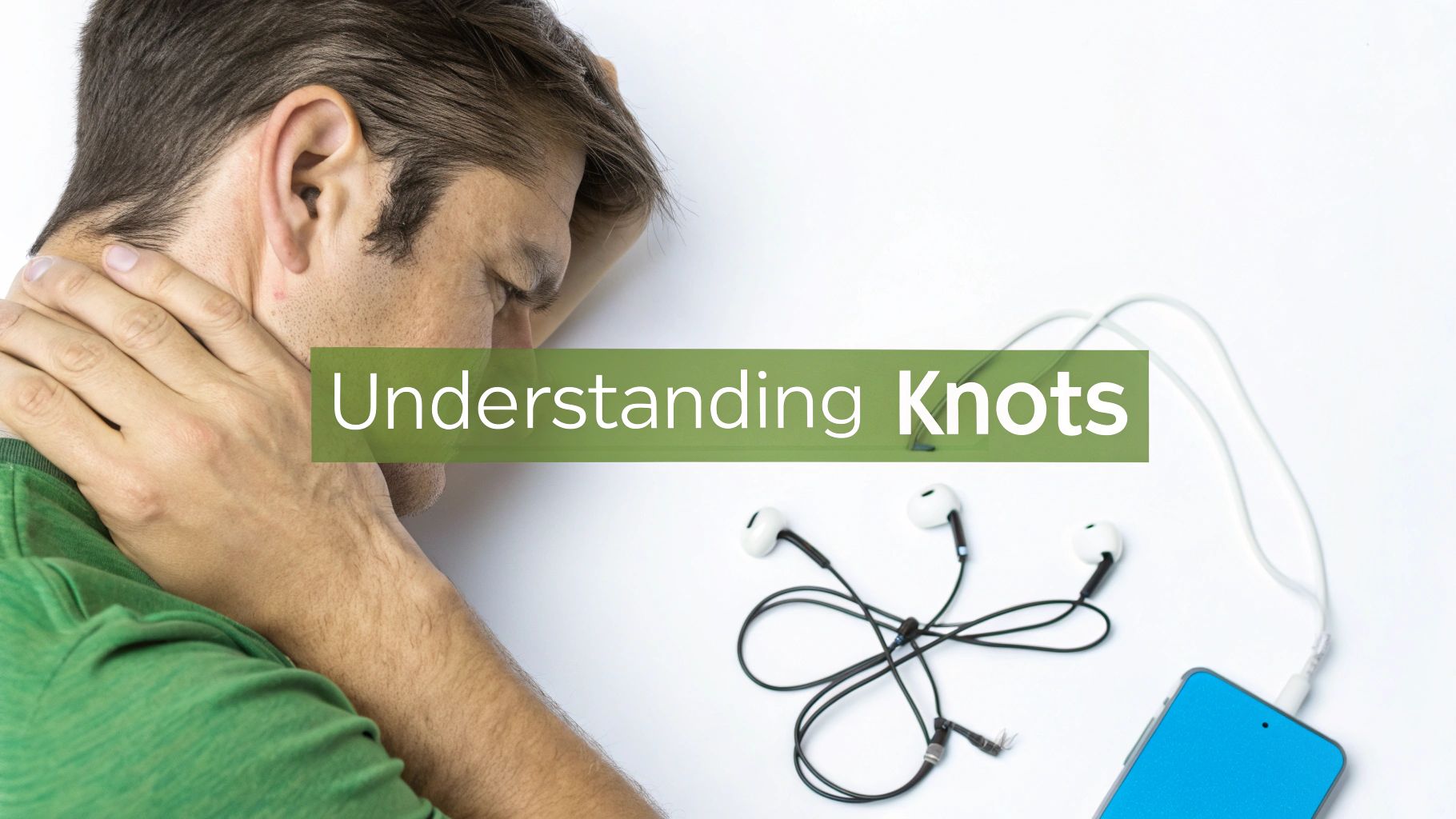
Ever felt that stiff bump along your neck and wondered what’s happening under the skin? Picture tangled headphone wires jammed in your pocket. Tiny muscle fibres, under prolonged strain, twist and bunch up like overstretched rubber bands.
These tight bundles, called myofascial trigger points, form when blood flow drops and nerves become irritated. Over time, they can radiate discomfort into your shoulders or even down your arms.
Trigger Point Clusters reduce circulation and cause aches.
Compressed Nerves send sharp twinges through neck and shoulders.
Persistent Tension turns soft tissue into hard, tender lumps.
Science Behind Trigger Points
Beneath the surface, fibres knot together and act like miniature roadblocks. Oxygen and nutrients struggle to pass, delaying natural repair. Imagine a highway narrowed by lane closures—everything slows, jams form. That’s exactly what happens in your muscle tissue.
In California, between 15–20% of adults report neck pain with palpable knots each year, resulting in 1.2–1.8 million ambulatory visits among adults aged 18–64 annually. Dive deeper into the numbers in the California State of Public Health Full Report 2024.
“Persistent trigger points can reshape how muscles feel and behave,” explains a manual therapy expert.
Key Steps in the Knot Cycle:
Fibres tighten around small hotspots.
Reduced blood flow irritates nerves.
The tension cycle continues until you intervene.
Common Aggravators:
Stress spikes muscle tightening.
Poor sleep prevents recovery.
Slouched posture limits range of motion.
Everyday Movements And Knots
You don’t need a dramatic injury to create trigger points—everyday habits do plenty of damage. Hunching over a laptop or peering down at your phone adds uneven stress to the neck muscles. Even routine tasks like typing or extended driving can bunch fibres into coils, leading to that stubborn lump feeling.
For more on how gentle techniques can unwind these knots, check out our guide on Myofascial Release and Trigger Points Explained.
Understanding the root of these neck knots sets you up for targeted relief. Next, we’ll dive into the most common causes—posture, stress, arthritis and more—and share safe, at-home strategies to break the cycle before it tightens further.
Common Causes Of Neck Knots
Everyday routines can quietly weave tight bands of tension across your neck. These muscular “knots” often emerge from small habits that overload specific fibres.
Take leaning forward at your desk: it shifts the weight onto your upper trapezius like overloading one spoke on a bike wheel. Or picture a long drive, hands gripping the wheel as shoulders creep upward—the upper traps tighten and stay that way long after you park.
Forward Head Posture pushes your head’s centre of gravity forward, forcing neck muscles to work overtime.
Gazing down at a phone for hours strains neck extensors like overstretched rubber bands.
Stress coils your shoulders like springs, squeezing neck muscles into tension knots.
Posture And Phone Use
When you slouch, blood flow slows in the tiny muscles around your spine and nerves can get irritated. Over time, these areas of poor circulation harden into palpable lumps—myofascial trigger points—feeling almost like small pebbles under the skin.
"Bad posture can accelerate knot formation by 50 per cent," shares a seasoned manual therapist.
Arthritis reshapes joint surfaces, prompting surrounding muscles to brace and tighten.
Bulging cervical discs heighten nerve sensitivity, making even light pressure feel intense.
Autoimmune conditions like rheumatoid arthritis often trigger chronic muscle fatigue and deep tightness.
Stress And Underlying Factors
Chronic stress floods the body with cortisol, causing muscles to clench like a fist around your spine. By day’s end, that persistent tension often shows up as a dull ache—or a sharper tenderness—across your neck.
Deadline crunches, family demands and restless nights all feed into this cycle of tension and pain.
Propping your phone between shoulder and ear during lengthy calls can create lasting hotspots.
Holding stress in meetings turns muscles into tight bands just waiting to knot up.
You may also find our Guide To Relieve Back And Shoulder Pain While Sitting useful if you spend long hours at your desk.
Understanding these drivers gives you the chance to break the tension cycle before knots become a daily companion.
Neurological And Autoimmune Factors
Certain conditions—multiple sclerosis or fibromyalgia, for example—can leave neck muscles hypersensitive, as if they’re always on high alert. A pinched cervical nerve might even feel like electric shocks shooting through those tight bands.
Autoimmune flare-ups often coincide with increased stiffness and tender points in the neck.
Some medications subtly alter muscle tone, making familiar knots more likely to return.
By tracing each trigger—from posture quirks to underlying health factors—you can catch the early warning signs and step in before a minor ache becomes chronic pain.
Trigger | Impact on Neck Muscles |
|---|---|
Poor Posture | Uneven load, tight bands |
Chronic Stress | Muscle clamp, reduced circulation |
Arthritis | Joint stiffness, referred tension |
Nerve Irritation | Pain spikes, muscle guarding |
Recognising these patterns empowers you to intervene early, reducing chronic discomfort.
Spot hunched positions throughout your day.
Tackle stress levels and explore any medical triggers.
Consult a professional at the first sign of persistent pain.
Next, we’ll dive into the symptoms that signal when it’s time to seek help for those stubborn knots.
Symptoms And When To Seek Help
Understanding the difference between a harmless neck knot and a warning sign can save you time and discomfort. By tuning in to your body’s messages, you’ll know whether simple self-care will do the trick or if you need expert guidance.
A classic neck knot feels like a tight, tender spot that whispers protest every time you turn your head. You might notice:
Localized Tenderness: A small, sore nodule you can press to reveal discomfort.
Dull Ache: A persistent, low-level throb around the base of your skull.
Range Restriction: Stiffness that limits how far you can tilt or rotate your neck.
Muscle Spasms: Unexpected twitching or tightening of muscle fibres.
Waking up with a stiff neck before an important day is one of those everyday nuisances that typically eases with a warm compress and a few gentle stretches.
When Knots Are Harmless
Most simple knots loosen up on their own with:
Rest
Heat therapy
Light stretching
If your pain stays under 3 out of 10, you’re usually safe to carry on with home remedies and gentle movement.
Red Flags That Need Attention
Keep an eye out for these warning signs—they mean it’s time to seek a professional opinion:
Tingling or Numbness in your arms or hands.
Sharp, Radiating Pain shooting down your shoulder or arm.
Sudden, Intense Stiffness that makes any movement difficult.
“Persistent numbness or sharp pain is a clear signal to seek help,” advises Taylor, RMT serving Brampton to Guelph.
Self-Check: Home Remedies Versus Professional Care
Before you decide on next steps, run through this quick checklist:
Track how long and how intensely the pain sticks around—aim for 48 hours.
Gently stretch to see if your range of motion improves.
Notice whether the discomfort spreads beyond your neck.
If knots linger past two weeks or any red flags pop up, it’s wise to book a session with an expert. Check out our guide on comparing physiotherapy and massage for personalised advice in choosing the right treatment approach Learn more about physiotherapy vs massage.
Professional Assessment Benefits
A skilled RMT goes deeper than basic self-care to uncover root causes:
Targeted muscle testing to pinpoint hidden trigger points
Safe joint mobilisation to restore flexibility
Custom myofascial release techniques to ease stubborn tension
Taylor travels across Brampton, Toronto, Etobicoke, Mississauga, Milton, Halton and Guelph, bringing mobile RMT care right to your door. His professional setup and draping protocols ensure every session feels safe, respectful and effective.
With the right balance of home care and professional support, you can tackle neck knots confidently and keep your head moving freely.
Safe At-Home Relief And Prevention
When your neck starts feeling like it’s carrying the weight of the world, a few simple routines can help you unwind the knots. These steps focus on gentle stretches, targeted heat and basic self-massage—no fancy equipment required.
Gentle Neck Stretches
Begin with smooth tilts, rotations and side bends to “stack” your neck muscles into a balanced alignment.
Tilt your head toward each shoulder until you feel a mild pull, holding for 15 seconds per side to boost circulation.
Rotate your chin in slow circles, easing tight bands along the trapezius.
Nod your chin gently forward to stretch the back of the neck and relieve pressure at the skull’s base.
Tip: Set a timer every hour to repeat these moves during work or TV breaks.
Visual Guide
Here’s a simple diagram to show how stretching, heat and massage work together:
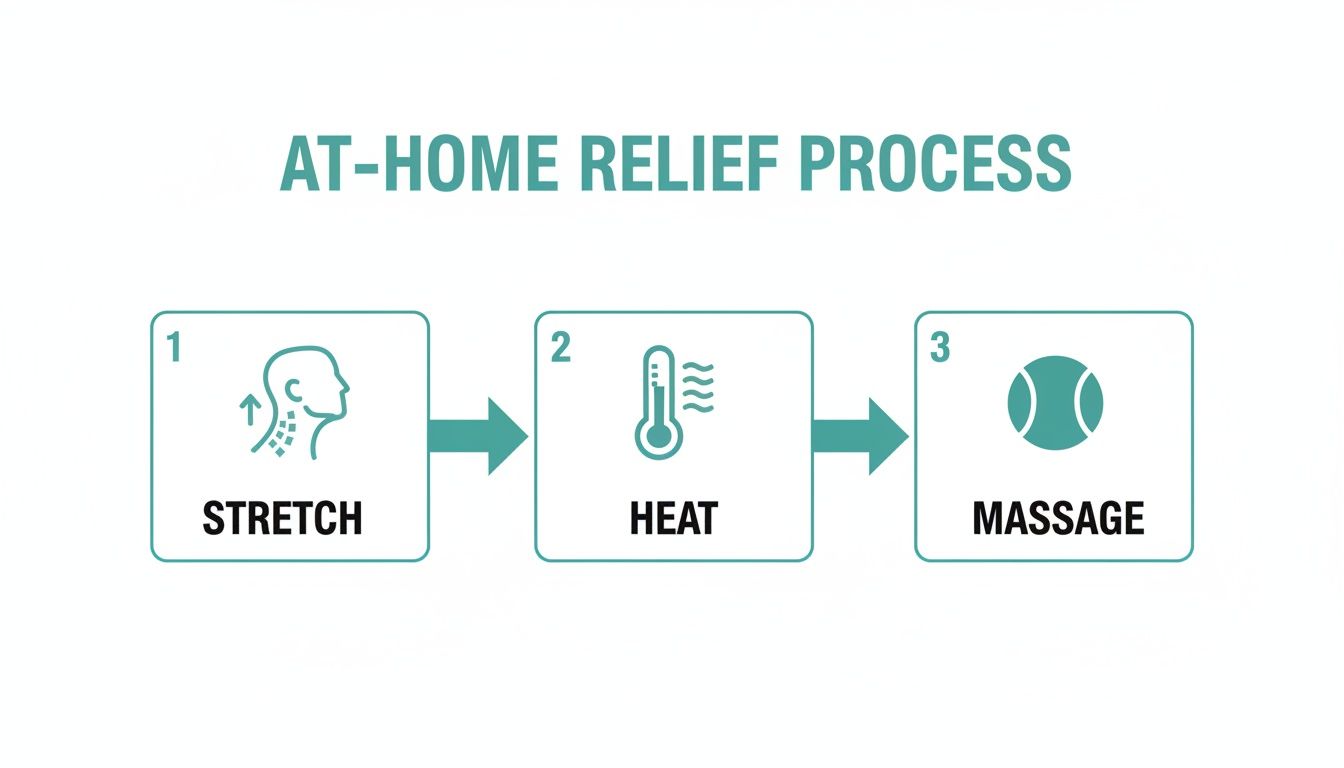
This flow highlights how combining three key steps in sequence can deliver consistent relief and build long-term resilience.
Heat Therapy With Warm Packs
Applying gentle warmth relaxes tight fibres and improves blood flow to stubborn knots.
Use a microwavable heat pack or a hot-water bottle wrapped in a towel.
Test the temperature on your forearm before placing it against sensitive neck skin.
Aim for 2–3 minutes per session, ideally first thing in the morning or before stretching.
Self-Massage Techniques
Now that the muscles are warmed up, pinpoint those trigger points with your fingertips or a tennis ball.
Stand against a wall and position a tennis ball between your neck and the surface.
Lean in gently and rock side to side until you locate tender spots.
Press slowly with your fingertips in circular motions, holding each for 30 seconds.
Finish with a gentle neck shake to encourage fresh blood flow.
Below is a quick side-by-side look at these three go-to techniques:
Comparison Of At-Home Relief Techniques
Technique | Method | Benefits | Duration |
|---|---|---|---|
Gentle Stretches | Head tilts, rotations and chin nods | Improves alignment, reduces stiffness | 5–10 minutes |
Heat Therapy | Warm pack or hot-water bottle against the neck | Relaxes fibres, enhances blood circulation | 2–3 minutes |
Self-Massage | Fingertip circles or tennis ball between neck/wall | Targets trigger points, eases tension | 5–8 minutes |
By rotating through these techniques daily, you’ll find tension slipping away faster—and stay ahead of new knots.
Ergonomic Tweaks And Habit Tips
Good posture is your best defence against neck knots. Think of your head as a stack of bricks: each one must sit neatly over your spine.
Monitor Height: Top of the screen at eye level to prevent downward tilt.
Seat Position: Keep hips slightly above knees with solid back support.
Phone Use: Raise your device or use a stand to avoid chin-dropping.
Review these settings monthly as you change chairs or gadgets. For extra support between sessions, check out our guide on three tools you can use in between massages.
Building Lasting Habits
Small, consistent actions keep tension from creeping back.
Link neck stretches with your coffee routine for an effortless habit.
Use heat therapy during brief screen breaks as a daily reset.
Jot down notes after self-massage to track progress and stay motivated.
Stick with these simple rituals every day, and you’ll notice your neck thanking you.
Professional RMT Treatments For Specific Populations
Taylor is a Registered Massage Therapist who brings expert care right into your home or care facility across Brampton, Toronto, Etobicoke, Oakville, Caledon, Orangeville, Mississauga, Milton, Halton and Guelph. His mobile setup means you skip the commute and settle into the familiar comfort of your own space.
Mobile Sessions reduce travel stress and adapt to the unique layout of each client’s environment.
Draping Protocols follow CMTABC standards to ensure privacy and dignity.
Professional Attire (polo shirts or scrubs) maintains clear professional boundaries throughout the treatment.
Special Care For Seniors
As we grow older, skin thins and joints can become less flexible. Taylor tailors every move with gentle myofascial release and careful joint mobilisation to ease neck tension and boost mobility.
Hydrotherapy Applications to improve circulation in delicate tissues
Light Swedish Strokes that nourish thinning skin without overworking it
Geriatric Massage Techniques focused on preserving functional movement
Neurological Conditions And Athletes
Clients with Parkinson’s, MS or recovering from stroke often need a softer approach and slower pacing. At the same time, athletes training for hockey, soccer or running rely on deeper sports massage to tackle recurring tension.
“Targeted RMT sessions can restore motion and ease pain faster than generic treatments,” Taylor notes.
Population | Key Technique | Benefit |
|---|---|---|
Seniors | Gentle Joint Mobilisation | Improves functional range safely |
Neurological Clients | Myofascial Release | Reduces neural irritation |
Athletes | Deep Sports Massage | Enhances performance and speeds recovery |
Taylor’s mobile clinic follows strict hygiene and draping standards, with fresh linens for each session. Booking is straightforward and secure through the online scheduling link.
Whether you’re in a lively family home or a tranquil nursing suite, Taylor adapts every detail to your pace and space. His professional conduct and adherence to CMTABC guidelines make each visit both respectful and reassuring.
FAQ
What Causes Knots On The Neck To Form?
When muscle fibres tighten, they often develop hypersensitive trigger points—those stubborn little knots. Poor posture, repetitive motions, daily stress and even arthritis can all contribute. Over time, reduced blood flow and nerve irritation make these spots feel like hard lumps or tight bands.
What Safe Home Remedies Ease Neck Knots?
Simple routines can offer real relief. Start with gentle stretches and warm packs, then try a tennis ball massage against a wall to find and ease tender areas. Adjusting your workstation—think monitor height and regular micro-breaks—also keeps muscles supple and prevents new knots.
15–30 seconds head tilts and gentle chin nods on each side
Warm packs applied for 2–5 minutes before stretching
Tennis ball self-massage to pinpoint tension spots
Consistent practice melts away muscle tension over time.
When Should I Seek Professional Care For Neck Knots?
If you notice numbness, sharp radiating pain or any sudden weakness, it’s wise to get checked out. And if those knots won’t budge after two weeks of diligent self-care, reach out to a qualified professional.
“Sharp pain or persistent symptoms often point to a deeper issue,” says Taylor, RMT serving Brampton to Guelph.
Choosing Mobile RMT Care
How Can Seniors Benefit From Mobile RMT Sessions?
Travel can be a real hurdle for seniors, especially those with fragile skin or limited mobility. A mobile RMT like Taylor brings gentle myofascial release and joint mobilisation right to your front door. This hands-on care restores flexibility, eases discomfort and supports daily movement without the stress of going anywhere.
By focusing on each individual’s needs and ensuring proper draping, these sessions build long-term resilience against recurring neck knots.
Key Takeaways
Spot tension early so knots don’t deepen.
Commit to simple, daily self-care techniques.
Watch for red flags and seek professional help when needed.
Book your next session with Stillwaters Healing & Massage at Stillwaters Healing & Massage


